
Do Pets Truly Understand Us? The Language of Animals Explored
Published on December 25, 2025 by Admin

For centuries, humans have been captivated by the idea of communicating with animals. We watch our dogs wag their tails, our cats purr contentedly, and our parrots mimic our words, all while wondering: do they truly understand us? This age-old question delves into the fascinating complexities of animal communication and the potential for deeper connection. While a complete, human-like language translation remains a distant dream, recent advancements, particularly in Artificial Intelligence (AI), are opening new avenues for understanding.
The journey to decipher animal communication is not a new one. From the intricate songs of birds to the deep calls of whales, scientists have long strived to find meaning in their vocalizations and behaviors. However, the fundamental question persists: can we ever truly bridge the communication gap with our animal companions and the wider animal kingdom? This article explores the current understanding of animal communication, the challenges involved, and how AI might be the key to unlocking these mysteries.
The Nuances of Animal Communication
Animals communicate in a rich tapestry of ways, far beyond simple sounds. Their methods are diverse and often deeply rooted in instinct and emotion. These include:
- Body Language: Posture, tail wags, ear positions, and facial expressions convey a wealth of information.
- Scents: Pheromones and other chemical signals play a crucial role in marking territory, attracting mates, and signaling danger.
- Vocalizations: Barks, meows, chirps, and calls serve various purposes, from warnings to greetings.
- Facial Expressions: Subtle changes in a creature’s face can indicate mood, intent, or physical state.
Understanding these diverse channels is essential. For instance, a dog’s excited bark might mean different things depending on its accompanying body language. Therefore, a holistic approach is necessary when trying to interpret their messages.
Challenges in Decoding Animal Languages
Deciphering animal communication presents significant hurdles. Each species possesses its own unique communication system, making universal translation impossible with current technology. Moreover, the complexity and structure of animal “languages” are likely far more basic than human language. This means decoding meaning could be inherently limited. As one perspective highlights, “Animals communicate in very different ways than humans – they use body language, scents, sounds, facial expressions, and more. We don’t fully understand all the complexity and meanings behind their communications.”Furthermore, some animal communication may be driven more by instinct and emotion rather than conscious thought.
Additionally, studies attempting to teach animals human language have shown limited progress. This suggests that many species’ vocal cords and brains are not wired for complex symbolic language. The sheer diversity of species, each with its own intricate communication methods, means that decoding one animal’s language does not automatically translate to understanding another. This underscores the immense task involved in this field of study.
The Role of AI in Animal Communication Research
Artificial Intelligence is emerging as a powerful tool in the quest to understand animal communication. AI excels at recognizing patterns, making it ideal for analyzing vast datasets of animal sounds and behaviors. Domain-specific AI systems can be trained to parse the noises animals make, potentially unlocking revelations about how non-human species share information, express emotions, coordinate activities, and ensure their survival.
AI has already made strides in decoding certain animal communication signals. These often relate to immediate needs or environmental cues, such as warnings of danger, signals for food, or indicators of social hierarchy. Researchers are using AI/ML to identify these patterns. However, complete decoding of complex animal language still seems beyond current technological reach. Nevertheless, the potential is immense. As one expert notes, AI can help us better understand animals and, if it could, what might we discover? The Earth Species Project, for example, is using AI to decode the languages and cultures of non-human species, revealing startling complexity.
The development of advanced brain-computer interfaces (BCIs) and the ongoing progress in Artificial General Intelligence (AGI) may further accelerate these efforts in the future. Quantum computing is also on the horizon, promising even more powerful AI capabilities that could revolutionize our understanding.
Do Pets Understand Human Language?
When it comes to our pets, the question of language comprehension is nuanced. While dogs and cats may not grasp the abstract concepts or complex grammar of human language, they are incredibly adept at understanding associated cues and tones. They learn to associate specific words with actions or rewards.
For instance, a dog might learn that the word “walk” means an enjoyable outing. Similarly, a cat might respond to its name because it’s often followed by feeding or petting. This understanding is largely based on learned associations and emotional responses, rather than a deep linguistic comprehension. Their keen senses of hearing and smell, coupled with their ability to read our body language, allow them to interpret our intentions and emotional states.
The Importance of Tone and Body Language
Our pets are masters at reading our non-verbal cues. The tone of our voice, our facial expressions, and our posture convey more to them than the precise words we use. A gentle, soothing tone can reassure a nervous pet, while a sharp, excited tone might signal playtime. This highlights how much of our communication with animals relies on empathy and emotional resonance.
For example, when we praise our pets, it’s often the happy inflection in our voice and the warm smile that they register, not the specific words of commendation. This makes our relationship with them more about shared emotional experiences than a linguistic exchange. Understanding this dynamic can significantly improve our interactions and deepen our bond. For those interested in canine behavior, understanding early signs of cognitive decline can also be crucial for maintaining effective communication as they age. You can learn more about dog dementia and how to manage it.
Beyond Simple Signals: Evidence of Animal “Culture” and Intelligence
Emerging research suggests that many animal species exhibit a far greater level of communication and social complexity than previously thought. This goes beyond basic survival signals and hints at something akin to culture and learned traditions within animal communities.
For instance, dolphins have been observed inventing new tricks together, indicating a capacity for innovation and social learning. Crows exhibit complex social structures, even raising each other’s young in communal “villages.” These examples point towards sophisticated communication systems that facilitate cooperation and knowledge transfer across generations. Aza Raskin of the Earth Species Project highlights how we’ve missed much by only “hearing the shouts” of other species, implying a need to listen more deeply to their subtler communications.
Examples of Complex Animal Communication
The evidence for complex animal communication is growing:
- Dolphins: They not only communicate complex information but also appear to learn and innovate together, suggesting a form of shared intelligence and culture. Some research even suggests dolphins have names for each other.
- Elephants: Their overlapping calls and intricate social interactions suggest a form of “communal grammar,” where their vocalizations are structured and context-dependent.
- Whales: The complex songs of whales, particularly humpbacks, evolve over time and across populations, indicating cultural transmission of learned behaviors.
- Crows: These intelligent birds display remarkable social learning and problem-solving skills, often passed down through generations.
These findings challenge our anthropocentric view of intelligence and language. They suggest that many species possess rich inner lives and sophisticated ways of interacting with their world. The concept of Animal Language Processing is rapidly becoming science’s next frontier.
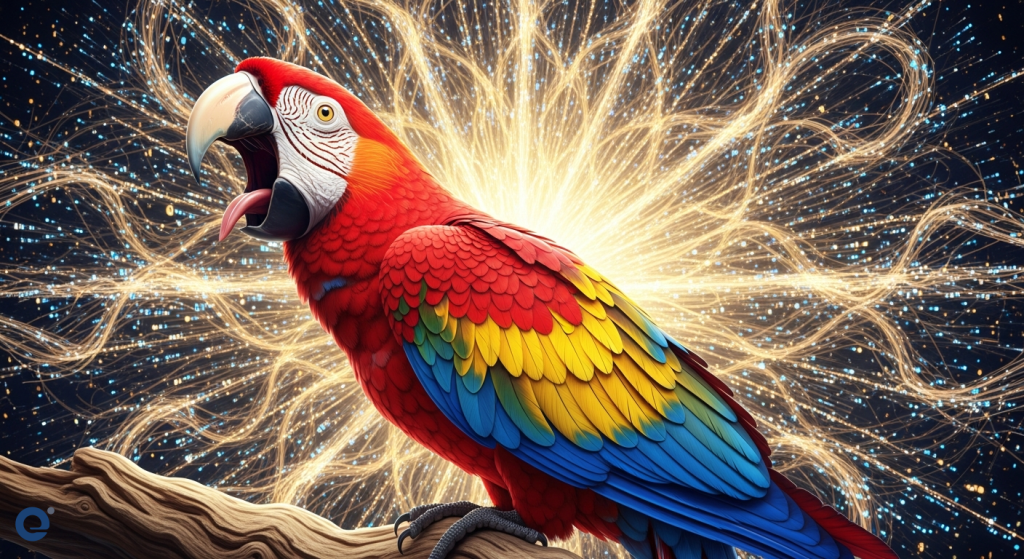
The Ethical Implications of Interspecies Understanding
As we develop the capacity to better understand animal communication, profound ethical questions arise. Recognizing the intelligence and complex social lives of non-human species could spark a significant moral shift. It forces us to re-evaluate our relationship with the animal kingdom and our responsibilities towards them.
Moving from merely “speaking to” animals to truly “listening to” them requires a fundamental change in perspective. It means acknowledging their sentience, their experiences, and their right to exist. This shift could lead to greater empathy and a more compassionate approach to animal welfare. The potential for AI to facilitate this understanding is immense, but it must be guided by ethical considerations. The goal should be mutual respect and understanding, not exploitation.
AI and the Future of Interspecies Communication
The future of interspecies communication looks increasingly intertwined with AI. The ability of AI to analyze complex data patterns could unlock the secrets of animal “languages” at an unprecedented scale. This could lead to breakthroughs in conservation efforts, veterinary medicine, and our general understanding of life on Earth.
Imagine a future where we can understand the distress calls of endangered species, helping us intervene more effectively. Or where we can better diagnose and treat our pets by understanding their subtle expressions of pain or discomfort. This vision, while ambitious, is becoming more realistic with ongoing AI development. The development of more advanced AI, potentially quantum-powered, could further enhance our ability to decode these complex systems. It’s a future where technology serves to deepen our connection with the natural world.
Talking to Animals Is Real Now — AI Just Decoded Their Emotions!
Frequently Asked Questions (FAQ)
Do animals understand human emotions?
Yes, animals are highly attuned to human emotions. They often pick up on our tone of voice, body language, and even subtle physiological cues like changes in heart rate or scent. This allows them to respond to our emotional states, offering comfort or reacting to perceived threats.
Can AI truly translate animal languages?
While AI is making significant progress in identifying patterns and decoding specific signals related to warnings, food, and social hierarchy, a complete, human-like translation of complex animal language is still a distant goal. Current AI can help us understand specific aspects of their communication, but not necessarily their entire “vocabulary” or sentence structures.
What is the Earth Species Project?
The Earth Species Project is an organization using AI to decode the languages and cultures of non-human species. Their mission is to foster a deeper understanding of the animal kingdom and promote interspecies empathy and communication.
How do I improve communication with my pet?
To improve communication with your pet, focus on consistent training, positive reinforcement, and paying close attention to their body language and vocalizations. Using a calm and consistent tone of voice is also crucial. Understanding their species-specific communication methods can also enhance your bond.
Are animal “languages” the same as human language?
No, animal communication systems are generally considered to be different from human language. Human language is characterized by its complex grammar, syntax, and abstract symbolism. While animals have sophisticated ways of communicating, these are often more instinctual, emotional, and context-dependent, lacking the same level of symbolic abstraction.
Conclusion
The question of whether pets truly understand language is complex. While they may not comprehend human language in the same way we do, they are exceptionally skilled at interpreting our intentions through tone, body language, and learned associations. The ongoing advancements in AI are paving the way for a deeper understanding of animal communication, moving us closer to deciphering the intricate ways in which other species interact with the world.
Ultimately, fostering a better connection with our animal companions and the broader animal kingdom hinges on observation, empathy, and a willingness to learn. As we continue to explore the fascinating realm of animal communication, we not only gain insights into other species but also enrich our own understanding of connection and consciousness. The future holds exciting possibilities for bridging the interspecies communication gap, promising a more harmonious coexistence between humans and animals.
