Animal Instincts: The Evolutionary Roots of Pet Behavior
Published on December 26, 2025 by Admin
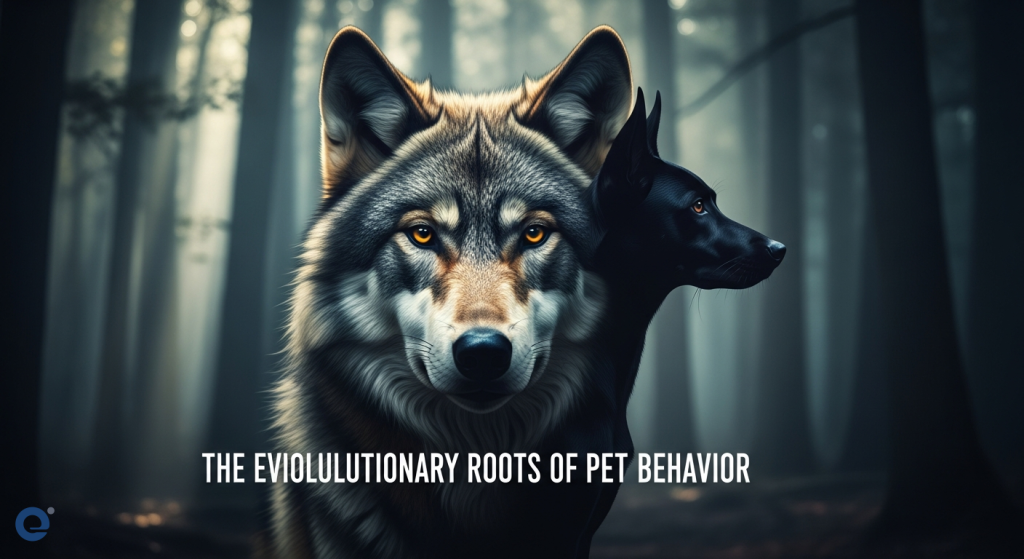
Understanding animal instincts is fundamental for pet trainers and behavioral researchers. It helps us decode why pets act the way they do. These behaviors are not random. Instead, they are deeply rooted in evolutionary history. This article explores the evolutionary basis of pet behaviors. We will examine how instincts shape our companions’ actions.
For centuries, scientists have pondered animal actions. How do birds know to migrate? How do dogs herd sheep? How do turtles find their way home? Early explanations often used the term “instinct.” It served as a catch-all for complex behaviors. These behaviors seemed to appear without obvious learning or experience. However, a closer look reveals a more nuanced picture.
Modern research suggests that “instincts” are not simply pre-programmed. Rather, species-typical behaviors develop. They emerge through species-typical experiences within reliable ecological contexts. This developmental perspective is crucial. It moves beyond simplistic notions of hardwiring. It emphasizes the dynamic interplay between genes and environment.
The Ethological Approach to Understanding Behavior
The study of animal behavior in its natural setting is called ethology. This field began in the 1930s. Pioneers like Konrad Lorenz and Niko Tinbergen shaped its early development. They observed animals in their natural habitats. This approach aims to understand the adaptive significance of behaviors. How do these actions aid survival and reproduction?
Ethology focuses on behaviors that are characteristic of a species. These are often called species-typical behaviors. They are not necessarily present at birth. Nor are they always unchangeable once developed. Instead, they emerge through a developmental process. This process is guided by genetics and environmental influences. As research highlights, these behaviors develop in every individual. This happens under the guidance of species-typical experiences.
Key Concepts in Ethology
Ethology provides a framework for understanding instinct. It moves away from the idea of fixed, innate programs. Instead, it emphasizes:
- Species-Typical Behaviors: Actions commonly observed across members of a species.
- Developmental Systems: The idea that behaviors develop over an animal’s lifetime. This involves complex interactions between genes, the environment, and experience.
- Ecological Context: The role of the animal’s natural environment in shaping behavior.
For example, a dog’s herding behavior is not solely genetic. It is also influenced by early experiences. Interactions with sheep or other animals play a role. The environment provides opportunities for this behavior to manifest and develop.
Evolutionary Basis of Pet Parenting
The human-pet bond has deepened significantly. Many people now view pets as family members. This shift is often described as “pet parenting.” This phenomenon has roots in our evolutionary past. Humans have an innate drive to nurture and care for others. This drive extends beyond our own offspring.
Parental behaviors are common in the animal kingdom. Many species provide food, shelter, and protection for their young. Humans share this innate drive to care. This is deeply ingrained in our ancestral heritage. As Source 2 notes, this innate drive to care for offspring that are not biologically our own is evident. Therefore, it’s plausible that pet parenting stems from this tendency.

Domestication has also played a crucial role. Over millennia, the human-animal relationship evolved. It moved beyond mere utility. Emotional connections became intertwined. Humans took on caregiving roles. Pets responded to this nurturing. This mutual dependence forged a unique bond.
The Shifting Paradigm in Human-Animal Relationships
Historically, pets were often working animals. They provided services like guarding or hunting. Over time, this perception shifted. Pets became companions. They are now considered integral members of the family. This societal change reflects a deeper emotional connection.
Modern society contributes to this trend. Increased urbanization and smaller family sizes mean people seek companionship elsewhere. Pets fill this void. They offer unconditional love and emotional support. As a result, they provide a sense of belonging. This is especially true for younger generations prioritizing education and personal achievement over starting families immediately.
Indeed, research into child-free pet parents reveals much. These individuals actively choose pets. They view them as family members. They use parent-child relational terms. This highlights the fulfillment of species-specific needs. They recognize the differences between caring for animals and raising children. They are not substituting human children with “fur babies.” Rather, they find fulfillment in nurturing their pets’ specific needs and forming emotional connections.
Understanding Specific Pet Behaviors Through Instinct
Many common pet behaviors can be understood through an evolutionary lens. These behaviors often served critical functions for their wild ancestors. Understanding these origins helps us manage and train our pets more effectively.
Chewing and Mouthing
Puppies explore the world with their mouths. This is a natural behavior. It helps them learn about textures and objects. For young canids, mouthing is also a social behavior. It’s part of play and establishing social hierarchies. Understanding this instinct helps trainers manage chewing. Providing appropriate chew toys is essential.
Vocalization (Barking, Meowing)
Vocalizations are a primary form of communication for many animals. Dogs bark to alert, warn, or express excitement. Cats meow to communicate with humans, a behavior they often reserve for us. These vocal signals were vital for survival in the wild. They alerted the pack or colony to danger or opportunities.
As discussions on Reddit suggest, understanding these innate communication methods is key. It helps us interpret our pets’ needs. It also guides us in teaching them appropriate vocal behavior.
Territorial Marking
Urinating or defecating to mark territory is common. This behavior signals presence and ownership to other animals. It’s a way to establish boundaries and avoid conflict. While less critical in a domestic setting, the instinct remains. Understanding this helps manage marking behaviors. It involves providing appropriate outlets and clear boundaries.
Prey Drive
Many pets, especially dogs and cats, have a prey drive. This is an innate urge to chase and capture. It stems from their ancestors’ need to hunt for food. This instinct explains why pets chase moving objects. It also explains their fascination with toys that mimic prey. Trainers must manage this drive carefully. Leash laws and secure environments are important. Safe outlets for this instinct, like supervised play, are also beneficial.
This instinct is particularly evident in breeds selectively bred for hunting or chasing. For instance, understanding herd dynamics is crucial when working with herding breeds. Understanding herd animals reveals deep-seated social structures that influence their behavior.
The Role of Experience and Learning
While instincts provide a foundation, experience and learning are equally important. Behaviors are not purely innate. They are shaped by an animal’s interactions with its environment and caregivers. This is known as epigenesis.
Epigenesis refers to how environmental factors influence gene expression. It means that genes don’t solely dictate behavior. Experiences can turn genes on or off. This leads to variations in how instincts manifest.
Imprinting
Imprinting is a critical form of early learning. It’s most famously observed in birds. Young birds imprint on the first moving object they see after hatching. This object becomes their “parent.” Konrad Lorenz’s famous images of ducklings following him exemplify this. Imprinting is a rapid, irreversible learning process. It happens during a specific sensitive period.
Socialization
Socialization is vital for developing well-adjusted pets. It involves exposing young animals to various people, other animals, and environments. Positive early experiences help them learn to interact appropriately. They learn to manage fear and anxiety. Proper socialization can mitigate the expression of negative instinctive behaviors.
For example, a dog that is not socialized may exhibit fear-based aggression. This is an instinctual response to perceived threats. However, early positive exposure can temper this reaction. It helps them understand that new stimuli are not necessarily dangerous.
Instinct vs. Learned Behavior in Pet Training
Distinguishing between instinctual and learned behaviors is key for effective training. Trainers must work with, not against, an animal’s natural predispositions.
Working with Instincts
Instead of suppressing instincts, trainers can redirect them. For instance, a dog with a strong prey drive can engage in scent work or fetch. These activities satisfy the urge to chase and retrieve in a controlled manner. Similarly, a dog that loves to dig can be given a designated digging area.
Modifying Learned Behaviors
Learned behaviors are modified through reinforcement and conditioning. Positive reinforcement is highly effective. It involves rewarding desired behaviors. This encourages the animal to repeat them. Conversely, punishment can be counterproductive. It can create fear and anxiety. This can lead to new behavioral problems.
Therefore, understanding the underlying drive behind a behavior is paramount. Is it an instinct that needs channeling? Or is it a learned response that can be reshaped?
The Human-Animal Bond and Evolutionary Psychology
The deepening bond between humans and pets is also explained by evolutionary psychology. Humans are social creatures. We have an innate need for connection and companionship. Pets fulfill this need. They offer a unique form of social support.
The concept of “pet parenting” highlights this. It reflects our evolved caregiving instincts. People find fulfillment in nurturing their pets. They provide them with food, shelter, and affection. This reciprocal relationship strengthens the bond. It taps into our deep-seated need to care for others. This need is not limited to our own species.
As Source 2 points out, humans have an innate need for social connection. Pets often fill this void. They offer unconditional love. They provide emotional support. This contributes to a sense of belonging. For many, pets are not substitutes for children. Instead, they are cherished family members. They fulfill a fundamental human desire to nurture.
Challenges and Considerations
While understanding instincts is beneficial, there are challenges. Not all behaviors are easily categorized as purely instinctual or learned. Some behaviors are complex. They result from a combination of factors.
Developmental Anomalies
Sometimes, developmental anomalies can affect behavior. These can be caused by genetic factors or environmental influences during development. For example, issues with the vestibular system can impact an animal’s balance and coordination. This, in turn, can affect its behavior. The “righting response,” a reflex to orient the body upright, is an example of a deeply ingrained behavior that can be affected by developmental issues.
Misinterpreting Instincts
A common mistake is misinterpreting instincts. For example, a dog’s growl might be seen as aggression. However, it could be a warning. It’s an instinctual way to communicate discomfort. Understanding the context and the animal’s body language is crucial.
The Ethics of Intervention
When addressing problematic behaviors, ethical considerations are paramount. Trainers and researchers must prioritize the animal’s welfare. Interventions should be humane. They should be based on scientific understanding. This includes understanding the evolutionary basis of the behavior.
For instance, using aversive training methods can suppress instinctual behaviors. However, it can also cause stress and fear. This can lead to more severe behavioral issues. Therefore, positive reinforcement and understanding the animal’s natural drives are essential. This is a core principle in modern ethical training practices.
Future Directions in Instinct Research
Research into animal instincts continues to evolve. Advances in genetics and neuroscience offer new insights. Scientists are exploring the neural pathways underlying instinctual behaviors. They are also investigating how environmental factors influence these pathways.
The field of epigenetics is particularly promising. It helps explain how experiences can alter gene expression. This provides a more dynamic view of instinct. It moves beyond a rigid, deterministic model.
Furthermore, comparative ethology is broadening. Researchers are increasingly looking at social dynamics. Understanding how social interactions influence behavior is crucial. This is especially true for species like dogs, which are highly social. The role of social dynamics in ethology is becoming increasingly recognized. As Source 3 notes, the field has shifted from focusing on individual animals to examining social dynamics within groups.
Conclusion
Understanding animal instincts is a complex but rewarding endeavor. It requires looking beyond simple definitions. It involves appreciating the interplay of genetics, environment, and experience. Ethology provides a vital framework for this understanding. It emphasizes species-typical behaviors developed within ecological contexts.
For pet trainers and behavioral researchers, this knowledge is invaluable. It allows for more effective and humane training methods. It deepens our appreciation for the intricate lives of our animal companions. By recognizing the evolutionary roots of their behaviors, we can foster stronger, more harmonious relationships.
Frequently Asked Questions
What is the difference between instinct and learned behavior?
Instincts are innate, unlearned behaviors. They are genetically programmed and present from birth or early development. Learned behaviors are acquired through experience and interaction with the environment. Many complex behaviors are a combination of both instinct and learning.
How does domestication influence animal instincts?
Domestication can modify or suppress certain instincts. It can also enhance others. For example, the prey drive in dogs has been selectively bred for in some breeds. In others, it has been reduced. Domestication also shapes social behaviors to be more compatible with humans.
Are all behaviors in pets instinctual?
No, not all behaviors are instinctual. While instincts provide a foundation, learning and environmental factors play a significant role. Many behaviors are a result of conditioning, socialization, and individual experiences.
How can understanding instincts help with pet training?
Understanding instincts helps trainers work with an animal’s natural predispositions. Instead of fighting an instinct, trainers can channel it into desirable behaviors. For example, a strong digging instinct can be directed towards a designated digging pit.
What is the role of ethology in understanding pet behavior?
Ethology is the scientific study of animal behavior in natural settings. It helps us understand the evolutionary and environmental influences on behavior. Applying ethological principles allows for more humane and effective training methods aligned with an animal’s natural instincts. Ethological principles are crucial for dog trainers.