Mycorrhizal Networks: The Plant Kingdom’s Hidden Internet
Published on December 31, 2025 by Admin
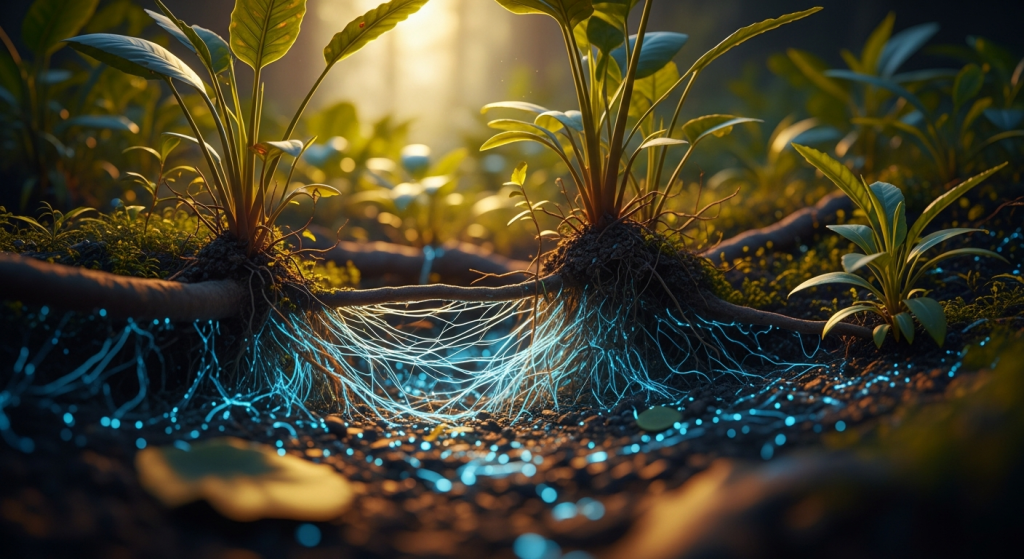
Beneath our feet lies a secret world. It’s a vast, intricate network that connects plants, sharing resources and information. This incredible system is the mycorrhizal network. It’s like the internet for the plant kingdom.
Mushrooms, those familiar fruiting bodies of fungi, are just the tip of the iceberg. The real magic happens underground. Here, a dense web of fungal threads, called mycelium, forms an extensive network. This network links trees and plants together. In healthy forests, this connection is profound.
Unveiling the Mycelial Web
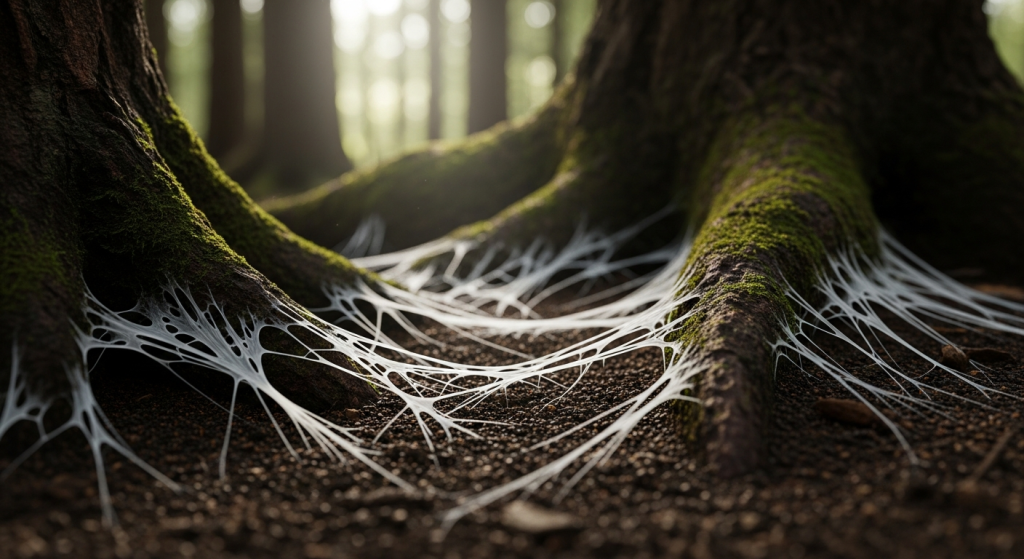
What exactly is mycelium? It’s the main body of a fungus. Think of it as a network of fine threads, or hyphae. These hyphae spread through the soil. They are crucial for fungal growth and survival. In fact, mycelium functions much like plant roots. It explores the environment. It also secretes digestive enzymes. These enzymes break down organic matter.
This breakdown process is vital. It recycles dead plant material. It also feeds many soil organisms. This includes bacteria and other small animals. Mycelial networks can be surprisingly large. Some are microscopic. Others are colossal. For instance, an Armillaria ostoyae fungus in Oregon covers nearly 10 square kilometers. It’s one of the largest living organisms on Earth.
The Symbiotic Partnership: Mycorrhizae
Mycelium plays a key role in connecting with plant roots. This creates a partnership known as a mycorrhizal network. The word “mycorrhizal” itself means “fungus-root.” This is a symbiotic relationship. Both the fungus and the plant benefit greatly.
Plants, through photosynthesis, produce sugars and fats. They share these carbohydrates with the fungi. In return, the fungi help plants absorb vital nutrients and water from the soil. This absorption can extend far beyond the reach of the plant’s own roots. Therefore, the fungi act as an extension of the root system. This partnership is ancient. It is thought to have helped plants colonize land over 500 million years ago. Today, over 83 percent of plants form these associations.
Types of Mycorrhizal Associations
There are two main types of mycorrhizal associations. These are ectomycorrhizas (EcM) and arbuscular mycorrhizas (AM). The classification depends on how the fungal hyphae interact with the plant root cells.
- Ectomycorrhizas (EcM): In EcM, the fungal hyphae form a sheath around the plant root. They also form a structure called the Hartig net. This net penetrates the spaces between root cells. This creates a direct pathway for nutrient exchange. EcM fungi are diverse. They belong to major fungal phyla like Basidiomycota and Ascomycota. However, they tend to be more specialized in their host plant relationships.
- Arbuscular Mycorrhizas (AM): AM fungi are different. They penetrate the plant root cells. They form tree-like structures called arbuscules. These arbuscules are the main sites for nutrient exchange. AM fungi are less diverse taxonomically. They primarily belong to the phylum Glomeromycota. Despite this, they associate with a much larger percentage of plant species, over 80%.
The Underground Internet: Communication and Resource Sharing
Mycorrhizal networks are more than just nutrient pipelines. They also facilitate communication between plants. This is a groundbreaking discovery. It reveals a complex underground signaling system.
Plants connected by a common mycorrhizal network can share resources. For example, older, established trees can support younger saplings. They can do this by sending them essential nutrients. This is especially important in shaded forest understories. It helps ensure the survival of younger plants.
Furthermore, these networks can act as an early warning system. When one plant is attacked by pests, it can send signals. These signals travel through the mycelial network. Neighboring plants receive these signals. As a result, they can activate their defenses before they are even attacked. For instance, studies have shown that bean plants connected via mycorrhizal networks can warn each other of aphid attacks. The infested plants produce specific volatile compounds. These compounds signal danger. The healthy plants then produce defensive enzymes to protect themselves.
This communication is sophisticated. It allows plants to share information about threats. It also enables them to share vital resources. This interconnectedness is crucial for ecosystem health. It highlights the collaborative nature of plant communities. The idea that plants share nutrients is indeed true, supported by numerous studies on nutrient transfer through these networks.
Some plants even rely entirely on these fungal networks. For example, plants like the pinesap (Monotropa hypopithys) lack chlorophyll. They cannot photosynthesize. Therefore, they get all their energy from their fungal partners. These fungi, in turn, get their energy from trees. This demonstrates a deep interdependence within the ecosystem.
Challenges and Threats to Mycorrhizal Networks
Despite their resilience, mycorrhizal networks face significant threats. Land use changes and climate change are major concerns. These factors can disrupt the delicate balance of these ecosystems.
Deforestation and intensive agriculture can damage fungal populations. Pollution also poses a risk. For example, pollution can harm the fungal partners that certain rare plants depend on. The Lady Slipper orchid, for instance, requires specific fungi to germinate. Its rarity is likely linked to threats against its fungal partner.
Protecting these underground networks is essential. It is vital for maintaining forest health and biodiversity. Understanding their importance is the first step. Then, we can work towards conservation efforts. These efforts can help safeguard this hidden world.
The Role of Mycorrhizae in Ecosystems
Mycorrhizal networks are foundational to many ecosystems. They are not just for trees. Mycorrhizal plants come from all corners of the plant kingdom. This includes forbs, grasses, ferns, and clubmosses.
These networks improve soil structure. They enhance water infiltration. They also increase nutrient availability. This leads to more robust plant growth. Consequently, it supports a wider array of wildlife.
The fungi also contribute to carbon sequestration. They help store carbon in the soil. This is an important aspect of combating climate change. Healthy soils, rich in fungal networks, are vital for a healthy planet. You can learn more about the ecological role of forests in carbon capture in our article on Old-Growth Forests: Carbon Capture Champions.
Frequently Asked Questions (FAQ)
What is the main role of mycorrhizal networks?
The main role of mycorrhizal networks is to connect plants and fungi. They facilitate the exchange of nutrients, water, and signals between plants. This partnership enhances plant growth and survival.
Are mushrooms part of the mycorrhizal network?
Yes, mushrooms are the reproductive structures of fungi. The main body of the fungus, the mycelium, forms the mycorrhizal network underground. So, mushrooms are a visible sign of this hidden network.
Can plants communicate through mycorrhizal networks?
Absolutely. Studies show that plants can send warning signals through these networks. They can alert neighbors to pest attacks or share vital resources like carbon.
What are the two main types of mycorrhizal associations?
The two main types are ectomycorrhizas (EcM) and arbuscular mycorrhizas (AM). EcM form a sheath around roots and a Hartig net between cells. AM penetrate root cells and form arbuscules for nutrient exchange.
What threatens mycorrhizal networks?
Threats include deforestation, intensive agriculture, pollution, and climate change. These factors can disrupt the soil environment and harm the fungal partners.
Conclusion: The Unseen Architects of Life
Mycorrhizal networks are a testament to the interconnectedness of nature. They are the unsung heroes of the plant kingdom. These hidden fungal highways are vital for healthy ecosystems. They support plant life, facilitate communication, and contribute to soil health.
By understanding and protecting these networks, we can better appreciate the complexity of our natural world. The underground internet of fungi is a crucial element. It underpins much of the life we see above ground. Therefore, their conservation is paramount for ecological balance and sustainability.