
Seed Banks: Safeguarding Global Crop Diversity Against Extinction
Published on December 31, 2025 by Admin
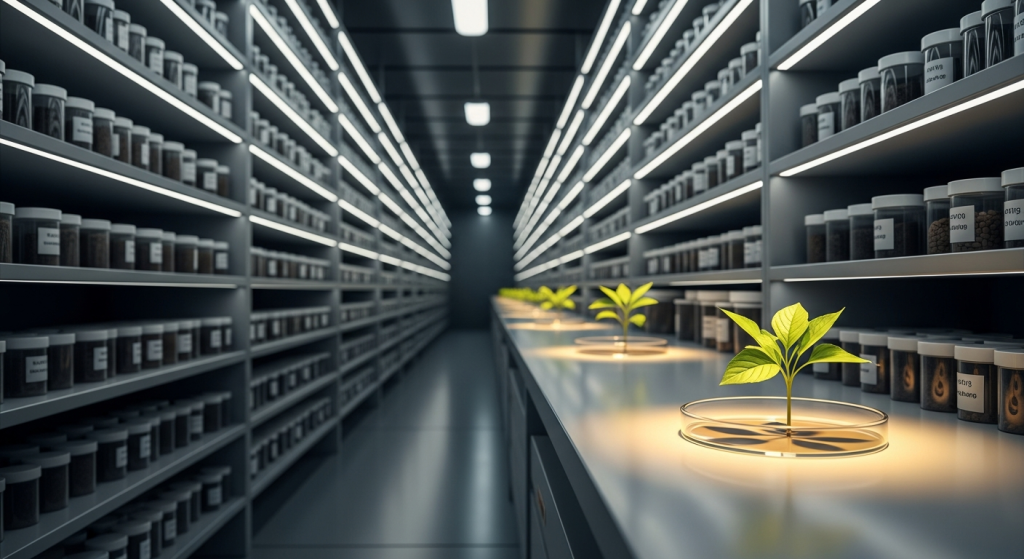
The future of food security hinges on a delicate balance. As our planet faces unprecedented challenges, from climate change to geopolitical instability, the very foundation of our food supply is increasingly at risk. Fortunately, a vital network of seed banks stands as a global safeguard. These institutions are more than just repositories; they are libraries of life, preserving the genetic heritage of crops that have sustained humanity for millennia. Therefore, understanding their role is crucial for global food security experts and geneticists alike.
Seed banks act as an ultimate insurance policy. They protect the vast diversity of plant species, ensuring that future generations have the resources to adapt to evolving environmental conditions and unforeseen crises. Without these vital collections, we risk losing the genetic resources needed to develop more resilient crops, a prospect that could have devastating consequences for global food systems.
The Imperative of Crop Diversity
Humanity’s reliance on a narrow range of crops poses a significant vulnerability. Today, over half of the world’s caloric intake comes from just three staple crops: maize, rice, and wheat. This lack of diversity makes our food system susceptible to widespread disease outbreaks and the impacts of climate change. For instance, a new pest or a severe drought could decimate these essential crops, leading to global food shortages.
However, the world possesses an estimated 200,000 edible plant species. Safeguarding this immense biodiversity is paramount. Seed banks preserve not only the major food crops but also their wild relatives, which often possess valuable traits like drought tolerance or disease resistance. These traits are essential for breeding new crop varieties that can thrive in a changing climate.
Sefra Alexandra, a Genebank Impacts Fellow for the Crop Trust, emphasizes this point. She highlights the importance of utilizing and sharing plant genetic resources to adapt to changing climatic conditions. Her work focuses on establishing community seed banks in disaster-prone areas to bolster resilience and promote food security through seed sovereignty.

The Svalbard Global Seed Vault: An Arctic Ark
Perhaps the most iconic seed bank is the Svalbard Global Seed Vault. Located deep within a mountain on the remote Norwegian island of Spitsbergen, it serves as a fail-safe backup for genebanks worldwide. This facility is designed to withstand natural disasters and the test of time, offering a secure location for duplicating vital seed collections.
The vault’s location in Svalbard is strategic. It is far north, yet accessible. The entrance is hidden, and the main storage areas are over 100 meters into the mountain. Furthermore, the region is geologically stable, has low humidity, and is situated well above sea level, protecting it from potential ocean flooding. Crucially, the permafrost provides natural freezing, maintaining the required storage temperature of -18°C even without power. This ensures seeds remain viable for extended periods.
As of May 2024, the Svalbard Global Seed Vault holds over 1.3 million seed samples from nearly every country. It has the capacity to store 4.5 million crop varieties, representing a colossal number of individual seeds. This collection includes everything from African and Asian staples like maize and sorghum to European and South American varieties of eggplant and potato. The vault is a testament to international cooperation, owned by Norway and managed in partnership with the Norwegian Ministry of Agriculture and Food, NordGen, and the Crop Trust.
The vault marked its 15th anniversary in February 2023, receiving new deposits from various countries. Notably, the Cherokee Nation became the first Indigenous group from North America to deposit seeds of nine heirloom food crops, predating European colonization. This signifies the vault’s role in preserving not just agricultural diversity but also cultural heritage.
Why Svalbard? A Unique Location for Conservation
The choice of Svalbard for this crucial facility was deliberate. Several factors contribute to its suitability for long-term seed storage:
- Remoteness and Accessibility: Svalbard is the northernmost point reachable by scheduled flights, offering isolation yet remaining accessible for deposits and management.
- Security and Stability: The vault is buried deep within a mountain, over 100 meters inside, providing physical security. The area is geologically stable, minimizing risks from earthquakes.
- Environmental Conditions: Low humidity levels are ideal for seed preservation. The location is also well above sea level, mitigating flood risks from rising sea levels.
- Natural Refrigeration: The permafrost acts as a natural freezer, providing a cost-effective and fail-safe method for maintaining the required low temperatures for seed viability.
This combination of factors makes Svalbard an unparalleled location for safeguarding the world’s most precious botanical resources. The vault is essentially a bank for other genebanks, providing a critical backup against catastrophic loss.
The Broader Network of Seed Banks
While Svalbard is a central hub, it is part of a much larger global network. Worldwide, over 1,700 genebanks house collections of plant species. These range from large international institutions to smaller, community-based initiatives. Each plays a unique role in preserving biodiversity.
For example, the Millennium Seed Bank in Sussex, UK, is considered the most diverse wild plant genetic resource globally. It houses over 2.4 billion seeds from approximately 40,000 species, including collections from 189 countries. This bank has collaborated on projects to conserve wild relatives of priority crops, crucial for future food security.
Another vital institution is ICARDA, the International Center for Agricultural Research in the Dry Areas. Originally based in Aleppo, Syria, its genebank was impacted by war. ICARDA famously made a withdrawal from Svalbard to rebuild its collection, which is now split between Lebanon and Morocco. This highlights how Svalbard functions as a true backup, enabling the recovery of lost collections.
Sefra Alexandra also works with community seed banks on island nations. These local repositories are established after natural disasters to fortify regenerative models of resiliency and support food security and nutritional diversity through seed sovereignty. This demonstrates the distributed nature of conservation efforts.
Threats to Seed Diversity
The need for seed banks is underscored by the numerous threats facing crop diversity. Modern agriculture’s focus on a limited number of high-yield varieties has led to the extinction of many traditional and heirloom crops. This narrowing of the genetic base makes agriculture more vulnerable.
Environmental disasters, such as floods, fires, and earthquakes, can destroy local seed collections. For instance, the Syrian war devastated ICARDA’s original genebank. Climate change exacerbates these risks, with extreme weather events becoming more frequent and intense. Meltwater from high temperatures even breached the Svalbard vault in 2017, highlighting the dynamic challenges of conservation.
Political instability and lack of funding are also significant threats. Many genebanks operate on tight budgets, making them susceptible to mismanagement or closure. The loss of a crop variety is irreversible, akin to the extinction of any other species. Therefore, safeguarding these genetic resources is a critical global responsibility.
The Guardian reported that two in five of the world’s plant species are at risk of extinction. This alarming statistic underscores the urgency of conservation efforts. Well-funded, well-maintained seed banks are critical to reducing the negative impact of the climate crisis on our agriculture globally, according to Stefan Schmitz, executive director of the Global Crop Diversity Trust.
The Role of Geneticists and Researchers
Seed banks are not just passive storage facilities; they are active hubs for research and innovation. Geneticists and scientists utilize these collections to study plant genetics, evolution, and adaptation. This research is vital for developing new crop varieties that are more resistant to pests, diseases, and environmental stressors.
For example, wild relatives of crops stored in seed banks often possess genes that can enhance yield, improve nutritional content, or confer resistance to drought and salinity. By studying these genes, researchers can introduce beneficial traits into cultivated crops. This is crucial for adapting agriculture to the challenges of climate change and ensuring long-term food security.
The preservation of genetic diversity is also essential for understanding plant intelligence and resilience. By studying a wide array of plant genetic material, scientists can accelerate discovery and innovation in various fields, including agriculture, medicine, and conservation. This research can lead to breakthroughs that benefit humanity and the planet.
The work of genebanks and the utilization of their collections directly contribute to enhancing climate change resilience. As environmental conditions shift, plants with specific traits for drought tolerance or heat resistance, preserved in seed banks, become invaluable for restoring ecosystems and adapting agriculture.
Community Seed Banks and Seed Sovereignty
Beyond large-scale international efforts, community seed banks play a crucial role in preserving local biodiversity and empowering communities. These smaller, often grassroots initiatives focus on safeguarding regionally important heirloom varieties and traditional crops.
Community seed banks foster seed sovereignty, allowing communities to maintain control over their own food systems. They also serve as vital educational resources, teaching traditional seed-saving techniques and promoting the cultural heritage associated with specific plant varieties. The culture of seed saving is deeply important to maintaining our seed stewarding lineages and offering a means of community and self-facilitated resilience, as noted by Sefra Alexandra.
These local efforts are essential for maintaining the rich tapestry of agricultural diversity. They ensure that unique varieties, often adapted to specific local environments, are not lost. Furthermore, they provide a crucial first line of defense against localized environmental disasters or crop failures.
The Future of Seed Banking
The future of seed banking lies in continued international cooperation, robust funding, and innovative approaches to conservation. While Svalbard provides a critical backup, the ongoing maintenance and accessibility of the thousands of genebanks worldwide are essential.
Organizations like the Global Crop Diversity Trust play a pivotal role in securing funding and providing support for multiple crop repositories. Their goal is to safeguard as much of the world’s unique crop genetic material as possible while avoiding unnecessary duplication. This ensures that the global network remains strong and effective.
Furthermore, advancements in genetic technology and data management are enhancing the capabilities of seed banks. Digital seed portals, like the one used by Svalbard, improve tracking and accessibility of stored samples. This allows for more efficient research and quicker response in times of need.
The ongoing efforts in seed banking are not just about preserving seeds; they are about securing the foundation of our future food supply. They offer hope and resilience in the face of global challenges, ensuring that humanity has the genetic resources necessary to adapt and thrive for generations to come. The work of these institutions is a testament to our understanding of the interconnectedness of life and our responsibility to preserve it.
Frequently Asked Questions
What is the primary purpose of a seed bank?
The primary purpose of a seed bank is to preserve plant genetic material, safeguarding plant species from extinction, ensuring future food supplies, and supporting scientific research.
How many seed banks are there globally?
Globally, there are approximately 1,700 seed banks, ranging from small community facilities to large international organizations.
Why is crop diversity so important?
Crop diversity is crucial because it reduces the vulnerability of our food system. A wider range of crop varieties helps in adapting to new pests, diseases, and changing environmental conditions, thereby ensuring long-term food security.
What is the Svalbard Global Seed Vault?
The Svalbard Global Seed Vault is a secure facility in Norway designed to store duplicate copies of seeds from genebanks around the world. It acts as a fail-safe backup against catastrophic loss of crop diversity.
How does climate change affect seed banks?
Climate change poses a threat through increased extreme weather events that can damage local genebanks. Additionally, rising temperatures can impact the permafrost in locations like Svalbard, requiring constant monitoring and adaptation of storage conditions.
Can I donate seeds to a seed bank?
While direct donation to major facilities like Svalbard is typically done by established genebanks, many community seed banks and organizations like Seed Savers Exchange welcome donations of heirloom and open-pollinated seeds. It’s best to check their specific donation guidelines.
