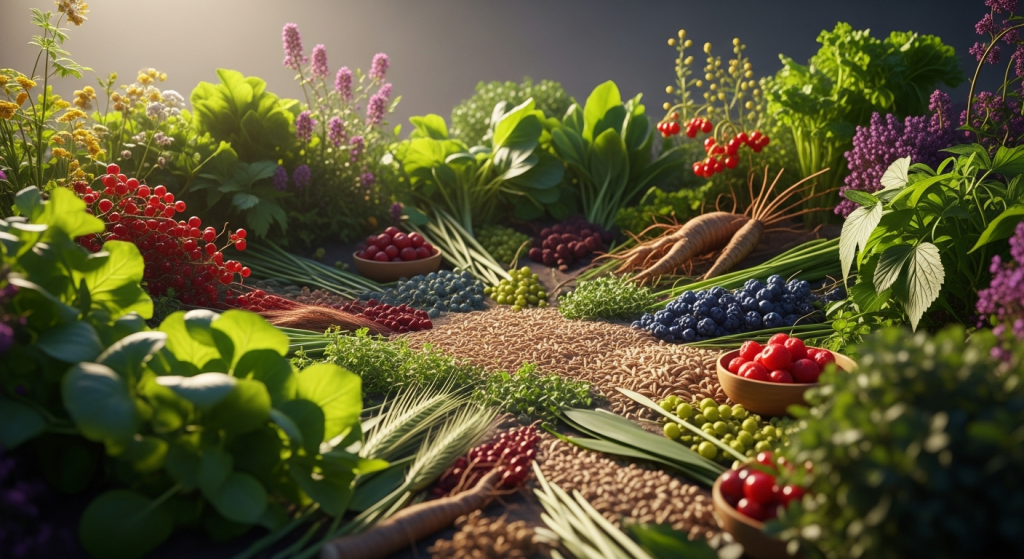
Our current food systems face immense pressure. Population growth, climate change, and resource depletion threaten our ability to feed everyone. Conventional agriculture, with its reliance on monocultures, is vulnerable. This vulnerability puts global food security at risk. Therefore, we must explore new strategies. Integrating wild plant varieties into agriculture offers a promising solution. This approach can enhance resilience, promote biodiversity, and ensure a more sustainable food future.

The Vulnerability of Modern Agriculture
Modern industrial agriculture often prioritizes short-term efficiency. This leads to monoculture farming. Monocultures mean growing a single crop variety over vast areas. While this simplifies management and harvesting, it creates significant risks. If a disease or pest outbreak occurs, an entire crop can be wiped out. This lack of diversity leaves our food supply highly vulnerable.
Furthermore, our global diet is dominated by a few staple crops. Wheat, rice, soy, and corn provide nearly half of our daily calories. This narrow base is precarious. For instance, climate change could drastically reduce corn yields by as early as 2030. Such a reduction would have widespread consequences for global food availability. The UN reports that agriculture consumes about 70% of the world’s freshwater. This high water usage, especially for non-native, water-intensive crops, is unsustainable in the face of increasing droughts.
Harnessing the Power of Wild Relatives
Wild plant relatives of our domesticated crops hold immense potential. These wild varieties often possess traits that are lost during domestication. They can be more resistant to diseases, pests, and environmental stresses like drought and extreme temperatures. By integrating these traits into our crops, we can develop more resilient varieties.
For example, wild wheat relatives (WWRs) are crucial for improving wheat. Equitable access to new wheat varieties derived from WWRs is essential for inclusive agricultural development and global food security. These wild relatives can confer valuable genetic resources.
Genomic Insights and Genome Editing
Advances in genomics and genome editing offer powerful tools. These technologies allow us to precisely identify and transfer desirable genes from wild relatives into cultivated crops. This speeds up the development of improved varieties. It also allows for the utilization of “orphan crops” – those less studied but potentially vital for local food systems. Integrating genomics and genome editing for orphan crop development is a key strategy. This results in a more diversified base for future food and fodder supplies. This strategy is both practical and effective.
Wild Edible Plants: A Treasure Trove of Nutrition and Resilience
Beyond crop relatives, wild edible plants (WEPs) themselves offer significant benefits. Historically, indigenous communities relied on a diverse array of wild plants for sustenance. These plants are often well-adapted to local environments and require fewer inputs. They are also rich in essential nutrients and can enhance dietary diversity. Wild edible plants have historically improved the nutrition and food security of indigenous communities.
Manzanita Cooperative, for instance, is pioneering the integration of nutrient-dense wild foods. These include acorns, native hazelnuts, pine nuts, and California bay nuts. Their work aims to bring these historically consumed native plants back into cultivation and the market. This makes sustainable diets more accessible. It also helps replace crops affected by drought or disease. Planting wild crops can also create vital habitat for biodiversity.
Benefits for Diet and Health
Eating a diversity of wild plants can significantly enhance our diets. Many wild species are packed with vitamins, minerals, and antioxidants. This can combat malnutrition and improve overall health. These foods can enhance diets and promote health, longevity, and sustainability, especially for nutritionally disadvantaged groups.
Moreover, wild plants often have unique phytochemicals with nutraceutical properties. This opens doors for developing new functional foods and medicines. The sheer number of edible plant species worldwide—over 30,000—suggests vast untapped potential. Exploring and cultivating these species can lead to more varied and nutritious diets.
Building Resilience Through Diversification
The principle of diversification is key to resilience. In finance, diversification reduces risk. The same applies to agriculture. Growing a wider variety of crops, especially those adapted to local conditions, strengthens our food systems. This approach can protect agricultural productivity and conserve precious natural resources.
Increasing plant diversity in an area enhances genetic diversity. This, in turn, boosts plant resilience. It mitigates crop losses from disease and extreme weather events. Planting native, locally-adapted crops can also significantly reduce water needs. Additionally, it supports vital biodiversity, such as pollinators. This aligns with principles of regenerative agriculture, which focuses on healing the earth through farming practices.
Climate Change Adaptation
Climate change presents unprecedented challenges. Rising temperatures, altered rainfall patterns, and increased frequency of extreme weather events threaten crop yields. Ensuring food security requires adapting agricultural practices to be sustainable in the face of climate change.
Wild plants, by their very nature, have evolved to survive in diverse and often harsh environments. Their genetic makeup contains the keys to drought tolerance, heat resistance, and disease immunity. By studying and incorporating these traits, we can breed crops that are better equipped to withstand the impacts of climate change. This is crucial for ensuring continued food production in vulnerable regions.
Challenges and Opportunities
While integrating wild plant varieties offers immense promise, challenges remain. Unsustainable harvesting and overexploitation of wild resources can lead to their depletion. More research is needed in areas like plant domestication and sustainable harvesting practices. There are also challenges in scaling up the use of wild edibles. Issues like consistent availability, perishability, and fair returns to collectors need to be addressed.
However, the opportunities are substantial. Emerging research in countries like India and China highlights the growing momentum in this field. Efforts are also underway in the USA, Europe, and Africa. These endeavors span food science, plant sciences, sustainable agriculture, and phytochemistry. Collaboration across disciplines is vital for unlocking the full potential of wild plant resources.
The Role of Seed Savers and Food Security Strategists
Seed savers play a critical role in this transition. They are the custodians of genetic diversity. By preserving heirloom varieties and wild relatives, they ensure that these valuable resources are not lost. Their efforts provide the raw material for breeding programs and the foundation for future food security.
Food security strategists must champion the integration of wild plants. This involves policy development, research funding, and public awareness campaigns. Promoting crop diversification and supporting local food systems are essential steps. Strategists also need to consider equitable access to new resilient varieties. This ensures that the benefits reach smallholder farmers and vulnerable communities.
A Blueprint for a Sustainable Future
The integration of wild plant varieties into agriculture is not just about increasing yields. It is about building a more resilient, diverse, and sustainable food system. It is about recognizing the wisdom embedded in nature and harnessing it for human well-being. Organizations are already pioneering this approach, blending traditional knowledge with scientific methods.
By embracing the diversity of the plant kingdom, we can create a food future that is more secure, nutritious, and environmentally sound. This transition requires a collective effort from researchers, farmers, policymakers, and consumers. It is an investment in the health of our planet and the well-being of future generations.
Frequently Asked Questions
What are wild plant relatives, and why are they important for agriculture?
Wild plant relatives are the wild ancestors or close relatives of domesticated crops. They are important because they often possess valuable genetic traits, such as resistance to diseases, pests, and environmental stresses like drought and heat. Incorporating these traits can help improve the resilience and yield of cultivated crops.
How can wild edible plants contribute to food security?
Wild edible plants (WEPs) can contribute to food security by diversifying our diets, providing essential nutrients, and offering resilience during crop failures. They are often well-adapted to local conditions and require fewer agricultural inputs, making them a sustainable food source, especially for vulnerable populations.
What are the main challenges in integrating wild plants into agriculture?
Challenges include the risk of unsustainable harvesting leading to depletion, the need for more research into domestication and cultivation practices, and difficulties in ensuring consistent availability and fair market access for wild edibles. Scaling up their use also requires addressing issues of perishability and collection logistics.
What role do seed savers play in this initiative?
Seed savers are crucial for preserving the genetic diversity of both cultivated crops and their wild relatives. By safeguarding heirloom varieties and wild species, they provide the essential genetic resources needed for breeding programs aimed at developing more resilient and diverse food crops for the future.
How does climate change make integrating wild plants more urgent?
Climate change is increasing environmental stresses on agriculture, such as extreme temperatures and altered rainfall. Wild plants, having evolved in diverse environments, often possess inherent resilience traits. Integrating these traits into our crops is vital for developing varieties that can withstand these changing conditions and ensure continued food production. For more on this, you can explore crop resilience strategies.