
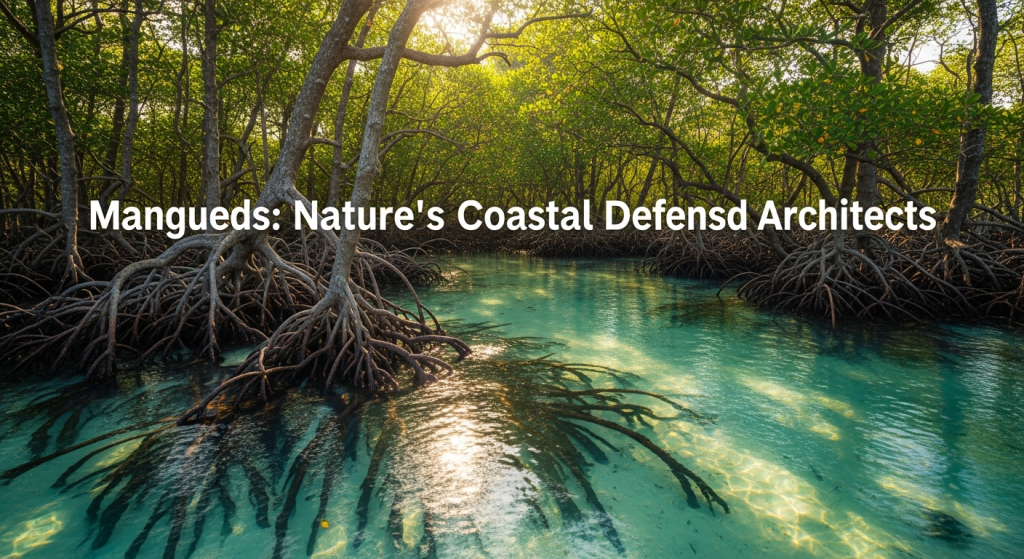
Coastal communities worldwide face increasing threats. Storm surges, rising sea levels, and relentless erosion endanger lives and infrastructure. However, a remarkable natural solution stands ready to defend our shorelines: the humble mangrove forest.
These unique ecosystems are far more than just trees. They are vibrant, living barriers. They also provide critical habitats and play a vital role in mitigating climate change. Therefore, understanding their importance is crucial for coastal engineers, marine conservationists, and policymakers alike.
This article delves into the multifaceted benefits of mangroves. We will explore how they act as natural defenses against coastal erosion. We will also highlight their ecological significance and their role in a sustainable future.
The Unseen Strength of Mangrove Roots
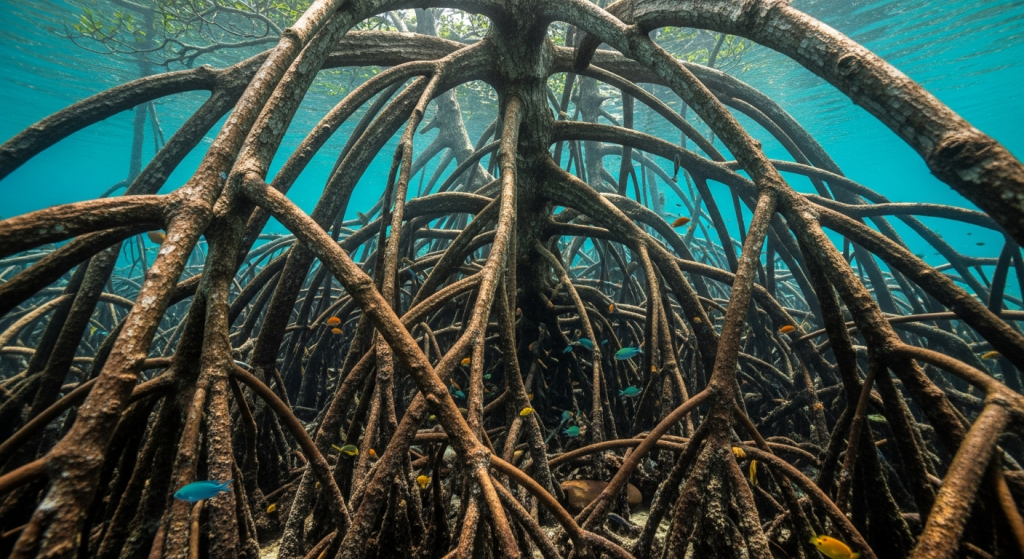
Mangroves possess an extraordinary root system. This network is their primary tool for fighting coastal erosion. Their dense, tangled roots anchor them firmly in the soil. Moreover, they trap and bind sediments effectively.
This root structure acts like a natural net. It catches sediment carried by water. As a result, it builds up new land over time. This process actively combats shoreline retreat. It also helps to stabilize the coastline. The roots are also excellent at slowing down water flow. This reduces the energy of waves. Therefore, less force hits the shore.
Furthermore, these above-ground roots help to dissipate wave energy. This is especially important during storms. They significantly reduce the impact of storm surges. This protection extends to nearby populated areas. It also safeguards valuable coastal infrastructure.
Nature’s Wavebreakers
Think of mangrove roots as a living breakwater. They stand between the open sea and the land. When waves approach, the dense root systems absorb their force. This dramatically reduces wave height and power before they reach the shore. This is a critical function, especially in areas prone to hurricanes and cyclones.
The effectiveness of mangroves in reducing wave energy is well-documented. Wave tanks have demonstrated this phenomenon. They show how mangrove models significantly decrease wave action. This natural defense is often more effective and sustainable than artificial structures like sea walls. Artificial structures can sometimes have unintended negative consequences on coastal dynamics.
Beyond Erosion: Mangroves as Ecosystem Engineers
Mangroves are not just passive defenses. They are active ecosystem engineers. Their presence profoundly shapes the coastal environment. Their dense root systems provide a unique habitat. This habitat is essential for a vast array of marine life.
Many species rely on mangroves for survival. This includes fish, invertebrates, and birds. The complex root structures offer shelter. They also provide crucial nursery grounds. Juvenile fish and crustaceans find safety here. They can grow and develop away from predators. This supports healthy fish populations. These populations are vital for both commercial and recreational fishing.
Nurseries for Marine Life
Estuarine habitats with mangrove shorelines are critical spawning and nursery territories. Many commercially important fish species, such as redfish and snook, depend on them. Crabs and shrimp also thrive in these sheltered environments. The intricate root systems provide the perfect conditions for their early life stages.
Oysters also benefit greatly. The submerged portions of red mangrove roots are ideal for oyster attachment. This creates thriving oyster reefs. These reefs further enhance the coastal ecosystem. They also contribute to water filtration.
Bird Rookeries and Wildlife Refuges
The branches of mangrove trees serve as important bird rookeries. Coastal wading birds, including egrets, herons, and roseate spoonbills, nest and roost here. The abundant food sources in the surrounding waters further attract these avian species.
Moreover, mangroves are vital habitats for endangered species. Animals like the smalltooth sawfish, manatees, and hawksbill sea turtles rely on mangrove ecosystems at various stages of their lives. The Florida panther also depends on this habitat. Protecting mangroves means protecting biodiversity.
A Powerful Tool Against Climate Change
In the face of a changing climate, mangroves offer significant advantages. They are exceptional at capturing and storing carbon. This process is known as “blue carbon” sequestration. This is because the carbon is stored underwater in coastal ecosystems.
Mangrove forests can store vast amounts of carbon dioxide. They trap this greenhouse gas from the atmosphere. They then store it in their carbon-rich soils for millennia. In fact, mangrove ecosystems might be the most efficient carbon capture and storage system on the planet. They can store three times more carbon than terrestrial forests. Acre for acre, mangroves are “world champions of carbon sequestration.”
When mangrove forests are destroyed, this stored carbon is released. This contributes to climate change. Therefore, protecting and restoring mangroves is a key climate change mitigation strategy. It helps to reduce greenhouse gas emissions.
Regulating Local Climates
Beyond global carbon storage, mangroves also influence local climates. Their dense vegetation helps to regulate temperature. They provide shade, which is particularly beneficial in urban coastal areas. This cooling effect can improve living conditions.
Flood Mitigation: The Natural Sponge Effect
Mangroves play a significant role in flood mitigation. They act like natural sponges. This is especially true during heavy rainfall and storm events. The dense vegetation absorbs excess rainwater. It also slows down water flow.
The intricate root structures allow sediments and nutrients to settle. This reduces the speed and volume of downstream floodwaters. By acting as a natural water retention system, mangroves help regulate water levels. This prevents or alleviates flooding in coastal areas. This is a crucial benefit for communities facing increasingly intense weather patterns.
The reduction in surge behind mangroves helps ease flooding. This protects land and properties from destructive inundation. This natural flood control is a cost-effective and sustainable solution. It provides measurable social and economic benefits by reducing disaster damages.
Economic and Recreational Value
The importance of mangroves extends to economic benefits. As nurseries for fish stocks, they directly support local fisheries. This provides livelihoods for many coastal communities. The health of these fisheries is directly linked to the health of mangrove ecosystems.
Furthermore, mangrove forests offer significant recreational opportunities. People enjoy birding, fishing, snorkeling, and kayaking in these areas. The serene natural environment also provides therapeutic benefits. It offers a peaceful escape. These nature-based recreation activities also fuel local economies. They attract tourists and support businesses.
The economic value of mangroves is substantial. For instance, the present value of Florida mangroves for flood protection alone is estimated at $50 billion. This highlights their immense contribution to coastal resilience and economic stability.
Threats to These Vital Ecosystems
Despite their immense value, mangrove forests are under severe threat. Human activities are the primary cause of their decline. Deforestation for rapid urbanization and development is a major issue. Aquaculture expansion, particularly in Southeast Asia, also contributes significantly.
Water pollution from herbicides and other contaminants harms mangrove health. Dredging and land reclamation projects destroy their habitats. When mangrove forests are cleared, they not only lose their protective functions but also release stored carbon. This exacerbates climate change. UNESCO reports that mangroves have been disappearing “three to five times faster than overall global forest losses.” It’s estimated that by the end of the 20th century, 50% of the world’s mangrove forests had already disappeared.
Rising sea levels also pose a threat. While mangroves can adapt to some sea-level rise, rapid increases can overwhelm them. Currently, only a small percentage of mangrove forests are legally protected. This makes them vulnerable to further degradation.
Conservation and Restoration Efforts
Recognizing the critical role of mangroves, conservation and restoration efforts are gaining momentum. These initiatives are vital for sustainable coastal management. They involve local communities, scientists, and policymakers.
Restoring mangrove habitats is a key strategy. This includes planting new mangroves along shorelines. It also involves protecting existing mangrove forests from further destruction. Projects in places like Fiji are actively working to restore and improve mangrove management. This benefits both local communities and wildlife. WWF is involved in such crucial restoration work.
Engineers and scientists are also exploring hybrid solutions. These combine natural mangrove resilience with engineered structures. This approach offers a forward-thinking strategy for coastal defense. Integrating natural resilience with engineered structures is a key area of research.
The Future of Coastal Defense: Nature-Based Solutions
The shift towards nature-based solutions (NBS) is gaining traction. Coastal risks are growing due to climate change and development. NBS, like mangrove restoration, play a critical role in reducing these risks. They offer a sustainable and effective approach to coastal protection.
Researchers are working to quantify the value of NBS. This helps to justify investment in conservation and restoration. Recognizing nature as “natural infrastructure” is a key aspect of this work. This perspective highlights the economic and social benefits of healthy ecosystems.
By investing in mangroves, we invest in our future. We build more resilient communities. We protect invaluable biodiversity. We also contribute to global efforts to combat climate change. A world without mangroves would likely mean more coastal damage and unknown ecosystem consequences.
Frequently Asked Questions
What exactly are mangroves?
Mangroves are a group of salt-tolerant trees, shrubs, and palms. They grow in the brackish and saline coastal waters of tropical and subtropical regions. Their unique adaptations allow them to thrive in challenging intertidal zones.
How do mangroves protect against erosion?
Mangroves protect against erosion through their dense, interwoven root systems. These roots trap sediment, stabilize shorelines, and absorb wave energy. This prevents the soil from being washed away by tides and storms.
Are mangroves important for wildlife?
Yes, mangroves are incredibly important for wildlife. They provide essential habitat, shelter, and nursery grounds for a vast array of marine and terrestrial species. Many fish, crustaceans, birds, and even endangered mammals rely on them.
Can mangroves help with climate change?
Absolutely. Mangroves are highly effective at capturing and storing carbon dioxide, a major greenhouse gas. This “blue carbon” sequestration helps mitigate climate change. They can store significantly more carbon than many terrestrial forests.
What are the biggest threats to mangroves?
The biggest threats include deforestation for development and aquaculture, pollution, and rising sea levels. Human activities are the primary drivers of mangrove decline worldwide.
What is being done to protect mangroves?
Conservation and restoration efforts are underway globally. These include replanting mangroves, protecting existing forests, and developing integrated coastal management strategies. Policy changes and community involvement are also crucial.
Conclusion
Mangrove forests are indispensable natural assets. They are nature’s frontline defense against coastal erosion and storm impacts. Their intricate root systems stabilize shorelines. Their dense foliage dissipates wave energy. Furthermore, they offer critical habitats for biodiversity.
Moreover, mangroves play a vital role in mitigating climate change. They are powerful carbon sinks. They also help regulate local climates and prevent flooding. Their economic and recreational value further underscores their importance. For coastal communities and the planet, mangroves are truly invaluable.
Therefore, coastal engineers, marine conservationists, and policymakers must prioritize their protection and restoration. By embracing these natural guardians, we can build more resilient coastlines. We can also foster healthier ecosystems for generations to come. Investing in mangroves is an investment in a safer, more sustainable future. It is a testament to the power of nature-based solutions.
