
Fire’s Role: Nature’s Catalyst for Forest Renewal
Published on December 31, 2025 by Admin
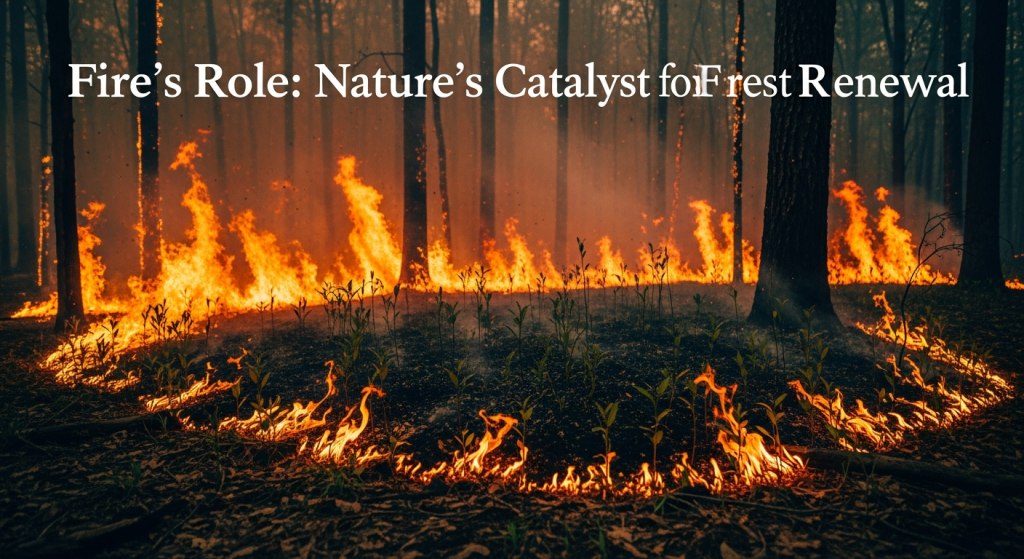
Fire is often seen as a destructive force. However, for many ecosystems, fire is a vital and natural process. It plays a crucial role in regeneration and maintaining forest health. Understanding fire ecology helps us manage forests more effectively. This article explores why fire is sometimes necessary for forest renewal.
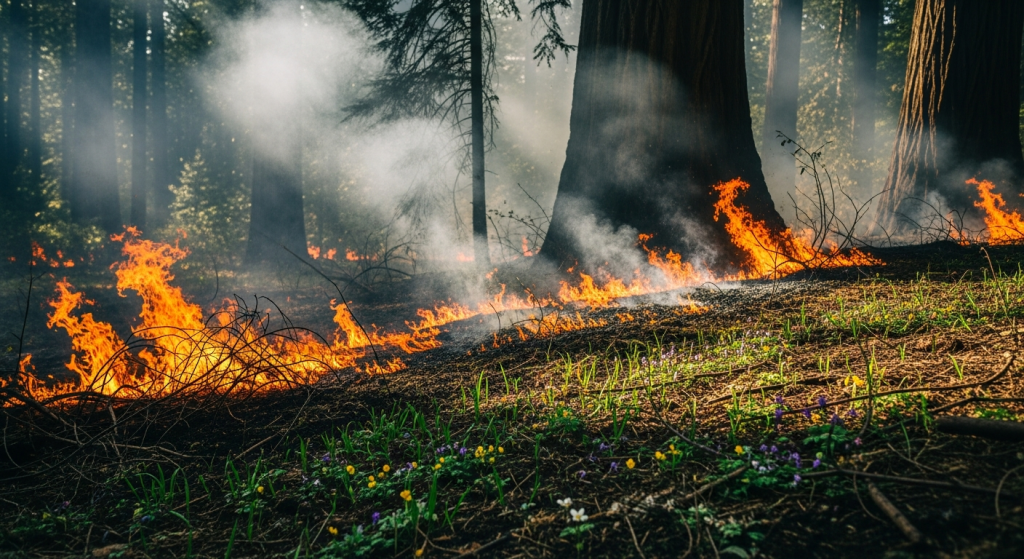
What is Fire Ecology?
Fire ecology is a scientific field. It studies the origins of wildland fire. It also examines fire’s relationship with the environment. This includes living and non-living elements. Fire is viewed as a natural component of ecosystems. It is similar to floods or storms. It acts as a catalyst for change. To truly understand an ecosystem, we must look at its history and future stages. We must also consider the cycles it goes through. Fire is a natural process operating as a component of an ecosystem.
The Concept of Fire Dependence
One key concept in fire ecology is fire dependence. This applies to plant species. These species rely on fire’s effects. Fire makes the environment more hospitable for their regeneration and growth. For instance, fire prepares the soil for seeds. It makes nutrients more available for plants. This reduces competition from other species. These competitors might absorb needed nutrients or shade out sunlight. In the southern United States, researchers challenged negative views of fire in the 1930s. They argued that fire was essential for animals and longleaf pine forests. Fire dependence applies to species of plants that rely on the effects of fire to make the environment more hospitable for their regeneration and growth.
How Fire Aids Regeneration
Fire’s benefits for regeneration are multifaceted. It clears out dense vegetation. This reduces competition for resources. For example, in many boreal forests, pioneer species like aspen and white birch thrive after a fire. They can recolonize burned sites quickly. Aspen and birch can re-establish quickly by sprouting from stumps and the roots of burned trees. These species produce abundant seeds. These seeds are windblown over long distances. This helps them colonize new areas rapidly.
Furthermore, fire can release essential nutrients into the soil. These nutrients are vital for new plant growth. Fire also exposes mineral soil. This provides a good seedbed. Finally, fire increases the amount of sunlight reaching the forest floor. Many young trees and plants need full sunlight to grow. As a result, competition from other species that may absorb needed nutrients or shade out necessary sunlight is reduced.
Fire History and Fire Regimes
Another important concept is fire history. This refers to how often fires occur in a specific area. Trees can record fire history. They grow a new layer of cells each year. When a fire passes, trees might get scorched. A layer of charcoal remains. This is eventually covered by new growth. These fire scars act as historical records. Scientists can use them to determine when fires happened. Trees actually record fire history.
The role fire plays in an ecosystem is defined by its fire regime. This is the third key concept. A fire regime is determined by frequency, intensity, and fuel consumption. Humidity, fuels, and ignition sources all influence it. Frequency depends on ignition sources and weather conditions. Intensity depends on fuel amount and combustion rates. Wind and topography also affect fire behavior. A fire regime is a function of the frequency of fire occurrence, the fire intensity, and the amount of fuel consumed. Climate change and human activities are altering these regimes. This can lead to more severe fires.
Species That Depend on Fire
Some tree species have specific adaptations that make them dependent on fire. Jack pine and lodgepole pine are prime examples. Their cones are serotinous. This means they are sealed by a waxy coating. Extreme heat from a fire is needed to open these cones. This releases the seeds. Jack pine and lodgepole pine depend on fire to regenerate. Both species have serotinous (protected by a waxy coating) cones that require extreme heat to release their seeds.
Black spruce is another species with a relationship to fire. It has semi-serotinous cones. It can establish after a fire. However, it grows slowly in full sunlight. If fires do not occur within about 100 years, other shade-tolerant species take over. These species are not well-adapted to fire. Balsam fir and white-cedar, for example, colonize burned areas via seeds from unburned areas. They are rare in frequently burned landscapes. Balsam fir and white-cedar are not adapted to fire. They colonize burned areas via seeds windblown or carried by animals from unburned areas.
Cone Serotiny Explained
Cone serotiny is a fascinating adaptation. The waxy coating on the cones protects the seeds. It keeps them viable until conditions are right for germination. Fire provides these ideal conditions. The heat melts the wax. It also opens the cone. This allows the seeds to be released onto a prepared seedbed. This mechanism ensures that seeds are dispersed when competition is low and resources are available. This strategy is crucial for the survival of these species in fire-prone environments.
The Impact of Fire Suppression
For many decades, fire suppression has been the official policy of land management agencies. This practice has had unintended consequences. It has led to fuel accumulation. Forests have become denser. This creates conditions that promote rapid fire spread and high fire severity when fires do ignite. The problem is that we have intentionally suppressed natural fires for many decades, allowing fuels to accumulate and forest trees to grow very dense, conditions that promote rapid fire spread and high fire severity when ignited unintentionally. Climate warming exacerbates this issue. Fuels are drier and more easily ignited.
This historical suppression has altered natural fire regimes. It has disrupted ecosystems that evolved with fire. This has impacted biodiversity. It has also increased the risk of large, uncontrollable wildfires. Returning to a more natural fire regime is crucial for ecosystem health. This can be achieved through prescribed burning and other management techniques.
Prescribed Fire: A Tool for Management
Prescribed fire, also known as controlled burning, is a valuable tool. It is used to mimic natural fire processes. These fires are planned carefully. They are set under very specific weather conditions. Proper personnel and safety measures are in place. This prevents fire escapes and minimizes smoke issues. Prescribed fires are planned extensively and set under very specific weather conditions and with proper personnel and safety measures to avoid fire escapes, smoke issues or extreme burning of forest trees and other forest resources.
Benefits of Prescribed Fire
Prescribed fires offer numerous ecological benefits. They reduce fuel loads. This helps prevent larger, more destructive wildfires. They also increase plant and animal biodiversity. Furthermore, they can help reduce populations of unwanted pests. For example, prescribed fires can help manage tick populations. Prescribed fires not only reduce fuels but also serve many other important ecological functions, including increasing plant and animal biodiversity and reducing unwanted pests like ticks and chiggers. Returning low-severity fire through fuel treatments is an effective way to reduce high-severity fire. A comprehensive review of fuel treatment research shows that returning low-severity fire through fuel treatments is an effective way to reduce high-severity fire.
High-Severity Fires and Regeneration
While low-severity fires are often beneficial, high-severity fires can be challenging. These fires consume much of the vegetation. They can significantly alter the soil microbiome. This impacts soil health and forest regeneration. New research helps describe how severe wildfire can reshape the soil microbiome and impact soil health and forest regeneration. In some cases, high-severity fires can lead to forest conversion. This means the ecosystem may not return to its original state. Instead, it might transition to a different type of vegetation, like grasslands.
Research is exploring where high-severity fires are likely to occur. It also investigates how they lead to forest conversion. This research informs strategies to manage these impacts. Understanding these dynamics is crucial for long-term forest management. When, where, and why are severe wildfires likely to occur and how do they lead to forest conversion? Research informs these questions, and explores the possibility of profound and persistent ecological change across forested ecosystems.
Fire Refugia: Islands of Survival
Fire refugia are areas within a landscape. They are burned less frequently or severely than their surroundings. These areas act as havens for species. They can serve as sources for recolonization after a fire. Scientists study the factors influencing where these refugia occur. This helps in planning for forest resilience. Scientists took a close look at where fire refugia, forested locations that are burned less frequently or severely than their surrounding, occur on a given landscape. Understanding fire refugia is important for conservation efforts.
Indigenous Fire Management
Indigenous peoples have long understood the importance of fire. They have practiced sound fire stewardship for millennia. This tradition contradicts the 20th-century policy of fire suppression. Indigenous knowledge embraces fire’s regenerative properties. Today, fire ecology demonstrates that properly stewarded fire can prevent larger, more dangerous wildfires and acknowledges that Indigenous peoples have practiced sound fire stewardship for millennia, embracing fire’s regenerative properties. Working with Indigenous leaders is crucial for bringing “good fire” back to the land. This collaborative approach combines traditional knowledge with modern science.
Climate Change and Future Fire Regimes
Climate change is significantly impacting fire regimes. Warmer temperatures and prolonged droughts create drier fuels. This increases the likelihood of fires. Fire seasons are becoming longer. The number of fires and the area burned are increasing. This summer’s wildfire season is predicted to be another bad one due to dry, warm conditions, especially in the U.S. West and Southwest, but also in parts of the coastal Southeast due to moderate to severe drought. This trend poses significant challenges for forest management. It also impacts human communities. Accurate forecasting of future conditions is essential.
Research at the USDA Forest Service Rocky Mountain Research Station focuses on understanding these changes. They study fire effects and ecology in fire-dependent ecosystems. They also develop tools for fuels and vegetation management. Strategies to support ecosystem restoration are a key focus. Research at the USDA Forest Service Rocky Mountain Research Station focuses on the fundamental knowledge of fire effects and ecology in fire-dependent ecosystems, products and tools related to fuels and vegetation management, strategies to support ecosystem restoration, and accurate forecasting of future conditions.
Conclusion: Embracing Fire’s Ecological Role
In conclusion, fire is not always an enemy of the forest. It is a natural and necessary force for many ecosystems. Fire ecology teaches us that fire dependence is common. It is essential for the regeneration of many plant species. Understanding fire history and fire regimes helps us manage landscapes. Prescribed fire offers a way to restore natural processes. It reduces fuels and promotes biodiversity.
By moving away from decades of suppression and embracing a more nuanced understanding of fire, we can better support forest health. This also helps in creating more resilient ecosystems. These ecosystems can better withstand the challenges of climate change. Restoring the essential role of fire in nature is vital for regenerating land. It also honors its historic part in natural cycles. Learning about permaculture principles can also offer insights into creating resilient, self-sufficient ecosystems that work with natural processes.
Frequently Asked Questions
Is all fire bad for forests?
No, not all fire is bad. Many forest ecosystems are fire-dependent. Fire plays a crucial role in their regeneration and health. Natural fires, when they occur within a healthy fire regime, can be beneficial.
What does “fire dependence” mean for a plant species?
Fire dependence means a plant species relies on the effects of fire to reproduce or thrive. This can include needing fire’s heat to open seed cones or to clear competition from the forest floor.
How does fire suppression impact forests?
Fire suppression leads to fuel accumulation. This makes forests denser and more prone to intense, uncontrollable wildfires. It disrupts natural ecological processes that evolved with fire.
What is prescribed fire?
Prescribed fire, or controlled burning, is a planned fire. It is set under specific conditions to achieve land management goals. These goals include reducing fuel loads, restoring habitats, and promoting regeneration.
Can high-severity fires lead to long-term ecosystem changes?
Yes, high-severity fires can significantly alter ecosystems. They can reshape soil microbiomes and lead to forest conversion, where the landscape changes to a different type of vegetation.
