
Phytoremediation: Nature’s Green Solution for Industrial Pollution
Published on January 12, 2026 by Admin

Industrial activities often leave behind a toxic legacy. Soil and water become contaminated with heavy metals, pesticides, and other harmful substances. This pollution poses significant risks to ecosystems and human health. Traditional cleanup methods can be expensive and disruptive. Fortunately, nature offers a powerful and sustainable solution: phytoremediation. This article explores how plants can be used to decontaminate industrial sites.
What is Phytoremediation?
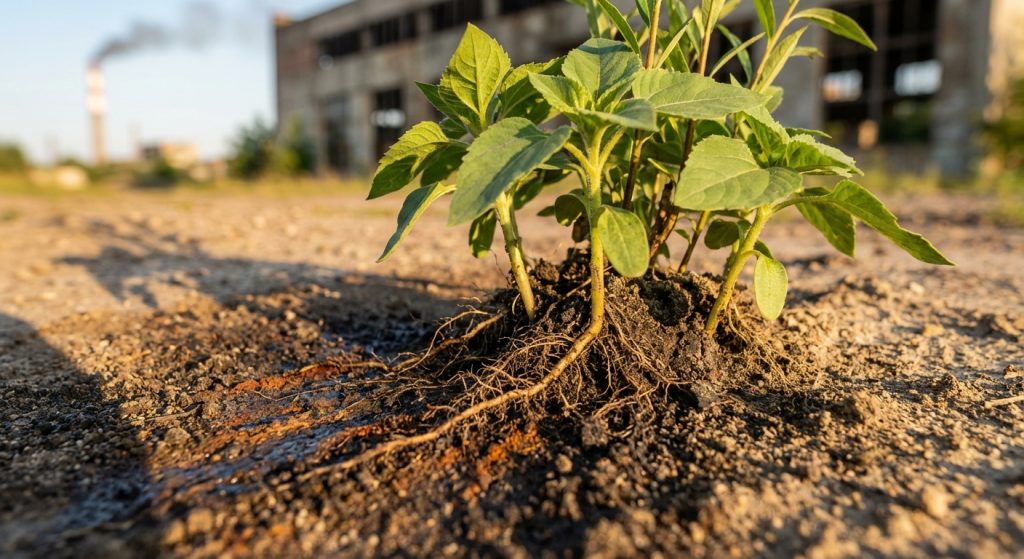
Phytoremediation is a green technology. It uses living plants to clean up polluted soil and water. The word “phyto” means plant. “Remediation” means to fix or clean up. Therefore, phytoremediation literally means using plants to clean. Plants can absorb, break down, or stabilize contaminants. This process is eco-friendly and cost-effective. It is a biological solution to an industrial problem.
How Do Plants Clean Contaminants?
Plants employ several mechanisms to tackle pollution. These methods are quite ingenious. They have evolved over millennia to interact with their environment. This interaction is key to their cleansing abilities.
- Phytoextraction: Plants absorb contaminants from the soil or water. They store these pollutants in their roots, stems, or leaves. This is especially effective for heavy metals like lead, cadmium, and arsenic.
- Phytodegradation: Plants break down organic pollutants. They use their enzymes to convert harmful compounds into less toxic ones. This is useful for cleaning up pesticides and solvents.
- Phytostabilization: Plants reduce the mobility of contaminants. They prevent pollutants from spreading into groundwater or the air. This is done by immobilizing contaminants in the soil.
- Phytovolatilization: Plants absorb contaminants and release them into the atmosphere as vapor. This is typically done for volatile organic compounds.
- Rhizodegradation: This is a symbiotic process. Plant roots release substances into the soil. These substances stimulate the growth of microorganisms. These microbes then break down pollutants.
Types of Contaminants Phytoremediation Can Address
Phytoremediation is versatile. It can tackle a wide range of industrial pollutants. This makes it a valuable tool for environmental engineers. It offers a natural approach to remediation.
- Heavy Metals: Lead, mercury, cadmium, arsenic, and nickel are common industrial pollutants. Plants can accumulate these metals in their tissues.
- Organic Pollutants: This includes pesticides, herbicides, solvents, and petroleum hydrocarbons. Plants can break these down or immobilize them.
- Radionuclides: Some plants can absorb radioactive isotopes. This helps to reduce radiation levels in contaminated areas.
- Excess Nutrients: Phytoremediation can also help remove excess nitrogen and phosphorus from wastewater. This is crucial for preventing eutrophication.
Advantages of Phytoremediation
There are many reasons why phytoremediation is gaining popularity. Its benefits are substantial for the environment and industry.
- Cost-Effectiveness: It is often much cheaper than traditional methods like excavation or chemical treatment. The primary costs involve plant establishment and harvesting.
- Environmental Friendliness: It is a natural process. It does not require harsh chemicals. It also helps to improve soil quality and biodiversity.
- Aesthetically Pleasing: It transforms unsightly industrial sites into green spaces. This can improve the visual appeal of an area.
- In-Situ Treatment: The process can often be done on-site. This reduces the need for transporting contaminated materials. This minimizes disruption.
- Sustainable: It uses renewable resources (plants). It can lead to long-term ecological recovery.
Challenges and Limitations
While phytoremediation is promising, it is not a magic bullet. There are challenges to consider. Understanding these limitations is crucial for successful implementation.
- Speed: Phytoremediation can be a slow process. It may take several growing seasons to achieve significant cleanup. This depends on the contaminant and plant species.
- Depth of Contamination: Plants can only reach contaminants within their root zone. Deeply buried pollutants may not be accessible.
- Plant Tolerance: Not all plants can survive in highly contaminated environments. Selecting the right species is critical.
- Biomass Disposal: Plants that accumulate heavy metals must be disposed of properly. They cannot be used for food or feed. Incineration or secure landfilling might be necessary.
- Climate and Site Conditions: Plant growth is dependent on climate and soil conditions. These factors can affect the efficiency of the process.
Selecting the Right Plants
Choosing the correct plant species is fundamental to successful phytoremediation. Different plants have varying abilities to tolerate and accumulate specific contaminants. Scientists classify plants based on their phytoremediation capabilities.
Hyperaccumulators
These are plants that can accumulate extremely high concentrations of metals. They have evolved specialized mechanisms for this. Examples include certain species of sunflowers, ferns, and mustard plants. These are ideal for phytoextraction.
In-Ducers
Some plants can stimulate microbial activity in the soil. This enhances the degradation of organic pollutants. For example, certain grasses and legumes can promote rhizodegradation.
Tolerant Species
Other plants can survive in contaminated soils without accumulating high levels of toxins. They are useful for phytostabilization. They help to cover the soil and prevent erosion. Examples include certain types of poplars and willows.
Phytoremediation in Practice: Case Studies
Real-world applications demonstrate the effectiveness of phytoremediation. Several successful projects highlight its potential.
For instance, in areas contaminated with lead from old mining operations, plants like Indian mustard (Brassica juncea) have been used for phytoextraction. These plants can absorb significant amounts of lead. The harvested plant material can then be safely disposed of or processed. This is a practical way to reduce lead levels in the soil. Indeed, the science behind plant adaptation to extreme conditions is fascinating.
Similarly, willow trees (Salix spp.) are frequently used to treat wastewater. Their extensive root systems can absorb excess nutrients and certain organic pollutants. They can also help stabilize contaminated soils along riverbanks. This approach is particularly useful for managing runoff from agricultural lands or industrial sites. It is a testament to nature’s own cleanup crew. Learning about how plants engineer soil through their roots offers further insight into these natural processes. You can explore the hidden architecture of roots to understand this better.
The Future of Phytoremediation
Research in phytoremediation is ongoing. Scientists are developing new techniques and identifying more effective plant species. Genetic engineering is also being explored. This could lead to plants with enhanced pollutant uptake or degradation capabilities. Furthermore, combining phytoremediation with other bioremediation techniques could offer synergistic benefits. The potential for phytoremediation to address global pollution challenges is immense. It aligns with the growing need for sustainable environmental solutions. As we continue to understand the science of photosynthesis and plant biology, our ability to harness their power for environmental cleanup will only grow.
Frequently Asked Questions (FAQ)
Is phytoremediation suitable for all types of pollution?
Phytoremediation is most effective for certain types of contaminants, particularly heavy metals and organic pollutants. It may be less effective for highly volatile substances or deeply buried contaminants. However, its application is expanding with ongoing research.
How long does phytoremediation take?
The timeframe varies greatly. It depends on the type and concentration of the contaminant, the plant species used, and environmental conditions. It can take months to several years for significant cleanup.
What happens to the plants after they absorb pollutants?
If plants accumulate toxic substances like heavy metals, they are typically harvested. The harvested biomass then needs careful disposal. This might involve incineration or disposal in secure landfills to prevent re-release of the contaminants.
Can phytoremediation be used in urban areas?
Yes, phytoremediation can be applied in urban settings. For example, it can be used for treating contaminated soils in parks or vacant lots. It can also help improve air quality by absorbing certain pollutants. The use of urban green spaces for such purposes is becoming increasingly important.
Are there any risks associated with phytoremediation?
The main risk is the potential for contaminants to enter the food chain if the harvested plant material is not handled properly. Also, the plants themselves could be harmed if contaminant levels are too high. Careful species selection and site management are crucial.
Conclusion
Phytoremediation offers a natural, cost-effective, and environmentally sound approach to cleaning up industrial pollution. By harnessing the power of plants, we can restore contaminated soil and water. This technology provides a sustainable path forward. It benefits both the environment and human health. As research advances, phytoremediation will likely play an even larger role in environmental management. It is a testament to nature’s remarkable ability to heal itself.
