
Circular Water Systems: A Vital National Resource
Published on January 13, 2026 by Admin

Water is life. Yet, many nations face growing water scarcity. Climate change exacerbates this. Population growth adds pressure. Traditional water management is strained. It’s time for a new approach. This approach is circular water systems. They treat wastewater not as waste. Instead, they see it as a valuable resource. This paradigm shift is crucial for sustainability. It ensures water security for the future. Environmental engineers, city council members, and utility managers must lead this change.
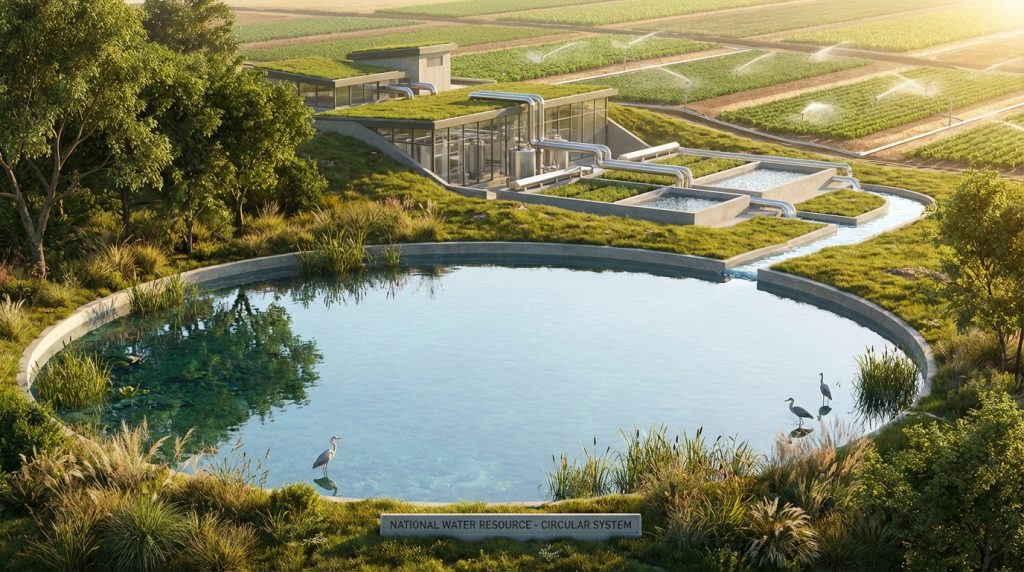
The Imperative for Circular Water Management
Our current water systems are often linear. We extract water. We use it. Then, we discharge it as wastewater. This is inefficient. It pollutes rivers and oceans. It depletes finite freshwater sources. Furthermore, treating wastewater to potable standards is energy-intensive. It also requires complex infrastructure. However, the reality is stark. Many regions already experience severe water stress. For instance, some areas see water demand outstrip supply. This trend is projected to worsen globally. Therefore, we need to reimagine our water infrastructure. We must move towards a circular economy model.
Wastewater: A Misunderstood Reservoir
Wastewater contains many valuable components. It has treated water. It also contains nutrients like nitrogen and phosphorus. Energy can even be recovered from it. Treating wastewater and then discharging it is a missed opportunity. It’s like throwing away treasure. Circular water systems aim to capture these resources. They aim to reuse them effectively. This reduces the need for new water extraction. It also minimizes pollution. Consequently, it creates a more resilient water supply.
Key Components of Circular Water Systems
Implementing circular water systems involves several key technologies and strategies. These work together to create a closed-loop system. They maximize resource recovery. They also minimize environmental impact. Understanding these components is vital for effective planning and implementation.
Advanced Wastewater Treatment
Traditional wastewater treatment removes solids and organic matter. It often doesn’t remove dissolved salts or specific contaminants. Circular systems employ advanced technologies. These include membrane filtration (like reverse osmosis and nanofiltration). They also use UV disinfection and advanced oxidation processes. These methods can treat water to a high standard. In many cases, it can be recycled for potable use. This is known as direct or indirect potable reuse. For example, Singapore’s NEWater system is a prime example of successful potable water reuse. It transforms treated wastewater into ultra-clean drinking water.
Nutrient Recovery
Wastewater is rich in nutrients. Nitrogen and phosphorus are essential for agriculture. Recovering these nutrients offers significant benefits. It reduces the need for synthetic fertilizers. These fertilizers have environmental drawbacks. They can cause eutrophication. They also require significant energy to produce. Technologies like struvite precipitation can capture phosphorus. Biological nutrient removal processes can recover nitrogen. These recovered nutrients can then be used as fertilizers. This closes the nutrient loop in agriculture.
Energy Generation and Recovery
Wastewater treatment plants are often energy-intensive. However, they can also be energy producers. Anaerobic digestion of sludge produces biogas. Biogas is rich in methane. It can be used to generate electricity and heat. This can power the treatment plant itself. It can even supply energy to the grid. Emerging technologies are also exploring energy recovery from the water itself. For instance, thermoelectric generators can harness temperature differences. Therefore, wastewater treatment can become energy-neutral or even energy-positive.
Decentralized and Integrated Systems
Circular water systems can be implemented at various scales. Centralized mega-plants are one option. However, decentralized systems offer flexibility. They can be implemented in smaller communities or at industrial sites. These systems can treat water closer to its source or point of reuse. This reduces the need for extensive pipe networks. It also allows for tailored treatment for specific reuse applications. Integrating these systems with other urban infrastructure, like green spaces, further enhances their value.
Benefits of Embracing Circular Water Systems
The transition to circular water systems yields numerous advantages. These benefits extend across environmental, economic, and social spheres. They are essential for building resilient and sustainable communities.
Enhanced Water Security
Firstly, circular systems significantly improve water security. They create new, reliable sources of water. This is especially critical in arid or water-stressed regions. By reusing treated wastewater, we reduce reliance on limited freshwater supplies. This makes communities more resilient to drought and climate change impacts. It ensures water availability for essential needs, industry, and agriculture.
Environmental Protection
Secondly, these systems offer substantial environmental gains. They drastically reduce the discharge of pollutants into waterways. This protects aquatic ecosystems and biodiversity. Nutrient recovery lessens the demand for synthetic fertilizers. This, in turn, reduces agricultural runoff and its harmful effects. Energy generation from wastewater also lowers carbon emissions. It contributes to climate change mitigation efforts. For example, reducing the need for energy-intensive desalination projects helps preserve marine environments.
Economic Opportunities
Thirdly, circular water systems create economic value. Recovered water can be used for irrigation, industrial processes, or even drinking. Recovered nutrients can be sold as fertilizer. Energy generated can offset operational costs or provide revenue. Furthermore, the development and implementation of these technologies create jobs. It stimulates innovation in the water sector. This can lead to new industries and economic growth. The reduced strain on natural water resources also has long-term economic benefits.
Resource Efficiency and Sustainability
Finally, these systems embody the principles of a circular economy. They promote resource efficiency. They minimize waste. They create a sustainable model for water management. This approach is not just about managing scarcity. It’s about creating a system that can thrive in the long term. It aligns with global sustainability goals. It ensures that future generations have access to clean water.
Challenges and Considerations
Despite the compelling benefits, transitioning to circular water systems is not without its challenges. Addressing these hurdles is crucial for successful implementation.
Public Perception and Acceptance
One significant challenge is public perception. Many people are hesitant about drinking recycled wastewater. This is often due to a lack of understanding or misinformation. Building public trust requires transparent communication. It also requires robust public education campaigns. Demonstrating the safety and quality of recycled water is paramount. Highlighting successful case studies, like those in water sovereignty initiatives, can help. Clear labeling and consistent quality assurance are also vital.
Regulatory Frameworks
Existing regulations may not always be conducive to water reuse. Outdated standards can hinder the adoption of advanced treatment technologies. Policymakers and regulators need to adapt. They must develop clear guidelines and standards for water recycling. This includes setting acceptable contaminant levels and reuse applications. Streamlining permitting processes is also important. This encourages investment and innovation in the sector. Developing these frameworks is a critical step toward wider adoption.
Infrastructure Investment
Implementing advanced treatment technologies and new infrastructure requires substantial investment. Upgrading existing facilities or building new ones can be costly. However, the long-term benefits often outweigh the initial costs. Cities and utilities must explore various funding models. These can include public-private partnerships, government grants, and innovative financing mechanisms. A comprehensive assessment of life-cycle costs is essential. This helps justify the investment in a sustainable future.
Technical Expertise and Capacity Building
Operating and maintaining advanced circular water systems requires specialized knowledge. There is a need for trained personnel. This includes engineers, operators, and technicians. Capacity-building programs are essential. These programs ensure that the workforce has the necessary skills. They also foster innovation in water management. Collaboration between educational institutions and industry can help develop this expertise.
The Path Forward: A Call to Action
The concept of turning wastewater into a national resource is no longer a futuristic dream. It is a present necessity. For environmental engineers, this means embracing new technologies. It involves designing and implementing advanced treatment processes. For city council members, it means championing policy changes. It involves allocating resources for infrastructure upgrades. It also means engaging with citizens to build support. For utility managers, it involves operational efficiency. It means exploring innovative revenue streams from recovered resources. It also means ensuring system reliability and public safety.
The integration of circular water systems aligns with broader sustainability goals. It contributes to a more resource-efficient economy. It enhances our resilience to environmental challenges. It is a critical step towards a more sustainable future. It ensures that water, our most precious resource, is managed wisely. This transformation will not happen overnight. It requires collaboration, innovation, and a commitment to a new way of thinking about water.
Frequently Asked Questions
What is the primary goal of circular water systems?
The primary goal is to treat wastewater as a valuable resource. This involves recovering water, nutrients, and energy. It aims to minimize waste and maximize resource efficiency.
Can recycled wastewater be safe to drink?
Yes, with advanced treatment technologies like membrane filtration and disinfection, recycled wastewater can be purified to meet or exceed drinking water standards. Public acceptance is key, and robust monitoring ensures safety.
What are the main environmental benefits of circular water systems?
Key benefits include reduced pollution of rivers and oceans, less demand for freshwater extraction, decreased reliance on synthetic fertilizers, and lower carbon emissions through on-site energy generation.
How do circular water systems contribute to economic development?
They create economic value through recovered water, nutrients, and energy. They also stimulate innovation, create jobs in the water sector, and reduce long-term costs associated with water scarcity and environmental remediation.
What are the biggest challenges in implementing circular water systems?
Major challenges include public perception and acceptance of recycled water, outdated regulatory frameworks, significant infrastructure investment needs, and the requirement for specialized technical expertise.
“`
