
Digital Twins for Ecosystems: Simulating Climate Change Impacts
Published on January 13, 2026 by Admin
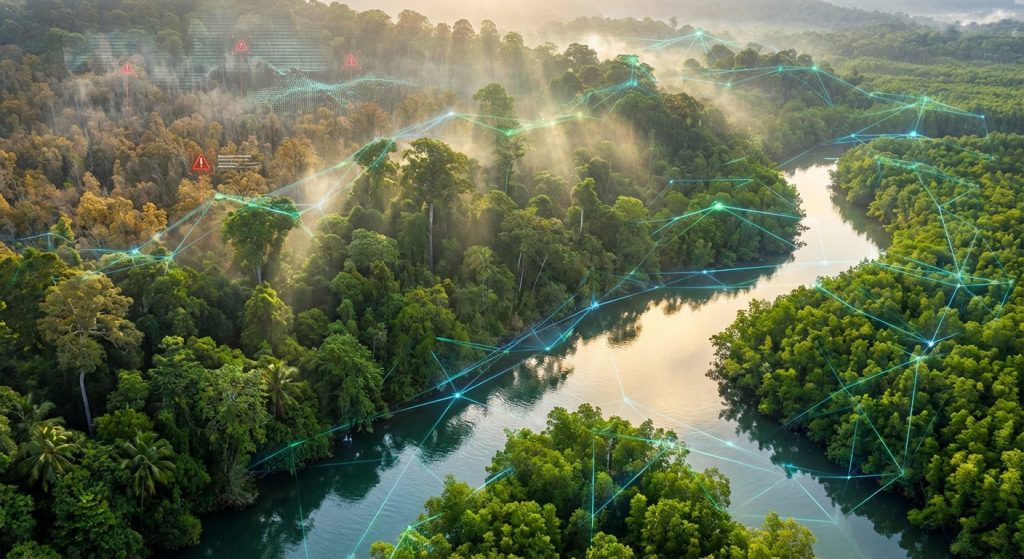
Climate change poses a significant threat. It impacts ecosystems worldwide. National parks are particularly vulnerable. These precious natural areas face rising temperatures. They also face changing precipitation patterns. Furthermore, extreme weather events are increasing. Understanding these impacts is crucial. This knowledge helps us protect these vital landscapes. Therefore, digital twins offer a powerful solution. They allow us to simulate climate impacts. This enables proactive conservation strategies.
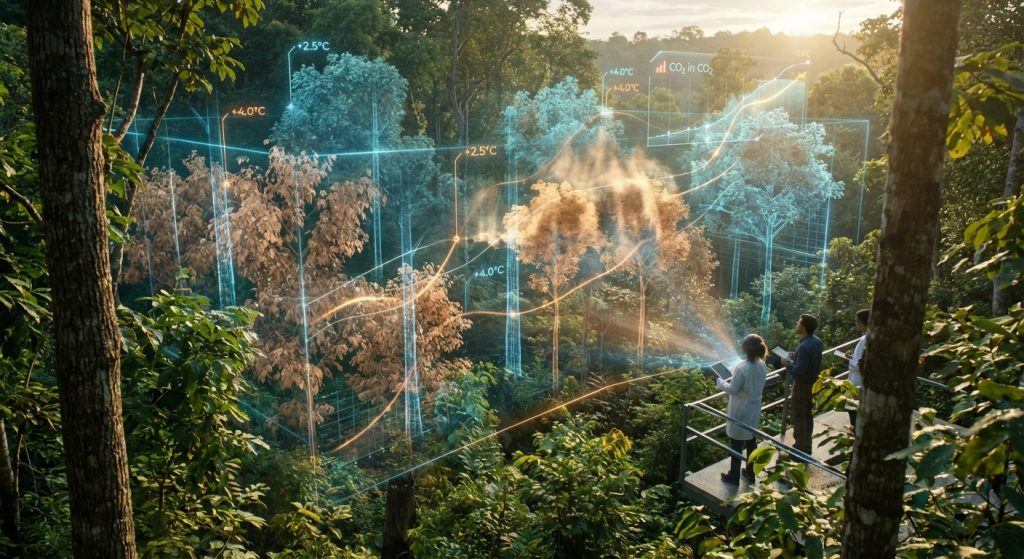
What are Digital Twins of Ecosystems?
A digital twin is a virtual replica. It mirrors a physical object or system. For ecosystems, this means creating a dynamic digital model. This model represents a specific natural environment. It includes its complex biological and physical components. Think of it as a living, breathing digital counterpart. This twin is built using real-world data. Sensors collect information constantly. This data includes weather patterns, soil moisture, and biodiversity. Advanced algorithms process this data. They create a highly accurate simulation. This simulation reflects the ecosystem’s current state. It also predicts future behavior. This technology is revolutionary for environmental science.
Building the Digital Ecosystem
Creating a digital twin involves several key steps. Firstly, data acquisition is paramount. This includes satellite imagery. It also involves ground-based sensors. Remote sensing technologies are vital here. LiDAR, for instance, can map terrain in detail. This helps create a 3D representation. Moreover, biological data is collected. This involves tracking species populations. It also includes monitoring plant health. Simulation engineers then build the model. They use sophisticated software. These models capture intricate ecological processes. They consider interactions between species. They also factor in environmental variables. This creates a comprehensive virtual world.
Simulating Climate Impacts
The true power of digital twins lies in simulation. We can test various climate scenarios virtually. For example, we can simulate a prolonged drought. We can see how it affects vegetation. We can also observe its impact on wildlife. Similarly, we can model increased rainfall. This helps understand flood risks. Or we can simulate rising temperatures. This shows how species might migrate. These simulations are invaluable for park rangers. They can anticipate challenges. They can then develop adaptive management plans. This proactive approach is far more effective. It is also more cost-efficient than reactive measures.
Predicting Species Migration
Climate change forces species to move. They seek suitable habitats. Digital twins can predict these movements. By simulating temperature shifts, we can identify new viable zones. We can also identify areas that become uninhabitable. This is crucial for planning wildlife corridors. These corridors help species move safely. They connect fragmented habitats. This ensures species survival. It is also important to understand how invasive species might spread. Digital twins can model this spread. This allows for early intervention. For example, understanding invasive species is key to maintaining native biodiversity.
Assessing Water Resource Availability
Water is essential for all life. Climate change alters water cycles. Droughts can devastate ecosystems. Floods can cause widespread damage. Digital twins can model these changes precisely. They can predict water availability. They can also assess water quality. This information is vital for resource management. Park managers can plan for water scarcity. They can also prepare for excess water. This ensures the long-term health of the park. Technologies like advanced desalination and atmospheric water harvesting are also crucial for water security. However, understanding natural water cycles is the first step.
Benefits for National Parks
Digital twins offer numerous benefits for national parks. They provide a deeper understanding of ecosystem dynamics. They enable data-driven decision-making. This is essential for conservation efforts. Furthermore, they facilitate scenario planning. This allows for preparedness against future threats. Ultimately, they help preserve biodiversity. They also protect natural heritage for future generations.
Enhanced Conservation Planning
Traditional conservation methods are often reactive. Digital twins allow for proactive planning. Environmental scientists can test interventions virtually. They can assess their potential outcomes. This minimizes risks in the real world. For instance, they can simulate prescribed burns. They can optimize their timing and intensity. This helps prevent uncontrolled wildfires. It also promotes ecological restoration. Understanding regenerative agriculture principles can also inform restoration efforts within and around park boundaries.
Improved Resource Management
Park rangers manage vast areas. They need efficient tools. Digital twins provide real-time insights. They help monitor park conditions. They highlight areas needing attention. For example, they can track visitor impact. They can also monitor illegal activities. This allows for better deployment of resources. It ensures park safety and integrity. This also helps in managing threats like microplastics which can affect both plant and animal life.
Educational and Public Engagement Tools
Digital twins are not just for scientists. They can be powerful educational tools. They can visualize complex ecological processes. They can make conservation issues relatable. Parks can use these models to engage the public. They can demonstrate the effects of climate change. They can also showcase conservation successes. This fosters greater public support. It also promotes environmental stewardship. Imagine interactive exhibits showing a park’s future. This can inspire visitors to act.
Challenges and Future Directions
Despite their promise, digital twins face challenges. Data integration can be complex. Building and maintaining these models requires significant expertise. High computational power is also necessary. However, advancements in AI and cloud computing are addressing these. The future will see more sophisticated and accessible digital twins. We will likely see interconnected twins. This will allow for regional or global ecosystem modeling. Furthermore, real-time integration will become seamless. This will enable immediate adaptive responses to environmental changes. The integration of AI in monitoring, as seen in LiDAR and AI for forest health, is a prime example of this trend.
Data Integration and Accuracy
The accuracy of a digital twin depends on its data. Gaps in data can lead to inaccuracies. Therefore, continuous data collection is vital. Ensuring data quality is also critical. Environmental scientists and engineers must collaborate closely. They must validate models against real-world observations. This iterative process refines the twin’s accuracy. It ensures its reliability for decision-making.
Computational Demands
Simulating complex ecosystems requires immense processing power. Large datasets need to be analyzed quickly. This can be a barrier for some institutions. However, cloud computing offers a scalable solution. It provides access to powerful resources on demand. This makes digital twin technology more accessible. It lowers the barrier to entry for many organizations.
Frequently Asked Questions
What is the primary goal of creating digital twins of ecosystems?
The primary goal is to create a dynamic virtual replica of an ecosystem. This allows for accurate simulation of environmental changes, especially those driven by climate change. It helps in predicting impacts and developing proactive conservation strategies.
Who benefits most from ecosystem digital twins?
Environmental scientists, park rangers, and simulation engineers are key beneficiaries. However, policymakers, conservationists, and even educators can leverage this technology.
How does a digital twin differ from a standard ecological model?
A digital twin is a more dynamic and data-rich representation. It is continuously updated with real-time data. It aims for a higher fidelity mimicry of the physical ecosystem, allowing for more complex and accurate simulations than traditional static models.
Can digital twins help in disaster prediction and response?
Yes, absolutely. By simulating extreme weather events like floods, droughts, or wildfires, digital twins can help predict their potential impact. This allows for better preparation and more effective response strategies.
What is the role of AI in ecosystem digital twins?
AI plays a crucial role in processing vast amounts of data. It helps in identifying patterns, improving prediction accuracy, and automating the simulation process. AI is essential for creating sophisticated and responsive digital twins.
Conclusion
Digital twins of ecosystems represent a paradigm shift. They offer an unprecedented ability to understand and manage our natural world. For national parks, this technology is invaluable. It provides the tools needed to confront climate change. It allows for informed decisions. It ensures the long-term health of these vital landscapes. As technology advances, digital twins will become even more powerful. They will be instrumental in safeguarding our planet’s biodiversity. Therefore, embracing this innovation is crucial for conservation success.
