Your genes are not your destiny. This is a powerful realization. It suggests you have more control than you might think. Epigenetics explains how. It’s the study of changes in gene expression. These changes happen without altering your DNA sequence. Essentially, your environment and lifestyle can “switch” genes on or off. This article explores this fascinating field. We will discuss its impact on preventive medicine, fitness, and parenting.
What is Epigenetics?
Think of your DNA as a cookbook. It contains all the recipes for building and operating your body. Epigenetics is like the annotations in that cookbook. These annotations don’t change the recipes themselves. However, they tell your cells which recipes to use, when to use them, and how much. These annotations are chemical marks. They attach to your DNA or the proteins that package it.
For example, DNA methylation is a common epigenetic mechanism. It adds a methyl group to DNA. This can silence gene activity. Another mechanism involves histone modification. Histones are proteins that DNA wraps around. Modifying them can make DNA more or less accessible for gene expression. Therefore, these epigenetic modifications are crucial for development and adaptation.
How Your Environment Reshapes Gene Expression
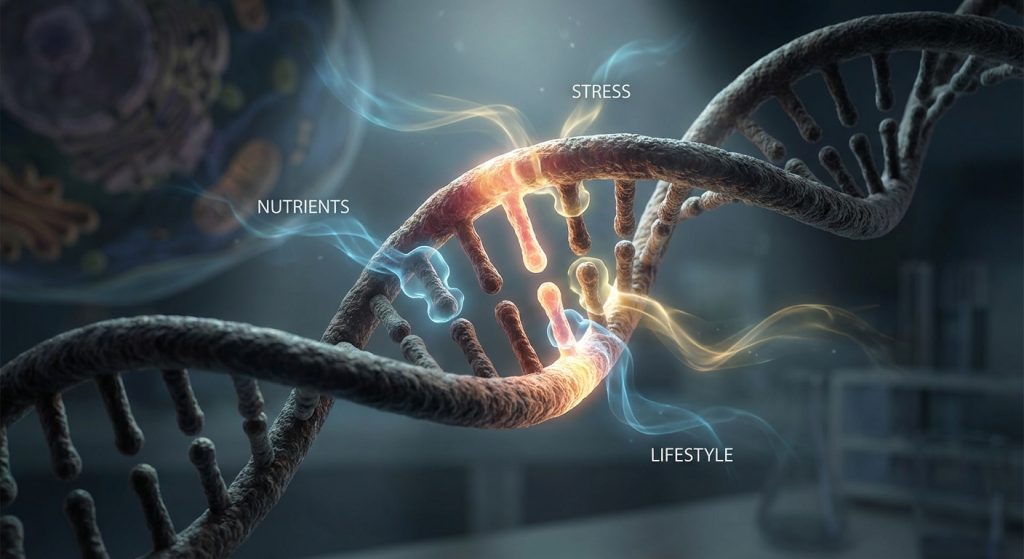
Your surroundings play a significant role. Factors like diet, stress, exercise, and exposure to toxins can all influence your epigenome. This means your daily choices have a direct impact on your genes. It’s a dynamic process. It occurs throughout your life. Consequently, understanding these influences is key to proactive health management.
The Impact of Diet
What you eat matters greatly. Nutrients from food can provide the building blocks for epigenetic modifications. For instance, folate, found in leafy greens, is vital for DNA methylation. Conversely, a diet high in processed foods and unhealthy fats can lead to detrimental epigenetic changes. Therefore, a balanced diet supports a healthy epigenome. You can learn more about functional foods and their impact on health here.
Stress and Its Epigenetic Footprint
Chronic stress is not just a mental burden. It also affects your genes. Stress hormones can alter epigenetic marks. This can increase susceptibility to certain diseases. For example, stress can influence genes related to inflammation and the immune system. Managing stress is therefore essential for long-term well-being. The science of resilience offers strategies for coping with stress.
Exercise: A Gene Expression Activator
Physical activity is a powerful epigenetic modulator. Exercise can promote beneficial changes in gene expression. It can enhance mitochondrial function. It also improves insulin sensitivity. Furthermore, regular exercise can reduce inflammation. Thus, staying active is a cornerstone of epigenetic health. You might find information on fitness tracking and avoiding burnout useful.
Environmental Toxins
Exposure to pollutants, pesticides, and other toxins can also leave epigenetic marks. These marks can disrupt normal gene function. This can increase the risk of various health issues. For example, research shows microplastics can impact endocrine systems. Therefore, minimizing exposure to environmental toxins is advisable. This aligns with the broader concept of One Health, recognizing the interconnectedness of environmental, animal, and human health.
Epigenetics in Preventive Medicine
For preventive medicine doctors, epigenetics offers a new frontier. It allows for a more personalized approach to health. By understanding an individual’s epigenetic profile, doctors can tailor interventions. This can help predict disease risk. It also guides lifestyle recommendations. Therefore, proactive health strategies can be more effective.
Personalized Health Strategies
Epigenetic markers can indicate predispositions to conditions like diabetes, heart disease, or certain cancers. Doctors can use this information. They can then recommend specific dietary changes or exercise regimens. This moves beyond a one-size-fits-all approach. It empowers individuals to make informed health choices. AI in personalized healthcare is also revolutionizing this field.
Early Disease Detection
Epigenetic changes often occur early in disease development. Sometimes, they precede clinical symptoms. This opens doors for early detection. For instance, liquid biopsies can detect cancer markers. These markers can include epigenetic alterations. Early detection significantly improves treatment outcomes. This is a crucial aspect of modern oncology.
Epigenetics and Fitness Enthusiasts
Fitness enthusiasts can leverage epigenetic understanding. It can help optimize training and recovery. Understanding how exercise impacts gene expression can inform training plans. For example, certain types of exercise might activate genes related to muscle growth or fat metabolism more effectively. Therefore, training can become more targeted.
Optimizing Performance and Recovery
Nutrition and sleep are also key epigenetic factors for athletes. A well-timed, nutrient-dense diet supports cellular repair. Adequate sleep is crucial for hormonal balance and gene regulation. For example, understanding sleep architecture helps optimize rest. This enhances recovery and performance. Cold exposure is another fascinating area impacting metabolism.
Long-Term Health Benefits
Consistent, healthy lifestyle choices driven by epigenetic awareness can lead to lasting health. This means not just performing better now. It also means reducing the risk of chronic diseases later in life. It’s about building a resilient body and mind. This holistic approach benefits everyone, not just athletes.
Epigenetics and Parenting
The impact of epigenetics begins even before birth. A mother’s diet, stress levels, and environment during pregnancy can shape the fetus’s epigenome. This has long-lasting effects. Therefore, prenatal care is incredibly important. It influences the child’s lifelong health trajectory. Furthermore, early childhood experiences are also critical.
Early Life Environment Matters
A nurturing and stimulating environment in early childhood promotes healthy development. Conversely, adverse childhood experiences can lead to epigenetic changes. These changes can increase the risk of mental health issues and chronic diseases later in life. For example, exposure to nature has been shown to boost child cognitive growth. Building resilience in children is also vital.
Passing on Epigenetic Information
While DNA is passed directly from parents, epigenetic marks are also heritable. This means lifestyle choices can potentially influence future generations. However, the extent and reversibility of this transgenerational epigenetic inheritance are still areas of active research. Nevertheless, it underscores the importance of healthy habits.
Lifestyle Changes to Influence Your Epigenome
Fortunately, many lifestyle interventions can positively influence your epigenome. You have the power to make changes. These changes can lead to better health outcomes. Therefore, focusing on these areas is highly beneficial.
Key Lifestyle Interventions:
- Balanced Nutrition: Focus on whole foods, fruits, vegetables, and healthy fats. Limit processed foods, sugar, and unhealthy fats.
- Regular Exercise: Aim for a mix of aerobic and strength training. Find activities you enjoy to ensure consistency.
- Stress Management: Practice mindfulness, meditation, deep breathing, or yoga. Prioritize adequate sleep.
- Adequate Sleep: Aim for 7-9 hours of quality sleep per night. Maintain a consistent sleep schedule.
- Limit Toxin Exposure: Choose organic foods when possible. Reduce exposure to environmental pollutants and chemicals.
- Social Connection: Maintain strong social ties. Loneliness can have negative biological impacts.
Frequently Asked Questions (FAQ)
Can epigenetic changes be reversed?
Yes, many epigenetic changes are reversible. Lifestyle interventions like diet, exercise, and stress management can positively influence the epigenome. This means you can actively work to improve your gene expression.
Is epigenetics the same as genetics?
No, they are different but related. Genetics studies the DNA sequence itself. Epigenetics studies how factors influence the expression of genes encoded in that sequence. Think of genes as the hardware and epigenetics as the software that controls it.
How soon can I see changes from epigenetic interventions?
The timeline for seeing epigenetic changes can vary. Some effects might be noticeable within weeks or months. Others may take longer to manifest. Consistency in lifestyle changes is key for sustained benefits.
Can epigenetics explain why identical twins can have different health outcomes?
Yes, epigenetics plays a significant role. While identical twins share the same DNA, their life experiences and environments can lead to different epigenetic modifications. These differences can contribute to variations in their health and disease susceptibility.
Conclusion
Epigenetics reveals a profound truth: your genes are not static. They are dynamic. They respond to your life choices and environment. This understanding empowers you. It offers a pathway to proactive health management. For preventive medicine, it promises personalized care. For fitness enthusiasts, it refines performance strategies. For parents, it highlights the critical importance of early life environments. By embracing healthy lifestyle choices, you can actively shape your gene expression. You can cultivate a healthier, more resilient future for yourself and generations to come. Remember, your life experiences are writing their own story on your genome every day.