The Science of Soundscapes: Noise Pollution’s Impact on Wildlife Migration
Published on January 14, 2026 by Admin

The world is a noisy place. Human activities generate a constant hum of sound. This pervasive noise pollution significantly disrupts natural environments. It has a profound, often overlooked, impact on wildlife. Specifically, it interferes with crucial behaviors like migration. Understanding the science of soundscapes is vital. This knowledge helps acousticians, environmental consultants, and traffic managers mitigate these effects.
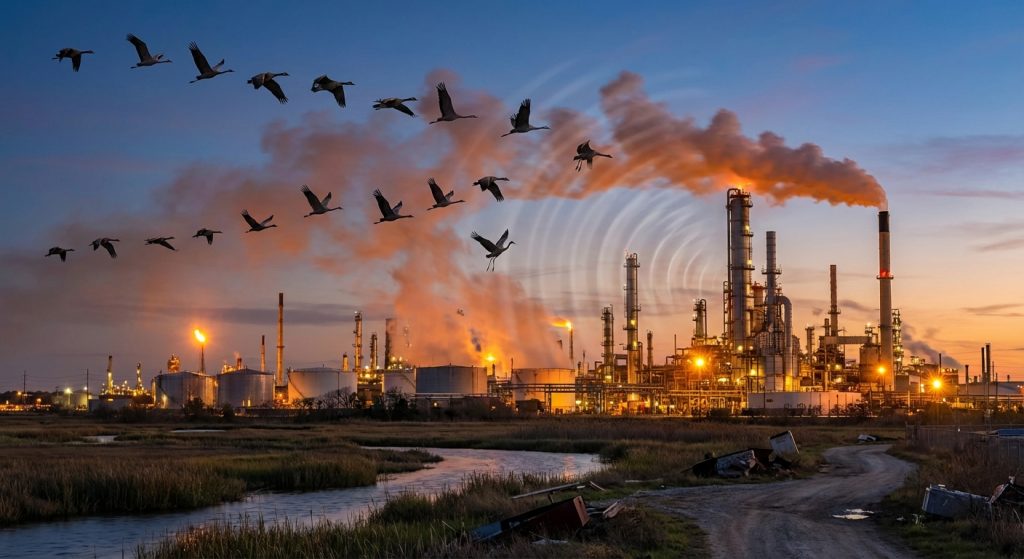
The Unseen Walls: How Noise Disrupts Nature’s Highways
Migration is a fundamental life cycle event for many species. Animals travel vast distances. They seek food, breeding grounds, or better climates. These journeys are often guided by instinct and environmental cues. Sound plays a critical role in this navigation. Animals use auditory signals to communicate. They also use them to detect predators and find their way. Artificial noise acts as a barrier. It masks these natural sounds. Therefore, it disorients migrating animals.
Consider birds. Many species rely on vocalizations for navigation and flock cohesion. Constant traffic noise can drown out these calls. This makes it harder for them to stay together. It also hinders their ability to orient themselves. For instance, studies show increased flight altitudes and altered migration routes in noisy areas. This is because they are trying to escape the cacophony. This escape often leads them away from optimal migratory paths.
Impact on Different Species
The effects are not limited to birds. Marine mammals, like whales and dolphins, use echolocation. They also use vocalizations to communicate and navigate. Shipping noise and sonar interfere with these vital functions. This can lead to strandings and reduced foraging success. Similarly, insects, crucial pollinators, can be disoriented by noise. Their communication and mating calls can be masked. This affects their population dynamics.
Furthermore, the impact extends to amphibians and reptiles. While they may not rely on complex vocalizations, they are sensitive to vibrations. Noise pollution can disrupt their movement patterns. It can also affect their breeding behaviors. This demonstrates a widespread ecological consequence of our noisy world.
The Sonic Landscape: Understanding Natural and Anthropogenic Sounds
A soundscape is the acoustic environment of a particular place. It comprises natural sounds and human-made sounds. Natural soundscapes are dynamic. They include wind, water, and animal vocalizations. These sounds provide essential information. They help animals understand their environment. They also facilitate social interactions.
Anthropogenic noise, or human-generated noise, is the disruptive element. Sources include traffic, industrial activity, and construction. This noise is often loud, constant, and unpredictable. It fundamentally alters the natural soundscape. Consequently, animals must adapt to this altered acoustic environment. However, adaptation is not always possible. The sheer intensity and pervasiveness of human noise can be overwhelming.
Masking and Behavioral Changes
One primary mechanism of disruption is auditory masking. This occurs when a noise signal obscures another. In nature, this means important animal calls are lost. Communication signals are missed. Predator warnings go unheard. This is particularly problematic for species relying on subtle auditory cues. For example, bats use echolocation to hunt. Loud, continuous noise can make it impossible for them to detect prey. This directly impacts their survival rates.
Moreover, noise pollution can induce chronic stress in wildlife. This stress can lead to physiological changes. It can suppress immune systems. It can also affect reproductive success. Animals may expend more energy trying to cope with the noise. This leaves less energy for migration, foraging, and breeding. Therefore, the consequences are far-reaching.
Migration Routes Under Threat: A Case Study Approach
Many migratory species travel along established routes. These routes are often influenced by geographical features. They are also shaped by predictable environmental conditions. However, human infrastructure, particularly roads and industrial sites, often bisects these paths. This introduces significant noise pollution directly into critical corridors.
For instance, migratory birds often use rivers and coastlines as natural guides. However, these areas are frequently sites of human development. This results in high levels of noise pollution. Birds may avoid these noisy areas. This forces them to take longer, more energy-intensive detours. This can reduce their survival rates. It can also impact the success of their breeding seasons.
The Impact on Navigation and Orientation
Navigation is a complex feat. It involves multiple sensory inputs. Animals integrate visual cues, magnetic fields, and olfactory information. Sound is a key component. It provides directional information and helps maintain group coordination. When noise pollution interferes with auditory cues, navigation becomes difficult. Animals may become lost. They may fail to reach their destinations. This can lead to mass mortality events.
The problem is exacerbated by the cumulative effect of noise. A single noisy road might be manageable for some species. However, multiple sources of noise pollution along a migratory route create a cumulative impact. This makes it increasingly difficult for animals to find safe passage. Ultimately, this can threaten entire populations. You can learn more about the challenges of noise pollution’s impact on wildlife breeding and survival.
Mitigation Strategies for a Quieter Future
Addressing noise pollution requires a multi-faceted approach. Acousticians, environmental consultants, and traffic managers play crucial roles. They can implement strategies to reduce noise at its source. They can also design infrastructure to minimize its impact.
Infrastructure Design and Planning
One key strategy is noise barrier construction. These barriers can effectively reduce noise levels along roads and railways. Strategic placement of infrastructure is also vital. Avoiding sensitive habitats and migratory corridors is paramount. Furthermore, promoting quieter transportation technologies can significantly reduce noise output. This includes developing quieter engines and tires.
For marine environments, regulations on shipping speeds and noise levels are essential. Sonar usage can also be restricted in critical marine mammal habitats. Implementing quieter dredging and construction techniques in coastal areas is also beneficial. These measures collectively contribute to a healthier acoustic environment.
Habitat Management and Restoration
Restoring natural soundscapes can help wildlife adapt. Creating quieter zones in protected areas is important. This allows animals to find refuge from noise. Vegetation buffers can also help absorb sound. Planting trees and shrubs along noise sources can reduce noise transmission. This is a form of passive acoustic mitigation.
Understanding the specific auditory needs of different species is crucial. This allows for targeted interventions. For example, creating quiet breeding grounds for birds can mitigate noise impacts. Similarly, preserving quiet marine areas is essential for vocal marine life. Conservation efforts must consider the acoustic dimension of habitat quality. This connects to broader efforts in native landscaping to cultivate wildlife havens.
The Role of Technology and Research
Advancements in acoustic monitoring are vital. Real-time soundscape analysis can identify problem areas. This data helps inform mitigation strategies. Noise mapping can visualize acoustic pollution hotspots. This allows for targeted interventions. Furthermore, research into animal responses to noise is ongoing. This research helps us understand the full scope of the problem.
Developing innovative noise reduction technologies is also key. This includes advanced sound-dampening materials. It also encompasses smart traffic management systems. These systems can optimize traffic flow to minimize noise. Ultimately, a combination of technological solutions and thoughtful planning is needed. This ensures a more harmonious coexistence between human activities and wildlife.
Conclusion: Listening to the Wild
Noise pollution is a silent threat to wildlife migration. It disrupts communication, navigation, and survival. Understanding the science of soundscapes is paramount. Acousticians, environmental consultants, and traffic managers must integrate acoustic considerations into their work. By reducing noise at its source and planning infrastructure mindfully, we can protect these vital natural processes. The future of many species depends on our ability to listen to the wild and create quieter, more hospitable environments for all life.
Frequently Asked Questions
How does noise pollution directly affect bird migration?
Noise pollution can mask bird calls used for navigation and flock cohesion. This can lead to disorientation, increased flight altitudes, and altered migratory routes, forcing birds to expend more energy.
What are the main sources of noise pollution impacting wildlife?
The primary sources include transportation (cars, trains, airplanes, ships), industrial activities, construction, and energy exploration (like sonar).
Can noise pollution affect marine animals’ ability to migrate?
Yes, noise from shipping and sonar can interfere with marine mammals’ echolocation and communication, which are crucial for navigation, foraging, and social bonding during migration.
What is auditory masking in the context of wildlife?
Auditory masking occurs when a loud, unwanted sound (like human noise) drowns out or obscures quieter, natural sounds that animals rely on for survival, such as predator warnings or mating calls.
How can infrastructure planning help reduce noise pollution’s impact on migration?
Planning can involve building noise barriers, avoiding sensitive habitats and migratory corridors, and using quieter transportation technologies to minimize noise generation and transmission.