
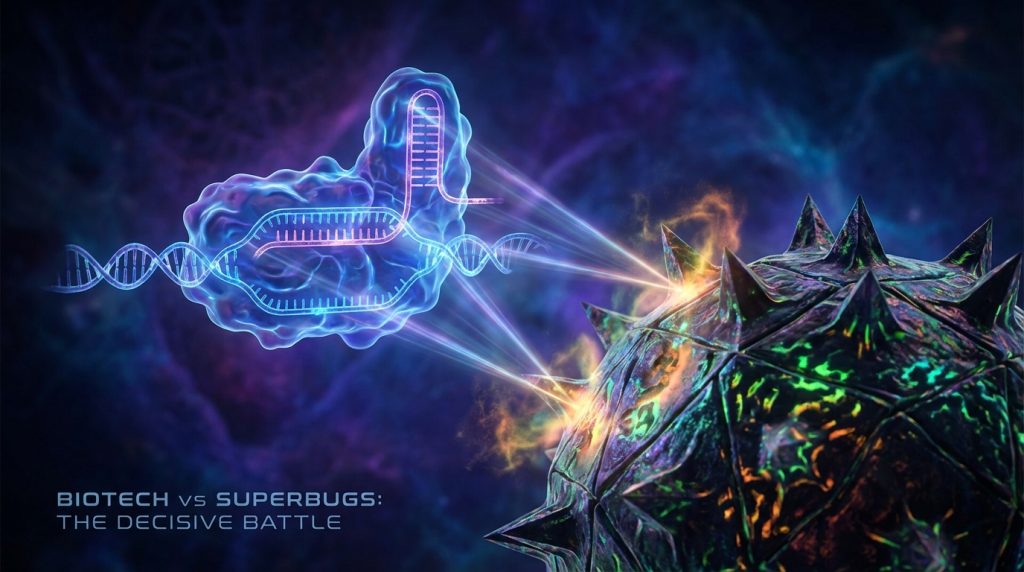
The escalating threat of antimicrobial resistance (AMR) is a significant global health crisis. Consequently, researchers are actively seeking novel strategies to combat infections caused by these “superbugs.” Fortunately, cutting-edge technologies like CRISPR are emerging as powerful tools in this fight. This article delves into how CRISPR systems are being harnessed to precisely target and neutralize drug-resistant bacteria, offering a promising new frontier in the battle against infectious diseases.
The Rising Tide of Superbugs
Superbugs are bacteria that have developed resistance to existing antibiotics. This resistance arises primarily from the overuse and misuse of these drugs. As a result, common infections are becoming increasingly difficult to treat. The Centers for Disease Control and Prevention (CDC) reported that around 2 million people in the United States are infected by antibiotic-resistant bacteria annually, leading to approximately 23,000 deaths each year.
This growing challenge has spurred a race to develop alternative treatments. Traditional antibiotic development is slow and costly. Therefore, exploring innovative solutions is paramount. CRISPR technology offers a precise and adaptable approach.
Understanding CRISPR: Nature’s Bacterial Defense
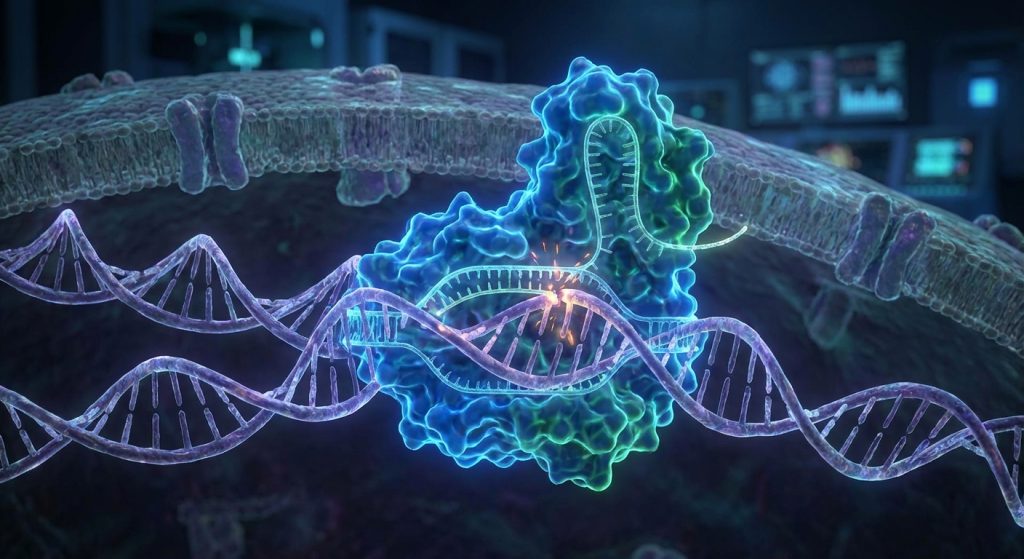
CRISPR, which stands for Clustered Regularly Interspaced Short Palindromic Repeats, is a naturally occurring defense mechanism in bacteria. It functions like a molecular immune system. Bacteria use CRISPR to identify and cut out foreign DNA, such as that from invading viruses (bacteriophages).
The CRISPR-Cas system involves two key components:
- CRISPR array: This stores snippets of DNA from past invaders.
- Cas proteins: These are enzymes that act like molecular scissors to cut DNA.
A guide RNA (gRNA) molecule directs the Cas protein to a specific DNA sequence. This sequence-specific targeting is crucial. It allows the system to precisely locate and disable target genes.
CRISPR-Cas9: A Precision Tool Against Superbugs
The CRISPR-Cas9 system is particularly well-suited for targeting superbugs. It can be programmed to seek out and disable specific genes within bacteria. This includes genes responsible for antibiotic resistance or virulence factors.
Researchers can design gRNAs to target only the problematic bacteria. This specificity is a major advantage over broad-spectrum antibiotics. Broad-spectrum antibiotics kill beneficial bacteria along with the harmful ones. This can lead to dysbiosis, disrupting the natural microbiome. The specificity of CRISPR-Cas9 helps to avoid this collateral damage.
Targeting Virulence and Resistance Genes
One promising application involves using CRISPR-Cas9 to disable virulence genes. These genes enable bacteria to cause disease. By disabling them, bacteria become less harmful. Furthermore, CRISPR can be used to target genes that confer antibiotic resistance. This can effectively revert resistant bacteria back to a state where they are susceptible to antibiotics once more [5].
Moreover, AI-generated genetic guides are enhancing CRISPR’s accuracy. Machine learning algorithms can predict CRISPR’s effectiveness. This improves its ability to target disease-causing genes in bacteria [2]. This advancement is invaluable for tackling antimicrobial resistance.
Innovative Delivery Methods
Delivering CRISPR-Cas9 systems to target bacteria effectively is a key challenge. Several innovative methods are being explored. One approach involves using bacteriophages, which are viruses that infect bacteria. Genetically modified phages can deliver CRISPR-Cas9 machinery directly into target bacteria.
This strategy offers several benefits. Phages are naturally evolved to infect bacteria. They can be engineered to carry CRISPR components. This allows for highly specific targeting of pathogenic strains while sparing beneficial bacteria [4].
Phage Therapy Enhanced by CRISPR
CRISPR-modified phages represent a powerful new weapon. These “living antibiotics” can be tailored to attack specific superbugs. For instance, researchers are developing cocktails of these modified phages. These cocktails are designed to be infused into patients to combat infections.
This approach offers a paradigm shift in treatment. Instead of broad-acting antibiotics, it uses highly targeted biological agents. This precision minimizes disruption to the patient’s microbiome. It also offers a way to overcome resistance mechanisms that have rendered current drugs ineffective.
Addressing Biofilms: A Sticky Problem
Superbugs often exist within biofilms. Biofilms are slimy, protective layers formed by bacteria. They act as a shield, making bacteria highly resistant to antibiotics and the body’s immune system. Imagine the slimy film at the bottom of a pet’s water dish; that’s a biofilm.
CRISPR technology can be employed to disrupt these biofilms. By targeting specific genes within the bacteria that form the biofilm, CRISPR can weaken or destroy the protective matrix. This makes the bacteria more vulnerable to treatment. As a result, this opens up new avenues for treating persistent infections.
Challenges and Future Directions
While CRISPR holds immense promise, challenges remain. Designing highly specific gRNAs is critical to avoid off-target effects. Any unintended DNA edits could have adverse consequences. Careful consideration is needed to ensure safety and efficacy.
Furthermore, the delivery of CRISPR systems into the human body needs optimization. Ensuring that the CRISPR machinery reaches the target site in sufficient quantities is crucial. The potential for collateral killing of commensal bacteria must also be managed. Co-administering CRISPR treatments with probiotics might help maintain microflora balance [3].
Despite these challenges, the development of CRISPR-based therapies for superbugs is rapidly advancing. Research is ongoing to refine targeting strategies and delivery mechanisms. The potential to create highly specific and effective treatments is a significant motivator.
The Broader Impact of CRISPR in Science
CRISPR technology extends far beyond combating superbugs. Its precision gene-editing capabilities are revolutionizing various fields. In agriculture, it is used to develop climate-resilient crops CRISPR Revolutionizes Crops for a Changing World. In fundamental research, it allows scientists to study gene function with unprecedented ease.
The ethical implications of gene editing, particularly in humans, are also a subject of ongoing discussion. Understanding the boundaries and responsibilities associated with such powerful technology is vital Gene Editing: Where Do We Draw the Human Line?. However, its application in fighting infectious diseases like those caused by superbugs presents a clear and urgent need.
Frequently Asked Questions
What are superbugs?
Superbugs are bacteria that have become resistant to most of the antibiotics used to treat them. This resistance makes infections very hard to cure.
How does CRISPR help fight superbugs?
CRISPR acts like precise molecular scissors. It can be programmed to target and disable specific genes in bacteria that make them resistant to antibiotics or help them cause disease.
Are CRISPR treatments safe for humans?
Research is ongoing to ensure the safety of CRISPR treatments. Scientists are working to prevent off-target edits and ensure the technology is delivered effectively and safely to combat infections.
Can CRISPR cure all antibiotic-resistant infections?
CRISPR offers a promising new approach, but it is not yet a universal cure. It is one of several innovative strategies being developed to address the complex challenge of antibiotic resistance.
Conclusion
The emergence of superbugs poses a grave threat to global health. However, the application of CRISPR technology offers a beacon of hope. By leveraging CRISPR-Cas systems, scientists are developing highly precise tools to target and neutralize these drug-resistant bacteria. From engineered bacteriophages to strategies for disrupting biofilms, CRISPR is opening new avenues for treatment. As research progresses, CRISPR-based therapies are poised to play a critical role in overcoming the antibiotic resistance crisis and ushering in a new era of infectious disease control.
