

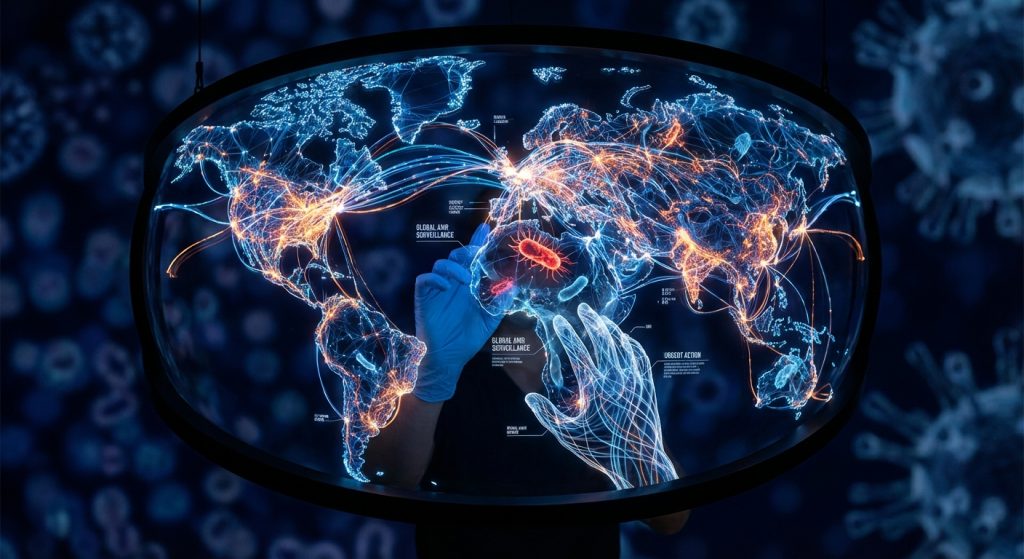
Antimicrobial resistance (AMR) is a growing threat. It makes infections harder to treat. Therefore, global surveillance is crucial. It helps us track resistance patterns. This information guides our response. Public health analysts play a key role here. They interpret complex data. They inform policy decisions. This article explores global AMR surveillance. It highlights its importance. It also discusses its challenges and future directions.
Understanding Antimicrobial Resistance (AMR)
AMR occurs when microbes evolve. They become resistant to medicines. These medicines include antibiotics. They are used to treat bacterial infections. Other drugs fight fungi and viruses. Resistance means these drugs no longer work. As a result, common infections become deadly. This is a major public health crisis. It affects everyone, everywhere.
The Scale of the Problem
AMR is a silent pandemic. It causes millions of deaths annually. For instance, it contributes to over a million deaths directly. Also, it indirectly leads to many more. This number is projected to rise significantly. Without action, AMR could cause 10 million deaths per year by 2050. This is a staggering figure. It underscores the urgency of the situation.
Why Global Surveillance Matters
Global AMR surveillance is essential. It provides a clear picture of the threat. It helps identify where resistance is highest. It also tracks how resistance spreads. This data is vital for several reasons.
Early Warning Systems
Surveillance acts as an early warning system. It detects new resistance patterns quickly. This allows for a faster response. For example, if a new superbug emerges, surveillance can flag it. Public health bodies can then act swiftly. This prevents widespread outbreaks. Therefore, it saves lives and resources.
Informing Treatment Guidelines
Healthcare providers rely on surveillance data. It helps them choose the right treatments. Local and national guidelines are informed. They reflect current resistance trends. This ensures patients get effective care. It also prevents unnecessary antibiotic use. This, in turn, slows resistance development.
Guiding Research and Development
Data from surveillance highlights gaps. It shows which drugs are failing. It also points to urgent needs. This guides pharmaceutical companies. They can focus on developing new antibiotics. It also helps researchers prioritize their work. Novel approaches are crucial. You can explore some exciting avenues in synthetic biology against superbugs.
Policy and Strategy Development
Governments and international bodies use this data. It informs national action plans. It also shapes global strategies. For instance, the World Health Organization (WHO) uses it. They develop global action plans on AMR. Therefore, robust data is the foundation of effective policy.
Key Components of Global AMR Surveillance
Effective global surveillance involves several interconnected elements. These work together to provide comprehensive insights.
Laboratory-Based Surveillance
This is the cornerstone. It involves collecting and testing samples. These samples come from patients and animals. Laboratories identify the microbes. They test their susceptibility to various antimicrobials. Standardized methods are crucial here. This ensures data comparability. Many countries have national reference laboratories. They coordinate testing efforts.
Integrated Surveillance Systems
AMR doesn’t exist in a vacuum. It spans human, animal, and environmental health. This is known as the “One Health” approach. Therefore, surveillance must integrate these sectors. Data from human hospitals, farms, and wastewater treatment plants is combined. This provides a holistic view. It helps understand transmission pathways. The One Health approach is vital for this. Wastewater surveillance is a powerful tool here. It can detect AMR trends early. You can learn more about wastewater surveillance systems.
Data Collection and Reporting
Collecting data is only the first step. It must be reported accurately and timely. Many countries face challenges here. Limited resources and infrastructure are common issues. Standardized reporting formats are essential. This allows for aggregation of data. International platforms like WHO’s GLASS (Global Antimicrobial Resistance and Use Surveillance System) are key. They aim to standardize data collection. This ensures a global overview.
Genomic Surveillance
Modern surveillance uses advanced techniques. Genomic sequencing provides powerful insights. It can identify specific resistance genes. It also tracks the spread of resistant strains. This is much faster than traditional methods. It can even pinpoint outbreaks. Genomic data complements traditional methods. It offers a deeper understanding of AMR evolution.
Challenges in Global AMR Surveillance
Despite its importance, global AMR surveillance faces significant hurdles.
Data Gaps and Inconsistencies
Many regions have limited surveillance capacity. This creates data gaps. We don’t have a complete global picture. Inconsistencies in methodologies also pose problems. Different countries may use different testing standards. This makes direct comparisons difficult. Therefore, harmonizing approaches is a priority.
Resource Limitations
Setting up and maintaining surveillance systems is expensive. It requires trained personnel. It also needs sophisticated laboratory equipment. Many low- and middle-income countries struggle with this. They lack the necessary funding and expertise. International support is crucial to bridge this gap.
Data Sharing and Collaboration
Effective surveillance requires collaboration. Countries must be willing to share data. However, political and economic factors can hinder this. Building trust and establishing secure data-sharing platforms are vital. Open communication is key to a united front against AMR.
The “One Health” Integration Challenge
Integrating human, animal, and environmental health data is complex. Different sectors often operate in silos. They may have different priorities and reporting systems. Overcoming these barriers requires strong leadership. It also needs dedicated interdisciplinary teams. The goal is a seamless flow of information.
The Role of Public Health Analysts
Public health analysts are central to global AMR surveillance. Their work translates raw data into actionable insights.
Data Analysis and Interpretation
Analysts process vast amounts of data. They identify trends, patterns, and outliers. They use statistical tools and epidemiological methods. They must understand the nuances of AMR. This includes resistance mechanisms and transmission routes. Therefore, strong analytical skills are essential.
Risk Assessment and Communication
They assess the public health risks associated with AMR. They must communicate these risks clearly. This communication is vital for policymakers. It also informs healthcare professionals and the public. Effective communication can drive behavior change. It can also mobilize resources for intervention. This is a critical function. It requires translating complex science into understandable terms.
Informing Interventions and Policies
Based on their analysis, analysts recommend actions. These recommendations guide public health interventions. They also shape policy development. For example, they might recommend targeted antibiotic stewardship programs. Or they might advise on new vaccine research priorities. Their insights are crucial for effective AMR control.
Future Directions in AMR Surveillance
The fight against AMR is ongoing. Surveillance methods must evolve. Several exciting developments are on the horizon.
Leveraging Technology
New technologies are transforming surveillance. Artificial intelligence (AI) can analyze large datasets faster. It can identify subtle patterns missed by humans. For example, AI-driven drug discovery is accelerating. Similarly, AI can enhance outbreak prediction. Wearable biosensors could offer new ways to monitor health. This includes tracking antimicrobial use. The future may involve more real-time data streams.
Enhanced “One Health” Collaboration
Greater integration across sectors is planned. This includes strengthening veterinary surveillance. It also means better monitoring of environmental AMR. More joint training programs are needed. These will equip professionals to work across disciplines. Therefore, a truly unified approach is the goal.
Strengthening Global Networks
Existing surveillance networks need expansion and strengthening. This includes providing technical and financial support. It means fostering stronger partnerships. International cooperation is paramount. Organizations like WHO are crucial facilitators. They coordinate global efforts. Ultimately, a connected global network is our best defense.
Conclusion
Global AMR surveillance is a critical weapon. It helps us understand and combat a major health threat. Public health analysts are at the forefront. They interpret data and guide our response. Despite challenges, advancements in technology and collaboration offer hope. Continued investment and commitment are essential. By working together, we can safeguard the effectiveness of our medicines. This will protect global health for future generations.
Frequently Asked Questions (FAQ)
What is the primary goal of global AMR surveillance?
The primary goal is to monitor the emergence and spread of antimicrobial resistance worldwide. This helps inform timely and effective interventions to combat the threat.
How does AMR affect everyday infections?
AMR makes common infections much harder to treat. It means that antibiotics and other antimicrobial drugs may no longer work. This can lead to longer illnesses, more severe outcomes, and increased mortality.
What is the “One Health” approach in AMR surveillance?
The “One Health” approach recognizes that the health of people is closely connected to the health of animals and our shared environment. In AMR surveillance, it means integrating data and efforts from human health, animal health, and environmental sectors.
What are the biggest challenges in global AMR surveillance?
Major challenges include data gaps, inconsistent methodologies, limited resources in many regions, and difficulties in data sharing and collaboration between countries and sectors.
How can technology improve AMR surveillance?
Technologies like genomic sequencing allow for detailed tracking of resistance genes. AI can analyze vast datasets for trends and predictions. Real-time data collection and advanced diagnostics also enhance surveillance capabilities.
