Rapid Diagnostics: Transforming Healthcare at the Point of Care
Published on January 19, 2026 by Admin
Healthcare is changing rapidly. New technologies are emerging. These innovations aim to improve patient outcomes. One such innovation is rapid diagnostic point-of-care (POC) testing. Therefore, POC testing is revolutionizing how we diagnose and manage diseases. It brings diagnostic capabilities closer to the patient. This means faster results and quicker treatment decisions. In essence, it empowers clinicians with immediate information.
This article explores the world of rapid diagnostic POC testing. We will delve into its benefits. We will also discuss its applications. Furthermore, we will examine its future potential. Understanding POC testing is crucial for healthcare providers. It is also important for patients. This technology promises a more efficient and effective healthcare system.
What is Point-of-Care (POC) Diagnostics?
Point-of-care diagnostics refers to medical testing. This testing happens near the patient. It occurs at the site of care. This could be a doctor’s office, a clinic, or even a patient’s home. Therefore, it eliminates the need to send samples to a central lab. This significantly reduces turnaround time. Patients receive results much faster. This speed is a major advantage.
Traditional lab testing involves several steps. A sample is collected. Then, it’s transported to a lab. It undergoes processing and analysis. Finally, results are sent back. This entire process can take hours or even days. However, POC testing streamlines this. It provides results in minutes. This immediacy is transformative.
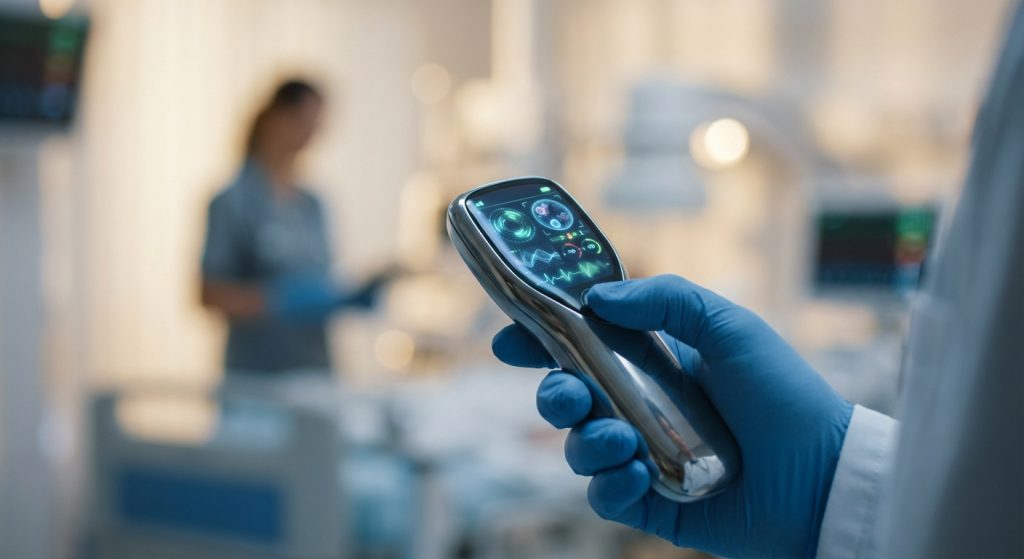
The devices used for POC testing vary. They range from simple dipsticks to complex portable analyzers. Many are designed for ease of use. They often require minimal training. This accessibility is key to their widespread adoption. Moreover, they are becoming increasingly sophisticated.
Key Advantages of Rapid Diagnostic POC Testing
The benefits of POC diagnostics are numerous. They directly impact patient care and healthcare efficiency. Let’s explore these advantages in detail.
Speed and Efficiency
The most significant benefit is speed. Rapid POC tests deliver results quickly. This allows for immediate clinical decisions. For instance, a doctor can diagnose a strep throat infection instantly. They can then prescribe antibiotics right away. This avoids delays in treatment. It also prevents the spread of infection. Consequently, patient outcomes improve.
Furthermore, this speed boosts efficiency. It reduces patient wait times. It also frees up laboratory resources. This allows labs to focus on more complex tests. Therefore, the entire healthcare system becomes more agile.
Improved Patient Outcomes
Faster diagnosis leads to faster treatment. This is critical for many conditions. For example, in emergency situations, quick results can save lives. Early detection of infections or critical biomarkers is vital. It allows for timely intervention. This often prevents complications. It can also reduce the severity of illness.
Moreover, POC testing can improve adherence to treatment. When patients understand their condition quickly, they are more likely to follow medical advice. This is especially true for chronic disease management. For example, monitoring blood glucose levels at home empowers diabetics. They can adjust their diet and medication accordingly. This proactive approach leads to better long-term health.
Accessibility and Convenience
POC diagnostics expand healthcare access. They are invaluable in remote areas. They are also useful in resource-limited settings. Here, traditional labs may be unavailable or impractical. Mobile clinics and remote healthcare facilities benefit greatly. They can offer diagnostic services previously out of reach.
In addition, POC testing offers convenience. Patients can undergo testing without long travel or multiple appointments. This is particularly beneficial for the elderly or those with mobility issues. It also reduces the burden on patients. This convenience can encourage more people to seek timely medical attention. The integration of wearable biosensors is further enhancing this convenience, offering 24/7 monitoring. Wearable biosensors are ushering in an era of continuous health tracking.
Cost-Effectiveness
While initial device costs can vary, POC testing can be cost-effective. It reduces the need for complex laboratory infrastructure. It also minimizes sample transportation costs. Furthermore, by enabling earlier and more accurate diagnoses, it can prevent costly complications and hospitalizations. For instance, quickly identifying a viral infection can prevent unnecessary antibiotic prescriptions. This combats the growing threat of antibiotic resistance. Understanding antibiotic resistance is crucial for public health.
The reduction in turnaround time also contributes to cost savings. Staff time is used more efficiently. Patients spend less time waiting for results. This overall streamlining of the diagnostic process leads to better resource allocation.
Common Applications of Rapid Diagnostic POC Testing
POC testing is used across a wide spectrum of medical disciplines. Its versatility makes it indispensable in modern healthcare.
Infectious Disease Testing
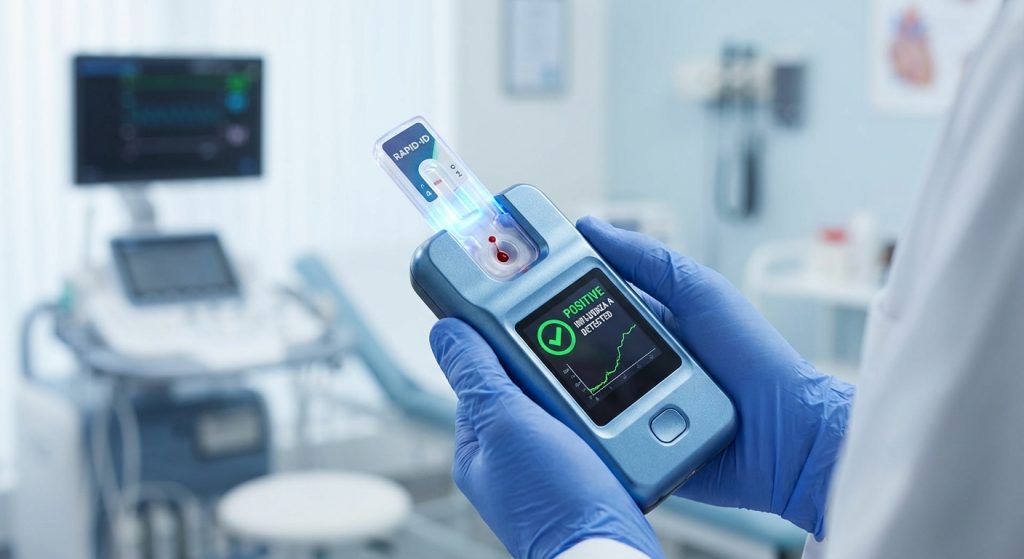
This is perhaps the most well-known application. Rapid tests for influenza, strep throat, and COVID-19 are now commonplace. These tests allow for quick identification of infections. This is vital for initiating treatment and implementing public health measures. For example, during outbreaks, rapid POC testing is essential for containment. It allows for swift isolation of infected individuals. This is similar to how avian influenza surveillance works to prevent pandemics.
Other infectious disease tests include those for HIV, malaria, and hepatitis. These are particularly important in developing countries. They provide access to essential diagnostics where laboratory facilities are limited.
Chronic Disease Management
POC testing plays a crucial role in managing chronic conditions. Blood glucose monitoring for diabetes is a prime example. Patients can test their levels at home. This allows for better management of their condition. Similarly, tests for cholesterol and coagulation (like INR) are used. These help monitor patients on anticoagulant therapy or at risk of cardiovascular disease.
Furthermore, POC tests are emerging for other chronic conditions. These include kidney function tests and cardiac markers. They help in the early detection of disease progression or complications. This proactive approach can significantly improve quality of life.
Pregnancy and Fertility Testing
Home pregnancy tests are a classic example of POC diagnostics. They offer privacy and convenience. Fertility testing also utilizes POC technology. These tests allow individuals to monitor ovulation or hormonal levels. This empowers them in family planning. The simplicity and speed of these tests have made them widely accessible.
Drug Testing and Monitoring
POC drug tests are used in various settings. These include workplace screening, roadside testing, and clinical settings. They detect the presence of illicit drugs or prescription medications. This helps in monitoring compliance or identifying substance abuse. The rapid results are crucial for immediate action. This is particularly important in addiction treatment programs.
Critical Care and Emergency Medicine
In emergency rooms and intensive care units, time is of the essence. POC devices provide rapid analysis of blood gases, electrolytes, and cardiac markers. This information is critical for making life-saving decisions. For instance, a rapid troponin test can quickly rule out or confirm a heart attack. This allows for immediate cardiac intervention. Therefore, POC testing significantly improves the management of critically ill patients.
The Technology Behind Rapid Diagnostics
Several technological advancements underpin the success of POC diagnostics. These innovations continue to drive the field forward.
Biosensors
Biosensors are key components of many POC devices. They convert a biological or chemical reaction into an electrical signal. This signal is then interpreted to provide a result. For example, electrochemical biosensors are used in glucose meters. They are highly sensitive and specific. They allow for accurate measurements from small sample volumes.
Microfluidics
Microfluidics involves the manipulation of small volumes of fluids. It uses microchannels to perform complex assays. This technology enables miniaturization. It allows for complex laboratory functions to be performed on a small chip. Therefore, it reduces reagent consumption and sample size. This is crucial for portable POC devices.
Lateral Flow Assays
Lateral flow assays are common in simple POC tests like pregnancy tests and rapid antigen tests. They utilize a strip of material. A sample is applied to one end. It then flows along the strip. It encounters reagents that cause a visible reaction if the target analyte is present. These tests are inexpensive, easy to use, and provide quick results.
Molecular Diagnostics
Molecular POC tests are becoming increasingly sophisticated. They can detect specific DNA or RNA sequences. This allows for highly accurate detection of pathogens. For example, portable PCR (polymerase chain reaction) devices are now available. They can diagnose infectious diseases rapidly at the point of care. This is a significant advancement over traditional lab-based molecular tests.
Challenges and Future Directions
Despite its advantages, POC testing faces challenges. However, ongoing research and development are addressing these issues.
Regulatory Hurdles
Ensuring the accuracy and reliability of POC tests is paramount. Regulatory bodies like the FDA have stringent requirements. Navigating these regulations can be complex and time-consuming. However, standardization efforts are helping to streamline the process.
Accuracy and Reliability Concerns
While POC tests are improving, some may still have limitations in sensitivity or specificity compared to laboratory tests. Ensuring consistent performance across different users and environments is crucial. Robust quality control measures are essential. Furthermore, the development of sophisticated internal controls within devices is ongoing. This helps to validate the test results.
Data Integration and Connectivity
Integrating POC test results into electronic health records (EHRs) is vital. This ensures seamless data flow. It allows for comprehensive patient management. Connectivity features in modern POC devices facilitate this. They can wirelessly transmit results to central systems. This enhances data security and accessibility. It also supports public health surveillance efforts. Wastewater surveillance systems, for instance, benefit from rapid data collection.
Cost and Reimbursement
The cost of POC devices and their associated consumables can be a barrier. Ensuring adequate reimbursement from insurance providers is crucial for widespread adoption. As technology advances and production scales up, costs are expected to decrease. This will further enhance accessibility.
Future Trends
The future of POC diagnostics is bright. We can expect more multiplexed tests. These will detect multiple analytes simultaneously. Artificial intelligence (AI) will play a larger role. AI can help interpret complex data. It can also personalize diagnostic approaches. Furthermore, nanotechnology is enabling even smaller and more sensitive devices. The goal is to bring even more advanced diagnostics closer to the patient. This aligns with the broader trend towards personalized medicine. Personalized medicine, guided by DNA, is a key future direction.
Conclusion
Rapid diagnostic point-of-care testing is a game-changer. It empowers healthcare providers. It also benefits patients immensely. By bringing diagnostics closer to the patient, it accelerates decision-making. This leads to faster treatment and improved outcomes. Its applications span from infectious diseases to chronic care. The technology continues to evolve. Innovations in biosensors, microfluidics, and molecular diagnostics are driving progress.
While challenges remain, the trajectory is clear. POC testing is becoming an integral part of modern healthcare. It promises a more efficient, accessible, and patient-centered future. Clinical diagnostics labs must embrace these advancements. They are essential for delivering high-quality care in the 21st century.
Frequently Asked Questions (FAQ)
What is the main difference between POC testing and traditional lab testing?
The main difference is location and speed. POC testing is done at the patient’s side, providing results within minutes. Traditional lab testing requires samples to be sent to a central laboratory, taking hours or days.
Are POC tests as accurate as lab tests?
Accuracy varies by test. Many modern POC tests are highly accurate and have received regulatory approval. However, for complex or rare conditions, traditional lab tests may still offer greater precision. Continuous quality improvement is a focus in POC development.
Who benefits most from POC diagnostics?
Patients in remote areas, individuals with chronic conditions, emergency care settings, and those seeking convenience all benefit greatly. It extends diagnostic capabilities beyond traditional hospital settings.
What are some examples of common POC tests?
Common examples include rapid COVID-19 tests, strep throat tests, influenza tests, home pregnancy tests, and blood glucose monitoring devices for diabetes.
How is data from POC devices managed?
Ideally, data from POC devices are integrated into electronic health records (EHRs). Many devices have connectivity features to wirelessly transmit results, ensuring data is accessible for patient management and public health surveillance.