
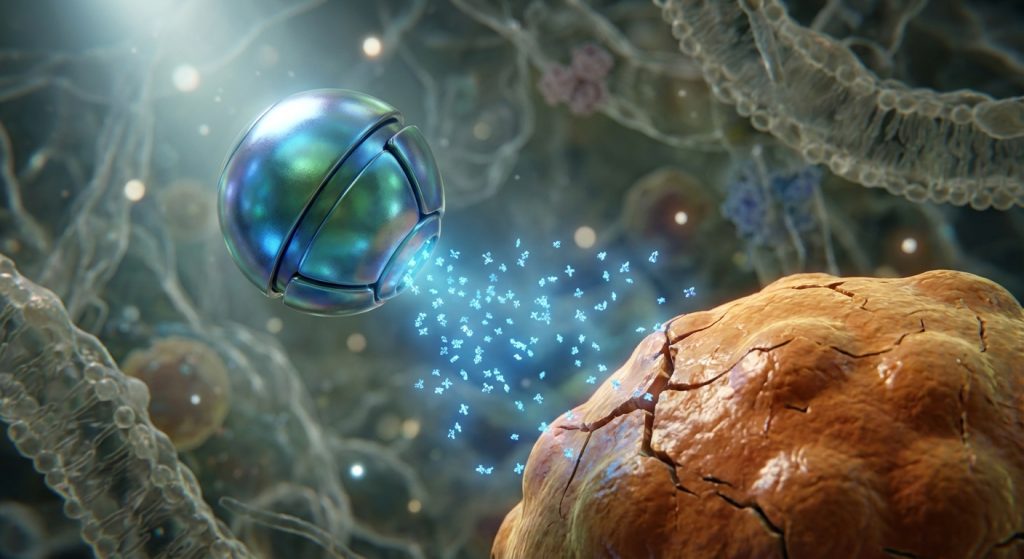
Antibiotic resistance is a major global health threat. It makes infections harder to treat. Therefore, new solutions are urgently needed. Nanotechnology offers a promising path. It allows for precise delivery of antibiotics. This can improve treatment effectiveness. It also helps reduce side effects. This article explores nanotech delivery for antibiotics.
The Growing Challenge of Antibiotic Resistance
For decades, antibiotics have been lifesavers. They combat bacterial infections effectively. However, bacteria evolve. They develop mechanisms to resist these drugs. This phenomenon is called antibiotic resistance. It is a natural evolutionary process. It is accelerated by overuse and misuse of antibiotics. For instance, widespread use in agriculture contributes to the problem. As a result, common infections are becoming more difficult to treat. New antibiotics are also developed more slowly. This creates a dangerous gap.
The World Health Organization (WHO) calls antibiotic resistance a top global threat. It impacts human health, animal health, and the environment. This is often referred to as the One Health approach. Consequently, we need innovative strategies. Nanotechnology is one such strategy.
What is Nanotechnology?
Nanotechnology deals with materials at the nanoscale. This is typically between 1 and 100 nanometers. A nanometer is one billionth of a meter. At this scale, materials exhibit unique properties. These properties differ from their bulk counterparts. For example, nanoparticles can have increased surface area. They also show different reactivity. This makes them ideal for various applications. In medicine, nanotechnology is revolutionizing drug delivery. It allows for targeted therapies. It also enables better diagnostics.
How Nanotechnology Enhances Antibiotic Delivery
Traditional antibiotic administration often involves systemic dosing. This means the drug travels throughout the body. It reaches the infection site. However, it also affects healthy tissues. This can lead to side effects. Furthermore, it may not achieve high enough concentrations at the infection site. This allows some bacteria to survive. Nanotechnology overcomes these limitations. It uses various nanocarriers to deliver antibiotics.
Types of Nanocarriers for Antibiotics
Several types of nanocarriers are being investigated. Each has unique advantages. Some common examples include:
- Liposomes: These are spherical vesicles. They have a lipid bilayer membrane. Liposomes can encapsulate antibiotics. They protect the drug from degradation. They also control its release.
- Polymeric nanoparticles: These are made from biodegradable polymers. They can be designed to release antibiotics slowly over time. This provides sustained therapeutic levels.
- Dendrimers: These are highly branched macromolecules. They have a precise structure. Dendrimers can carry many drug molecules. They offer controlled release profiles.
- Micelles: These are self-assembling structures. They form in aqueous solutions. Micelles are useful for delivering hydrophobic drugs.
- Nanocrystals: These are solid drug particles at the nanoscale. They have higher surface area. This can improve drug solubility and bioavailability.
- Metal nanoparticles: Such as gold or silver nanoparticles. They can have inherent antimicrobial properties. They can also be loaded with antibiotics.
Therefore, the choice of nanocarrier depends on the specific antibiotic and target infection. It also depends on desired release kinetics. Moreover, it considers the route of administration.
Advantages of Nanotech-Based Antibiotic Delivery
Using nanotechnology for antibiotic delivery offers several key benefits:
- Targeted Delivery: Nanoparticles can be engineered. They can target specific sites or cells. For example, they can be designed to accumulate in infected tissues. This increases drug concentration locally. It also minimizes exposure to healthy tissues. This is crucial for reducing systemic toxicity.
- Improved Bioavailability: Some antibiotics are poorly soluble. Nanoparticles can enhance their solubility. This leads to better absorption in the body. As a result, lower doses may be effective.
- Controlled Release: Nanocarriers can be designed for sustained drug release. This maintains therapeutic drug levels for longer periods. It reduces the need for frequent dosing. This improves patient compliance.
- Protection from Degradation: Certain antibiotics are unstable in the body. Nanocarriers can protect them from enzymatic degradation. This ensures the drug reaches its target intact.
- Overcoming Resistance Mechanisms: Nanoparticles can sometimes bypass bacterial resistance mechanisms. For example, some can penetrate biofilms more effectively. Biofilms are sticky communities of bacteria. They are notoriously hard to treat. Tackling biofilms is a major challenge. Effective biofilm eradication strategies are crucial.
- Reduced Side Effects: By targeting the infection site, less drug is distributed to other organs. This often leads to fewer adverse effects. For instance, less damage to the gut microbiome.
Consequently, nanotech delivery can make antibiotic treatments more effective and safer. It represents a significant step forward in combating resistant infections.
Applications and Research Frontiers
Research into nanotech delivery for antibiotics is rapidly advancing. Several applications are being explored:
Treating Bacterial Infections
Nanoparticles are being developed to treat a wide range of bacterial infections. This includes skin infections, lung infections, and urinary tract infections. For example, researchers are developing nanoparticles that target bacteria within macrophages. These are immune cells that bacteria can hide inside. Therefore, reaching these hidden reservoirs is key.
Combating Biofilms
Biofilms pose a significant challenge. They protect bacteria from antibiotics and the immune system. Nanoparticles can be designed to penetrate biofilms. They can also deliver high concentrations of antibiotics directly to the bacteria within. Some nanoparticles even have their own antimicrobial properties. This dual action can be very effective. This is a critical area of research for infections like those found on medical implants.
Delivering Antibiotics to the Lungs
Pulmonary infections, like pneumonia, are serious. Inhaling nanoparticles can deliver antibiotics directly to the lungs. This bypasses the systemic circulation. Thus, it reduces side effects. It also achieves high local drug concentrations. This is beneficial for treating conditions like cystic fibrosis.
Targeting Intracellular Bacteria
Some bacteria live inside human cells. This makes them difficult for conventional antibiotics to reach. Nanocarriers can be engineered to enter host cells. They can then release antibiotics specifically to kill these intracellular pathogens. This is important for infections caused by bacteria like Chlamydia or Listeria.
Nanoparticles for Wound Healing
Wounds are prone to infection. Nanoparticles can deliver antibiotics directly to the wound site. They can also promote healing. Some nanoparticles release antibiotics in response to infection markers. This ensures treatment is applied only when needed. Furthermore, some nanoparticles can stimulate tissue regeneration. Smart bandages, for instance, are emerging as a new era in infection detection and treatment, incorporating such technologies. You can learn more about smart bandages and their role in detecting bacteria.
Challenges and Future Directions
Despite the immense potential, challenges remain. Scaling up production of nanoparticles can be complex and costly. Ensuring their long-term safety and efficacy in humans is paramount. Regulatory approval processes for nanomedicines are also evolving. However, ongoing research is addressing these hurdles.
Future directions include:
- Developing smarter nanoparticles. These could respond to specific stimuli. For example, they could release drugs only in the presence of bacterial enzymes.
- Combining nanotechnology with other therapeutic approaches. This could include bacteriophages or antimicrobial peptides.
- Improving the biodegradability and biocompatibility of nanocarriers.
- Conducting rigorous clinical trials to validate safety and effectiveness.
Furthermore, advances in areas like nanotechnology in drug delivery are paving the way for more sophisticated treatments. The fight against antibiotic resistance is multifaceted. Nanotechnology is a vital tool in this ongoing battle.
Frequently Asked Questions (FAQ)
What is the main advantage of using nanotech for antibiotic delivery?
The main advantage is targeted delivery. Nanoparticles can deliver antibiotics directly to the site of infection. This increases effectiveness and reduces side effects.
Are nanotech antibiotics safe for humans?
Extensive research is ongoing to ensure safety. Nanoparticles are designed to be biocompatible and biodegradable. However, long-term safety studies are crucial for regulatory approval.
Can nanotech delivery overcome antibiotic resistance?
Yes, in several ways. Nanoparticles can bypass some resistance mechanisms. They can also deliver higher drug concentrations to kill resistant bacteria more effectively. Moreover, they can help overcome challenges like biofilms.
What are some examples of nanocarriers used for antibiotics?
Common examples include liposomes, polymeric nanoparticles, dendrimers, and micelles. Each has unique properties for drug encapsulation and release.
How does nanotech delivery help with biofilm infections?
Nanoparticles can penetrate biofilms. They can then release high concentrations of antibiotics within the biofilm. This is crucial for eradicating these stubborn bacterial communities.
Conclusion
Antibiotic resistance is a grave threat to global health. Nanotechnology offers a powerful new approach to deliver antibiotics. By using nanocarriers, we can achieve targeted delivery. We can also improve drug efficacy and reduce side effects. While challenges exist, ongoing research and development are promising. Nanotech delivery for antibiotics holds significant potential. It offers a new hope in our fight against superbugs. Therefore, continued investment and innovation in this field are essential. This will help secure a future where bacterial infections remain treatable.