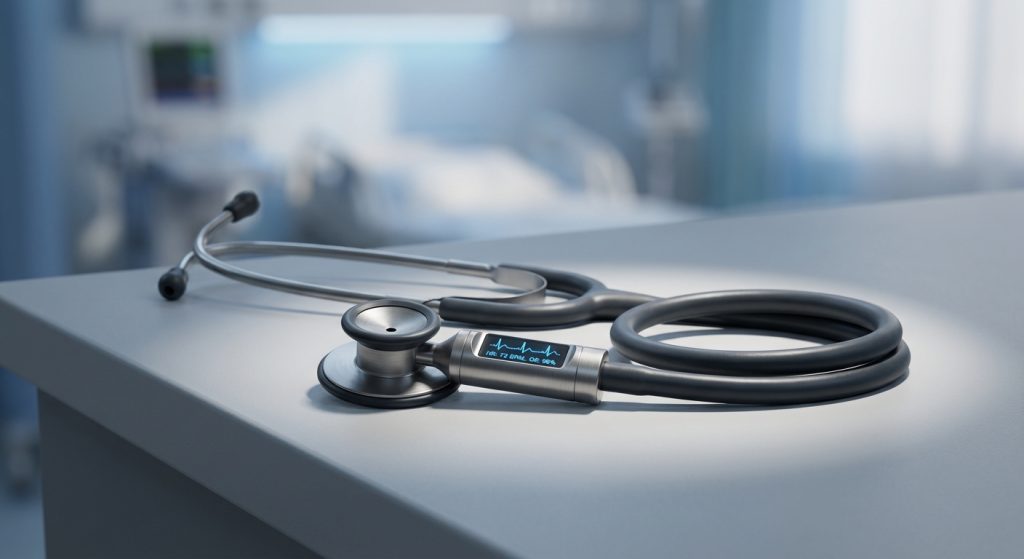
Sepsis is a life-threatening condition. It happens when the body’s response to infection damages its own tissues. Early detection is key. It significantly improves patient outcomes. Now, smart stethoscopes offer a new tool. They can help doctors spot sepsis faster.
The Challenge of Sepsis Detection
Diagnosing sepsis can be difficult. Symptoms often overlap with other conditions. Doctors rely on clinical signs and lab tests. However, these can take time. Every hour of delay increases the risk of mortality. Therefore, new technologies are crucial for rapid identification.
Traditional stethoscopes have limitations. They provide auditory information. Interpretation depends on the listener’s skill. They cannot quantify subtle changes. They also cannot integrate with digital health records easily. This is where smart stethoscopes come in.
What Are Smart Stethoscopes?
Smart stethoscopes are advanced medical devices. They go beyond simple sound amplification. They use digital technology. This includes sensors and algorithms. They capture and analyze body sounds. These sounds can include heartbeats, lung sounds, and bowel sounds. They also record vital signs. Some can even detect subtle acoustic changes.
These devices often connect to smartphones or tablets. They use apps to display data. This data can be stored and shared. It allows for remote consultation. It also enables trend analysis over time. This is a significant upgrade from traditional models.

How Smart Stethoscopes Spot Sepsis
Sepsis can cause changes in various bodily functions. These changes often manifest as subtle acoustic alterations. Smart stethoscopes can detect these. For example, sepsis can affect heart rate and rhythm. It can also alter breathing patterns. Furthermore, it can impact bowel motility.
Smart stethoscopes analyze these sounds. They use algorithms trained on vast datasets. These algorithms can identify patterns. These patterns are indicative of sepsis. They can detect changes that the human ear might miss. This early detection is a major advantage.
Specifically, some smart stethoscopes can detect:
- Changes in heart sounds: Sepsis can lead to tachycardia. It can also cause arrhythmias. The stethoscope can pick up these variations.
- Abnormal lung sounds: Fluid buildup or inflammation in the lungs is common. The device can identify crackles or wheezes.
- Bowel sound alterations: Sepsis can affect gastrointestinal function. Changes in the frequency or character of bowel sounds can be detected.
- Other vital sign data: Many smart stethoscopes integrate with other sensors. This provides a more comprehensive picture of the patient’s status.
These devices can provide continuous monitoring. This is vital in critical care settings. It allows for immediate alerts. This proactive approach can save lives. It is a significant step forward in patient care.
Benefits for Emergency Room Doctors
Emergency rooms are high-pressure environments. Speed and accuracy are paramount. Smart stethoscopes offer several benefits:
- Faster Diagnosis: They can flag potential sepsis cases sooner. This allows for quicker treatment initiation.
- Objective Data: They provide quantifiable data. This reduces subjective interpretation. It supports clinical decision-making.
- Improved Record-Keeping: Digital recordings can be easily stored. This aids in tracking patient progress. It also supports medical-legal documentation.
- Remote Collaboration: Data can be shared with specialists. This is especially useful in rural or underserved areas.
- Enhanced Training: Recordings can be used for teaching. New doctors can learn from experienced clinicians.
Furthermore, these tools can help manage workload. By automating some of the initial analysis, doctors can focus on complex cases. This efficiency is invaluable in busy ERs. It contributes to better patient management overall.
The Technology Behind Smart Stethoscopes
The effectiveness of smart stethoscopes relies on several key technologies:
- Acoustic Sensors: High-fidelity microphones capture body sounds. These are far more sensitive than traditional ones.
- Signal Processing: Advanced algorithms filter out noise. They isolate relevant physiological sounds.
- Artificial Intelligence (AI): Machine learning models are trained. They learn to recognize sepsis-specific acoustic signatures. This is a rapidly evolving field.
- Connectivity: Bluetooth or Wi-Fi enables data transfer. This allows for seamless integration with electronic health records (EHRs).
The development of these technologies is ongoing. Researchers are constantly improving accuracy and functionality. For instance, the integration of AI for diagnostics is a major focus. This promises even more powerful tools in the future. It aligns with the broader trend of AI in personalized healthcare.
Challenges and Future Directions
Despite their promise, smart stethoscopes face challenges. Cost can be a barrier for some institutions. Training healthcare professionals is also necessary. Ensuring data privacy and security is another important consideration. Moreover, the algorithms need continuous validation. They must be tested across diverse patient populations.
However, the future looks bright. As technology advances, smart stethoscopes will become more sophisticated. We can expect:
- Increased accuracy in sepsis detection.
- Integration with a wider range of patient monitoring systems.
- More portable and user-friendly designs.
- Lower costs, making them accessible to more healthcare providers.
- Predictive analytics for other conditions, not just sepsis.
These innovations will further enhance their role in emergency medicine. They are poised to become standard tools. This will significantly impact how we manage critical illnesses. It is a testament to the power of technological advancement in healthcare. The field of diagnostics is rapidly changing. For example, rapid diagnostics are also transforming patient care.
Conclusion
Smart stethoscopes represent a significant leap forward. They offer a powerful, non-invasive method for early sepsis detection. For emergency room doctors, this means faster diagnoses. It also means more timely interventions. Ultimately, it leads to better patient outcomes. As the technology matures, these devices will play an increasingly vital role. They are a key example of how innovation is revolutionizing frontline medical care. The fight against sepsis is ongoing. However, tools like smart stethoscopes give us a significant advantage.
Frequently Asked Questions (FAQ)
What is sepsis?
Sepsis is a severe, life-threatening condition. It occurs when an infection triggers a chain reaction throughout the body. This reaction causes widespread inflammation. It can lead to organ damage and failure.
How do smart stethoscopes detect sepsis?
Smart stethoscopes use advanced sensors and AI algorithms. They analyze subtle changes in body sounds like heartbeats and lung sounds. These changes can indicate the early stages of sepsis. The algorithms are trained to recognize these specific patterns.
Are smart stethoscopes replacing traditional stethoscopes?
Not entirely. Traditional stethoscopes remain valuable tools. Smart stethoscopes are complementary. They offer advanced diagnostic capabilities. They enhance, rather than replace, the clinician’s expertise.
What are the main benefits of using smart stethoscopes in the ER?
The main benefits include faster sepsis detection, objective data for diagnosis, improved medical record-keeping, and the potential for remote collaboration with specialists. This leads to quicker treatment and better patient outcomes.
What are the future prospects for smart stethoscope technology?
Future prospects include increased accuracy, broader integration with other medical devices and EHRs, more user-friendly designs, and potentially lower costs. They may also be developed to detect other conditions beyond sepsis.