
Build a Resilient Future: Climate Planning for Insurers
Published on January 27, 2026 by Admin
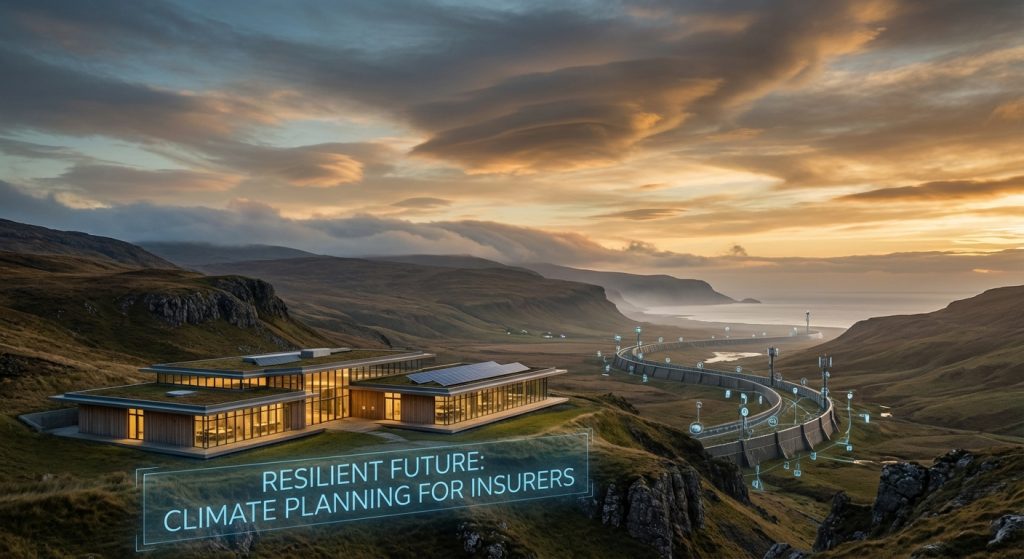
Climate change presents significant risks. These risks impact businesses and communities. Insurance underwriters face unique challenges. They must assess these evolving threats. Climate resilience planning is crucial. It helps manage these complex risks. Therefore, a proactive approach is essential. This article explores key aspects of climate resilience planning for insurance professionals.
Understanding Climate Risks
Climate change brings diverse risks. These include extreme weather events. Think floods, hurricanes, and wildfires. They also include gradual changes. Sea-level rise is one such change. Increased temperatures also pose risks. Furthermore, water scarcity is a growing concern. These events can cause massive financial losses. They can also disrupt supply chains. As a result, insurers need to understand these threats deeply.
It is important to identify specific vulnerabilities. This involves assessing geographic locations. It also means looking at industry sectors. For example, coastal properties are vulnerable to storms. Agricultural businesses face drought risks. Thus, detailed risk assessment is vital. This helps in pricing policies accurately. It also informs underwriting decisions.

Physical Risks
Physical risks are the most direct impacts. These stem from weather events. Floods can damage property extensively. Wildfires destroy homes and businesses. Extreme heat can impact infrastructure. For instance, power grids can fail. Storms cause widespread disruption. Therefore, understanding the frequency and intensity of these events is key.
Moreover, gradual changes also pose physical risks. Sea-level rise threatens coastal assets. Droughts impact agriculture and water resources. These long-term trends require different mitigation strategies. They demand a forward-looking approach to underwriting. Consequently, insurers must model these scenarios carefully.
Transition Risks
Transition risks arise from the shift to a low-carbon economy. Policy changes are a major factor. New regulations can impact industries. For example, carbon pricing can increase operational costs. Technological shifts are also important. The move towards renewable energy affects fossil fuel industries. Therefore, underwriters must consider these evolving market dynamics.
Social and market shifts also contribute. Consumer preferences change. Demand for sustainable products grows. This can impact businesses that do not adapt. As a result, understanding these transition pathways is crucial. It helps in identifying future liabilities. It also reveals new opportunities.
Liability Risks
Liability risks are a growing concern. Companies may face lawsuits. These suits can be due to climate-related damages. For instance, a company might be sued for contributing to climate change. Or, they might be sued for failing to adapt. This is especially true for companies in high-emission sectors. Therefore, insurers need to assess these potential legal exposures.
Directors and officers (D&O) insurance is affected. Board members can be held liable. This is for failing to manage climate risks. Consequently, understanding the legal landscape is paramount. This area is still evolving rapidly. Hence, continuous monitoring is necessary.
Key Components of Climate Resilience Planning
Effective climate resilience planning involves several key elements. These ensure a comprehensive approach. Firstly, data collection and analysis are fundamental. Secondly, scenario planning helps anticipate future conditions. Thirdly, mitigation and adaptation strategies are vital. Finally, stakeholder engagement is crucial for success.
Data Collection and Analysis
Accurate data is the bedrock of good planning. Insurers need robust climate data. This includes historical weather patterns. It also requires forward-looking climate projections. Advanced analytics and modeling are essential. These tools help process vast amounts of information. For example, AI can help analyze satellite imagery. It can also predict flood zones. Therefore, investing in data infrastructure is a priority.
Furthermore, understanding exposure is critical. This means knowing where assets are located. It also means understanding their susceptibility to climate impacts. Consequently, granular data on policyholders is needed. This allows for precise risk assessment. It also enables targeted risk management advice.
Scenario Planning and Stress Testing
Scenario planning allows insurers to explore future possibilities. They can test their resilience against various climate futures. This includes both gradual changes and extreme events. For instance, an insurer might model a category 5 hurricane. They might also model a prolonged drought. Therefore, these exercises reveal potential weaknesses in portfolios.
Stress testing goes further. It pushes systems to their breaking point. This helps identify critical thresholds. It also highlights potential cascading failures. As a result, insurers can develop contingency plans. They can also adjust their capital reserves accordingly. This proactive testing is essential for financial stability.
Mitigation and Adaptation Strategies
Mitigation aims to reduce greenhouse gas emissions. Adaptation aims to cope with current and future impacts. Insurers can play a dual role. They can offer incentives for mitigation. For example, lower premiums for green buildings. They can also support adaptation measures. This might include funding for flood defenses. Therefore, insurers can actively drive positive change.
Moreover, insurers can advise policyholders. They can provide guidance on reducing climate risks. This might involve recommending drought-resistant crops. Or, it could involve suggesting resilient building materials. Consequently, this advisory role strengthens client relationships. It also reduces future claims.
Stakeholder Engagement
Climate resilience is a collective effort. Insurers must engage with various stakeholders. This includes policyholders and regulators. It also involves governments and communities. Collaboration helps share knowledge and resources. For example, public-private partnerships can fund resilience projects. Therefore, building strong relationships is key.
Furthermore, transparent communication is vital. Insurers should clearly communicate climate risks. They should also explain their strategies. This builds trust and understanding. As a result, stakeholders can make informed decisions. This collaborative approach fosters a more resilient society.
Integrating Climate Resilience into Underwriting
Underwriting is at the core of the insurance business. Integrating climate resilience here is paramount. It means moving beyond traditional risk factors. It requires a forward-looking perspective. Therefore, underwriters must be equipped with new tools and knowledge.
Updated Risk Models
Traditional underwriting models may not suffice. They often rely on historical data. Climate change makes the past a less reliable predictor. Thus, new models are needed. These models must incorporate climate science. They should account for changing probabilities. For instance, models should reflect increased storm intensity. They should also consider shifting weather patterns. Consequently, investing in climate-aware modeling is crucial.
These models can help price risk more accurately. They can also identify areas of high exposure. This allows for better portfolio management. It also aids in developing new products. For example, parametric insurance can be developed. These policies pay out based on predefined triggers, like rainfall levels.
Policy Wording and Conditions
Policy terms and conditions need review. They should reflect climate realities. Insurers may need to adjust coverage. They might also add specific exclusions. For example, coverage for certain flood zones might change. Or, new conditions might apply to wildfire-prone areas. Therefore, clear and precise policy language is essential.
Moreover, insurers can include resilience requirements. They might mandate certain building standards. Or, they could require the use of mitigation technologies. As a result, policyholders are encouraged to invest in resilience. This benefits both parties by reducing future losses. This aligns with the growing trend of green building standards.
Incentivizing Risk Reduction
Insurers can use pricing to encourage resilience. Lower premiums can reward proactive risk management. For example, discounts can be offered for properties with flood barriers. Or, lower rates can be given to businesses with strong ESG integration strategies. Therefore, financial incentives are powerful tools.
Furthermore, insurers can provide education and resources. They can help policyholders understand their risks. They can also guide them on effective solutions. Consequently, this partnership approach fosters a culture of resilience. It also strengthens the insurer-client relationship.
The Future of Insurance in a Changing Climate
The insurance industry is at a critical juncture. Climate change demands innovation. Insurers must adapt to survive and thrive. This means embracing new technologies. It also means fostering new partnerships. Therefore, a proactive and forward-thinking approach is necessary.
Innovation in Products and Services
New insurance products will emerge. These will address emerging climate risks. Parametric insurance is one example. Others might include coverage for climate-related business interruption. Or, they could cover climate-induced migration. Consequently, insurers need to be agile and creative.
Furthermore, insurers can offer risk advisory services. They can help clients build resilience. This goes beyond traditional insurance. It positions insurers as partners in risk management. For example, consultancies focused on climate risk assessment are growing. This is an area where insurers can excel.
Collaboration and Partnerships
No single entity can solve climate change alone. Collaboration is key. Insurers can partner with governments. They can work with NGOs and research institutions. They can also collaborate with other businesses. For instance, the insurance sector can work with construction companies. They can also partner with technology providers. Therefore, building strong networks is vital.
These partnerships can drive innovation. They can also lead to scaled solutions. For example, joint efforts can develop better climate data. They can also fund large-scale adaptation projects. As a result, the impact of these collaborations can be significant. This is similar to how clean tech infrastructure is developed.
The Role of Underwriters
Underwriters are on the front lines. They assess and manage risk daily. Their role in climate resilience is crucial. They need to be educated and informed. Continuous learning is essential. They must understand climate science and its implications. Therefore, professional development is key.
Underwriters can influence business practices. By setting underwriting standards, they can steer investment. They can encourage more sustainable practices. Consequently, their decisions have a ripple effect. They can help shape a more resilient future. This is vital for the long-term viability of the insurance industry.
Frequently Asked Questions (FAQ)
What is climate resilience planning for insurers?
It is the process of identifying, assessing, and managing the risks posed by climate change to an insurance company’s operations, investments, and policyholders. This includes planning for both the physical impacts of climate change and the transition to a low-carbon economy.
Why is climate resilience planning important for insurance underwriters?
Climate change increases the frequency and severity of risks, impacting claims and financial stability. Underwriters need to accurately price these evolving risks and ensure the long-term sustainability of the insurance business.
What are the main types of climate risks insurers face?
The main risks are physical risks (e.g., extreme weather), transition risks (e.g., policy changes related to climate), and liability risks (e.g., lawsuits related to climate impact).
How can insurers incentivize policyholders to adopt climate-resilient practices?
Insurers can offer premium discounts for properties that meet certain resilience standards, provide educational resources on risk reduction, and develop new products that reward adaptation measures.
What is the role of data in climate resilience planning?
Accurate and comprehensive data, including historical weather patterns and future climate projections, is essential for risk assessment, modeling, and decision-making. Advanced analytics and AI play a significant role in processing this data.
Conclusion
Climate resilience planning is no longer optional for insurance underwriters. It is a fundamental necessity. By understanding evolving climate risks, adopting robust planning strategies, and integrating resilience into underwriting practices, insurers can navigate the challenges ahead. Furthermore, embracing innovation and collaboration will be key to securing a sustainable future for both the industry and the planet. Therefore, a proactive stance today builds a more secure tomorrow.
