
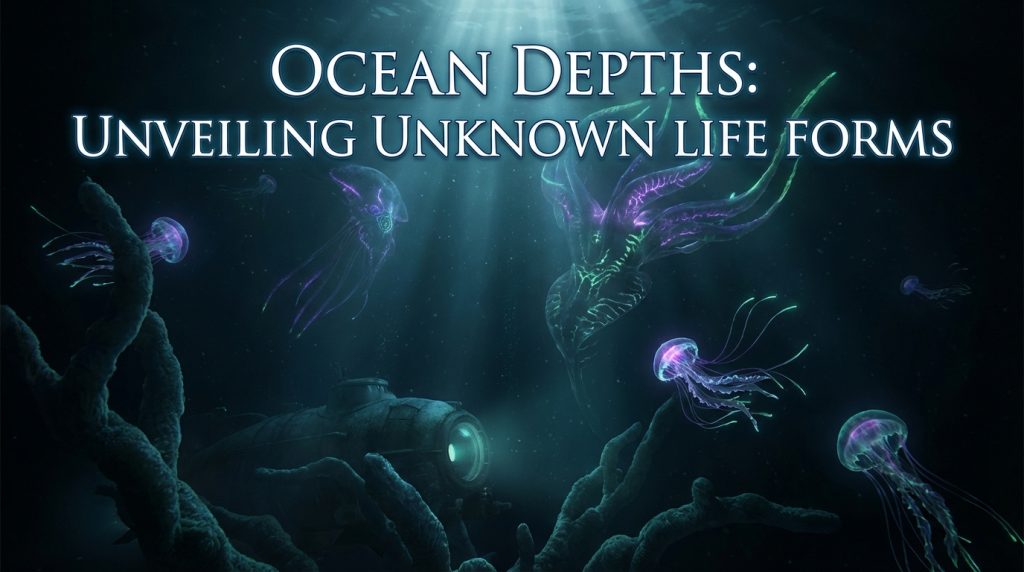
The deep sea is a realm of mystery. It covers most of our planet. Yet, we know very little about it. This vast underwater world teems with life. Much of this life is still undiscovered. Scientists are working hard to explore these depths. They are finding amazing new creatures. These discoveries are changing our understanding of life itself. Furthermore, these organisms play crucial roles. Their roles are vital to ocean ecosystems. This article explores the deep sea’s hidden biodiversity. It also examines the ecological importance of its inhabitants.
The Vast Frontier of the Deep Sea
Imagine a world without sunlight. Pressure is immense. Temperatures are near freezing. This is the deep sea. It begins where sunlight fades. This is typically around 200 meters. It extends down to the deepest trenches. These trenches can be over 10,000 meters deep. The sheer scale is astonishing. It represents the largest habitat on Earth. Its extreme conditions make exploration difficult. Therefore, our knowledge is limited. We have explored more of the moon’s surface. We have explored Mars too. This highlights how much we still need to learn about our own oceans. Many expeditions are underway. They use advanced submersibles and robots. These tools help us peer into this hidden world.
Challenges of Deep-Sea Exploration
Exploring the deep sea presents unique challenges. The crushing pressure is a major hurdle. For every 10 meters deeper, pressure increases by one atmosphere. At 10,000 meters, it’s over 1,000 times surface pressure. Specialized equipment is essential. This equipment must withstand these forces. It needs to be robust and reliable. Another challenge is the lack of light. Complete darkness prevails. Therefore, artificial lighting is necessary. This lighting can affect the animals. It can alter their natural behavior. Also, the vastness of the ocean is a challenge. Mapping and surveying large areas is time-consuming. It requires significant resources. These factors combine to make deep-sea research a complex undertaking.
Discovering Unknown Life Forms
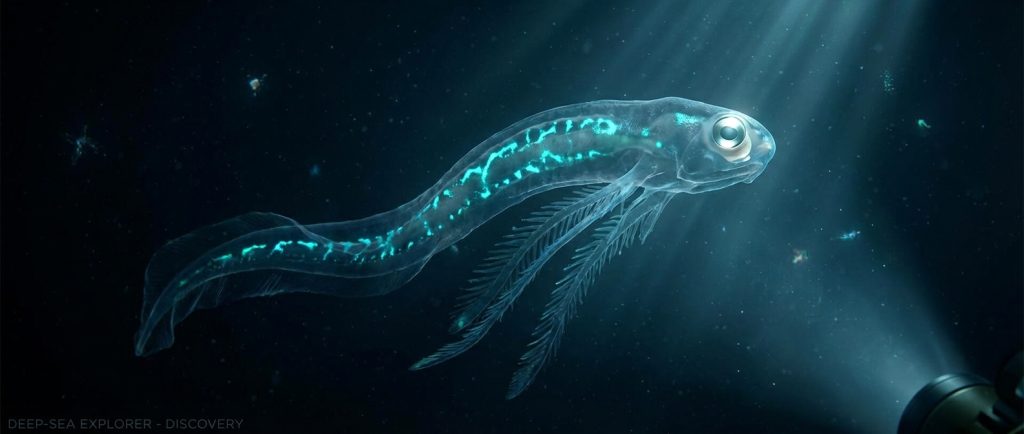
The deep sea is a treasure trove of biodiversity. Many species found there are unique. They have evolved remarkable adaptations. These adaptations allow them to survive extreme conditions. For instance, some creatures produce their own light. This is called bioluminescence. They use it for communication, hunting, and defense. Others have slow metabolisms. This helps them conserve energy in scarce environments. Scientists have discovered countless new species. These include bizarre fish, strange invertebrates, and unique microbes. Every expedition brings new surprises. It is like discovering a new continent of life.
Examples of Unique Deep-Sea Creatures
Consider the anglerfish. It has a bioluminescent lure. This lure attracts prey in the darkness. Then there are the viperfish. They have enormous, needle-like teeth. These teeth are perfect for catching prey. Vampire squid are another fascinating example. They have large eyes and a cape-like webbing. They can invert their bodies to defend themselves. Moreover, hydrothermal vents host entire ecosystems. These ecosystems thrive on chemosynthesis. Bacteria convert chemicals into energy. This supports a unique community of tube worms and other organisms. These discoveries show life’s incredible resilience. They also demonstrate its adaptability. Scientists estimate millions of species remain undiscovered. This is especially true for microbial life. These microbes are incredibly diverse. They play fundamental roles in ocean chemistry.
The deep ocean harbors many wonders. For example, the goblin shark is a living fossil. It has a protruding snout. It also has a distensible jaw. This allows it to swallow large prey. In addition, the blobfish looks quite different. It appears gelatinous. This appearance is due to its natural habitat. It lives at great depths. There, its body density matches the surrounding water. This adaptation helps it float effortlessly. Furthermore, the dumbo octopus is named for its ear-like fins. These fins help it “fly” through the water. These are just a few examples. They hint at the incredible diversity waiting to be found.
The Ecological Role of Deep-Sea Life
Deep-sea organisms are not just curiosities. They play vital ecological roles. These roles impact the entire ocean. They also influence global processes. For instance, deep-sea microbes are crucial. They are involved in nutrient cycling. They break down organic matter. This process returns essential nutrients to the water. This supports life in shallower waters. Some deep-sea organisms are important food sources. They form the base of deep-sea food webs. These webs are complex. They connect different species. Also, deep-sea corals build habitats. These structures provide shelter. They offer nurseries for many species. Therefore, their preservation is essential.
Impact on Global Biogeochemical Cycles
The deep sea is a significant part of Earth’s carbon cycle. Phytoplankton in surface waters capture carbon dioxide. When they die, they sink. This process is called the biological pump. Much of this carbon reaches the deep sea. It can be stored there for centuries. This helps regulate atmospheric CO2 levels. Therefore, the deep sea acts as a carbon sink. Furthermore, deep-sea microbes are involved in other cycles. These include nitrogen and sulfur cycles. These cycles are fundamental to marine ecosystems. They influence oxygen levels. They also affect water chemistry. Thus, deep-sea life has a global impact. It influences the planet’s health.
Threats to Deep-Sea Biodiversity
Despite its remoteness, the deep sea is not immune to human impact. Several threats endanger its unique life forms. Overfishing is one major concern. Bottom trawling, in particular, is destructive. It can devastate deep-sea coral reefs. These reefs are ancient ecosystems. They take centuries to recover, if at all. Additionally, deep-sea mining is a growing threat. It aims to extract minerals from the seabed. This process can cause significant habitat destruction. It can also release toxic plumes. Pollution is another issue. Plastics and other debris are found even in the deepest trenches. Climate change also affects the deep sea. Ocean warming and acidification pose risks. These changes can alter species distribution. They can also impact marine life directly.
Conservation Efforts and Future Prospects
Protecting deep-sea biodiversity is crucial. Many organizations are working towards this goal. Establishing Marine Protected Areas (MPAs) is one strategy. These areas restrict harmful activities. International cooperation is also vital. Many deep-sea ecosystems cross national boundaries. Promoting sustainable fishing practices is important. This includes reducing bycatch and avoiding destructive methods. Furthermore, regulating deep-sea mining is essential. Strict environmental impact assessments are needed. Public awareness is also key. Educating people about the deep sea’s importance can drive change. The future of these unique ecosystems depends on our actions today. We must act responsibly. We must ensure these unknown life forms thrive for generations to come. Understanding their ecological role is the first step. Conservation is the next. We can learn more about the importance of biodiversity by looking at how we protect terrestrial ecosystems, such as through biodiversity risk management.
Frequently Asked Questions (FAQ)
What is deep sea biodiversity?
Deep sea biodiversity refers to the variety of life found in the ocean’s depths. This includes all living organisms from microbes to large animals in areas where sunlight does not penetrate.
Why is the deep sea so unexplored?
The deep sea is largely unexplored due to extreme conditions like immense pressure, total darkness, and very low temperatures. The cost and technological challenges of exploration are also significant factors.
What are some examples of adaptations found in deep-sea creatures?
Deep-sea creatures have evolved unique adaptations. These include bioluminescence (producing light), large eyes or no eyes, slow metabolisms, and specialized jaws or mouths for catching scarce prey.
How do deep-sea organisms contribute to the global ecosystem?
They play roles in nutrient cycling, carbon sequestration, and forming habitats like deep-sea coral reefs. Their microbial communities are essential for ocean health.
What are the main threats to deep-sea life?
Major threats include destructive fishing practices like bottom trawling, deep-sea mining, pollution from plastics and chemicals, and the impacts of climate change such as ocean warming and acidification.
Are there any conservation efforts for the deep sea?
Yes, conservation efforts include establishing Marine Protected Areas (MPAs), promoting sustainable fishing, regulating mining, and raising public awareness about the importance of deep-sea ecosystems. Learn more about similar conservation challenges in protecting our shared planet.
