
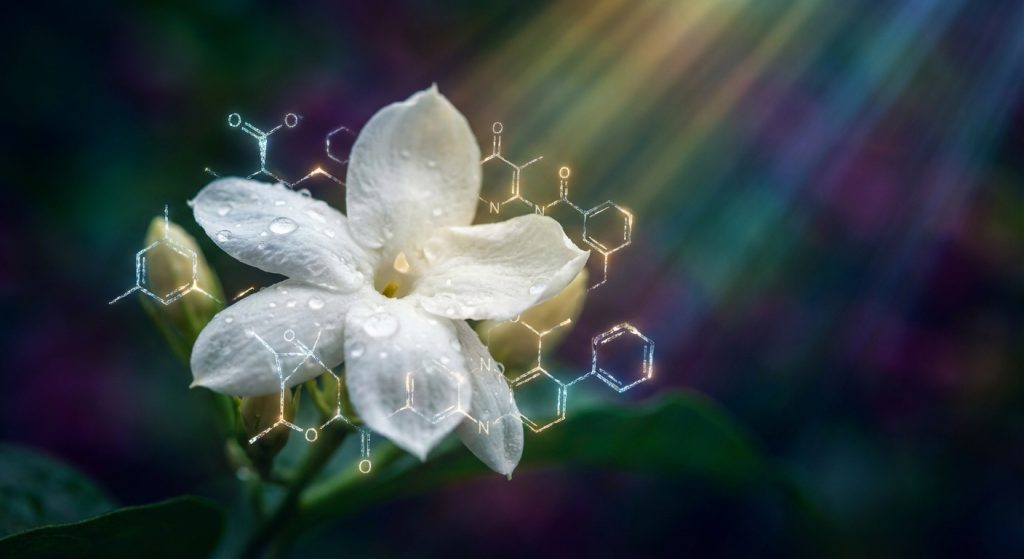
Luxury perfume makers understand that scent is an art. It’s also a science. Floral notes are central to many iconic fragrances. But what makes a rose smell like a rose? Or a jasmine blossom so captivating? The answer lies in complex floral scent chemistry. This field explores the molecules that create these beautiful aromas. Understanding this chemistry elevates perfumery to a new level. It allows for the creation of truly unique and enduring scents.
This article delves into the fascinating world of floral scent chemistry. We will explore the key compounds involved. We will also discuss how these compounds interact. Furthermore, we will touch upon the art of capturing and recreating these natural scents. This knowledge is invaluable for any luxury perfume maker.
The Building Blocks: Volatile Organic Compounds (VOCs)
Floral scents are primarily made of Volatile Organic Compounds (VOCs). These are organic chemicals. They easily evaporate at room temperature. This volatility allows them to travel through the air. That’s how we detect them as scents. Plants produce these VOCs for various reasons. These include attracting pollinators. They also use them to deter herbivores. Sometimes, they are for defense against pathogens.
The sheer diversity of floral scents is astounding. This diversity comes from the vast array of VOCs produced. Different flowers have different scent profiles. This is due to unique combinations and concentrations of these compounds. Even within the same species, scent can vary. Factors like climate and soil play a role. This is why understanding the chemistry is so important.
Key Chemical Classes in Floral Scents
Several classes of VOCs are particularly important in floral fragrances. These classes include:
- Alcohols: Many floral alcohols contribute fresh, green, or rosy notes. For instance, geraniol has a rose-like scent. Linalool offers a fresh, floral, and slightly citrusy aroma.
- Esters: Esters often impart fruity or sweet notes. They can add a delightful lift to floral compositions. For example, ethyl acetate can smell like pears.
- Aldehydes: Aldehydes are known for their powerful, often diffusive scents. They can add sparkle and radiance. Many classic perfumes use aldehydes. Think of Chanel No. 5.
- Terpenes: These compounds are common in many plants. They can contribute to floral, citrus, or even woody notes. Limonene, found in citrus, also appears in some floral essences.
- Phenols: While less common as primary floral notes, some phenols can add spicy or sweet nuances. Eugenol, found in cloves, has a warm, spicy scent.
Each of these classes contains numerous individual compounds. Their specific structures determine their unique olfactory properties. Therefore, the nuanced interplay of these molecules creates the complex beauty of a floral scent.
The Art of Extraction: Capturing Nature’s Essence
To recreate floral scents, perfumers must first capture them from nature. This is a delicate process. It requires specific techniques. The goal is to isolate the VOCs without damaging them. Common extraction methods include:
1. Distillation
Distillation is a widely used method. It involves heating plant material. This releases the volatile oils. Steam is often used. The steam carries the oils. It then condenses. The oil and water separate. This yields an essential oil. This method is effective for many flowers. However, some delicate flowers can be damaged by heat. For example, delicate jasmine or tuberose might not fare well with direct heat distillation.
2. Solvent Extraction
Solvent extraction uses chemical solvents. These solvents dissolve the aromatic compounds. Common solvents include hexane or ethanol. This method is gentler. It is suitable for heat-sensitive flowers. The process yields a concrete. This is a waxy substance. It is then further processed. This creates an absolute. Absolutes are highly concentrated. They retain the full fragrance profile.
3. Enfleurage
Enfleurage is an ancient technique. It uses fat to absorb the scent. Flower petals are spread on glass plates. These plates are coated with fat. The fat absorbs the floral aroma. The fat is then washed. This removes the scent. It leaves a perfumed oil. This method is labor-intensive. It is rarely used today. However, it was crucial historically. It captured the essence of delicate flowers like jasmine and tuberose.
Each extraction method produces a different type of aromatic material. These materials have varying strengths and nuances. They are the perfumer’s palette.
The Symphony of Molecules: Creating Fragrance
Once the aromatic compounds are extracted, the perfumer’s art truly begins. This involves blending these natural extracts. It also involves using synthetic aroma chemicals. The goal is to create a harmonious and lasting fragrance. Perfumers work with a vast palette of ingredients. They arrange these into top, middle, and base notes. This structure gives a perfume its evolution over time.
Top Notes
These are the first scents you notice. They are light and volatile. They evaporate quickly. Floral top notes often include fresh, green, or citrusy elements. Think of bergamot or lemon zest. These notes create the initial impression.
Middle Notes (Heart Notes)
These notes emerge after the top notes fade. They form the core of the fragrance. Floral heart notes are crucial. They define the perfume’s character. Classic examples include rose, jasmine, lily of the valley, and ylang-ylang. These scents are richer and more complex. They create the main theme of the perfume.
Base Notes
These are the longest-lasting notes. They provide depth and foundation. Base notes are heavier and less volatile. They anchor the fragrance. While not always floral, they complement floral notes beautifully. They can include woods, resins, or musks. For instance, a rose perfume might have a sandalwood base.
The magic of perfumery lies in balancing these notes. A skilled perfumer understands how different molecules interact. They can create a scent that is both captivating and enduring. The chemistry of floral scents provides the raw materials for this art.
Beyond Nature: Synthetic Aroma Chemicals
While natural extracts are precious, synthetic aroma chemicals are indispensable. They offer several advantages. Firstly, they can replicate rare or expensive natural scents. For example, lily of the valley is notoriously difficult to extract. Synthetics allow perfumers to use its scent reliably. Secondly, synthetics can create novel aromas. They expand the perfumer’s creative palette. They also ensure consistency. Natural ingredients can vary batch to batch. Synthetics offer predictability.
Many floral notes in modern perfumery are achieved through synthetic means. These are often molecules identified from natural sources. Scientists then synthesize them in labs. This is more sustainable. It also makes these scents accessible. For example, the clean, fresh scent of hedione (a jasmine derivative) is a popular synthetic. It adds radiance and diffusion to many fragrances.
The development of synthetic aroma chemicals has revolutionized perfumery. It allows for greater creativity and accessibility. It also helps in preserving natural resources. For instance, reducing reliance on endangered plants for certain scents is a significant benefit. You can learn more about the future of sustainable fashion, which often intersects with these material innovations.
The Science of Perception: How We Smell Flowers
Our sense of smell is complex. It involves specialized receptors in our nose. These receptors bind to specific VOC molecules. This binding sends signals to our brain. The brain interprets these signals as scents. Different molecules fit different receptors. This is why we perceive different smells. The sheer number and variety of VOCs in flowers create a complex olfactory landscape.
The way we perceive a scent is also subjective. It can be influenced by memory and emotion. This is why a particular floral scent might evoke different feelings in different people. However, the underlying chemistry is universal. Understanding these chemical interactions helps in predicting scent profiles. It also aids in creating consistent and desirable fragrances.
Factors Influencing Scent Perception
- Concentration: The amount of a specific VOC present significantly impacts its perceived intensity. A low concentration might be barely noticeable. A high concentration could be overwhelming.
- Mixture Effects: VOCs rarely exist in isolation. Their interaction in a mixture can create synergistic or antagonistic effects. This means the combined scent can be greater than, or less than, the sum of its parts.
- Genetics: Individual genetic makeup influences the number and type of olfactory receptors. This can lead to variations in how people perceive certain smells.
- Environment: Temperature, humidity, and even background odors can affect how a scent is perceived.
Therefore, capturing and recreating floral scents is not just about identifying molecules. It’s also about understanding how these molecules behave and how they are perceived. This holistic approach is key to creating truly masterful perfumes.
Floral Chemistry in Luxury Perfumery: A Competitive Edge
For luxury perfume makers, a deep understanding of floral scent chemistry offers a significant advantage. It allows for:
- Authenticity: Recreating the nuanced scent of a rare flower with precision.
- Innovation: Developing entirely new floral accords by combining known molecules in novel ways.
- Longevity: Crafting fragrances that evolve beautifully on the skin. This involves understanding how different VOCs interact over time.
- Sustainability: Utilizing synthetic chemistry to reduce pressure on endangered natural resources. This aligns with growing consumer demand for eco-conscious products.
- Quality Control: Ensuring batch-to-batch consistency in fragrance profiles.
By mastering the science behind the scent, luxury brands can elevate their creations. They can offer more than just a fragrance. They can offer an experience rooted in scientific understanding and artistic vision. This is particularly relevant in today’s market. Consumers are increasingly interested in the provenance and composition of the products they buy. For instance, understanding the science behind plant life can inform choices in many industries, including those focused on food safety or even the creation of new materials.
Conclusion: The Enduring Allure of Floral Chemistry
Floral scent chemistry is a captivating field. It bridges the gap between nature’s artistry and scientific precision. For luxury perfume makers, this knowledge is not just academic. It is a tool for innovation, authenticity, and artistic expression. By understanding the volatile organic compounds that create these enchanting aromas, perfumers can craft scents that linger in the memory. They can evoke emotions and tell stories. The power of a flower’s scent is immense. Understanding its chemical heart unlocks its full potential.
Frequently Asked Questions
What is the most common floral scent compound?
There isn’t one single “most common” compound across all floral scents. However, compounds like linalool (found in lavender and many other flowers) and geraniol (associated with roses) are very prevalent and important in creating floral notes.
Can all floral scents be extracted naturally?
No, not all floral scents can be easily or effectively extracted from nature. Some flowers have very delicate aromas that are destroyed by heat or solvent processes. In these cases, synthetic aroma chemicals are used to recreate the scent profile.
How do synthetic floral scents differ from natural ones?
Synthetic floral scents can be identical to their natural counterparts if they are synthesized from identified natural molecules. However, they also allow for the creation of novel scents or the enhancement of certain notes. Natural extracts often contain a complex blend of hundreds of compounds, giving them a unique richness and nuance that can be challenging to replicate perfectly with synthetics alone.
Why are some floral scents more expensive than others?
The cost of floral scents is often determined by the difficulty and yield of extraction. Rare flowers, those that require labor-intensive methods like enfleurage, or those that produce very little essential oil per unit of plant material will naturally be more expensive. Synthetic alternatives can offer a more cost-effective solution.
How does floral scent chemistry relate to sustainability in perfumery?
Understanding floral chemistry allows perfumers to identify key aroma molecules. This enables the development of synthetic versions, reducing the need to harvest large quantities of natural ingredients, some of which may be rare or endangered. This contributes to more sustainable practices within the fragrance industry.
