Seismology: Understanding Earthquakes and Building Stronger Futures
Published on February 4, 2026 by Admin

Earthquakes are powerful natural events. They shake the ground beneath us. Seismology is the science that studies them. It helps us understand why they happen. Furthermore, it guides us in building structures that can withstand them. This resilience is crucial for our safety.
What is Seismology?
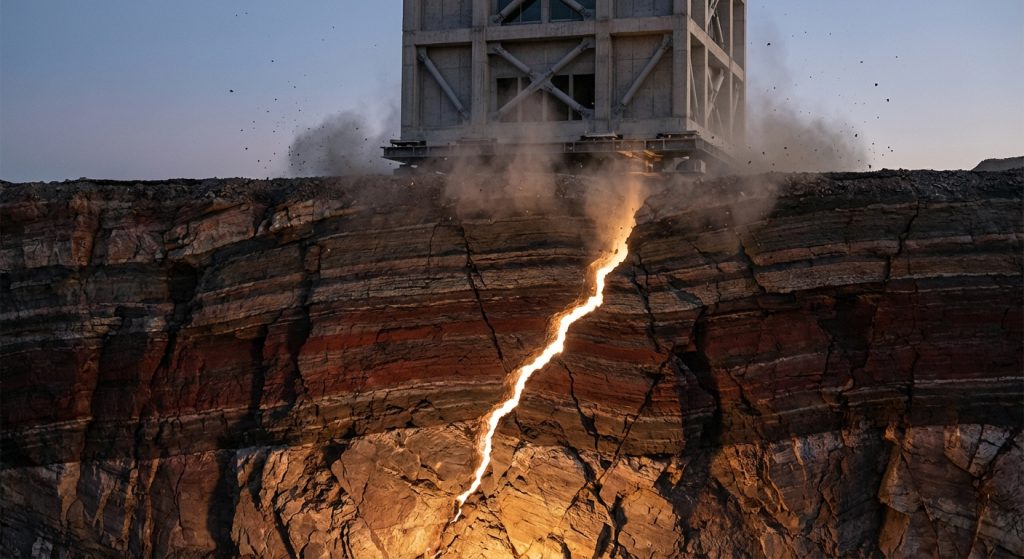
Seismology is a branch of geophysics. It focuses on earthquakes and seismic waves. These waves travel through the Earth. They are generated by sudden movements. These movements often occur along faults.
The Earth’s Inner Workings
Our planet is not a solid ball. It has layers. The outer layer is the crust. It is broken into large pieces called tectonic plates. These plates are constantly moving. They float on a semi-fluid layer called the mantle.
Sometimes, these plates get stuck. Stress builds up over time. When the stress becomes too great, the plates slip. This sudden release of energy causes an earthquake. The point where the slip occurs is the focus. The point directly above it on the surface is the epicenter.
Types of Seismic Waves
Earthquakes produce different types of waves. These waves travel at different speeds. They also have different effects.
Body Waves
Body waves travel through the Earth’s interior. There are two main types:
- P-waves (Primary waves): These are the fastest waves. They compress and expand the rock they travel through. They can travel through solids, liquids, and gases.
- S-waves (Secondary waves): These waves are slower than P-waves. They move rock particles perpendicular to the direction of wave travel. Importantly, they can only travel through solids.
Surface Waves
Surface waves travel along the Earth’s surface. They are generated when body waves reach the surface. They are slower but often more destructive.
- Love waves: These waves move the ground side to side.
- Rayleigh waves: These waves cause the ground to move in an elliptical motion, like ocean waves.
Measuring Earthquakes
Scientists use seismographs to detect and record earthquakes. These instruments measure the ground motion. The data collected allows us to determine the earthquake’s magnitude and location.
Magnitude Scales
Magnitude measures the energy released by an earthquake. The Richter scale was the first widely used scale. However, the Moment Magnitude Scale (MMS) is now preferred. It provides a more accurate measure for larger earthquakes. For instance, a magnitude 7 earthquake releases much more energy than a magnitude 6. Specifically, each whole number increase on the scale represents about 32 times more energy released.
Intensity Scales
Intensity measures the effects of an earthquake. It describes the shaking and damage at a specific location. The Modified Mercalli Intensity (MMI) scale is commonly used. It ranges from I (not felt) to XII (catastrophic destruction).
Earthquakes and Structural Resilience
One of the most critical applications of seismology is in engineering. It informs how we design and build structures. This ensures they can withstand seismic forces.
Understanding Seismic Hazards
Seismologists analyze historical earthquake data. They also study fault lines. This helps identify areas prone to earthquakes. This is known as seismic hazard assessment. Building codes are then developed based on these assessments. For example, regions near active fault lines have stricter building requirements.
Engineering for Earthquakes
Structural engineers use seismological data. They design buildings to be earthquake-resistant. This involves several strategies:
- Foundation design: Strong foundations are essential. They anchor the structure securely.
- Material selection: Flexible and strong materials are preferred. Steel and reinforced concrete are common choices.
- Damping systems: These systems absorb seismic energy. They reduce the shaking force on the building. Examples include base isolation and tuned mass dampers.
- Bracing and shear walls: These provide lateral stability. They resist the sideways forces of an earthquake.
The goal is not to make buildings earthquake-proof. Instead, it is to make them earthquake-resilient. This means they should avoid catastrophic collapse. They should also protect occupants and minimize damage. In addition, understanding how different structures respond to seismic events is crucial. This knowledge helps refine building codes and engineering practices over time.
The Science Behind Structural Resilience
Building resilient structures involves more than just following codes. It requires a deep understanding of how forces interact with materials. Engineers consider factors like soil type, building height, and shape. Additionally, they model potential earthquake scenarios. This allows for proactive design choices.
Base Isolation
This technique separates the building’s foundation from the ground. It uses flexible bearings or pads. These allow the ground to move beneath the building. However, the building itself remains relatively stable. As a result, seismic forces are significantly reduced.
Dampers
Dampers act like shock absorbers. They dissipate the energy from seismic waves. This prevents that energy from reaching the main structure. There are various types, including viscous dampers and friction dampers. Therefore, they play a vital role in mitigating earthquake damage.
Material Science
Advances in material science are also key. New composites and alloys offer greater strength and flexibility. These materials can better absorb and dissipate seismic energy. Consequently, they contribute to more robust and resilient structures. The development of self-healing concrete is another exciting area. This material can repair small cracks that form during seismic events.
Predicting Earthquakes: A Complex Challenge
Predicting the exact time and location of an earthquake remains a significant challenge. However, seismologists can identify areas with a high probability of future earthquakes. This is based on fault activity and historical patterns. Research continues into potential precursors, such as changes in ground deformation or gas emissions. Nevertheless, reliable short-term prediction is not yet possible. Therefore, preparedness and resilience are paramount.
The Role of Technology
Technology plays an ever-increasing role in seismology and earthquake preparedness. Advanced sensors and satellite data provide real-time monitoring. Furthermore, artificial intelligence is being used to analyze vast datasets. This can help identify subtle patterns and potential precursors. For instance, AI algorithms can process seismic wave data more efficiently. This leads to faster detection and analysis of earthquakes.
Early warning systems are also becoming more sophisticated. These systems can detect the initial, faster P-waves. They then send alerts before the slower, more damaging S-waves arrive. This gives people a precious few seconds to take cover. Such systems can be life-saving in densely populated areas. This technological advancement is a direct outcome of seismological research and engineering innovation.
Conclusion
Seismology is a vital scientific discipline. It unravels the mysteries of earthquakes. More importantly, it provides the knowledge to build a safer world. Understanding seismic waves and hazards allows us to engineer structures that can withstand these powerful forces. As technology advances, our ability to monitor, understand, and mitigate the impact of earthquakes will only grow. Therefore, continued investment in seismological research and resilient infrastructure is essential for global safety and security. By combining scientific understanding with innovative engineering, we can build communities that are better prepared for the Earth’s natural seismic activity.
Frequently Asked Questions
What is the difference between magnitude and intensity?
Magnitude measures the energy released at the earthquake’s source. Intensity measures the shaking and damage at a specific location on the surface. For example, a large magnitude earthquake can have varying intensities depending on distance and local geology.
Can buildings be made completely earthquake-proof?
It is extremely difficult and cost-prohibitive to make buildings completely earthquake-proof. The goal of modern engineering is to achieve earthquake resilience. This means designing structures that can withstand seismic events without catastrophic collapse, protecting lives and minimizing damage.
Why are S-waves more destructive than P-waves?
S-waves cause shearing and shaking motion that is more damaging to structures. P-waves, while faster, are primarily compressional. The side-to-side and up-and-down motion of S-waves and surface waves can destabilize buildings and infrastructure.
How can I prepare my home for an earthquake?
Secure heavy furniture to walls. Store heavy items on lower shelves. Secure water heaters. Have an emergency kit ready with food, water, and first-aid supplies. Learn how to shut off utilities if necessary. Practice earthquake drills regularly.
What is the most seismically active region in the world?
The “Ring of Fire” is the most seismically active region. It is a horseshoe-shaped zone around the Pacific Ocean. It accounts for about 90% of the world’s earthquakes. This is due to the movement of several tectonic plates.