Harnessing Earth’s Fire: Geothermal Energy Explained
Published on February 4, 2026 by Admin
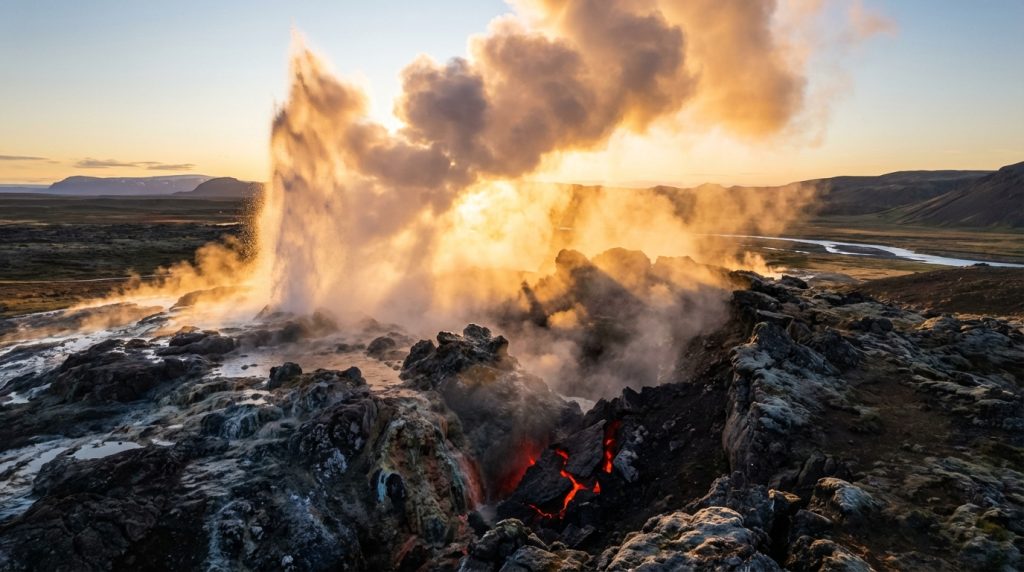
Our planet holds immense power beneath its surface. This power comes from volcanic activity. Geothermal energy taps into this heat. It offers a sustainable way to generate electricity. This article explores how we use this natural resource. We will look at its connection to volcanoes. We will also discuss its role in our energy future.
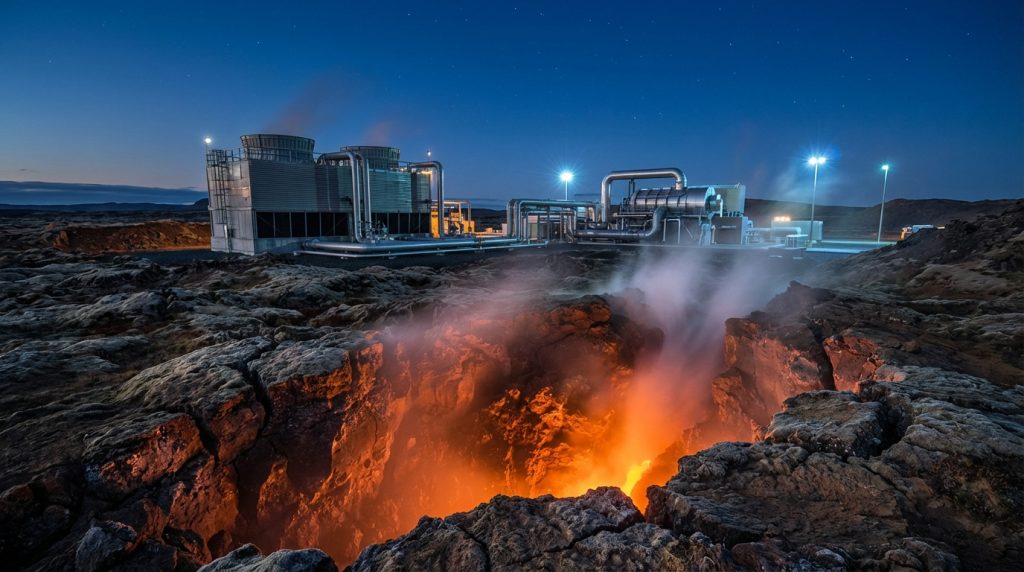
What is Geothermal Energy?
Geothermal energy is heat from within the Earth. This heat originates from the planet’s core. It is also generated by radioactive decay. Volcanic areas are rich in this heat. These regions often have hot rocks and magma close to the surface. Geothermal power plants use this heat. They convert it into usable energy.
This process is quite direct. Hot water or steam is brought to the surface. This is done through wells. The steam then drives turbines. These turbines are connected to generators. Electricity is produced as a result. It is a clean and renewable energy source. Therefore, it is a key part of sustainable power generation.
The Link Between Volcanoes and Geothermal Power
Volcanoes are a clear sign of intense heat below the surface. They are essentially vents for the Earth’s internal heat. Areas with recent volcanic activity are prime locations for geothermal energy. This is because magma chambers are close to the surface. Magma heats underground water. This creates reservoirs of hot water and steam.
These reservoirs are crucial. They provide the fluid needed for geothermal power plants. The hotter the reservoir, the more efficient the energy extraction. Countries situated on tectonic plate boundaries often have significant geothermal potential. For instance, Iceland is a leader in geothermal energy. This is due to its location on the Mid-Atlantic Ridge, a volcanically active zone.
Types of Geothermal Power Plants
There are several ways to harness geothermal energy. The method used depends on the temperature and state of the geothermal fluid.
Dry Steam Power Plants
These are the oldest type of geothermal plants. They use steam directly from underground reservoirs. The steam is piped to turbines. It then drives the generators. These plants are most efficient when the reservoir produces dry steam. However, such reservoirs are rare.
Flash Steam Power Plants
These are the most common type. They use a mixture of hot water and steam. The hot water is brought to the surface. The pressure drops suddenly. This causes the hot water to “flash” into steam. This steam is then used to drive turbines. Excess water is often reinjected back into the ground.
Binary Cycle Power Plants
These plants use moderately hot geothermal water. The water is not hot enough to flash into steam efficiently. Instead, the geothermal water heats a secondary fluid. This secondary fluid has a lower boiling point. It vaporizes easily. This vapor then drives the turbines. Binary cycle plants are more versatile. They can operate with lower temperatures.
Advantages of Geothermal Energy
Geothermal energy offers many benefits. It is a reliable and consistent power source. Unlike solar and wind power, it is not dependent on weather conditions. Therefore, it provides baseload power. This is crucial for grid stability.
- Renewable and Sustainable: The Earth’s heat is a virtually inexhaustible resource.
- Low Emissions: Geothermal plants produce very low greenhouse gas emissions. Some emissions are released, but they are significantly less than fossil fuels.
- Small Land Footprint: Compared to other energy sources, geothermal plants require less land.
- Reliable Baseload Power: It operates 24/7, providing a constant supply of electricity.
- Reduced Dependence on Fossil Fuels: It diversifies the energy mix and reduces reliance on non-renewable resources.
Challenges and Considerations
Despite its advantages, geothermal energy faces some challenges. Extracting geothermal resources can be complex. Sometimes, drilling can trigger minor seismic activity. This is known as induced seismicity. However, this is rare and usually minor. Also, the initial cost of drilling and plant construction can be high.
Another consideration is the location of geothermal resources. They are often found in remote areas. This can lead to transmission challenges. Furthermore, geothermal fluids can sometimes contain dissolved gases and minerals. These need to be managed properly to prevent pollution. However, modern technology is addressing these issues effectively.
The Future of Geothermal Energy
The potential for geothermal energy is vast. Technological advancements are making it more accessible. Enhanced Geothermal Systems (EGS) are a promising development. EGS can create geothermal reservoirs in areas without natural hot water or steam. This significantly expands the potential for geothermal power. It could unlock vast untapped resources globally.
Furthermore, research is ongoing to improve efficiency. We are also looking at ways to reduce costs. As the world transitions to cleaner energy, geothermal power will play a larger role. It offers a stable, renewable, and low-emission energy solution. Investing in geothermal technology is investing in a sustainable future. It is a powerful example of how we can harness natural processes for our energy needs.
Frequently Asked Questions (FAQs)
Is geothermal energy truly renewable?
Yes, geothermal energy is considered renewable. The Earth’s internal heat is constantly replenished through natural processes. As long as the Earth exists, geothermal heat will be available.
Are geothermal power plants safe for the environment?
Geothermal power plants have a much lower environmental impact than fossil fuel plants. They produce minimal greenhouse gases. However, there can be some release of gases like hydrogen sulfide. Modern plants have systems to capture and reinject most of these gases.
Can geothermal energy be used for heating and cooling directly?
Absolutely. Geothermal heat pumps are a very efficient way to heat and cool buildings. They use the stable temperature of the Earth just a few feet below the surface. This is different from large-scale power generation but uses the same core principle of Earth’s heat.
What is the lifespan of a geothermal power plant?
Geothermal power plants are built to last. Their operational lifespan can be 30 years or more. The underground reservoirs are managed to ensure sustainable extraction over long periods.
How does geothermal energy compare to other renewables like solar and wind?
Geothermal energy offers a significant advantage in consistency. Unlike solar and wind, which are intermittent, geothermal provides a constant power supply. This makes it ideal for baseload power generation. However, its geographical availability is more limited than solar or wind.