
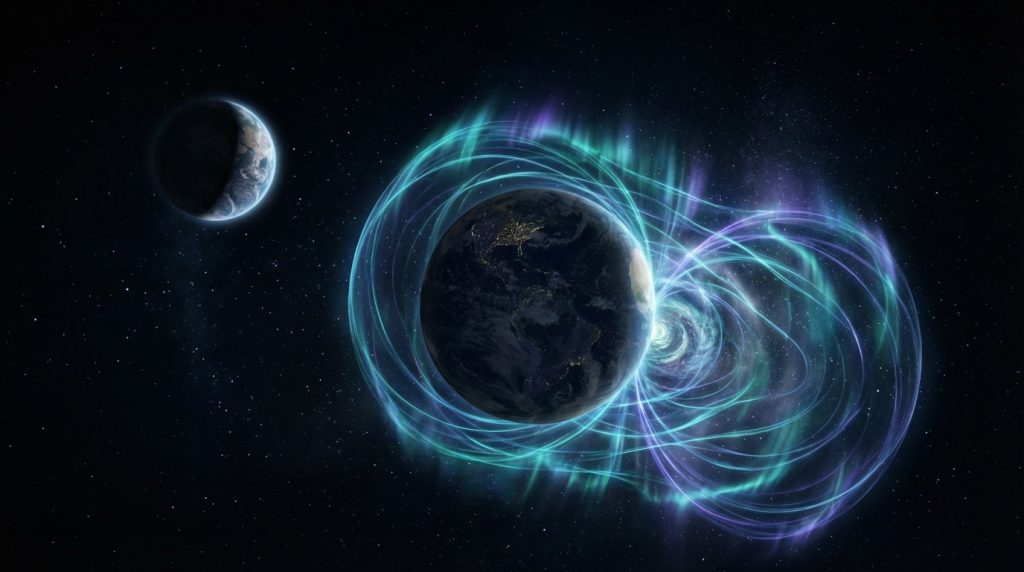
Our planet is surrounded by an invisible shield. This is Earth’s magnetic field. It is generated deep within the Earth’s core. Furthermore, this field plays a crucial role in life as we know it. It protects us from harmful solar radiation. However, its influence extends much further. Magnetic fields significantly impact both animal and plant life. This article explores these fascinating interactions.
The Vital Shield: Protection from Space
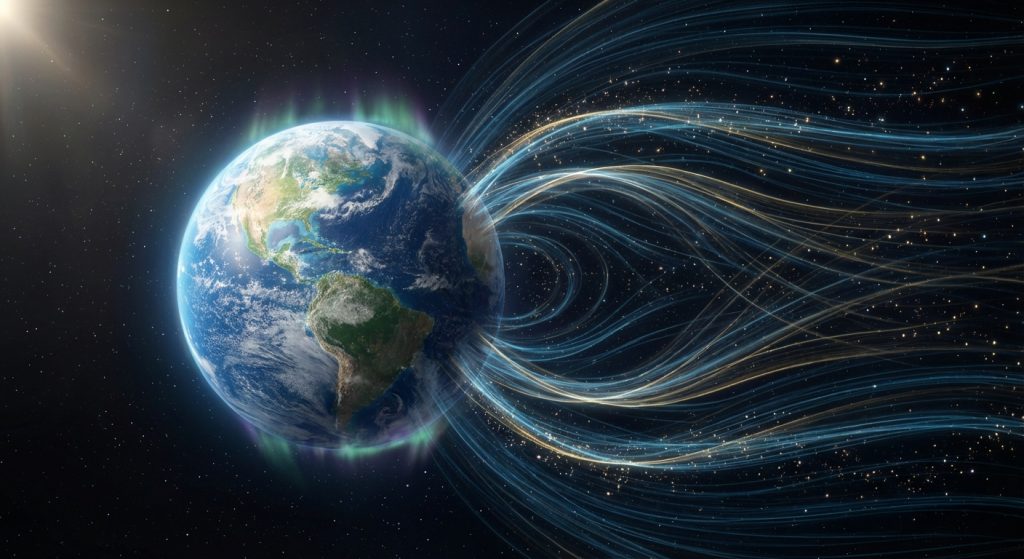
Firstly, the magnetic field acts as a planetary shield. It deflects charged particles from the sun. These particles are known as the solar wind. Without this protection, life on Earth would be very different. The solar wind can strip away our atmosphere over time. It can also damage DNA. Therefore, the magnetic field is essential for habitability.
Moreover, this shield is not uniform. It has poles, similar to a bar magnet. The field lines extend far into space. These lines guide charged particles. They often concentrate near the magnetic poles. This is why we see the auroras, or Northern and Southern Lights. They are a beautiful visual representation of this interaction.
Animal Navigation: A Magnetic Sense
Many animals possess an incredible ability. They can sense and use Earth’s magnetic field. This sense is called magnetoreception. It helps them navigate vast distances. For instance, migratory birds use it to find their way. They travel thousands of miles. They do this seasonally, returning to the same locations.
In addition, sea turtles also rely on this sense. They navigate across entire oceans. They return to their hatching beaches. This is a remarkable feat of biological navigation. Even small organisms like bacteria can sense magnetic fields. They use tiny magnetic crystals within their cells. These crystals are called magnetosomes. They help them orient themselves.
Scientists are still researching how magnetoreception works. Several theories exist. One suggests a chemical reaction in the eye. This reaction might be sensitive to magnetic fields. Another theory involves tiny magnetic particles. These particles could act like a compass needle. Understanding this sense is key to understanding animal behavior. It also sheds light on the evolution of life.
Birds and Their Compass
Birds are perhaps the most well-studied example. They use magnetic compasses. This is true even on cloudy days. It is when visual cues are not available. Some research suggests they can also sense magnetic inclination. This helps them determine their latitude. Therefore, they have a sophisticated navigation system.
Marine Life’s Magnetic Map
Marine animals like salmon and whales also exhibit magnetoreception. They use it for long-distance migrations. This is vital for their survival. It helps them find food sources. It also aids in reproduction. As a result, they can complete their life cycles successfully.
Plant Life: Subtle Influences
The influence of magnetic fields on plants is less understood. However, research suggests subtle but significant effects. Plants have been shown to respond to magnetic fields. This response can affect their growth and development.
For example, studies have observed changes in root growth. Magnetic fields can influence the direction of root elongation. They can also impact overall plant biomass. Some experiments show increased germination rates. Others indicate enhanced nutrient uptake. Therefore, magnetic fields might play a role in plant health.
Growth and Development
Magnetic fields can affect cellular processes in plants. They might influence enzyme activity. They could also impact ion transport across cell membranes. These changes, though small, can accumulate. This leads to observable differences in plant growth. For instance, experiments with crops like corn and wheat have shown varied responses. Some showed accelerated growth. Others showed changes in flowering time.
Seed Germination
Seed germination is another area of interest. Pre-treating seeds with magnetic fields has shown promise. It can sometimes lead to faster and more uniform germination. This is particularly relevant for agriculture. It could potentially improve crop yields. However, more research is needed. The optimal field strength and duration are still being investigated.
It is important to note that these effects are often subtle. They can be influenced by many other environmental factors. Light, water, and soil nutrients are crucial. Therefore, isolating the precise impact of magnetic fields is challenging. Nevertheless, the evidence suggests a connection.
Potential Applications and Future Research
Understanding magnetoreception opens up new possibilities. In agriculture, it could lead to innovative techniques. For instance, magnetic field treatments might enhance crop growth. This could reduce the need for fertilizers. It might also improve stress tolerance in plants. Thus, it offers a sustainable approach to farming.
Furthermore, this knowledge could aid conservation efforts. If we understand how animals navigate, we can better protect their habitats. We can also mitigate threats to their migratory routes. For example, understanding bird migration patterns could inform wind farm placement. This would reduce bird mortality. It could also help us protect endangered species.
Biomimicry and Technology
The study of magnetoreception also inspires technological advancements. Biomimicry, learning from nature, is key here. Scientists are trying to replicate the biological compass. This could lead to new navigation systems. These systems might be more energy-efficient. They could also be more robust than current GPS. Imagine navigation devices that work anywhere, even without satellite signals.
Challenges and Further Study
Despite the exciting findings, much remains unknown. The precise biological mechanisms are still being uncovered. The exact sensitivity of different species varies greatly. Furthermore, the Earth’s magnetic field is not static. It fluctuates over time. It also experiences occasional disturbances. These factors add complexity to the research.
Future research will likely involve more sophisticated imaging techniques. Genetic studies will also be crucial. These will help identify the genes involved in magnetoreception. Ultimately, a deeper understanding of magnetic field interactions will benefit both science and society. It might also reveal new ways to interact with our environment. We could learn to harness Earth’s magnetic forces in novel ways.
Frequently Asked Questions
What is Earth’s magnetic field?
Earth’s magnetic field is an invisible force field. It surrounds our planet. It is generated by the movement of molten iron in the Earth’s outer core. This field acts as a protective shield against harmful solar radiation.
How do animals use magnetic fields for navigation?
Many animals possess a sense called magnetoreception. This allows them to detect and use Earth’s magnetic field for navigation. They might use it as a compass to orient themselves or as a map to find their way over long distances, like birds and sea turtles.
Can magnetic fields affect plant growth?
Yes, research suggests that magnetic fields can subtly influence plant growth. Studies have shown effects on root development, germination rates, and overall plant biomass. However, these effects are often modest and influenced by other environmental factors.
Are there any practical applications for understanding magnetoreception?
Certainly. Applications are being explored in agriculture, such as enhancing crop growth. In conservation, it can help protect migratory species. Technology might also benefit, leading to new, bio-inspired navigation systems.
Is the Earth’s magnetic field constant?
No, the Earth’s magnetic field is not constant. It fluctuates over time and can be affected by solar activity. Occasionally, it experiences disturbances, which can lead to events like geomagnetic storms.
Conclusion
In conclusion, Earth’s magnetic field is a fundamental force. It protects our planet and influences a wide array of life. From the grand migrations of birds and whales to the subtle growth patterns of plants, magnetic fields play a vital role. Continued research promises to unlock more secrets. These discoveries could lead to significant advancements. They might also deepen our appreciation for the intricate connections within our biosphere. The invisible force shaping our planet is truly remarkable.
