

Have you ever wondered if your daily choices truly matter for your long-term health? The answer is a resounding yes. While your DNA sequence is largely set at birth, it’s not the whole story. Epigenetics reveals how your lifestyle and environment can actually change how your genes are expressed. This means what you eat, how much you exercise, and even your stress levels can influence your health without altering your underlying genetic code. Therefore, understanding epigenetics empowers you to take control of your well-being.
Think of your DNA as a vast cookbook. It contains all the recipes (genes) for building and operating your body. However, not all recipes are used all the time. Epigenetics acts like a set of bookmarks or sticky notes. These notes tell your cells which recipes to read, when to read them, and how much to read them. For example, a gene might be switched “on” or “off” by these epigenetic markers. This process is crucial for development. It’s also highly responsive to your life experiences.
The Fundamentals of Epigenetics
Epigenetics literally means “on top of” genetics. It refers to changes in gene activity that do not involve alterations to the genetic code itself. These changes are heritable, meaning they can be passed down through cell division and sometimes even across generations. However, they are also dynamic. They can be influenced by many external factors throughout your life.
Key Epigenetic Mechanisms
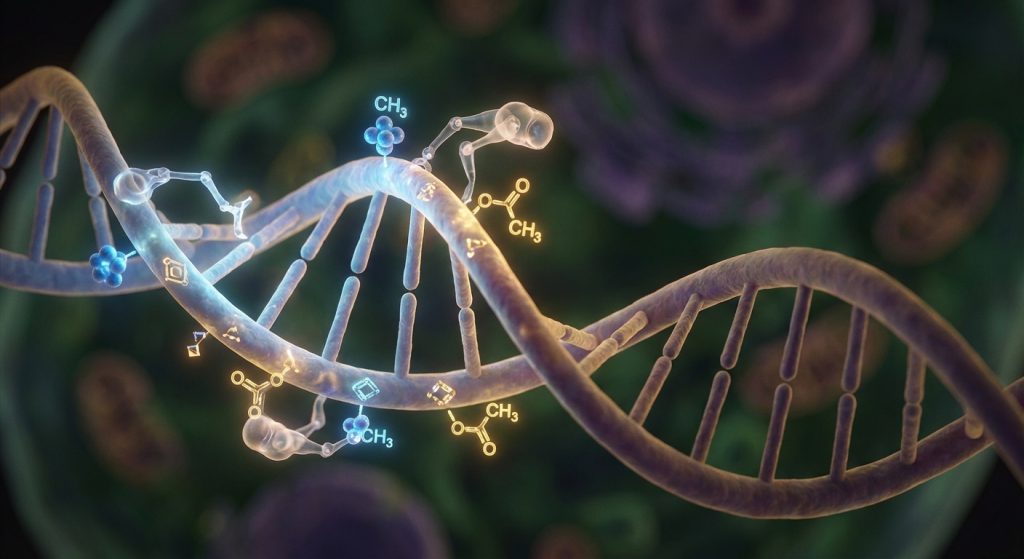
There are several primary ways epigenetics works. These mechanisms are complex but can be understood through simple analogies. Firstly, DNA methylation is a key player. It involves adding a small chemical tag (a methyl group) to DNA. This often acts like a “dimmer switch.” It can reduce the activity of a gene. Conversely, histone modification involves changes to the proteins that DNA wraps around. These changes can make DNA more accessible or less accessible for reading. As a result, gene expression is altered.
- DNA Methylation: Adding methyl groups to DNA. This often silences genes.
- Histone Modification: Altering the proteins (histones) DNA wraps around. This can turn genes on or off.
- Non-coding RNAs: Small RNA molecules that can also regulate gene expression.
These mechanisms work together. They fine-tune gene expression in response to internal and external cues. Therefore, your body can adapt to different conditions. For instance, cells in your skin are different from your brain cells. This is because different sets of genes are activated in each cell type, thanks to epigenetic regulation.
Lifestyle Factors That Shape Your Epigenome
Your daily habits have a profound impact on your epigenome. The choices you make can activate or silence genes related to health and disease. Consequently, understanding these links is empowering.
Diet and Nutrition
What you eat is a powerful epigenetic modulator. For example, certain nutrients are essential for the chemical reactions that add or remove epigenetic tags. Folate, B vitamins, and choline are particularly important for DNA methylation. A diet rich in fruits, vegetables, and whole grains provides these vital cofactors. On the other hand, diets high in processed foods and unhealthy fats can negatively impact epigenetic patterns. In conclusion, a balanced diet supports healthy gene expression.
Consider the impact of specific dietary components. For instance, compounds found in cruciferous vegetables like broccoli and cauliflower can influence gene expression related to detoxification. Similarly, omega-3 fatty acids found in fish may have anti-inflammatory effects by altering gene expression. Therefore, making conscious dietary choices is a direct way to influence your epigenetics.
Physical Activity
Regular exercise is another major factor. It can lead to widespread epigenetic changes in muscle and other tissues. For example, exercise has been shown to alter DNA methylation patterns in genes involved in metabolism and inflammation. As a result, it can improve insulin sensitivity and reduce the risk of chronic diseases. Furthermore, physical activity can promote the production of beneficial molecules that have epigenetic effects.
Even moderate activity makes a difference. Walking, cycling, or swimming can all contribute to positive epigenetic shifts. In addition, exercise can improve mood and cognitive function, partly through its influence on gene expression in the brain. Thus, staying active is a key strategy for a healthy epigenome.
Stress and Mental Well-being
Chronic stress can have detrimental epigenetic effects. It can lead to changes in gene expression in the brain. These changes are associated with increased risk of anxiety, depression, and other mental health conditions. For example, stress can alter methylation patterns in genes involved in the stress response system. This can make you more vulnerable to future stressors. Therefore, managing stress is crucial for maintaining epigenetic health.
Techniques like mindfulness, meditation, and yoga can help mitigate the negative epigenetic impact of stress. By reducing cortisol levels and promoting relaxation, these practices can help reset epigenetic markers. For instance, studies show that mindfulness meditation can lead to changes in gene expression associated with reduced inflammation. Thus, prioritizing mental well-being is as important as physical health.
Sleep Quality
Adequate, quality sleep is vital for cellular repair and regulation. It also plays a role in epigenetic maintenance. Disruptions to your sleep-wake cycle, or circadian rhythm, can lead to epigenetic alterations. For example, lack of sleep can affect the expression of genes involved in metabolism and immune function. Consequently, poor sleep is linked to an increased risk of obesity, diabetes, and cardiovascular disease. You can learn more about optimizing your sleep cycle in our article on Mastering Your Inner Clock for a Longer Life.
Environmental Exposures
Exposure to toxins, pollutants, and even social factors can influence epigenetics. For example, exposure to air pollution has been linked to epigenetic changes associated with respiratory and cardiovascular diseases. Similarly, certain chemicals found in plastics or pesticides can act as endocrine disruptors. They can interfere with normal gene expression. Therefore, minimizing exposure to environmental toxins is important.
Epigenetics and Disease Risk
Epigenetic changes are implicated in the development of many diseases. These include cancer, heart disease, diabetes, and neurodegenerative disorders. Importantly, epigenetic alterations can occur early in life. They can even be influenced by factors experienced by your parents or grandparents.
Cancer
In cancer, epigenetic changes can lead to uncontrolled cell growth. For example, genes that normally suppress tumor formation can be silenced through DNA methylation. Conversely, genes that promote cell division can become overactive. Therefore, epigenetic therapies are a growing area of cancer treatment. These therapies aim to reverse harmful epigenetic changes. Personalized medicine, which tailors treatments based on your genetic makeup, also considers epigenetic factors. You can read more about Personalized Medicine: DNA Tailors Cancer Treatments.
Cardiovascular and Metabolic Diseases
Lifestyle factors like diet and exercise have profound epigenetic influences on heart and metabolic health. For instance, epigenetic modifications can affect genes involved in cholesterol metabolism, blood pressure regulation, and insulin sensitivity. As a result, individuals with unhealthy lifestyles may develop epigenetic patterns that increase their risk of heart disease and type 2 diabetes. Therefore, adopting a healthy lifestyle is a powerful preventive measure.
Neurodegenerative Diseases
The brain is highly responsive to environmental influences. Epigenetic changes are increasingly recognized as playing a role in conditions like Alzheimer’s and Parkinson’s disease. For example, factors such as diet, stress, and learning experiences can alter gene expression in brain cells. This can affect neuronal function and survival. Consequently, research is exploring how to use epigenetic interventions to protect brain health.
Taking Control: Harnessing Epigenetics for Health
The good news is that many epigenetic changes are reversible. You have the power to influence your epigenome through your daily choices. By adopting a healthy lifestyle, you can promote beneficial gene expression and reduce your risk of disease.
Practical Steps for an Epigenetic-Friendly Lifestyle
Here are actionable steps you can take:
- Eat a nutrient-dense diet: Focus on whole foods, fruits, vegetables, and lean proteins. Ensure adequate intake of B vitamins and folate.
- Stay physically active: Aim for at least 150 minutes of moderate-intensity exercise per week.
- Manage stress effectively: Practice mindfulness, meditation, or other relaxation techniques regularly.
- Prioritize sleep: Aim for 7-9 hours of quality sleep per night. Maintain a consistent sleep schedule.
- Avoid toxins: Minimize exposure to pollutants, pesticides, and harmful chemicals.
- Stay socially connected: Strong social bonds are linked to better health outcomes.
Furthermore, continuous learning about your health can be beneficial. Understanding how your body works is a powerful tool. For example, exploring the gut-brain axis can reveal how your digestive health impacts your mood and focus. You can find more information in our article on The Gut-Brain Axis: Your Digestion Dictates Your Mood.
The Future of Epigenetics
Research in epigenetics is rapidly advancing. Scientists are uncovering new links between lifestyle, environment, and gene expression. This knowledge holds immense promise for developing personalized health strategies. For instance, future medical treatments may be tailored not just to your genes, but also to your epigenetic profile. This could lead to more effective prevention and treatment of a wide range of diseases. In conclusion, epigenetics offers a dynamic and hopeful perspective on health and longevity.
Frequently Asked Questions (FAQ)
What is the difference between genetics and epigenetics?
Genetics refers to the study of genes and heredity – the DNA sequence itself. Epigenetics, on the other hand, studies changes in gene activity that do not involve alterations to the DNA sequence. These changes can be influenced by lifestyle and environment.
Can epigenetic changes be passed down to children?
Yes, some epigenetic changes can be inherited. These are called transgenerational epigenetic inheritance. However, the extent and mechanisms are still areas of active research.
Is it possible to reverse negative epigenetic changes?
In many cases, yes. Lifestyle interventions like diet, exercise, and stress management can positively influence your epigenome. Therefore, adopting healthy habits can help counteract some negative epigenetic marks.
How quickly do lifestyle changes affect epigenetics?
The timeline varies. Some epigenetic changes can occur relatively quickly, within weeks or months of adopting new habits. Others may take longer to manifest or become established.
Can epigenetics explain why identical twins can have different health outcomes?
Yes, epigenetics can help explain this. While identical twins share the same DNA, their life experiences and environments can lead to different epigenetic modifications over time. This can result in variations in their health and disease susceptibility.
