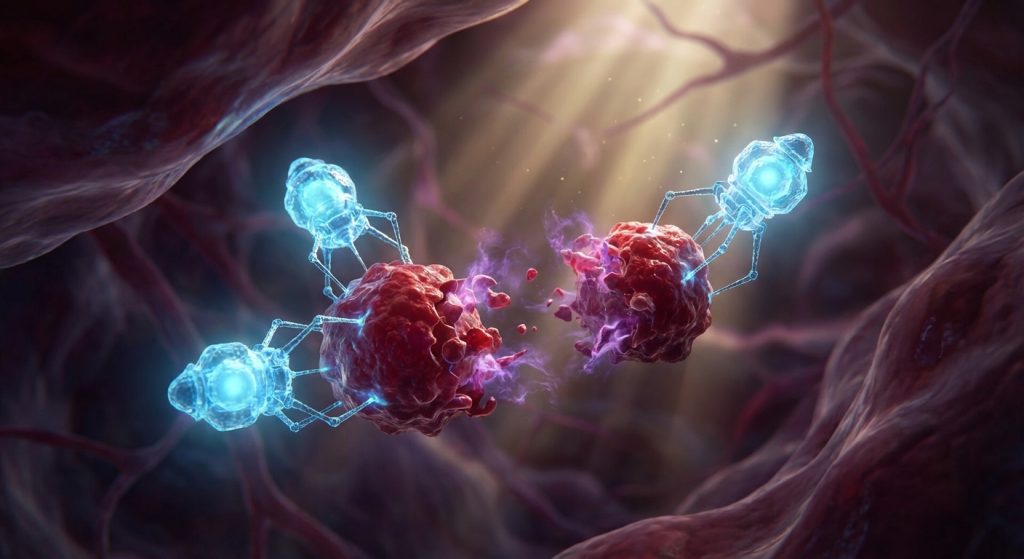
Cancer remains a significant global health challenge. Traditional treatments often struggle to differentiate between healthy and cancerous cells. This leads to harmful side effects. However, a new frontier is emerging. Nanotechnology offers unprecedented precision. It allows us to target tumors at the molecular level. This breakthrough promises more effective cancer therapies.
The Promise of Nanotechnology in Oncology
Nanotechnology involves manipulating matter at the atomic and molecular scale. This scale, typically 1 to 100 nanometers, is incredibly small. For context, a human hair is about 80,000 nanometers wide. At this scale, materials exhibit unique properties. These properties can be harnessed for advanced medical applications. Specifically, in cancer treatment, nanotechnology enables highly targeted drug delivery.
Traditional chemotherapy drugs are often distributed throughout the body. This means they affect healthy cells as well as tumor cells. As a result, patients experience debilitating side effects. These can include hair loss, nausea, and a weakened immune system. Nanoparticles, however, can be engineered. They can be designed to selectively accumulate in tumor sites. Therefore, they deliver therapeutic agents directly to cancer cells. This minimizes damage to healthy tissues. It also enhances the drug’s efficacy.
How Nanoparticles Target Tumors
There are several mechanisms by which nanoparticles can target tumors. One key mechanism is the Enhanced Permeability and Retention (EPR) effect. Tumors often have abnormal and leaky blood vessels. These vessels have larger pores than those in healthy tissue. Nanoparticles, being small, can extravasate through these leaky vessels. Once inside the tumor, they tend to accumulate. This is because tumors often have poor lymphatic drainage. Therefore, the nanoparticles are ‘retained’ within the tumor microenvironment.
Another strategy involves functionalizing nanoparticles. This means attaching specific molecules to their surface. These molecules can act as ‘homing devices’. They can bind to specific receptors or antigens that are overexpressed on cancer cells. For instance, antibodies or ligands can be used. When the nanoparticle encounters a cancer cell expressing the target receptor, it binds. This ensures the drug is delivered precisely where it is needed. This targeted approach is a major advancement.
Types of Nanocarriers for Drug Delivery
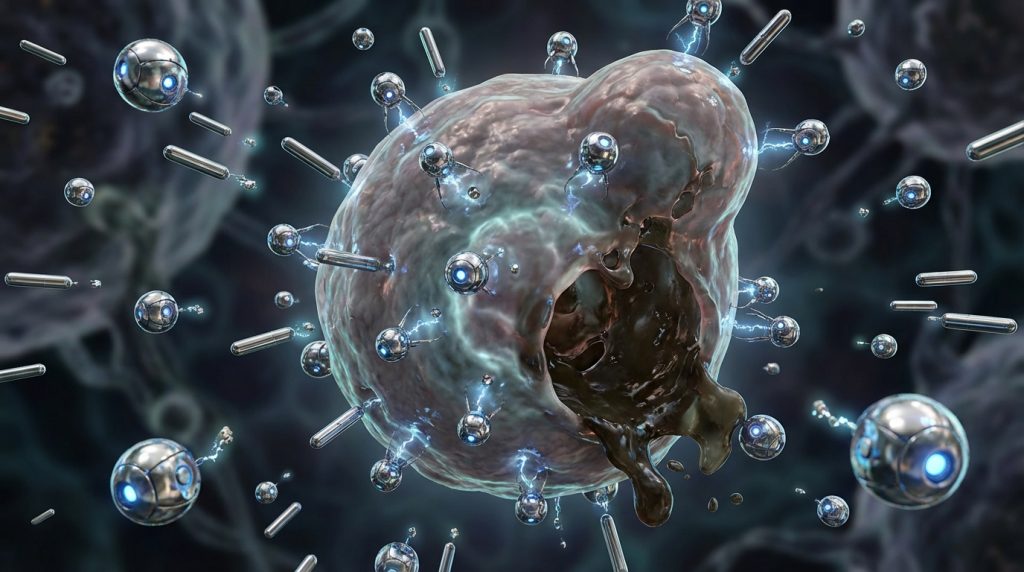
A variety of nanomaterials are being explored for cancer drug delivery. Each has unique advantages. Common examples include:
- Liposomes: These are spherical vesicles made of lipid bilayers. They can encapsulate both hydrophobic and hydrophilic drugs. Liposomes are biocompatible and biodegradable. They can be modified to improve tumor targeting.
- Polymeric Nanoparticles: These are made from biodegradable polymers. They offer excellent control over drug release kinetics. Polymers can be designed to degrade slowly, releasing the drug over an extended period.
- Dendrimers: These are highly branched, tree-like macromolecules. Their precise structure allows for high drug loading capacity. They can also be functionalized easily for targeted delivery.
- Micelles: These are self-assembled structures formed by amphiphilic molecules. They can encapsulate poorly soluble drugs in their hydrophobic core. Micelles are generally smaller than liposomes.
- Gold Nanoparticles: These are known for their unique optical properties. They can be used for both drug delivery and photothermal therapy. Heat generated by gold nanoparticles can destroy cancer cells.
- Carbon Nanotubes: These are cylindrical molecules made of carbon atoms. They possess excellent mechanical and electrical properties. They can be used to deliver drugs and genes.
Each of these nanocarriers can be further engineered. For example, they can be coated with polyethylene glycol (PEGylation). This helps to evade the immune system. It also prolongs their circulation time in the bloodstream. Consequently, more nanoparticles reach the tumor site.
Advantages of Nanotechnology in Drug Delivery
The application of nanotechnology in drug delivery offers several significant advantages over conventional methods:
- Enhanced Efficacy: By concentrating drugs at the tumor site, higher local concentrations are achieved. This leads to a more potent anti-cancer effect.
- Reduced Side Effects: Minimizing drug exposure to healthy tissues significantly reduces systemic toxicity. This improves patient quality of life.
- Improved Solubility: Many potent anti-cancer drugs are poorly soluble in water. Nanocarriers can encapsulate these drugs, making them deliverable.
- Controlled Release: Nanoparticles can be designed to release their payload in a sustained or triggered manner. This allows for better therapeutic control.
- Combination Therapy: Nanoparticles can carry multiple drugs or therapeutic agents simultaneously. This enables synergistic treatment approaches. For instance, delivering both chemotherapy and gene therapy agents.
- Diagnostic Capabilities: Some nanoparticles can also be used for imaging. This allows for simultaneous diagnosis and treatment, a concept known as theranostics.
Furthermore, nanotechnology opens doors for treating previously untreatable cancers. It also offers hope for overcoming drug resistance. This is a major hurdle in current cancer therapies. For example, researchers are developing nanoparticles that can deliver drugs directly into drug-resistant cancer cells. This circumvents the resistance mechanisms. Therefore, it re-sensitizes the tumor to treatment.
Challenges and Future Directions
Despite the immense promise, challenges remain in translating nanotechnology from the lab to the clinic. One major concern is the long-term toxicity of nanoparticles. While they are designed to be biocompatible, their behavior in the body over extended periods needs thorough investigation. Accumulation in organs like the liver, spleen, and kidneys is a potential issue. Rigorous preclinical and clinical trials are essential to address these safety concerns.
Another challenge is the cost and scalability of producing nanomedicines. Manufacturing nanoparticles consistently and in large quantities can be complex and expensive. Developing cost-effective and scalable production methods is crucial for widespread clinical adoption. Regulatory hurdles also exist. Ensuring the safety and efficacy of these novel drug delivery systems requires robust regulatory frameworks.
Looking ahead, the future of nanotechnology in drug delivery is bright. Research is focused on developing ‘smarter’ nanoparticles. These might respond to specific physiological cues within the tumor microenvironment. For example, nanoparticles that release their payload only when they encounter the acidic pH of a tumor. Or those that are activated by specific enzymes overexpressed in cancer cells. This level of control further refines targeting. It also minimizes off-target effects.
Moreover, the integration of artificial intelligence (AI) and machine learning is accelerating nanomedicine research. AI can help design nanoparticles with optimal properties. It can also predict their behavior in the body. This speeds up the discovery and development process significantly. You can explore how AI is accelerating drug discovery for various applications.
Conclusion
Nanotechnology represents a paradigm shift in cancer treatment. By enabling precise targeting of tumors at the molecular level, it offers a powerful new weapon against this devastating disease. The ability to deliver drugs more effectively while minimizing side effects is transformative. While challenges in safety, scalability, and regulation persist, ongoing research and technological advancements are paving the way for widespread clinical application. The era of precision oncology, powered by nanotechnology, is well underway. It holds immense promise for improving patient outcomes and ultimately, finding cures for cancer.
Frequently Asked Questions
What is nanotechnology in the context of drug delivery?
Nanotechnology in drug delivery refers to the use of materials and devices at the nanoscale (typically 1-100 nanometers) to improve how drugs are administered, distributed, metabolized, and excreted. For cancer therapy, it specifically involves using nanoparticles to deliver anti-cancer agents directly to tumor cells.
How do nanoparticles specifically target cancer cells?
Nanoparticles can target cancer cells through several mechanisms. These include the Enhanced Permeability and Retention (EPR) effect, where leaky tumor blood vessels allow nanoparticles to accumulate. They can also be ‘functionalized’ with molecules that bind specifically to receptors overexpressed on cancer cells.
What are the main benefits of using nanotechnology for cancer treatment?
The main benefits include enhanced drug efficacy due to higher local concentrations at the tumor site, reduced side effects on healthy tissues, improved solubility for difficult-to-deliver drugs, controlled drug release, and the potential for combination therapies and theranostics (simultaneous diagnosis and treatment).
What are some common types of nanocarriers used in cancer drug delivery?
Common nanocarriers include liposomes, polymeric nanoparticles, dendrimers, micelles, gold nanoparticles, and carbon nanotubes. Each has unique properties that can be leveraged for specific therapeutic goals.
What are the biggest challenges facing nanomedicine in cancer treatment?
Key challenges include ensuring long-term safety and minimizing potential toxicity, developing cost-effective and scalable manufacturing processes, and navigating complex regulatory pathways for approval.
Are there any nanoparticles that can also help diagnose cancer?
Yes, some nanoparticles can be engineered for diagnostic purposes, such as imaging. This integration of diagnosis and therapy is known as theranostics, allowing for more personalized and effective treatment strategies.