Quantum Biology: Life’s Quantum Secrets Revealed
Published on February 5, 2026 by Admin
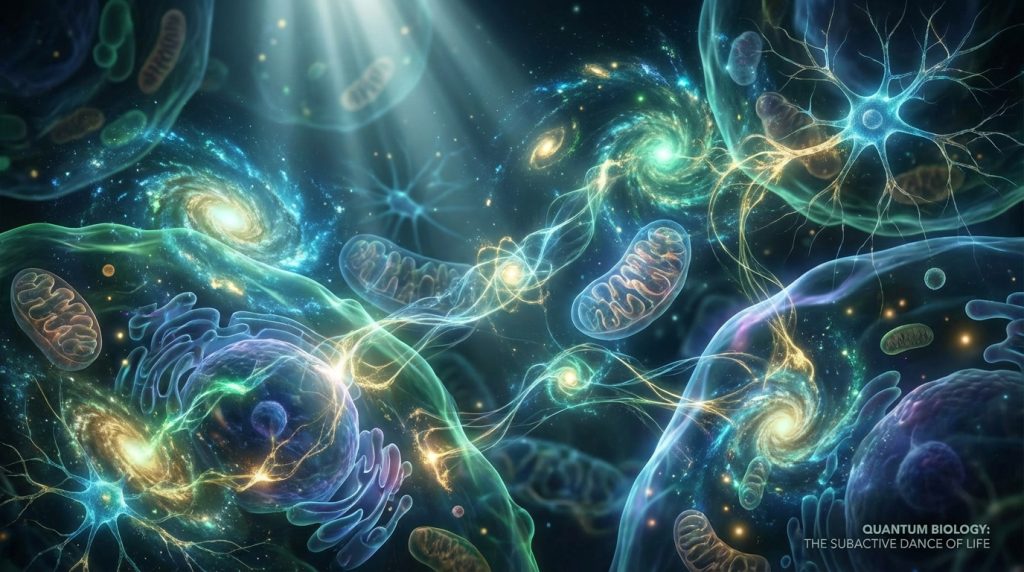
Life is a marvel. It operates on complex chemical reactions. These reactions power everything from a single cell to entire ecosystems. For a long time, we thought these processes were purely classical. That is, they followed the predictable rules of everyday physics. However, a new field is emerging. It’s called quantum biology. This field explores how quantum mechanics influences life at its most fundamental levels. It suggests that quantum effects are not just for subatomic particles. They are actively at play within our cells.
Quantum mechanics deals with the strange and counter-intuitive behavior of matter and energy. Concepts like superposition and entanglement were once thought to be confined to the microscopic world. Now, scientists are finding evidence that they play a role in biological systems. This is a revolutionary idea. It bridges the gap between physics and biology in profound ways. Therefore, understanding quantum biology can offer new insights into life’s processes. It might even lead to breakthroughs in medicine and technology.
The Quantum Realm in Our Cells
Many biological processes rely on precise energy transfer. Photosynthesis is a prime example. Plants use sunlight to create energy. This process is incredibly efficient. Scientists now believe quantum coherence plays a role here. This means energy moves in a wave-like manner. It explores multiple paths simultaneously. This allows it to find the most efficient route. As a result, very little energy is lost.
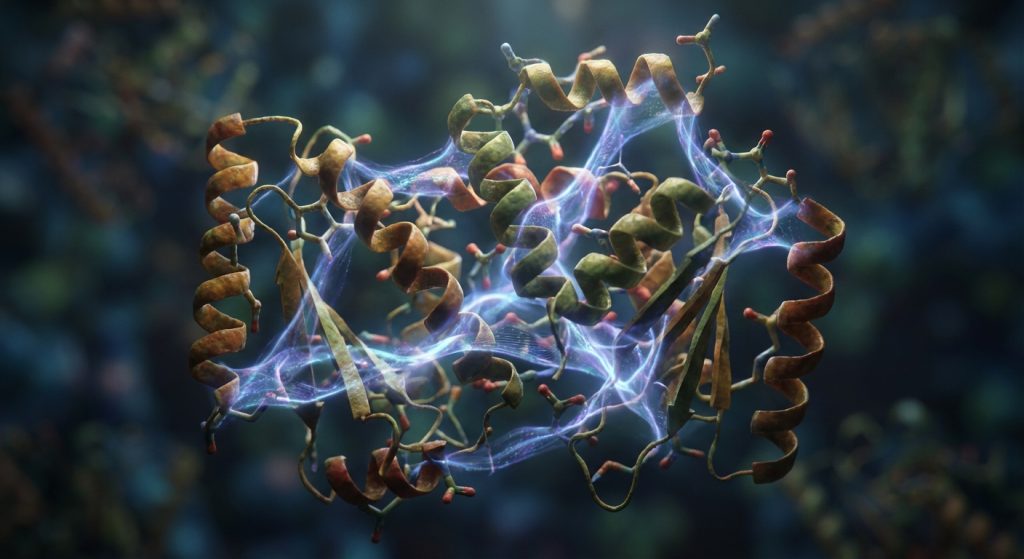
Enzyme catalysis is another area. Enzymes speed up biochemical reactions. They do this by lowering the activation energy. Quantum tunneling is thought to be involved. This is where a particle can pass through an energy barrier. It’s like a ghost walking through a wall. This quantum phenomenon allows reactions to happen faster. It is crucial for many metabolic processes.
Photosynthesis: A Quantum Powerhouse
Photosynthesis is the process by which green plants and some other organisms use sunlight to synthesize foods with the help of chlorophyll pigment. It’s a fundamental process for life on Earth. It converts light energy into chemical energy. Researchers have observed that the energy transfer within photosynthetic complexes is extremely efficient. This efficiency is hard to explain with classical physics alone. Therefore, quantum mechanical effects are considered. Specifically, quantum coherence is believed to be involved. This coherence allows the excitation energy to explore multiple pathways at once. It then settles into the most efficient one. This quantum behavior ensures minimal energy loss. As a result, plants can capture and utilize light energy with remarkable precision.
Enzyme Catalysis: Tunneling Through Barriers
Enzymes are biological catalysts. They accelerate chemical reactions within cells. Many of these reactions involve the transfer of protons or electrons. Quantum tunneling is a key quantum mechanical effect. It allows particles to overcome energy barriers. Even if they don’t have enough classical energy to do so. In enzyme-catalyzed reactions, quantum tunneling can significantly speed up the process. For instance, it is thought to be important in enzymes like alcohol dehydrogenase. This process is vital for cellular metabolism. It impacts everything from energy production to DNA repair.
Quantum Effects in Biological Systems
Beyond photosynthesis and enzymes, quantum effects are being explored in other biological phenomena. These include avian navigation and olfaction (sense of smell).
Avian Navigation: The Quantum Compass
Birds are known for their incredible migratory abilities. They can navigate vast distances with remarkable accuracy. One hypothesis suggests they use a quantum compass. This compass relies on a quantum phenomenon called radical pair mechanism. In this theory, light absorption in the bird’s eye creates pairs of molecules. These molecules have unpaired electrons. Their spins are entangled. The Earth’s magnetic field influences the spin states of these pairs. This influence is then translated into a visual signal. It helps the bird orient itself. This is a truly fascinating application of quantum mechanics in nature.
Olfaction: Quantum Vibrations and Smell
The sense of smell is another area where quantum mechanics might play a role. The traditional “lock and key” model suggests that odor molecules fit into specific receptors. However, this model doesn’t fully explain the diversity of smells. An alternative theory, the vibrational theory of olfaction, proposes that our sense of smell detects the vibrational frequencies of odor molecules. This detection might involve inelastic electron tunneling. This is a quantum mechanical process. When an electron tunnels through a molecule, it can lose energy. This energy loss corresponds to the molecule’s vibrational modes. Therefore, different vibrational patterns could be perceived as different smells. This quantum explanation offers a richer understanding of how we perceive odors.
Furthermore, the gut-brain axis is a complex communication network. It links the digestive system and the brain. This connection influences mood, cognition, and overall health. Emerging research suggests quantum effects might even play a role in how gut microbes communicate. This is a very new area of study. However, it highlights the pervasive nature of quantum phenomena.
Quantum Biology and Its Implications
The study of quantum biology has far-reaching implications. It could revolutionize our understanding of life. It also opens doors to new technological advancements.
Medicine and Drug Discovery
Understanding quantum effects in biological systems could lead to new medical treatments. For example, if quantum tunneling is crucial for certain enzyme functions, we could design drugs that modulate these processes. This could lead to more effective therapies for various diseases. Also, the precise energy transfer in photosynthesis could inspire new solar energy technologies. Quantum computing, which leverages quantum mechanics, is already being explored for drug design. Specifically, it can model molecular interactions with unprecedented accuracy. This could speed up the discovery of new medicines. For instance, quantum computing for drug design is a rapidly developing field.
Biotechnology and Bio-inspired Design
The efficiency of natural quantum processes offers a blueprint for bio-inspired technologies. Imagine artificial systems that mimic photosynthesis for energy generation. Or sensors that detect molecules based on quantum vibrational signatures, akin to olfaction. This field of bio-inspired design could lead to highly efficient and sustainable technologies. It also relates to how we understand nanotechnology in drug delivery, where precise molecular interactions are key.
Understanding Consciousness and Life Itself
Some researchers even speculate about the role of quantum mechanics in consciousness. While highly theoretical, it suggests that quantum phenomena like entanglement might be involved in brain function. This is a complex and controversial area. However, it underscores the profound questions quantum biology raises about the nature of life and consciousness.
Challenges and Future Directions
Quantum biology is a young and challenging field. Observing and proving quantum effects in warm, wet, and noisy biological environments is difficult. Decoherence, the loss of quantum properties due to environmental interactions, is a major hurdle. Scientists are developing sophisticated experimental techniques to overcome these challenges. They are using advanced spectroscopy and quantum sensors. The future of quantum biology lies in interdisciplinary collaboration. Physicists, biologists, chemists, and computer scientists must work together. This collaboration will be essential to unraveling life’s quantum secrets.
More research is needed to confirm these quantum effects. Scientists are also exploring quantum effects in areas like DNA mutations and avian magnetoreception. The potential for new discoveries is immense. As our understanding grows, we can expect quantum biology to reshape our view of life. It may also lead to transformative technologies. For example, understanding the intricate workings of biological systems could inspire new approaches to regenerative medicine.
Frequently Asked Questions (FAQ)
Is quantum biology real?
Yes, quantum biology is a recognized and active field of scientific research. While some of its applications are still theoretical, there is growing evidence for quantum effects influencing biological processes like photosynthesis and enzyme activity.
What are some examples of quantum effects in biology?
Key examples include quantum coherence in photosynthesis, quantum tunneling in enzyme catalysis, and the radical pair mechanism possibly involved in avian navigation. Research is also exploring quantum effects in olfaction and even consciousness.
How does quantum biology differ from classical biology?
Classical biology describes life’s processes using the rules of classical physics. Quantum biology, however, proposes that phenomena like superposition, entanglement, and tunneling, which are central to quantum mechanics, play a significant and functional role in living organisms.
What are the potential applications of quantum biology?
Potential applications include developing more efficient solar energy technologies, designing novel drugs and medical treatments, creating advanced biosensors, and even gaining deeper insights into the nature of consciousness. The field also informs advancements in areas like nanotechnology for targeted drug delivery.
Why is it hard to study quantum effects in living systems?
Living systems are warm, wet, and complex environments. These conditions tend to cause quantum states to lose their coherence quickly (decoherence). Detecting and measuring these delicate quantum effects in such environments is a significant experimental challenge.
Conclusion
Quantum biology represents a paradigm shift in our understanding of life. It reveals that the universe’s most fundamental laws are not confined to the subatomic realm. They are intricately woven into the fabric of biological existence. From the efficient energy capture of plants to the navigational prowess of birds, quantum mechanics is an unseen architect of life. As this field matures, it promises to unlock profound secrets. It may also pave the way for revolutionary technologies. Therefore, the interplay between physics and biology is proving to be more wondrous than we ever imagined.