AI & Animal Communication: Bridging the Species Gap
Published on February 7, 2026 by Admin
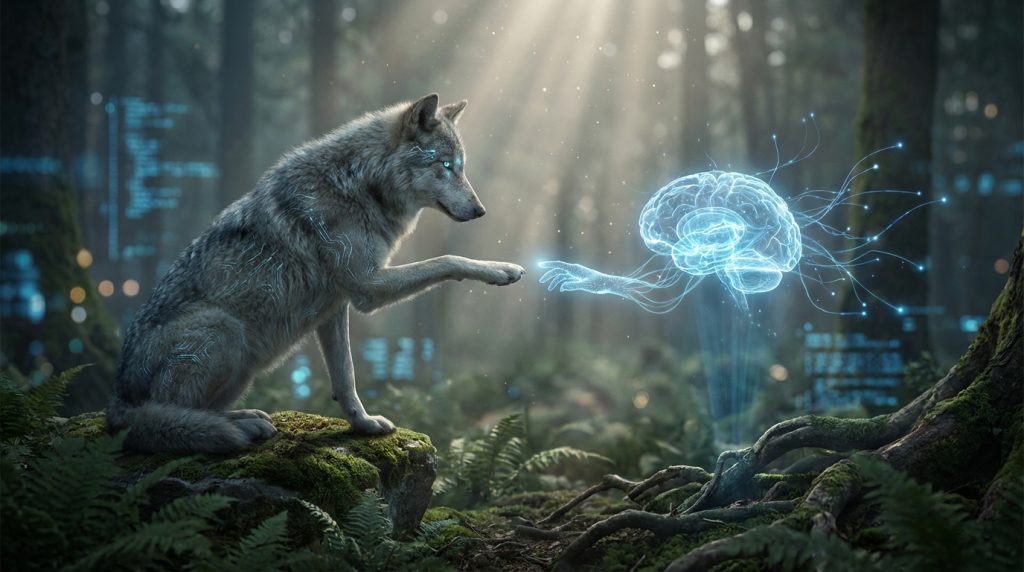
For centuries, humans have dreamed of understanding animals. We watch their behaviors. We try to interpret their sounds. Now, artificial intelligence (AI) is opening new doors. Can AI help us truly “talk” to animals? This is an exciting frontier. It blends linguistics, biology, and cutting-edge technology. Futurists are keenly watching this development. It could reshape our relationship with the natural world.
The Dawn of Interspecies AI
Historically, animal communication research involved careful observation. Scientists documented calls, gestures, and scents. However, these methods are often limited. They capture only a fraction of the communication spectrum. Moreover, interpreting these signals requires deep expertise. AI offers a powerful new lens. It can process vast amounts of data. It can also identify subtle patterns humans might miss.
Decoding Animal Languages
The core challenge is understanding “animal languages.” These are not like human languages. They often lack complex grammar. Instead, they rely on context, tone, and specific signals. For example, a bird’s song can convey alarm. It can also signal mating intent. Similarly, a dog’s bark can mean many things. It depends on the pitch and the situation.
AI algorithms are being trained on massive datasets. These datasets include recordings of animal vocalizations. They also include behavioral observations. Machine learning models can then learn to associate specific sounds. They link these sounds to particular actions or emotions. Therefore, AI is becoming a translator of sorts.
Current AI Applications in Animal Communication
Several projects are already exploring this space. They show promising results. AI is not just for sci-fi fantasies anymore. It’s becoming a practical tool. Firstly, AI is used in conservation efforts. It helps monitor animal populations. It also aids in understanding their needs.
Whale Songs and Dolphin Clicks
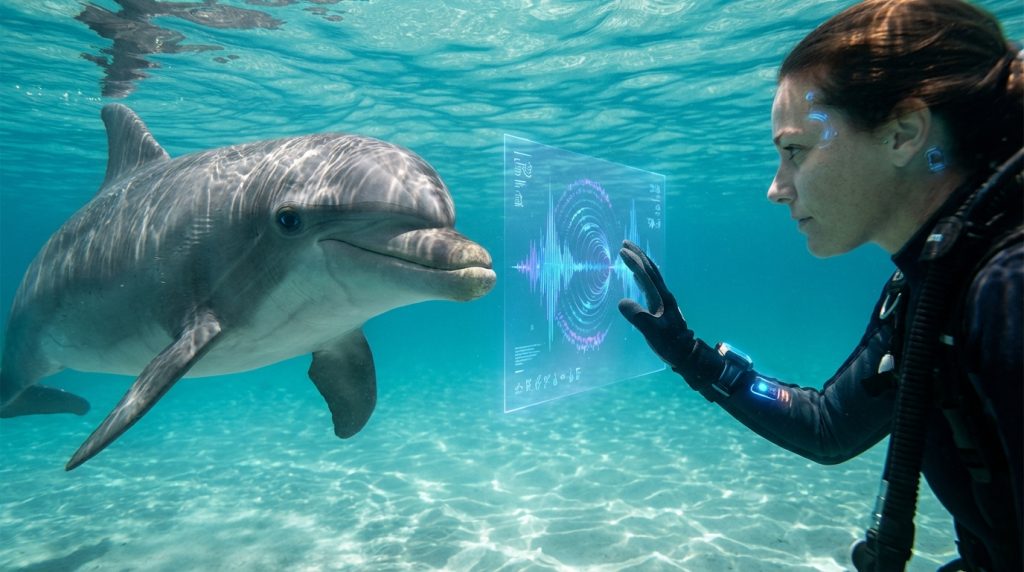
Researchers have used AI to analyze whale songs. These songs are incredibly complex. AI can identify individual whales. It can also track migration patterns. Similarly, AI is decoding dolphin communication. Dolphins use clicks and whistles. AI helps to categorize these sounds. It aims to understand their social interactions. This technology could help us protect marine life better. For instance, understanding animal navigation is crucial for conservation.
Primate Vocalizations
Primates are highly social animals. Their vocalizations are rich and varied. AI is being applied to study primate calls. It helps researchers distinguish between different calls. It also links them to specific social contexts. This research can shed light on primate intelligence. It also helps us understand their social structures. This is vital for their protection. You can learn more about primate minds in our related article.
Birdsong Analysis
Birdsong is another area of AI application. AI can identify bird species by their songs. It can also detect subtle variations. These variations can indicate health or stress. Furthermore, AI can help understand the nuances of birdsong. This is especially relevant in urban environments. For example, urban birds are changing their songs to be heard. AI can help analyze these adaptations.
Challenges and Limitations
Despite the advancements, significant challenges remain. AI is a powerful tool. However, it is not a magic bullet. Firstly, data collection is a major hurdle. Obtaining comprehensive and clean data is difficult. Animals don’t always cooperate. Secondly, context is crucial. A sound might mean different things in different situations. AI needs to learn these contextual cues.
Moreover, anthropomorphism is a risk. We tend to project human emotions and thoughts onto animals. AI models might inadvertently reinforce these biases. It is important to remain objective. We must avoid oversimplifying complex animal behaviors. The goal is understanding, not just translation. We also need to consider the ethics of de-extinction when considering our impact on species.
The Nature of Animal Consciousness
A deeper philosophical question is animal consciousness. Do animals have subjective experiences like humans? If so, how do we account for that? AI can analyze patterns. It can predict behavior. But can it truly grasp sentience? This is a complex area. It requires input from philosophy and neuroscience.
The Future of Interspecies Communication
The future looks bright, though. AI technology continues to evolve rapidly. We can expect more sophisticated tools. These tools will likely enhance our ability to communicate. They will also deepen our empathy for other species.
AI-Powered Devices
Imagine wearable devices for pets. These devices could translate barks or meows. They might offer insights into their needs and feelings. This could revolutionize pet ownership. It would foster stronger human-animal bonds. This also touches upon the science of feline vocalizations.
For wildlife, AI could power real-time monitoring systems. These systems could alert conservationists. They could warn of poaching activities. They could also signal distress calls. This aligns with efforts in AI tech for wildlife smuggling detection.
Ethical Considerations
As we advance, ethical considerations are paramount. How will this technology be used? Will it be for exploitation or for understanding? We must ensure AI is used responsibly. It should benefit both humans and animals. The goal is a more harmonious coexistence. This also relates to broader discussions on the ethics of zoos.
Frequently Asked Questions
Can AI truly translate animal languages?
While AI can identify patterns and associate sounds with behaviors, it’s more about interpretation than direct translation. We are getting closer to understanding their communication systems, but a direct word-for-word translation like human languages is unlikely given the fundamental differences in how species communicate.
What are the biggest challenges in using AI for animal communication?
The primary challenges include collecting sufficient, high-quality data, understanding the contextual nuances of animal signals, and avoiding anthropomorphic biases in interpretation. The complexity of animal consciousness also presents a philosophical hurdle.
Which animals are currently being studied with AI for communication?
Current research focuses on a variety of species, including whales, dolphins, primates, birds, and even insects. The goal is to understand their unique communication methods.
Will AI-powered translators be available for pets soon?
While some consumer-level devices are emerging, widespread, highly accurate AI translators for pets are still some way off. The technology is advancing, but significant research and development are still needed.
Conclusion
In conclusion, the intersection of AI and interspecies communication is incredibly promising. It offers a unique opportunity to bridge the gap between humans and animals. While challenges exist, the potential benefits are immense. From conservation to enhancing our relationships with pets, AI is poised to transform our understanding of the animal kingdom. Therefore, this field is one to watch closely. It promises a future where we can listen, understand, and coexist more harmoniously with all living beings on Earth.