
Smart Livestock Tracking: LoRaWAN in Highland Cattle Management
Published on February 7, 2026 by Admin

Managing livestock in remote or challenging terrains presents unique difficulties. Large-scale farmers and agri-tech startups are seeking innovative solutions. They need to improve efficiency and animal welfare. Smart livestock tracking offers a powerful answer. Specifically, using LoRaWAN technology is proving transformative. This is especially true for cattle management in highland regions.
Therefore, this article explores how LoRaWAN is revolutionizing cattle management. We will look at its benefits for highland farms. We will also discuss its impact on operational efficiency and herd health.
The Challenge of Highland Cattle Management
Highland environments are often characterized by vast, rugged landscapes. They can also feature challenging weather conditions. These factors make traditional livestock management methods difficult. Farmers often struggle with:
- Limited connectivity and unreliable mobile signals.
- Vast grazing areas that are hard to monitor.
- Difficult terrain for physical checks.
- Timely detection of sick or lost animals.
- Ensuring animal safety and welfare in remote locations.
These challenges can lead to inefficiencies. They can also result in increased stress for both farmers and animals. Furthermore, they can impact overall productivity and profitability. Traditional methods often rely on manual checks. These are time-consuming and can be inaccurate. This is where technology can step in.
Introducing LoRaWAN for Livestock Tracking
LoRaWAN (Long Range Wide Area Network) is a wireless technology. It is designed for low-power, long-range communication. This makes it ideal for Internet of Things (IoT) applications. For livestock tracking, it offers several key advantages:
- Long Range: LoRaWAN can cover vast distances. This is crucial for expansive highland pastures. It can reach areas where traditional Wi-Fi or cellular networks fail.
- Low Power Consumption: Devices using LoRaWAN consume very little power. This means tracking collars can operate for months or even years on a single battery.
- Cost-Effective: The infrastructure and devices are generally more affordable than other wireless solutions. This makes it accessible for many farmers.
- Robustness: It is designed to work in challenging environments. It can penetrate obstacles like hills and dense foliage.
These features allow for the deployment of smart sensors. These sensors can be attached to cattle. They then transmit vital data over long distances. As a result, farmers gain unprecedented visibility into their herds.
Key Applications of LoRaWAN in Cattle Management
LoRaWAN enables a range of smart applications for cattle management. These directly address the challenges faced in highland farming.
1. Real-Time Location Tracking
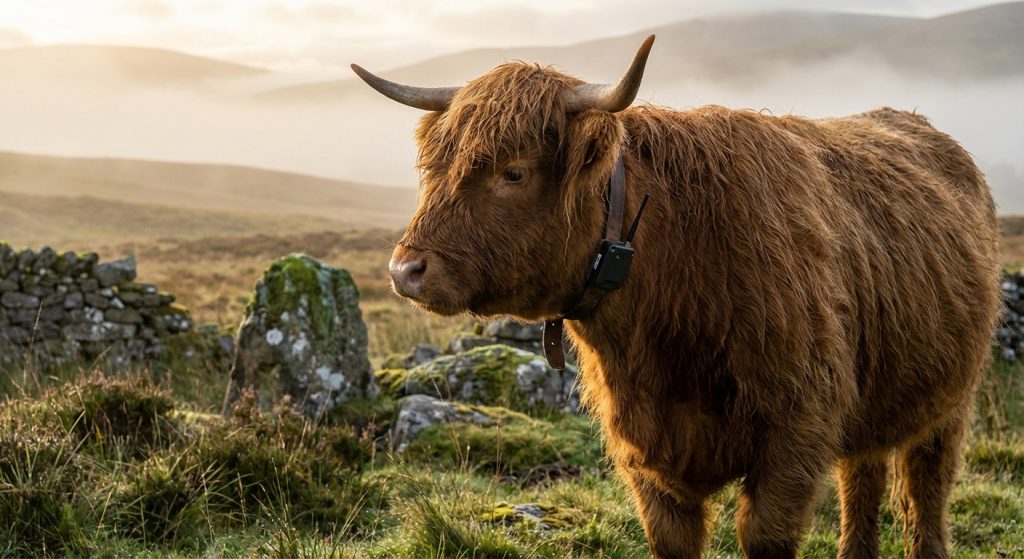
Firstly, LoRaWAN allows for precise, real-time location tracking of individual animals. Each cow can be fitted with a LoRaWAN-enabled tag. This tag sends its GPS coordinates periodically. Farmers can then view this data on a dashboard or mobile app. Therefore, they can easily locate any animal. This is invaluable for:
- Preventing livestock loss due to straying or theft.
- Efficiently gathering animals for specific tasks.
- Monitoring grazing patterns and pasture utilization.
This constant oversight significantly reduces the time spent searching for animals. It also provides a crucial layer of security.
2. Health and Activity Monitoring
Beyond just location, LoRaWAN sensors can collect more sophisticated data. Accelerometers and other sensors can monitor:
- Activity Levels: Unusual decreases or increases in movement can signal health issues.
- Ruminating Patterns: Changes in chewing and resting times can indicate digestive problems.
- Body Temperature: Elevated temperatures can be an early sign of infection.
- Location Deviations: Animals that stop moving or move to unusual areas might be in distress.
This data is transmitted wirelessly. Farmers receive alerts when an animal deviates from its normal parameters. For example, if a cow stops moving for an extended period, it could be sick or injured. The system can alert the farmer immediately. This proactive approach to animal health is a game-changer. It allows for early intervention, potentially saving lives. It also reduces the severity of illness. This technology can help identify issues before they become widespread. This is particularly important in preventing diseases from spreading through the herd. For more on animal health monitoring, consider exploring articles on smart collars for tracking cattle stress.
3. Environmental Monitoring
Furthermore, LoRaWAN can be used to monitor environmental conditions. Sensors can be placed in pastures to measure:
- Temperature and humidity.
- Soil moisture levels.
- Water availability.
This information helps farmers understand the environmental factors affecting their herd. It can inform decisions about pasture rotation and water management. This holistic approach ensures optimal conditions for animal well-being and growth.
Benefits for Agri-Tech Startups and Large-Scale Farmers
The adoption of LoRaWAN technology offers substantial benefits for both new agri-tech ventures and established large-scale farming operations.
For Agri-Tech Startups:
- Innovation Opportunity: LoRaWAN provides a robust platform for developing new smart farming solutions. Startups can create specialized sensors and software. They can focus on specific aspects of livestock management.
- Scalable Solutions: The low cost and wide coverage of LoRaWAN allow for scalable solutions. Startups can offer their products to a broad market, from small farms to large enterprises.
- Data-Driven Services: The data collected can be used to offer value-added services. This includes predictive analytics, herd health reports, and precision farming advice.
For Large-Scale Farmers:
- Increased Efficiency: Automating monitoring and data collection frees up valuable time. Farmers can focus on strategic decisions rather than routine checks.
- Improved Animal Welfare: Proactive health monitoring and reduced stress lead to healthier animals. This can result in better meat or milk production.
- Reduced Losses: Minimizing animal loss due to theft, environmental hazards, or illness directly impacts the bottom line.
- Better Resource Management: Optimizing grazing and water use leads to more sustainable farming practices.
- Data-Driven Decision Making: Access to real-time data empowers farmers to make informed decisions. This leads to better overall farm management.
In essence, LoRaWAN transforms data collection into actionable insights. This is crucial for modern, competitive agriculture. It aligns with the growing demand for sustainable and ethical farming practices. For instance, understanding animal stress levels is vital. This is a key area where smart collars are making a significant impact.
Implementation Considerations
While LoRaWAN offers many advantages, successful implementation requires careful planning.
1. Network Coverage
Firstly, assess the LoRaWAN network coverage in the target highland area. This might involve installing gateways to create a private network. Alternatively, using a public LoRaWAN network provider is an option if available.
2. Device Selection
Secondly, choose appropriate LoRaWAN devices. Select tags and sensors that are durable, weatherproof, and have sufficient battery life for the intended duration. Consider the specific data points needed for effective management.
3. Data Management and Analytics
Thirdly, establish a robust system for data management and analysis. This involves a platform to receive, store, and process the data from the sensors. Advanced analytics can then be applied to derive meaningful insights.
4. Farmer Training and Support
Finally, ensure farmers are adequately trained on how to use the system. Provide ongoing support to address any technical issues. User-friendly interfaces are paramount for widespread adoption.
As technology advances, solutions are becoming more integrated. For example, drone monitoring is also emerging as a valuable tool in livestock health management. Drone monitoring offers complementary capabilities.
The Future of Smart Livestock Tracking
The integration of LoRaWAN with other technologies like AI and machine learning will further enhance livestock management. Predictive analytics can forecast disease outbreaks or identify optimal breeding times. This synergy will lead to more efficient, sustainable, and humane farming practices. The ability to monitor animal well-being remotely is a significant step forward. It ensures that even in remote highland areas, every animal receives the attention it needs.
Moreover, the data collected can contribute to broader agricultural research. It can help understand the impact of climate change on livestock. It can also inform breeding programs for more resilient animals. This forward-looking approach is essential for the future of agriculture.
Frequently Asked Questions (FAQ)
What is LoRaWAN and why is it suitable for highland farming?
LoRaWAN is a wireless communication technology designed for long-range, low-power devices. Its ability to cover vast distances and operate with minimal power makes it ideal for remote highland environments where traditional networks are unreliable.
Can LoRaWAN devices withstand harsh weather conditions common in highlands?
Yes, LoRaWAN devices are typically designed to be rugged and weatherproof. They are built to operate reliably in challenging environmental conditions, including varying temperatures and moisture levels.
How does LoRaWAN help in preventing livestock loss?
LoRaWAN-enabled tracking tags provide real-time location data for each animal. This allows farmers to quickly locate any animal that may have strayed from the herd, preventing loss due to environmental factors or theft.
What kind of health data can LoRaWAN sensors collect from cattle?
Sensors can monitor activity levels, rumination patterns, body temperature, and movement anomalies. This data helps in detecting early signs of illness or distress, enabling timely veterinary intervention.
Is implementing a LoRaWAN system expensive for farmers?
Compared to other extensive wireless solutions, LoRaWAN infrastructure and devices are generally more cost-effective. This makes it an accessible technology for many farmers, especially when considering the potential reduction in losses and increase in efficiency.
Conclusion
Smart livestock tracking using LoRaWAN technology is a transformative solution for cattle management in highland regions. It addresses critical challenges related to connectivity, vast terrains, and animal welfare. By providing real-time location and health monitoring, LoRaWAN empowers farmers with unprecedented control and insight. This technology not only improves operational efficiency and reduces losses but also enhances animal well-being. As agri-tech continues to evolve, LoRaWAN stands as a foundational element for building smarter, more sustainable, and resilient highland farming operations.
