
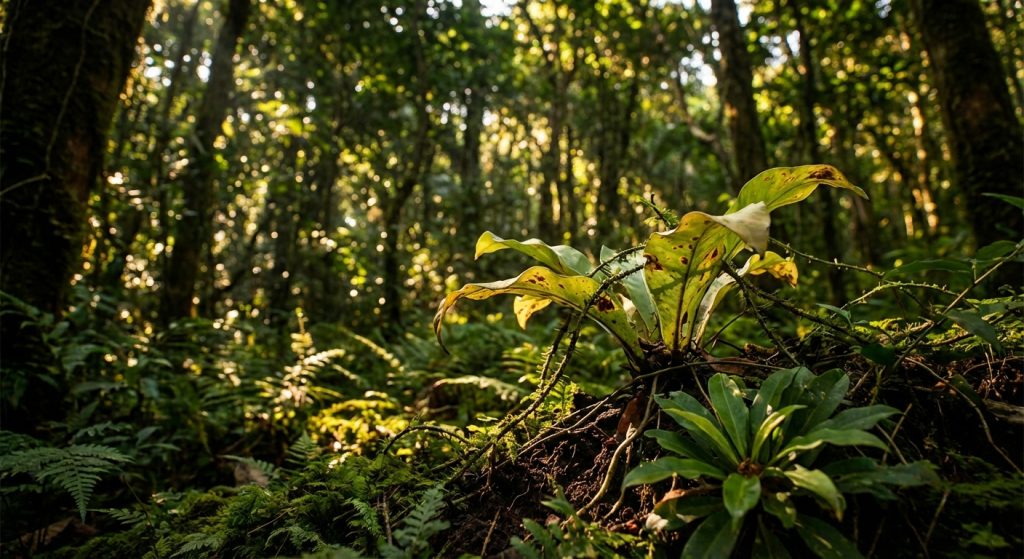
The lush jungles of Vietnam teem with life. Plants compete fiercely for resources. This competition isn’t always overt. Often, it’s a silent chemical battle. This phenomenon is called allelopathy. It’s a fascinating aspect of plant ecology. Ecologists and botany students find it particularly intriguing. Allelopathy shapes plant communities. It influences biodiversity. It’s a key survival strategy.
Plants release chemicals. These chemicals affect other plants. They can inhibit growth. They can even kill rivals. This chemical warfare is ancient. It has evolved over millennia. Understanding allelopathy is crucial. It helps us grasp jungle dynamics. It also has implications for agriculture. For example, some crops can be improved. They might be bred for allelopathic traits. This could reduce the need for herbicides. Furthermore, it offers insights into natural pest control.

What is Allelopathy?
Allelopathy is a biological phenomenon. It involves biochemical interactions. These interactions occur between plants. They can also involve microorganisms. The key is the release of specific chemicals. These are called allelochemicals. They are secondary metabolites. They are not essential for the plant’s primary life functions. However, they serve crucial roles in survival.
These chemicals are released in various ways. They can leach from roots into the soil. They can volatilize into the air. They can also be present in decaying plant matter. When these chemicals reach other plants, they have an effect. This effect is usually inhibitory. It can suppress seed germination. It can also stunt seedling growth. In some cases, it can even lead to plant death.
Mechanisms of Allelopathy
Plants employ several strategies for allelopathy. Root exudation is common. Roots release a cocktail of chemicals. These chemicals permeate the surrounding soil. They can directly harm neighboring plants’ roots. They can also alter soil chemistry. This makes it less hospitable for competitors.
Volatile organic compounds (VOCs) are another method. Some plants release airborne chemicals. These can travel to nearby plants. They can affect their physiology. This is particularly relevant in dense environments. Airflow can distribute these compounds widely. Additionally, decomposition plays a role. As plant tissues break down, they release stored allelochemicals. This can create zones of inhibition around decaying material.
Allelopathy in Vietnamese Jungles
Vietnam’s tropical rainforests are hotspots of biodiversity. They are also arenas of intense competition. Allelopathy is a significant factor here. Many plant species have evolved potent allelochemicals. These chemicals help them establish dominance. They also help them survive against numerous challengers.
For instance, certain tree species might suppress the growth of understory plants. This creates a more open forest floor beneath them. This can influence the entire ecosystem structure. The specific allelochemicals involved are diverse. They include alkaloids, phenolics, and terpenes. These compounds often have antimicrobial properties too. This can help plants defend against pathogens.
Examples from Vietnam
While specific, widely documented studies on allelopathy within Vietnamese jungles might be scarce in general web searches, the principles are universal to tropical ecosystems. For example, the dominance of certain species in rainforests is often attributed to their competitive strategies, which include allelopathy. Think of the dense canopy layer. Beneath it, plants must contend with shade and competition for nutrients. Allelopathic plants can further limit their rivals by releasing toxins into the soil. This is a common strategy in nutrient-poor tropical soils. These soils are often acidic. This acidity can enhance the release and activity of certain allelochemicals.
Consider the impact on seedling establishment. A seed falling beneath a parent tree might face a double challenge. It has to compete for light and water. It also has to contend with the parent plant’s allelopathic chemicals. This often means that seedlings of the same species struggle to grow nearby. This strategy helps prevent overcrowding. It ensures better resource distribution for the surviving offspring.
The dense ground cover in many Vietnamese jungle areas is also a testament to complex interactions. Some plants might release compounds that inhibit the germination of seeds from other species. This creates a mosaic of plant communities. Each community is shaped by the dominant allelopathic species within it. This is a dynamic process. It is constantly shifting as plant populations change.
Types of Allelochemicals and Their Effects
Allelopathy is not a one-size-fits-all phenomenon. The chemicals involved are varied. Their effects can differ greatly. Some compounds are general inhibitors. Others are highly specific. They might target only certain plant species.
Here are some common classes of allelochemicals:
- Phenolics: This is a large group. It includes phenolic acids and flavonoids. They often inhibit seed germination. They can also affect enzyme activity in target plants.
- Alkaloids: These are nitrogen-containing compounds. Many are known for their toxicity. They can disrupt cell division and growth.
- Terpenoids: These include essential oils and resins. They can affect photosynthesis. They can also interfere with hormone regulation.
- Flavonoids: Some flavonoids act as signaling molecules. Others have direct inhibitory effects. They can influence nutrient uptake.
The impact of these chemicals can be profound. They can alter root morphology. They can inhibit chlorophyll production. They can even cause DNA damage in sensitive plants. Therefore, allelopathy is a powerful evolutionary force.
Ecological Significance
Allelopathy plays a vital role in ecosystems. It influences plant species diversity. It can create clearings in forests. This allows other species to colonize. It also affects nutrient cycling. Some allelochemicals can inhibit beneficial soil microbes. Others can promote them. This creates complex soil environments.
Furthermore, allelopathy contributes to natural succession. As one plant community is inhibited, another may thrive. This drives the gradual change in species composition over time. In Vietnam’s diverse habitats, this process is continuous. It shapes the unique landscapes we see.
The study of allelopathy is also linked to understanding plant communication. While not direct “communication” like animals, plants do signal. They can warn neighbors of danger. They can also compete for resources. Allelopathy is one facet of this complex signaling. It’s a constant, silent negotiation for survival. This intricate interplay is essential for the health of the entire ecosystem. It’s a reminder that even in stillness, there is constant activity.
Applications in Agriculture and Beyond
Understanding allelopathy has practical applications. Scientists are exploring its use in sustainable agriculture. For instance, cover crops can be selected. They can be chosen for their ability to suppress weeds. This reduces the need for herbicides. This is crucial for environmental health. It also aligns with organic farming practices.
Moreover, allelopathic properties can be bred into crop plants. This could create natural pest and disease resistance. It could also improve nutrient uptake. This leads to higher yields. It also reduces reliance on synthetic inputs. This is particularly relevant for crops grown in Vietnam. Many are susceptible to pests and diseases. Finding natural solutions is key.
Beyond agriculture, allelopathy research can inform conservation efforts. It helps us understand why certain plant communities exist. It can guide restoration projects. For example, understanding allelopathic interactions can help in reintroducing native species. It ensures they have a competitive advantage. This is vital for preserving biodiversity. It contributes to the overall resilience of natural landscapes.
Challenges and Future Research
Despite its importance, allelopathy research faces challenges. Identifying and quantifying all allelochemicals is complex. Their interactions in the soil are intricate. Predicting their exact effects in a natural setting is difficult. Furthermore, environmental factors influence their activity. Temperature, soil pH, and moisture all play a role.
Future research should focus on several areas. Firstly, more detailed studies are needed. These should be conducted in specific ecosystems like Vietnamese jungles. We need to identify the key allelopathic species. We also need to understand their chemical arsenal. Secondly, advanced analytical techniques can help. These can identify novel allelochemicals. They can also elucidate their modes of action.
Additionally, integrating allelopathy with other plant interactions is important. This includes plant-microbe symbioses. It also includes herbivory. Understanding the whole picture is crucial. Finally, translating this knowledge into practical applications requires collaboration. This involves ecologists, botanists, and agricultural scientists. Their combined efforts can unlock the full potential of allelopathy. This could lead to more sustainable practices. It could also enhance our understanding of these vital ecosystems.
Frequently Asked Questions (FAQ)
Is allelopathy harmful to humans?
Direct harm to humans from typical allelopathic interactions in natural settings is rare. While some plant compounds can be toxic, they are usually present in low concentrations. They are also often specific in their action. However, some plants known for allelopathy can be poisonous if ingested. Always exercise caution with unknown plants.
Can allelopathy be used to control invasive species?
Yes, allelopathy can be a tool against invasive species. Some invasive plants release potent allelochemicals. These can suppress native flora. Conversely, researchers are exploring ways to use native plants with allelopathic properties. They can be used to inhibit invasive growth. This is a promising area for ecological restoration.
Are all plants allelopathic?
No, not all plants exhibit strong allelopathic tendencies. The degree of allelopathy varies significantly between species. Some plants have evolved highly specialized allelochemicals. Others may have very weak or no detectable allelopathic effects. It is a trait that has evolved based on evolutionary pressures.
How does allelopathy affect soil health?
Allelopathy can significantly impact soil health. Allelochemicals can alter the soil microbiome. They can inhibit beneficial bacteria and fungi. They can also affect nutrient availability. Some studies suggest that allelopathy can reduce soil enzyme activity. However, other compounds might promote certain microbial populations. The net effect is complex and context-dependent.
Can allelopathy be beneficial to the plant that produces it?
Yes, allelopathy is primarily a survival mechanism. It benefits the plant by reducing competition. This allows it to access more resources like light, water, and nutrients. It can also provide defense against pests and pathogens. Therefore, it is a crucial adaptation for plants in crowded environments.
Conclusion
Allelopathy is a silent yet powerful force. It shapes the plant communities in Vietnam’s vibrant jungles. It is a testament to nature’s ingenuity. Plants engage in sophisticated chemical warfare. This ensures their survival and dominance. Understanding these interactions is vital. It opens doors to sustainable agriculture. It also deepens our appreciation for ecological complexity. For botanists and ecologists, it is a field rich with discovery. The chemical dialogues between plants continue. They are a fundamental part of life on Earth.
