Hydroponics vs. Aquaponics: VN’s Food Security Future?
Published on February 8, 2026 by Admin
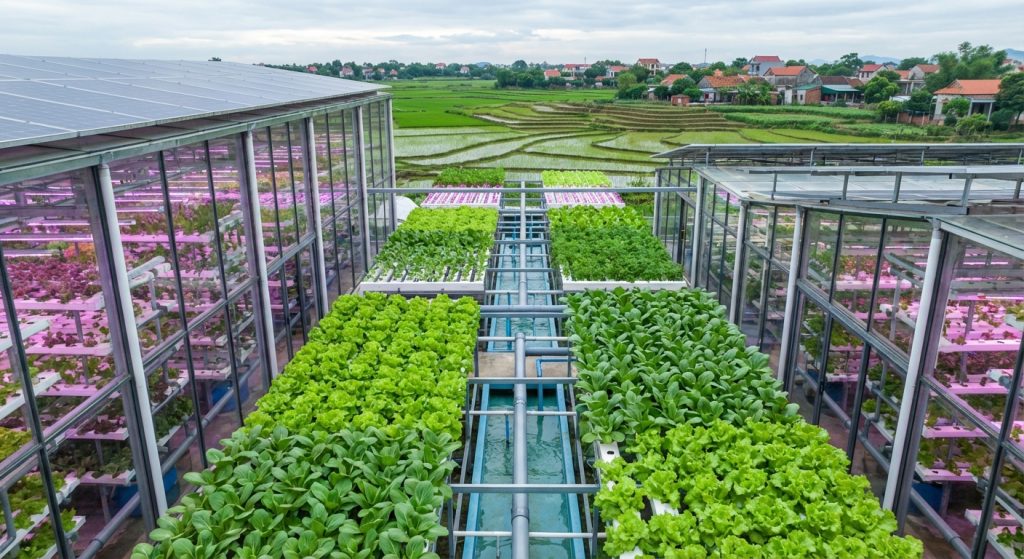
Vietnam faces a growing challenge. Feeding its expanding population is crucial. Food security is a top priority. Traditional agriculture has limits. It uses much water and land. Climate change adds more pressure. So, what are the solutions? Innovative farming methods are key. Hydroponics and aquaponics offer hope. They are soilless farming techniques. Both use water efficiently. Both can grow food in urban areas. But which is better for Vietnam’s future? Let’s explore hydroponics versus aquaponics. We will look at their pros and cons.
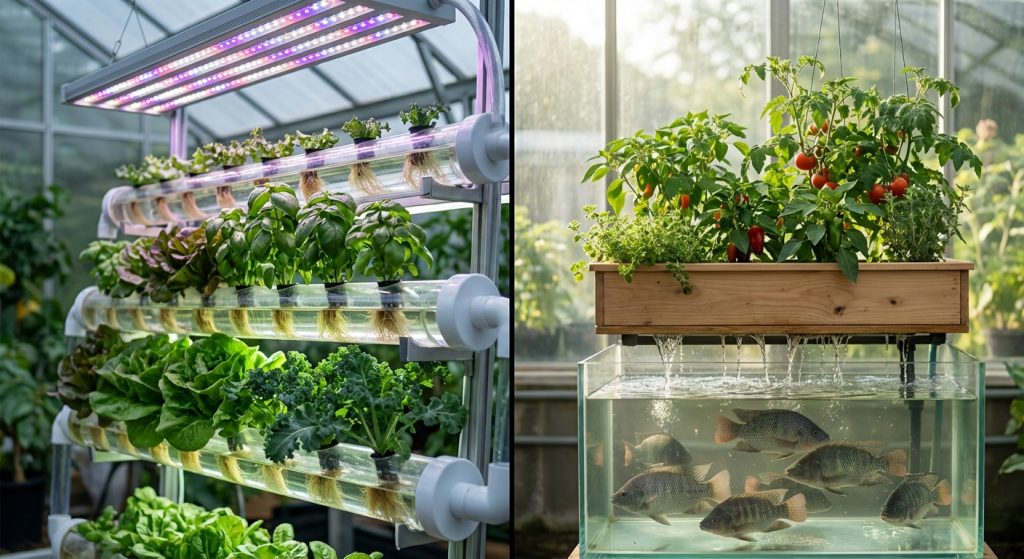
Understanding Hydroponics
Hydroponics is a method of growing plants without soil. Plants get nutrients from water. This water contains dissolved minerals. It is a precise system. You control nutrient levels exactly. Many types of hydroponic systems exist. These include Deep Water Culture (DWC). There is also Nutrient Film Technique (NFT). Drip systems and ebb and flow are common too. Hydroponics is very versatile. It can grow many types of plants. Leafy greens like lettuce and spinach do well. Tomatoes, peppers, and strawberries also thrive. This method uses up to 90% less water than soil farming. This is a huge benefit for Vietnam. Water scarcity is a real concern. Therefore, hydroponics is attractive.
Advantages of Hydroponics
- Water Efficiency: It uses significantly less water. This is critical for drought-prone regions.
- Faster Growth: Plants often grow faster. They get nutrients directly.
- Higher Yields: You can get more produce. This is from the same area.
- Less Space Needed: It’s ideal for urban farming. Vertical farms are a prime example. You can learn more about vertical farms in Vietnam’s skylines.
- Fewer Pests and Diseases: No soil means fewer soil-borne issues. This reduces the need for pesticides.
- Year-Round Production: Controlled environments allow continuous harvests.
Disadvantages of Hydroponics
However, hydroponics is not without its challenges. Firstly, it requires a significant initial investment. The equipment can be costly. Setting up a system needs expertise. You need to monitor nutrient levels closely. If something goes wrong, plants can suffer quickly. Power outages are also a risk. Pumps need electricity to run. A power failure can be disastrous. Water quality is also important. Contaminated water can harm plants.
Exploring Aquaponics
Aquaponics combines aquaculture and hydroponics. Aquaculture is fish farming. Hydroponics is soilless plant growing. In aquaponics, fish waste provides nutrients. Fish produce ammonia. Bacteria in the system convert ammonia. First, they turn it into nitrites. Then, they convert nitrites into nitrates. Plants absorb these nitrates. This process cleans the water for the fish. It creates a symbiotic ecosystem. It is a closed-loop system. This means it is very sustainable. Aquaponics can grow fish and plants together. Common fish include tilapia and catfish. Popular plants are leafy greens and herbs.
Advantages of Aquaponics
- Sustainability: It’s highly sustainable. It recycles nutrients. It uses less water than traditional farming.
- Dual Harvest: You get both fish and produce. This offers diverse income streams.
- Reduced Waste: Fish waste is utilized as fertilizer. This minimizes waste.
- Chemical-Free: It naturally fertilizes plants. Pesticides are not needed. This leads to healthier food.
- Water Savings: Like hydroponics, it conserves water.
Disadvantages of Aquaponics
Aquaponics also has drawbacks. It is more complex than hydroponics. You must manage two living systems: fish and plants. Balancing the needs of both is challenging. The initial setup cost can be high. System failures can be devastating. A problem with the fish can affect plants. A problem with plants can affect fish. It requires knowledge of both aquaculture and hydroponics. Temperature and pH levels must be carefully monitored. This ensures the health of both fish and plants.
Hydroponics vs. Aquaponics for Vietnam
Now, let’s compare them for Vietnam’s specific needs. Vietnam has a long coastline. It has a large agricultural sector. However, freshwater resources are strained. Climate change impacts are evident. Droughts and floods are more frequent. Therefore, water efficiency is paramount. Both systems excel here. Hydroponics offers simplicity in nutrient management. This might be easier for beginners. It is also very adaptable to urban settings. Vertical farms are a great fit. They maximize space. Aquaponics offers greater sustainability. It provides a dual harvest. This could be very attractive for farmers seeking diverse income. It also aligns with Vietnam’s rich tradition of aquaculture. However, the complexity of managing fish and plants together could be a hurdle. Farmers might need more training. The initial investment for aquaponics can also be higher. This is due to the need for fish tanks and filtration systems.
Consider the Mekong Delta. It is Vietnam’s food basket. It faces significant challenges from saltwater intrusion. Hydroponics could be a solution here. It uses less water and can be set up away from direct saltwater. This would allow for continued vegetable production. For coastal communities involved in aquaculture, aquaponics offers a natural progression. They can integrate plant cultivation. This would diversify their operations. Furthermore, the produce from both systems is often considered healthier. It lacks soil-borne diseases. It requires fewer pesticides. This aligns with growing consumer demand for safe, nutritious food.
For food tech investors, both systems present opportunities. Hydroponics allows for scalable, controlled environments. This is ideal for large-scale production facilities. Think of dedicated vertical farms. Aquaponics offers a more integrated, sustainable model. This appeals to investors focused on circular economy principles. The potential for a closed-loop system for aquaculture in Vietnam is immense. Aquaponics builds on this existing strength.
The Future of VN Food Security
What does the future hold? It is likely not an “either/or” situation. Vietnam will probably benefit from a combination of both. Hydroponics can provide rapid, consistent production of leafy greens and herbs. These are high-demand crops. Aquaponics can offer a more holistic approach. It integrates fish production with plant cultivation. This could be particularly impactful in rural and coastal areas. These areas already have strong ties to aquaculture. Also, consider the broader implications. Both systems can be implemented in urban centers. This reduces transportation costs and emissions. It brings food production closer to consumers. This enhances food security. It also fosters local economies. For instance, urban forests are also gaining traction. They help mitigate urban heat islands. They improve air quality. You can read more about urban forests in Ho Chi Minh City.
Moreover, the reduction in land and water usage is significant. This frees up land for other purposes. It conserves precious water resources. This is vital for long-term sustainability. The potential for reducing reliance on chemical fertilizers is also a major plus. This addresses concerns about soil degradation. The health of soil is crucial for long-term food production. Chemical fertilizers can harm the earth. You can learn more about how chemical fertilizers harm earth.
Ultimately, the choice between hydroponics and aquaponics depends on several factors. These include available resources, farmer expertise, market demand, and specific regional challenges. However, both technologies represent a significant step forward. They offer sustainable, efficient ways to grow food. They are crucial for ensuring Vietnam’s food security. They can adapt to a changing climate. They can meet the needs of a growing population. Investing in these technologies is investing in Vietnam’s future. It supports both urban and rural development.
Frequently Asked Questions (FAQ)
Is aquaponics truly more sustainable than hydroponics?
Aquaponics is often considered more sustainable. This is because it creates a symbiotic system. It recycles nutrients from fish waste. This reduces the need for external fertilizers. However, hydroponics can also be highly sustainable. It uses significantly less water than traditional farming. The “better” system depends on specific implementation and goals.
Can I grow all types of vegetables using hydroponics or aquaponics?
Most leafy greens, herbs, and many fruiting plants like tomatoes and peppers grow well. Root vegetables like potatoes and carrots are more challenging. They require different system designs. However, advancements are being made.
What is the biggest challenge for urban farmers in Vietnam using these methods?
The initial investment cost is a significant barrier. Access to reliable electricity for pumps is also crucial. Furthermore, farmers need proper training. They must understand the technical aspects of managing these systems.
Which system requires more maintenance?
Aquaponics generally requires more maintenance. This is because you are managing two biological systems: fish and plants. You must monitor water quality for both. Hydroponics requires careful monitoring of nutrient levels and pH.
Are hydroponic and aquaponic systems suitable for Vietnam’s climate?
Yes, these systems are well-suited. They allow for controlled environments. This protects crops from extreme weather. Their water efficiency is a major advantage in a climate prone to both floods and droughts.