
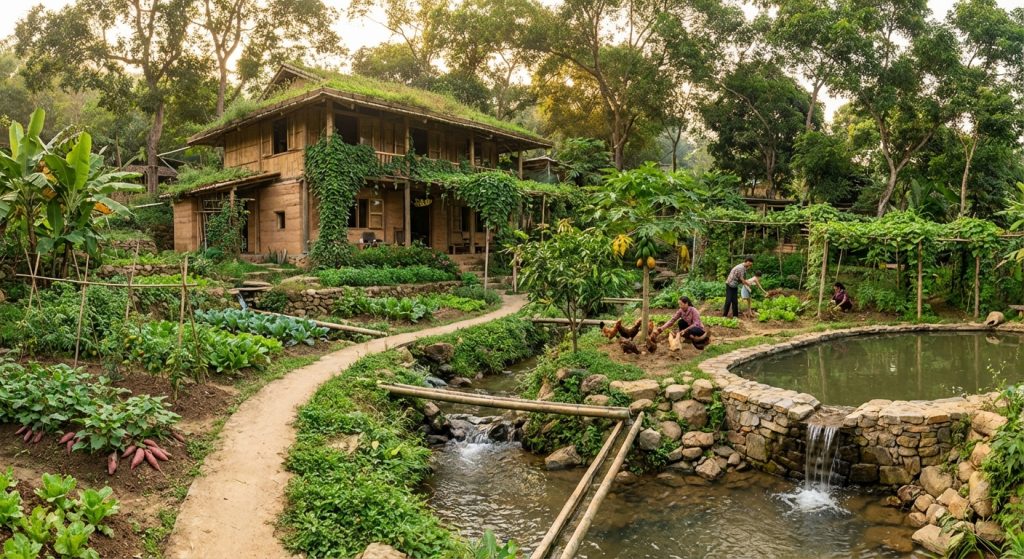
Imagine a garden that feeds you. It also conserves water and enriches the soil. This is the promise of permaculture. It’s a design system for sustainable living. It mimics natural ecosystems. In Vietnam, this approach is gaining traction. Homeowners and hobbyists are embracing it. They want to create resilient, self-sustaining home gardens.
This article explores permaculture design. We will focus on its application in Vietnam. You will learn the core principles. You will also discover practical techniques. These can transform your garden into a productive ecosystem. Furthermore, we will discuss the benefits for homeowners. We will also touch upon how it contributes to a greener Vietnam.
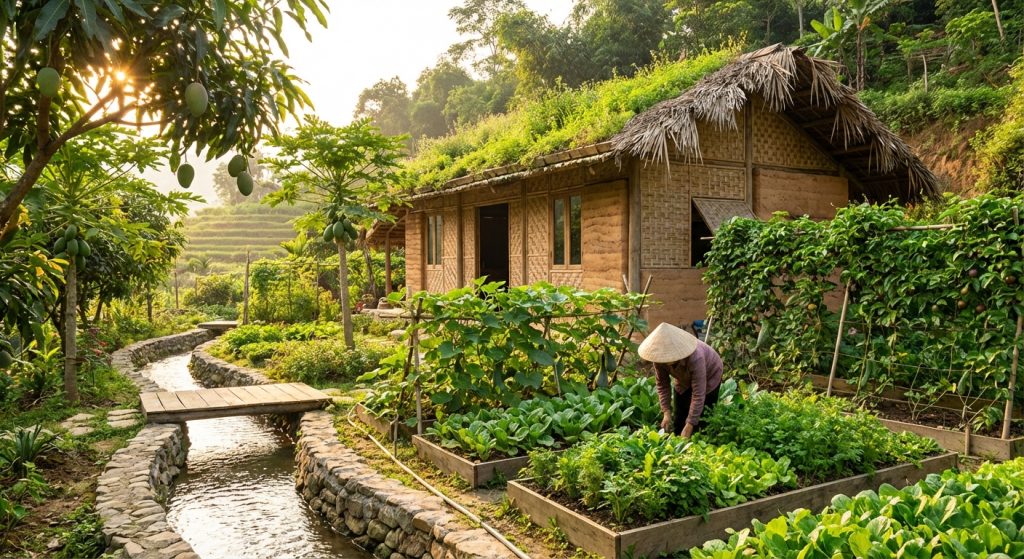
What is Permaculture Design?
Permaculture is more than just gardening. It’s a philosophy. It’s also a practical method. The term comes from “permanent agriculture” or “permanent culture.” Bill Mollison and David Holmgren developed it. They outlined three core ethics. These are care for the Earth, care for people, and fair share. These ethics guide all permaculture design.
The goal is to create systems that are regenerative. They should be resilient. They should also be productive. Permaculture aims to work with nature, not against it. It emphasizes observation. It also values understanding local conditions. This includes climate, soil, and available resources. Therefore, designs are unique to each location.
Key Principles of Permaculture
Permaculture design relies on several key principles. These principles help create efficient and sustainable systems. Understanding them is crucial for successful implementation.
- Observe and Interact: Spend time observing your site. Understand its patterns. Then, design with these observations.
- Catch and Store Energy: Harvest and store resources when they are abundant. This includes sunlight, water, and biomass.
- Obtain a Yield: Ensure your design provides useful outputs. This could be food, fiber, or other valuable resources.
- Apply Self-Regulation and Accept Feedback: Monitor your system. Make adjustments as needed. Learn from what works and what doesn’t.
- Use and Value Renewable Resources and Services: Prioritize resources that can be replenished. Minimize reliance on finite resources.
- Produce No Waste: Aim to close loops. Turn waste products into resources. This is a core tenet of sustainability.
- Design from Patterns to Details: Start with the big picture. Then, fill in the specifics. This ensures a holistic approach.
- Integrate Rather Than Segregate: Place elements so they support each other. This creates beneficial relationships.
- Use Small and Slow Solutions: Small-scale, slow-growing systems are often more resilient. They are also easier to manage.
- Use and Value Diversity: Diverse systems are more stable. They are also more productive. This applies to plants, animals, and people.
- Use Edges and Value the Marginal: The interfaces between different zones are often the most productive.
- Creatively Use and Respond to Change: Be adaptable. Embrace change as an opportunity.
Permaculture in the Vietnamese Context
Vietnam’s diverse climate and rich agricultural heritage make it ideal for permaculture. The country experiences distinct seasons. It also has varied topography, from mountains to deltas. These factors offer unique opportunities and challenges for permaculture design. Traditional farming practices in Vietnam often incorporate elements of sustainability. However, modern agriculture has introduced new challenges.
For instance, the overuse of chemical fertilizers can harm soil health. This is a significant concern for long-term productivity. Fortunately, permaculture offers an alternative. It promotes practices that regenerate soil. It also reduces reliance on external inputs. Therefore, it aligns well with Vietnam’s desire for sustainable development.
Adapting Permaculture to Vietnamese Climates
Vietnam has a tropical monsoon climate. This means distinct wet and dry seasons. It also means high humidity and temperatures in many regions. Permaculture designs must account for these conditions. For example, water harvesting is crucial. This is especially true in areas prone to drought during the dry season. Rainwater harvesting systems can capture water. They can then store it for later use.
Furthermore, understanding microclimates is essential. A small change in elevation or exposure can create different conditions. This allows for diverse planting strategies. For example, planting shade-loving species on the north side of a structure. Conversely, sun-loving plants can go on the south side. This intelligent placement maximizes resource use.
Building Self-Sustaining Home Gardens
Creating a self-sustaining garden involves several key elements. These elements work together to form a closed-loop system. This minimizes external inputs and waste. It also maximizes outputs and resilience.
1. Soil Health and Fertility
Healthy soil is the foundation of any permaculture garden. It supports plant growth. It also retains water. Furthermore, it hosts beneficial microorganisms. In Vietnam, soil degradation can be an issue. This is often due to intensive farming. It can also result from improper land management. Therefore, building soil health is a top priority.
Practices like composting are vital. Composting turns kitchen scraps and garden waste into nutrient-rich fertilizer. Cover cropping is another excellent method. Certain plants are grown. They are then tilled back into the soil. This adds organic matter. It also improves soil structure. Furthermore, mulching helps retain moisture. It also suppresses weeds. This reduces the need for manual labor. It also conserves water. You can learn more about the impact of chemical fertilizers on soil in our article, The Soil’s Silent Scream: How Chemical Fertilizers Harm Earth.
2. Water Management
Water is a precious resource. Effective water management is critical. This is especially true in regions with distinct wet and dry seasons. Permaculture employs various strategies to conserve and utilize water efficiently.
- Rainwater Harvesting: Collecting rainwater from rooftops. This water can be stored in tanks or ponds.
- Swales and Berms: These are landscape contours. They slow down water runoff. This allows it to infiltrate the soil.
- Drip Irrigation: Delivering water directly to plant roots. This minimizes evaporation.
- Greywater Systems: Reusing water from sinks and showers for irrigation. This requires careful planning and filtration.
By implementing these techniques, gardens can thrive even during dry spells. This reduces reliance on municipal water sources. It also conserves this vital resource. Drought-resilient crops are also a good choice. For example, rice varieties adapted to saline conditions in the Mekong Delta are crucial. You can read more about this in Drought-Resilient Rice for the Mekong Delta.
3. Plant Selection and Guilds
Choosing the right plants is key. Consider native species. They are adapted to local conditions. They also support local wildlife. Diversity is also important. A variety of plants provides a more stable ecosystem. It also offers a wider range of yields.
Plant guilds are groups of plants that work together. They mimic natural forest ecosystems. For example, a fruit tree might be surrounded by nitrogen-fixing plants. These plants enrich the soil. Other plants might attract beneficial insects. Some might repel pests. This creates a balanced and productive system. For instance, companion planting can deter pests naturally. This reduces the need for chemical interventions. The concept of plants communicating is also fascinating. You can explore this further in The Wood Wide Web: Nature’s Secret Communication Network.
4. Integrated Animal Systems
Animals can play a vital role in a permaculture garden. Chickens can provide eggs and manure. They can also help control pests. Ducks can manage snails. This is particularly important given the threat of the golden snail. You can learn more about this invasive species in Golden Snail: A Silent Menace in Vietnam’s Ecosystems.
Integrating animals requires careful planning. Ensure their needs are met. Also, consider how they contribute to the overall system. Their waste can be composted. This returns nutrients to the soil. Ethology, the study of animal behavior, can inform these designs. Happier animals often lead to healthier food. This is discussed in Ethology in Farming: Happier Animals, Healthier Food.
5. Waste Reduction and Recycling
A core permaculture principle is “produce no waste.” This means viewing waste as a resource. Kitchen scraps can become compost. Pruned branches can be used as mulch or for biochar. Even humanure can be safely composted and used. This closes nutrient cycles. It dramatically reduces the need for external fertilizers.
This approach also extends to water. Greywater can be filtered and reused for irrigation. This conserves water. It also reduces the burden on wastewater treatment systems. Thus, every element in the garden has a purpose. Nothing is truly wasted.
Benefits for Homeowners and Hobbyist Gardeners
Adopting permaculture design offers numerous advantages. These benefits extend beyond just growing food.
- Reduced Costs: Less need for fertilizers, pesticides, and external water. This saves money over time.
- Healthier Food: Growing your own organic produce. This ensures fresh, nutritious food free from harmful chemicals.
- Environmental Stewardship: Contributing to a healthier planet. This includes improving soil health and conserving water.
- Increased Resilience: Gardens become more resistant to pests and diseases. They also cope better with extreme weather.
- Educational Value: A living laboratory for learning about ecology and sustainability.
- Therapeutic Benefits: Gardening is known to reduce stress. It also promotes physical activity. This is similar to the benefits of nature therapy.
Furthermore, permaculture gardens can become beautiful and functional spaces. They enhance the aesthetic appeal of a home. They also provide habitat for beneficial wildlife. This includes pollinators. The decline of wild bees is a concern in Vietnam. Learning about pollinator gardens can help address this. You can find resources on this topic. For example, The Silent Threat: VN’s Wild Bees and Economic Ruin discusses this issue.
Challenges and Considerations
While permaculture offers many benefits, there are challenges. Initial setup can require time and effort. Understanding local conditions is crucial. It may also involve a learning curve. However, the long-term rewards are substantial.
For homeowners in Vietnam, consider local regulations. Also, think about community acceptance. Building a permaculture garden can be a community effort. Sharing knowledge and resources can be very beneficial. Engaging with local gardening groups can provide valuable support. Furthermore, some designs may require initial investment in water tanks or tools. However, these are often offset by long-term savings.
Conclusion
Permaculture design offers a powerful framework. It empowers homeowners and hobbyist gardeners. It allows them to create self-sustaining home gardens. This is especially relevant in Vietnam. The principles of working with nature are timeless. They lead to more resilient and productive systems. By embracing permaculture, you can cultivate a garden that nourishes you. It also nurtures the environment. This creates a more sustainable future, one garden at a time.
Frequently Asked Questions (FAQ)
What is the most important principle in permaculture?
While all principles are important, “Observe and Interact” is often considered foundational. Understanding your site’s unique conditions before designing is crucial for success.
Can permaculture be applied in small urban spaces?
Yes, absolutely. Permaculture principles can be scaled down for balconies, small yards, or even indoor spaces. Techniques like vertical gardening, container gardening, and companion planting are highly effective in limited areas.
How long does it take to establish a permaculture garden?
It varies greatly depending on the scale and complexity of the design. Some elements, like annual vegetable beds, can be productive in the first year. However, establishing mature perennial systems like food forests can take several years.
Are there specific plants that are better for permaculture in Vietnam?
Focusing on native and climate-appropriate species is best. Examples include fruit trees like mangoes, jackfruit, and longan. Many herbs and vegetables also thrive. Researching local varieties is highly recommended.
What if I don’t have much experience with gardening?
Permaculture is designed to be accessible. Start small. Focus on one or two principles. Observe your garden. Learn from your experiences. There are many resources available online and in books. Also, consider joining a local permaculture group for support. You might find inspiration in related topics like Urban Forests: Crafting Ho Chi Minh City’s Micro-Jungles.
