Plant Neurobiology: Do Plants Feel Pain or Make Decisions?
Published on February 8, 2026 by Admin
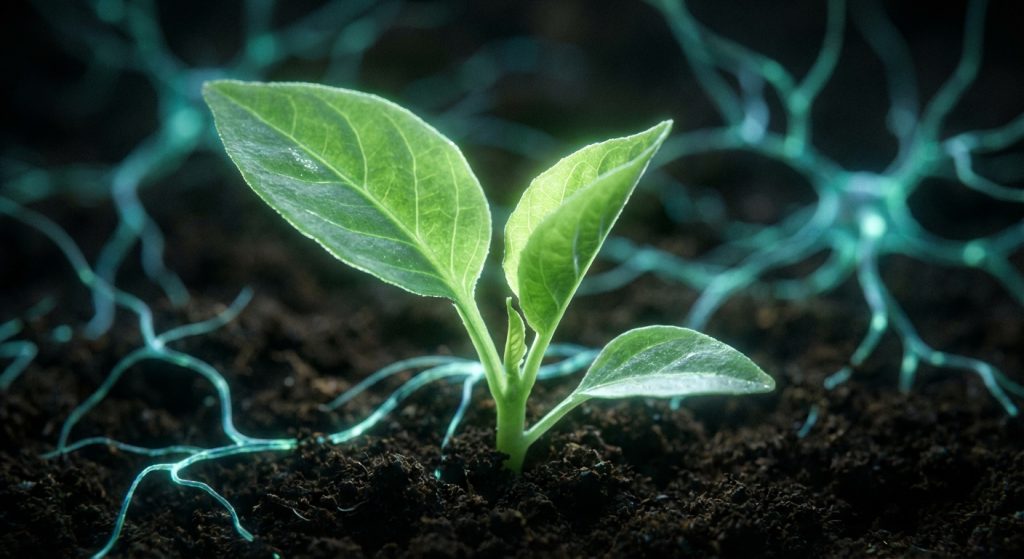
The question of whether plants possess sentience, feel pain, or make decisions has long fascinated philosophers and scientists alike. For centuries, we’ve viewed plants as passive organisms. However, recent research suggests a more complex reality. This exploration delves into the burgeoning field of plant neurobiology. We will examine the evidence and consider what it means for our understanding of life itself.

The Traditional View vs. Emerging Science
Traditionally, plants were considered simple biological machines. They performed photosynthesis and grew. They reacted to stimuli. But these reactions were seen as automatic. They lacked the complex nervous systems of animals. Therefore, they were presumed incapable of feeling or conscious thought. This view is now being challenged. New studies reveal sophisticated communication and response mechanisms in plants.
For instance, plants can detect light and gravity. They also respond to touch and chemical signals. These responses are remarkably intricate. They suggest a level of processing beyond simple reflexes. Some researchers even propose that plants have a form of intelligence. This intelligence is different from ours, but it is intelligence nonetheless.
What is Plant Neurobiology?
Plant neurobiology is a controversial field. It studies the electrical and chemical signaling in plants. It draws parallels to animal nervous systems. However, plants do not have neurons or brains in the animal sense. Instead, they use a network of electrical signals. They also use chemical messengers. These signals travel throughout the plant. They help coordinate responses to the environment.
Think of it like this: a plant’s entire body can act as a distributed processing system. When a part of the plant is damaged, it sends signals. These signals alert other parts of the plant. This allows for a coordinated defense. For example, some plants release volatile organic compounds. These compounds can warn nearby plants of danger. This is a form of inter-plant communication. It highlights their complex interactions.
Electrical Signals in Plants
Plants generate electrical signals. These are similar to nerve impulses in animals. They can travel rapidly through plant tissues. For example, the Venus flytrap snaps shut. This action is triggered by electrical signals. These signals are generated when an insect touches its sensitive hairs. The speed of these signals is impressive. It allows for a quick response to prey.
Furthermore, research shows that electrical signals can transmit information about stress. This stress can be from herbivory or injury. These signals help the plant prepare its defenses. They can even influence gene expression. This means the plant is actively responding on a molecular level. It is not just a passive reaction.
Chemical Communication
Chemical signaling is another key area. Plants release a variety of hormones. These hormones regulate growth and development. They also control responses to environmental changes. For example, abscisic acid is involved in drought stress. It helps the plant conserve water. Auxins promote root and shoot growth. Gibberellins influence flowering.
Beyond internal communication, plants also communicate with their environment. They can release scents. These scents attract pollinators. They can also deter herbivores. Some plants even release chemicals into the soil. These chemicals can affect other plants. This is part of a complex underground network. It reminds us of the Wood Wide Web, a fascinating communication system.
Do Plants Feel Pain?
This is perhaps the most contentious question. Pain, as we understand it, involves nociceptors. These are specialized sensory receptors. They detect tissue damage. They send signals to a central nervous system. Plants lack these structures. So, they do not feel pain in the human or animal sense.
However, plants do have sophisticated ways of detecting and responding to damage. When a leaf is torn or a stem is cut, the plant initiates a response. This involves electrical and chemical signals. These signals are crucial for survival. They help the plant repair itself. They also help it defend against further harm. Some argue that this response is analogous to pain. It is a signal of distress and damage.
For example, when a plant is attacked by an insect, it can release defensive chemicals. These chemicals can be bitter or toxic to the herbivore. This is a direct response to harm. It is a protective mechanism. While not “pain” in the neural sense, it is certainly a response to injury. This response is vital for their continued existence.
Do Plants Make Decisions?
The concept of “decision-making” in plants is also complex. It does not involve conscious deliberation. Instead, it refers to the ability to process information. This processing leads to adaptive responses. Plants often face multiple environmental cues. They must “choose” the best course of action.
Consider a plant growing towards a light source. This is a tropism. It is a directed growth response. The plant senses the direction of light. It then grows towards it. This maximizes its ability to photosynthesize. This is a form of adaptive behavior. It is a response to environmental conditions.
Information Processing in Plants
Research by Monica Gagliano has explored plant decision-making. Her experiments suggest that plants can learn. They can also remember. For instance, she trained mimosa plants. She exposed them to a falling stimulus. The plants eventually stopped closing their leaves. This indicated they had learned the stimulus was not a threat. They retained this learning over time.
This suggests a capacity for information processing. It is not conscious thought. But it is a sophisticated form of adaptation. Plants can integrate environmental signals. They can then modify their behavior accordingly. This is a hallmark of intelligent systems. It challenges our anthropocentric view of cognition.
Resource Allocation as Decision-Making
Plants must also make decisions about resource allocation. For instance, when facing drought, a plant might prioritize root growth. This allows it to access more water. It might also reduce leaf growth. This minimizes water loss. This is a complex trade-off. It requires the plant to “decide” where to invest its limited resources.
Similarly, plants can adjust their flowering time. They can do this based on day length and temperature. This ensures reproduction occurs under optimal conditions. These are not random events. They are adaptive responses. They are guided by internal signals and environmental cues.
The Philosophical Implications
The idea that plants might possess forms of sentience or intelligence has profound philosophical implications. It blurs the lines between the living and non-living. It also challenges our anthropocentric view of consciousness. If plants can respond, learn, and adapt in sophisticated ways, where do we draw the line?
This re-evaluation encourages a more holistic view of life. It suggests a continuum of awareness. It might lead to a greater respect for all living organisms. It could influence our ethical considerations. For example, how we treat plants in agriculture or research might change. This is especially relevant in fields like soil health and sustainable farming.
Ethical Considerations and Future Research
As our understanding grows, so do the ethical questions. If plants exhibit behaviors we associate with sentience, how should we treat them? Should we reconsider practices that cause them harm? This is a complex debate. It requires input from philosophers, ethicists, and scientists.
Future research will likely focus on unraveling the precise mechanisms of plant signaling. We need to understand how plants perceive and process information. Advances in molecular biology and computational modeling will be crucial. Exploring the diversity of plant responses across different species will also be important.
Furthermore, studying the intricate underground networks of plants could reveal more about their collective intelligence. The connection between plants and fungi, for example, is a vast area of research. It highlights the interconnectedness of ecosystems. This is similar to how we view the Wood Wide Web, where trees communicate through fungal networks.
Conclusion: A New Appreciation for Plant Life
While plants may not feel pain or make decisions in the human sense, they are far from passive. They exhibit remarkable abilities to sense, communicate, and adapt. The field of plant neurobiology is revealing a hidden world of complexity. It challenges our long-held assumptions about plant life.
Therefore, embracing this new perspective can lead to a deeper appreciation for the natural world. It encourages us to see plants not just as resources, but as complex, responsive organisms. Understanding their capabilities is vital. It can inform our approaches to agriculture, conservation, and our overall relationship with the planet.
Frequently Asked Questions
Do plants have brains?
No, plants do not have brains or nervous systems like animals do. However, they possess complex electrical and chemical signaling networks that allow them to process information and respond to their environment.
Can plants feel pain?
Plants do not have the biological structures (nociceptors) to feel pain in the way animals do. However, they can detect and respond to damage and stress through electrical and chemical signals, which is a form of distress response.
How do plants communicate?
Plants communicate through various methods. These include releasing volatile organic compounds into the air to warn other plants or attract pollinators, and sending electrical and chemical signals internally to coordinate responses. They also interact with other organisms, like fungi, in their environment.
Can plants learn or remember?
Some research suggests that plants can exhibit forms of learning and memory. For example, they can habituate to non-threatening stimuli over time and retain this acquired information. This indicates a capacity for information processing beyond simple reflexes.
What is plant neurobiology?
Plant neurobiology is a field that studies the electrical and chemical signaling in plants. It explores how these signals enable plants to perceive, process, and respond to their environment, drawing parallels to the functions of nervous systems in animals, albeit through different mechanisms.