
The Great Mangrove Restoration: VN’s Coastal Shield Against Storms
Published on February 8, 2026 by Admin
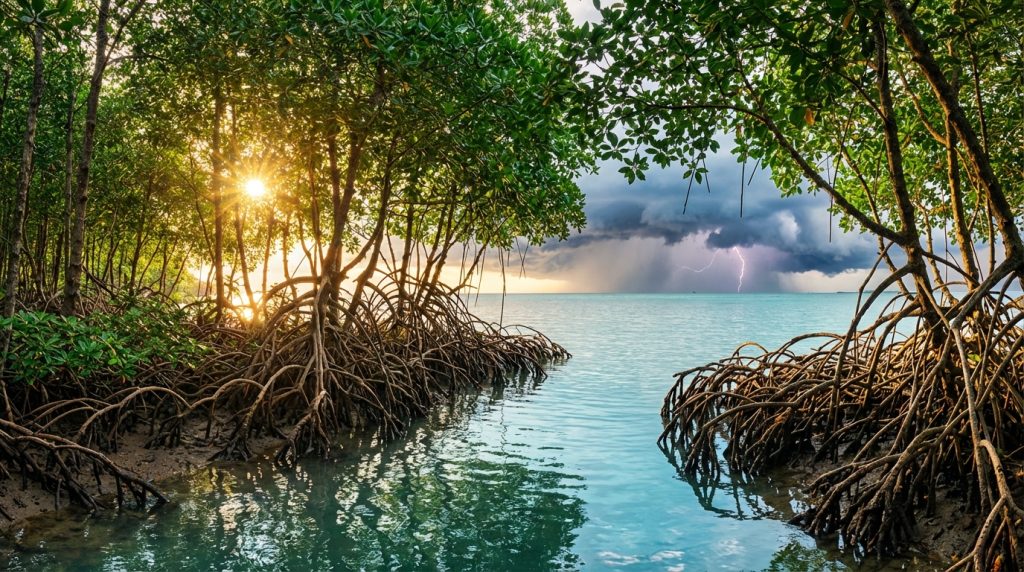
Vietnam’s extensive coastline faces a growing threat. Climate change intensifies storms. These powerful events wreak havoc on coastal communities. However, a natural solution is emerging. It’s the humble mangrove forest. These unique ecosystems are vital. They act as a natural barrier. They protect communities from storm surges. They also offer numerous other ecological benefits. Therefore, the great mangrove restoration is crucial for Vietnam’s future.
Why Mangroves Matter for Coastal Protection
Mangrove forests are not just trees. They are complex ecosystems. They thrive in salty, waterlogged soil. Their dense root systems are key. These roots spread wide and deep. They anchor the soil. This prevents erosion. They also absorb wave energy. This significantly reduces the impact of storm surges. Furthermore, mangroves act as natural breakwaters. They dissipate the force of incoming waves. This is especially important during typhoons and tropical storms. As a result, coastal areas with healthy mangrove coverage experience less damage.
Consider the Mekong Delta. It’s highly vulnerable to sea-level rise and storms. Extensive mangrove forests here provide a critical buffer. They protect rice paddies and homes. Without them, the impact of storms would be far more devastating. The importance of these coastal forests cannot be overstated. They are a frontline defense. They are also a cost-effective one compared to engineered solutions.
The Ecological Benefits Beyond Storm Defense
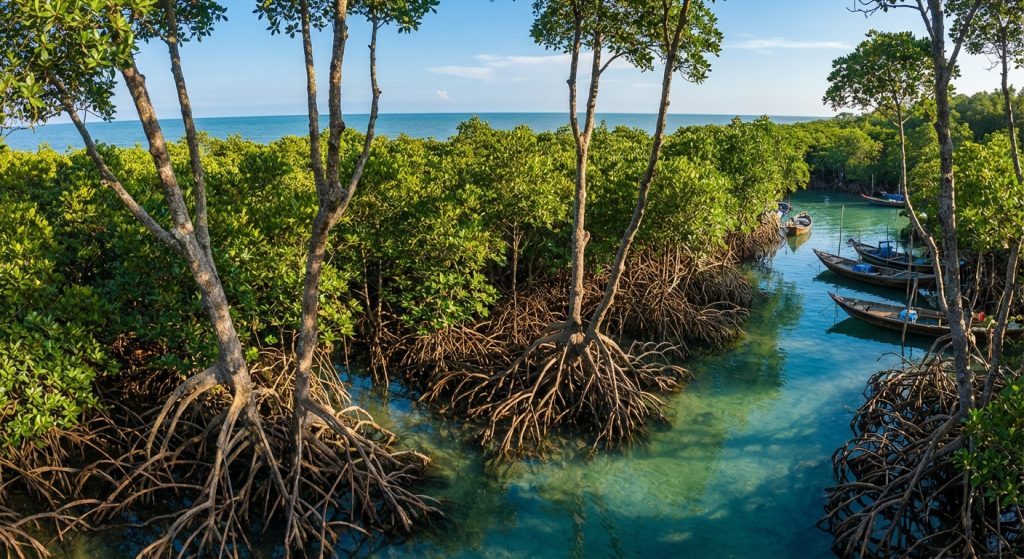
Mangroves offer much more than storm protection. They are biodiversity hotspots. They serve as nurseries for countless marine species. Fish, crabs, and shrimp find shelter and food here. This supports vital fisheries. Many coastal communities depend on these resources for their livelihoods. Therefore, mangrove health is directly linked to economic stability.
Moreover, mangroves are excellent carbon sinks. They store significant amounts of carbon. This helps mitigate climate change. They sequester carbon in their soil and biomass. This process is often more efficient than terrestrial forests. This makes them powerful allies in the fight against global warming. They also filter water. They remove pollutants. This improves water quality. This benefits both marine life and human health.
The interconnectedness of these benefits is clear. Protecting mangroves means protecting livelihoods. It means protecting biodiversity. It also means contributing to climate change mitigation. It is a multifaceted solution.
Threats to Vietnam’s Mangrove Ecosystems
Despite their importance, Vietnam’s mangrove forests face severe threats. Coastal development is a major driver. Aquaculture expansion, particularly shrimp farming, often leads to mangrove destruction. Urbanization and infrastructure projects also encroach on these vital areas. Furthermore, pollution from agricultural runoff and industrial waste degrades mangrove health. Climate change itself poses a threat. Rising sea levels and increased storm intensity can overwhelm some mangrove areas.
Illegal logging for timber and fuel wood also contributes to mangrove loss. This depletes these natural resources. It weakens their protective functions. Consequently, coastal erosion increases. Storm impacts become more severe. The loss of mangroves creates a dangerous feedback loop. It exacerbates the very problems they are meant to solve.
The Great Mangrove Restoration: A National Imperative
Recognizing these threats, Vietnam has embarked on ambitious mangrove restoration projects. The government, in collaboration with international organizations and local communities, is working to replant and protect these critical ecosystems. These efforts are crucial. They aim to rebuild the natural defenses of the coastline. They also seek to restore ecological balance.
The “Great Mangrove Restoration” is not just about planting trees. It involves a holistic approach. This includes:
- Reforestation initiatives: Planting new mangrove seedlings in degraded areas.
- Conservation efforts: Protecting existing, healthy mangrove stands from further destruction.
- Community engagement: Involving local communities in restoration and monitoring.
- Sustainable development practices: Promoting alternatives to mangrove-destructive activities.
- Policy and enforcement: Strengthening regulations against illegal logging and development.
These efforts are vital for building climate resilience. They offer a sustainable path forward.
Success Stories and Challenges
Vietnam has seen some notable successes in mangrove restoration. For instance, projects in the Mekong Delta have replanted thousands of hectares. These areas are now showing signs of recovery. Local communities, trained in planting and maintenance, are key to these successes. They have a vested interest in the health of their environment. Their involvement ensures long-term sustainability. For example, initiatives that provide alternative livelihoods have proven effective. They reduce the pressure on mangrove resources.
However, significant challenges remain. Funding can be inconsistent. Replanting efforts require sustained commitment. Ensuring the survival of young seedlings in harsh coastal environments is difficult. Monitoring and enforcement against illegal activities need continuous strengthening. Moreover, the scale of past destruction means restoration is a long-term process. It requires ongoing dedication and resources. Adapting to the changing climate adds another layer of complexity. We must ensure restored areas can withstand future storm intensities. This is where understanding ecological resilience becomes paramount. For instance, diverse species planting can enhance resilience.
The Role of Climate Activists and Coastal Communities
Climate activists and coastal communities are at the forefront of mangrove conservation and restoration. Their passion and local knowledge are invaluable. Activists raise awareness. They advocate for stronger policies. They mobilize volunteers for planting and clean-up drives. Communities on the front lines of climate change are the natural stewards of these ecosystems. They understand the direct benefits of healthy mangroves. Their traditional knowledge is often crucial for successful restoration.
Empowering these communities is essential. Providing them with resources and training ensures their active participation. When communities lead restoration efforts, success rates are higher. They become invested stakeholders. They are protectors of their own natural defenses. Therefore, supporting community-led initiatives is key. This ensures the sustainability of the restoration.
This work is not just environmental; it is also socio-economic. It safeguards homes and livelihoods. It preserves cultural heritage tied to the coast. It builds a more secure future for generations to come. The resilience of coastal Vietnam depends on these efforts.
Looking Ahead: Integrating Mangroves into Climate Adaptation
The restoration of mangrove ecosystems must be integrated into broader climate adaptation strategies. This means recognizing their value beyond just environmental conservation. They are critical infrastructure. They provide essential ecosystem services. Governments and development planners need to prioritize mangrove protection and restoration in coastal zone management. This includes land-use planning. It also involves investing in nature-based solutions.
Further research is also needed. Understanding optimal planting techniques for different species and locations is vital. Monitoring the long-term effectiveness of restoration projects is crucial. This data can inform future efforts. Innovations in technology can also play a role. Drones can be used for monitoring and even replanting. AI can help analyze data to predict areas most in need of intervention. These advancements can enhance the efficiency and success of restoration.
Ultimately, the great mangrove restoration is a testament to nature’s power. It is also a call to action. By protecting and restoring these vital coastal forests, Vietnam can build a more resilient future. It can safeguard its communities and its rich biodiversity.
Frequently Asked Questions (FAQ)
Why are mangroves called “natural breakwaters”?
Mangroves are called “natural breakwaters” because their dense root systems and above-ground structures effectively absorb and dissipate the energy of waves and storm surges. This significantly reduces the impact of waves reaching the shore, acting like a natural barrier.
How do mangroves help with carbon sequestration?
Mangroves are highly effective at capturing and storing carbon dioxide from the atmosphere. They do this through photosynthesis, storing carbon in their biomass (leaves, stems, roots) and, importantly, in the rich, anaerobic soil beneath them. This sequestered carbon can remain stored for centuries.
What are the main threats to mangroves in Vietnam?
The primary threats include coastal development, expansion of aquaculture (especially shrimp farming), urbanization, pollution from agriculture and industry, illegal logging, and the impacts of climate change such as sea-level rise and increased storm intensity.
What is the “Great Mangrove Restoration” initiative?
It refers to Vietnam’s comprehensive efforts to replant, restore, and protect its mangrove ecosystems. This initiative involves government agencies, international partners, local communities, and focuses on reforestation, conservation, and promoting sustainable practices.
How can local communities contribute to mangrove restoration?
Communities can participate by planting seedlings, monitoring mangrove health, reporting illegal activities, adopting sustainable fishing and farming practices, and educating others. Their involvement is crucial for the long-term success and sustainability of restoration projects.
Are there alternatives to mangroves for coastal protection?
While engineered structures like seawalls exist, they are often more expensive and can have negative environmental impacts. Mangroves offer a cost-effective, ecologically beneficial, and self-sustaining solution for coastal protection. They also provide numerous other ecosystem services.
