Plants “Hear” Water: The Root’s Underground Symphony
Published on February 8, 2026 by Admin
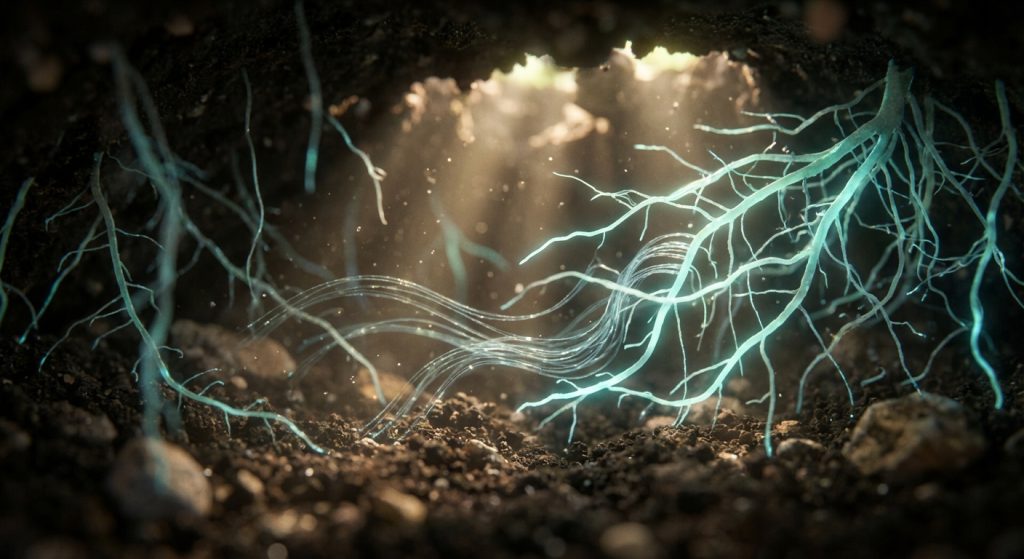
Plants possess an extraordinary ability. They can sense their environment. This includes detecting water underground. It’s a crucial survival mechanism. Roots are the primary sensory organs. They “hear” water through a complex process. This article explores how plants achieve this feat. We will delve into the science behind it. Understanding this helps us appreciate plant life more. It also informs agricultural practices. Better water management is key for food security.
The Root System: A Biological Radar
Roots are more than just anchors. They are sophisticated sensory organs. They explore the soil for resources. Water is paramount for plant survival. Roots must locate it efficiently. They do this without eyes or ears. Instead, they use a combination of mechanisms. These are finely tuned to soil conditions. Changes in moisture are detected. This guides root growth. Therefore, roots actively seek out water. They do not grow randomly.
The soil is a dynamic environment. Water content changes constantly. Roots must adapt to these changes. They respond to both water availability and its absence. This responsiveness is vital. It ensures the plant’s hydration. It also prevents waterlogging. Too much water can be harmful too. So, plants need a balanced approach.
How Roots Detect Water
Several factors contribute to water detection. These include physical and chemical cues. Turgor pressure is a key indicator. It relates to water content. Soil moisture affects turgor. Roots sense these pressure changes. Aquaporins are also important. These are protein channels. They facilitate water movement. Roots can sense water gradients. This guides their growth direction. They grow towards wetter areas.
Plant hormones play a significant role. Auxins are crucial for root growth. They respond to water signals. Abscisic acid (ABA) is another key player. ABA is involved in drought response. It helps plants conserve water. It also influences root behavior. Therefore, hormones modulate root responses. They integrate various environmental signals.
Hydrotropism: The Water-Seeking Instinct
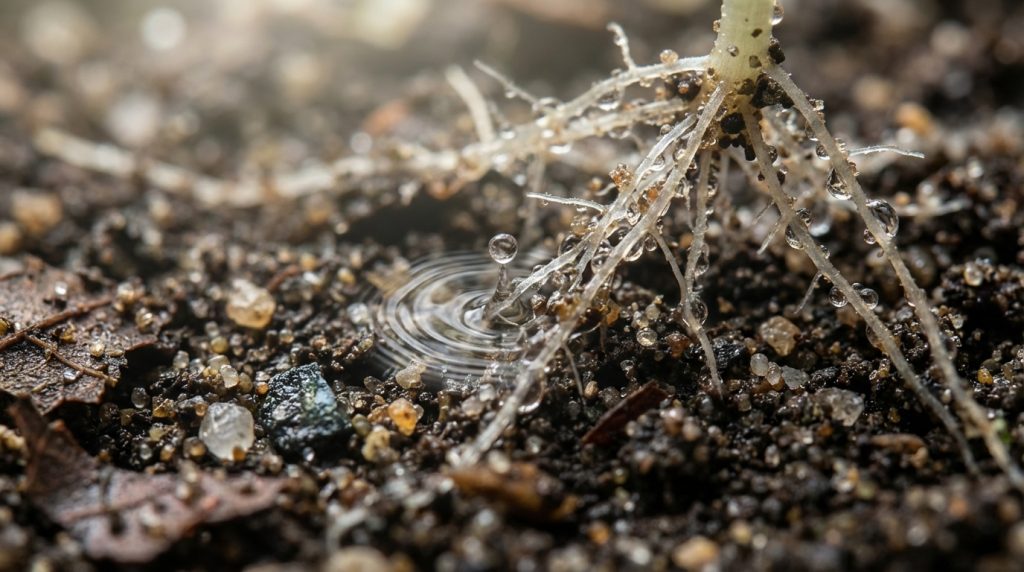
Hydrotropism is the directed growth of roots towards water. This is a fundamental plant behavior. It’s an essential survival strategy. Roots exhibit positive hydrotropism. This means they grow towards water. Negative hydrotropism is less common. Some specialized roots might show it. However, water attraction is the norm.
The mechanism involves sensing water potential. This is the measure of water’s free energy. It indicates how readily water can move. Roots can detect subtle differences. They respond to gradients in water potential. This guides their elongation. More water means higher water potential. Roots move towards higher potential.
The Role of Aquaporins
Aquaporins are integral membrane proteins. They form channels in cell membranes. These channels specifically transport water. They are found in root cells. Aquaporins help regulate water uptake. They respond to environmental cues. Changes in water availability affect their activity. For instance, drought can increase aquaporin expression. This enhances water uptake capacity.
Their presence is vital for efficient water absorption. They allow water to move quickly into root cells. This is crucial when water is scarce. Therefore, aquaporins are key sensors. They contribute to the root’s ability to “hear” water. They are part of the plant’s water sensing machinery.
Turgor Pressure and Cell Expansion
Turgor pressure is the pressure within a plant cell. It’s caused by water entering the cell. This pressure pushes against the cell wall. It keeps the plant rigid. Roots use turgor changes to sense water. When water is abundant, cells become turgid. When water is scarce, cells lose turgor. They become flaccid.
Root cells can detect these turgor changes. This information guides growth. Cells in wetter areas might expand more. This differential expansion causes bending. The root curves towards water. Thus, turgor pressure acts as a direct signal. It’s a physical manifestation of water presence.
Chemical Signals Underground
Water isn’t just a physical presence. It carries dissolved substances. These chemical signals are also detected. Soil chemistry provides important clues. Ions like calcium and potassium are involved. Their concentration changes with water. Roots can sense these ionic shifts. This provides another layer of information.
Certain soil compounds can attract roots. Others might repel them. This complex chemical environment is sensed. It influences root growth patterns. For example, nutrient availability is linked to water. Roots often seek both simultaneously. Thus, roots navigate a chemical landscape. This landscape is shaped by water.
Nutrient-Ion Sensing
Roots are also looking for nutrients. Nutrients are dissolved in soil water. Therefore, water movement often indicates nutrient presence. Roots have specialized transporters. These sense and absorb specific ions. Their activity can be modulated. This modulation can be linked to water status. For example, some nutrient uptake is enhanced in moist soil.
This dual sensing is efficient. It allows plants to acquire multiple resources. It ensures the plant gets water and food. The interplay between water and nutrient sensing is complex. It’s a sophisticated biological system. This system operates unseen beneath the surface.
The Role of Sound and Vibration (A Speculative Angle)
While the primary mechanisms involve chemical and physical cues, some research explores other possibilities. The idea of plants sensing sound or vibrations is intriguing. Water movement underground can create subtle vibrations. It’s possible that roots might detect these. However, this is a less established area of research. Most evidence points to chemical and pressure sensing.
The term “hearing” is often used metaphorically. It describes the plant’s ability to perceive its environment. It doesn’t imply auditory organs like animals. The plant’s “senses” are biochemical and biophysical. They are adapted to its unique existence. Therefore, while vibrations might play a minor role, it’s not the main mechanism.
Implications for Plant Physiology and Agriculture
Understanding how plants find water is vital. It has direct applications in agriculture. We can develop better irrigation strategies. Precisely delivering water where roots need it is key. This conserves water resources. It also improves crop yields. For example, smart irrigation systems can mimic natural root behavior. They deliver water based on plant needs. This is a significant advancement.
This knowledge also helps in breeding new crop varieties. We can select for plants with enhanced water-sensing abilities. This is especially important in arid regions. Drought-resistant crops are essential. They can withstand challenging climates. As a result, plant physiology research directly impacts food production. It helps us feed a growing global population.
Smart Irrigation and Water Conservation
Traditional irrigation methods can be wasteful. They often apply water uniformly. However, plants don’t need water everywhere. Roots concentrate in areas with water. Smart irrigation systems target these areas. They use sensors to monitor soil moisture. They also consider plant water needs. This precision saves water. It also reduces nutrient leaching. This is beneficial for the environment.
This technology is advancing rapidly. It integrates AI and IoT. Drip irrigation systems are a good example. They deliver water directly to the root zone. This minimizes evaporation. It ensures efficient water use. This innovation is crucial for sustainable agriculture. It helps us manage a precious resource wisely. You can learn more about drip irrigation AI for more details.
Developing Drought-Resistant Crops
Climate change poses significant challenges. Droughts are becoming more frequent. We need crops that can survive with less water. Plant breeders are working on this. They study the genetic basis of water sensing. They aim to enhance hydrotropism. They also focus on improving water use efficiency. This involves understanding root architecture. Deeper roots can access more water.
Genetic engineering plays a role. It allows for targeted modifications. These can improve drought tolerance. For instance, enhancing aquaporin function is one approach. Modifying hormone signaling pathways is another. These efforts are crucial for future food security. They ensure crops can adapt to changing conditions. Similarly, innovations in smart seeds also contribute to resilience.
Conclusion: A Deeper Appreciation for Plant Intelligence
The ability of plant roots to “hear” water is remarkable. It showcases a sophisticated biological system. This system relies on physical and chemical cues. It guides root growth towards vital resources. This process is fundamental to plant survival. It also underpins agricultural productivity. As plant physiologists, understanding these mechanisms is paramount. It allows us to better manage our plant resources. It helps us develop more sustainable practices. Therefore, the silent symphony of roots beneath our feet is a testament to nature’s ingenuity.
Frequently Asked Questions
Do plants have ears to hear water?
No, plants do not have ears in the way animals do. The term “hear” is used metaphorically. It describes their ability to sense and respond to water underground through biochemical and biophysical mechanisms.
How do roots know where water is?
Roots sense water through changes in soil moisture. They detect differences in water potential and chemical signals. They also respond to turgor pressure within their cells. This guides them to grow towards water sources.
What is hydrotropism?
Hydrotropism is the growth of plant roots in response to water. Roots exhibit positive hydrotropism, meaning they grow towards water.
Are aquaporins important for water detection?
Yes, aquaporins are crucial. They are protein channels in root cell membranes that facilitate water movement. They help roots sense water gradients and regulate water uptake.
Can plants sense sound underwater?
While plants can detect vibrations from water movement, they do not “hear” sound as we understand it. Their primary sensing mechanisms are chemical and physical, not auditory.