Smart Greenhouses: AI for High-Value Herb Cultivation
Published on February 8, 2026 by Admin
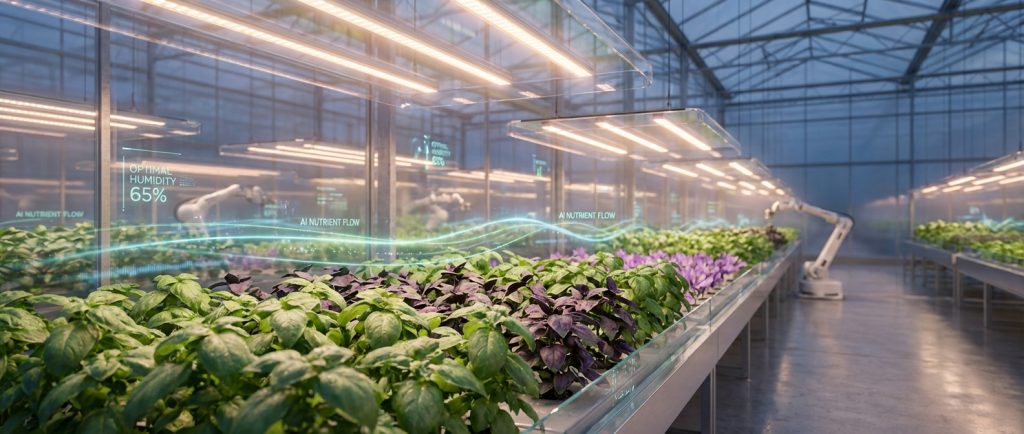
The future of agriculture is here, and it’s incredibly smart. For tech farmers and forward-thinking investors, the “smart greenhouse” represents a significant leap. Specifically, AI-controlled climate systems are revolutionizing the cultivation of high-value herbs. This technology offers unprecedented precision. It also promises higher yields and superior quality. Furthermore, it opens new doors for profitability in a competitive market.
Imagine a controlled environment. Here, every variable is optimized for plant growth. This is the promise of the smart greenhouse. It’s not just about automation; it’s about intelligent, adaptive control. This article explores how AI is transforming greenhouse operations. We will focus on the lucrative niche of high-value herbs.
The Core of Intelligence: AI in Climate Control
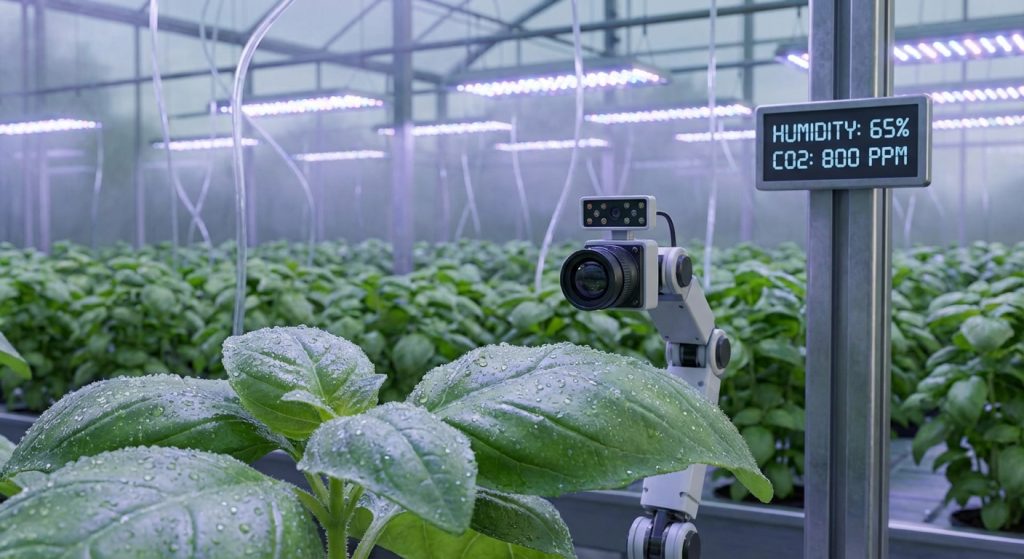
Traditional greenhouses offer some control. However, they often rely on manual adjustments. This can lead to inefficiencies and suboptimal conditions. Smart greenhouses, on the other hand, leverage Artificial Intelligence (AI). AI systems continuously monitor and analyze environmental data. They then make real-time adjustments to optimize growth. This includes temperature, humidity, CO2 levels, and light intensity.
Firstly, AI algorithms learn from vast datasets. These datasets include historical growth patterns and environmental responses. As a result, the AI can predict optimal conditions. It can also anticipate potential issues before they arise. This predictive capability is crucial for high-value crops. These crops are often sensitive to even minor environmental fluctuations.
Precision Farming for Premium Herbs
High-value herbs, such as saffron, medicinal cannabis, and specialty culinary herbs, demand specific conditions. For instance, saffron requires precise temperature and humidity cycles. Medicinal cannabis needs meticulous control over light spectrum and CO2 enrichment. AI-driven systems can deliver this precision consistently. This ensures uniform quality and potency, which are critical for market value.
Moreover, AI can optimize resource usage. Water and nutrient delivery can be precisely tailored. This reduces waste and lowers operational costs. For example, AI-powered drip irrigation systems can save significant amounts of water. This is especially important in regions facing water scarcity.
Benefits for Tech Farmers and Investors
The adoption of smart greenhouse technology offers compelling advantages. For farmers, it means increased efficiency and reduced labor. For investors, it translates to higher ROI and reduced risk.
Enhanced Yields and Quality
By maintaining ideal growing conditions, smart greenhouses significantly boost crop yields. AI ensures that plants receive exactly what they need, when they need it. This leads to healthier, more robust plants. It also results in higher-quality produce with superior flavor, aroma, and active compound concentration. For herbs where these factors are paramount, this is a game-changer.
Furthermore, AI can help tailor growing conditions to specific herb varieties. This means maximizing the potential of each plant. Consequently, farmers can meet the exacting demands of niche markets.
Reduced Operational Costs
While the initial investment in smart greenhouse technology can be substantial, the long-term savings are considerable. AI-driven systems optimize energy consumption for lighting and climate control. They also minimize water and fertilizer usage. Furthermore, by predicting and preventing issues like disease outbreaks, they reduce crop loss. This all contributes to a lower cost of production per unit.
This efficiency is particularly attractive to investors. It demonstrates a clear path to profitability and sustainability.
Data-Driven Decision Making
Smart greenhouses generate a wealth of data. This data covers everything from environmental parameters to plant growth metrics. AI systems analyze this data to provide actionable insights. Farmers can then make informed decisions about crop management, harvest timing, and market strategy. This shift from guesswork to data-driven precision is a hallmark of modern agriculture.
For investors, this data transparency offers reassurance. It shows that operations are managed with scientific rigor and foresight.
Key Technologies Powering Smart Greenhouses
Several interconnected technologies converge to create the smart greenhouse ecosystem.
Sensors and IoT Devices
A network of sensors is the eyes and ears of the smart greenhouse. These devices continuously collect data on temperature, humidity, light, CO2, pH, and nutrient levels. Internet of Things (IoT) technology enables these sensors to communicate data wirelessly. This real-time data stream is the foundation for AI analysis.
AI and Machine Learning Algorithms
At the heart of the system are AI and machine learning algorithms. These algorithms process the sensor data. They identify patterns, predict outcomes, and make control decisions. Machine learning allows the system to adapt and improve over time. It learns from new data, becoming more efficient and effective.
Automated Control Systems
Based on AI recommendations, automated systems manage the greenhouse environment. This includes HVAC systems, irrigation controllers, lighting systems, and CO2 enrichment. These systems respond instantly to AI directives, ensuring precise environmental control.
Advanced Lighting Solutions
LED grow lights are a staple in smart greenhouses. They offer energy efficiency and customizable light spectrums. AI can precisely control light intensity and duration. This optimizes photosynthesis and plant development. Different light recipes can be used for various growth stages or specific herb requirements.
Challenges and Considerations
While the benefits are significant, there are challenges to consider.
Initial Investment Costs
Setting up a smart greenhouse requires a considerable upfront investment. This includes the cost of advanced sensors, AI software, automated systems, and specialized lighting. However, grants and financing options are becoming more available for agricultural technology.
Technical Expertise Required
Operating and maintaining a smart greenhouse requires a certain level of technical expertise. Farmers and staff need training to understand and manage the AI systems. This may involve hiring specialists or investing in continuous education.
Data Security and Privacy
As with any data-intensive technology, data security is paramount. Protecting sensitive operational data from cyber threats is crucial. Ensuring the privacy of data collected by the AI systems is also important.
The Future of High-Value Herb Cultivation
The integration of AI into greenhouse climate control is not just a trend; it’s a paradigm shift. For high-value herbs, this means consistency, quality, and efficiency on an unprecedented scale. Farmers can achieve premium pricing for their products. Investors can expect a more predictable and profitable return.
Moreover, this technology supports sustainable agriculture. By optimizing resource use, smart greenhouses minimize environmental impact. They can also operate year-round, providing a consistent supply of fresh herbs regardless of external weather conditions. This resilience is invaluable in a changing climate. Indeed, understanding atmospheric water harvesting and similar advanced techniques can further enhance sustainability.
In conclusion, the smart greenhouse, powered by AI, is poised to dominate the cultivation of high-value herbs. It offers a powerful solution for meeting growing global demand. It also aligns with the increasing focus on sustainable and efficient agricultural practices. For those looking to invest in the future of farming, this is a sector ripe with opportunity.
Frequently Asked Questions (FAQ)
What are the main benefits of using AI in a smart greenhouse?
AI provides precise environmental control, leading to increased yields, improved quality, optimized resource usage (water, energy, nutrients), and reduced labor costs. It also enables data-driven decision-making and predictive maintenance.
What types of high-value herbs are best suited for smart greenhouses?
Herbs with specific environmental needs or high market value are ideal. This includes saffron, medicinal cannabis, certain types of basil, mint, chives, and other specialty culinary or medicinal herbs where consistent quality and potency are critical.
What is the typical lifespan of AI systems in a smart greenhouse?
The hardware components like sensors and control units typically have a lifespan of 5-10 years, depending on quality and maintenance. Software and AI algorithms are continuously updated and can evolve over much longer periods. Regular maintenance and software updates are key.
Can smart greenhouse technology help with pest and disease control?
Yes, AI can monitor environmental conditions that favor pest and disease outbreaks. It can also integrate with imaging systems to detect early signs of infestation or disease, allowing for targeted interventions. This is often more efficient than broad-spectrum chemical applications. You can learn more about fungal bio-pesticides as a sustainable pest control method.
What is the return on investment (ROI) for a smart greenhouse?
ROI varies greatly depending on the crop, market prices, operational efficiency, and initial investment. However, many smart greenhouse operations report significantly higher yields and quality, leading to faster payback periods compared to traditional methods.