The Wood Wide Web: Nature’s Secret Communication Network
Published on February 8, 2026 by Admin
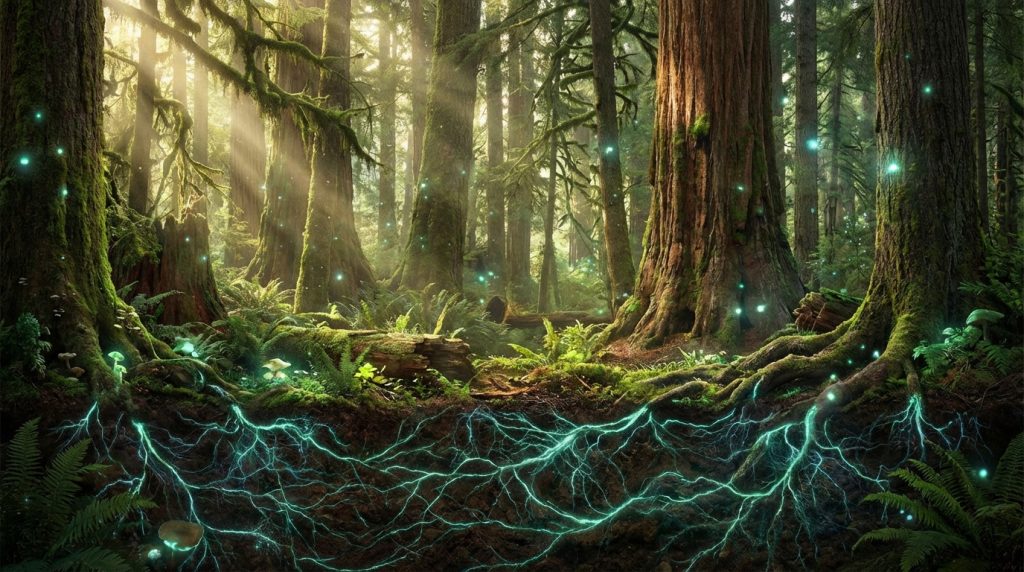
Imagine a forest. Sunlight dapples through the leaves. Birds sing. But beneath the surface, a silent, intricate conversation is happening. Trees are talking. They use a hidden network to share resources and warnings. This network is called the Wood Wide Web. It is made of fungi. These fungi connect tree roots. It’s a remarkable example of nature’s complexity.
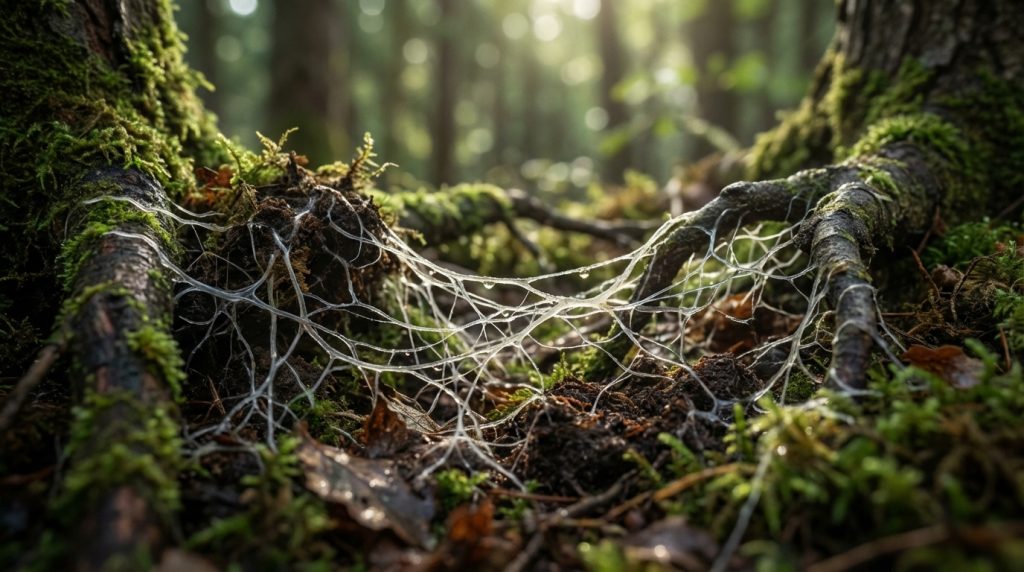
The Fungal Foundation
Trees are not solitary beings. They are deeply connected. This connection is facilitated by fungi. Specifically, mycorrhizal fungi. These fungi form symbiotic relationships with tree roots. The fungi extend their thread-like structures, called hyphae. These hyphae spread far beyond the reach of tree roots. They act like extensions of the root system. In return for nutrients, the fungi receive sugars from the trees. This mutualistic relationship is crucial for forest health.
Mycorrhizal Magic
There are two main types of mycorrhizal fungi. Ectomycorrhizal fungi are common. They form a sheath around root tips. They also penetrate the root cells. Arbuscular mycorrhizal fungi are also widespread. They penetrate the root cell walls. Both types create a vast underground network. This network can connect many trees. It can even connect different species of trees. This is the foundation of the Wood Wide Web.
How Trees Communicate
The Wood Wide Web is more than just nutrient exchange. It’s a sophisticated communication system. Trees use this network to send signals. They can warn each other of danger. For instance, an attacked tree can send chemical signals. These signals travel through the fungal network. Nearby trees receive these warnings. They can then boost their own defenses. This proactive defense is vital for survival.
Sharing is Caring
Furthermore, trees can share resources. A mature, healthy tree can support a younger one. It can send excess sugars through the network. This helps saplings survive in low-light conditions. It’s like a shared pantry for the forest. This sharing can even occur between different species. This interconnectedness benefits the entire ecosystem. It demonstrates a level of cooperation rarely seen elsewhere.
Scientists are still uncovering the full extent of this communication. It’s a complex language of chemicals and electrical signals. The fungal network acts as the conduit. It allows for rapid and widespread information transfer.
Benefits of the Wood Wide Web
The Wood Wide Web provides numerous benefits. It enhances tree growth and health. It improves nutrient uptake. It increases resistance to diseases and pests. It also helps trees cope with environmental stress. For example, during droughts, trees can share water. This collective resilience strengthens the forest as a whole.
Ecosystem Stability
This interconnectedness contributes to overall ecosystem stability. Forests with well-developed fungal networks are more robust. They can better withstand disturbances. This includes disease outbreaks and climate fluctuations. The Wood Wide Web is, therefore, a critical component of forest resilience.
Fungal Networks and Biodiversity
The Wood Wide Web supports a rich diversity of life. It’s not just trees that benefit. The fungal network itself is a habitat. It supports a diverse community of microorganisms. These microbes play vital roles in soil health. They also contribute to nutrient cycling. The health of the fungal network directly impacts the health of the entire forest ecosystem.
Beyond the Trees
The implications extend beyond the forest floor. Understanding these underground networks can inform conservation efforts. It highlights the importance of soil health. It also emphasizes the need to protect fungal diversity. This hidden world is as vital as the visible canopy. It is crucial for maintaining ecological balance.
Research and Discovery
The concept of the Wood Wide Web is relatively new. Early research focused on nutrient exchange. However, more recent studies have revealed its communicative role. Scientists like Suzanne Simard have been pioneers. They have used isotope tracing. This technique shows how trees share resources. It has provided compelling evidence for this underground network. Further research continues to reveal new insights.
Challenges in Study
Studying these underground networks is challenging. They are hidden from view. Advanced imaging techniques are being developed. These help visualize the fungal hyphae. They also track the movement of signals. Despite the difficulties, the discoveries are profound. They are changing our understanding of forests.
Implications for Conservation and Forestry
The knowledge of the Wood Wide Web has significant implications. It calls for a more holistic approach to forest management. Clear-cutting practices can disrupt these networks. They can sever vital connections. Sustainable forestry practices are needed. These must consider the role of fungi. Protecting old-growth forests is also important. These forests often have the most developed networks.
Rethinking Our Forests
This understanding also impacts conservation strategies. It highlights the interconnectedness of all living things in a forest. Protecting one species may depend on protecting its fungal partners. It also suggests that restoring degraded forests might involve reintroducing beneficial fungi. This approach is crucial for long-term ecological health.
Indeed, the transition from focusing solely on individual species to understanding interconnected systems is vital. This is true not only in forestry but across many ecological fields. For instance, research into plant health and its connection to broader ecological networks is expanding our perspective.
The Wood Wide Web in Action: Examples
Consider a forest facing an insect infestation. A tree under attack releases volatile organic compounds. These airborne signals warn its neighbors. Simultaneously, chemical signals are sent underground. They travel through the fungal network. Neighboring trees receive this alert. They ramp up their production of defensive compounds. This coordinated response can prevent a widespread outbreak.
Support for Seedlings
Another example is the support for young trees. Older, established trees can “nurse” seedlings. They can send them essential nutrients. This is especially important for seedlings growing in shaded areas. The fungal network acts as a lifeline. It ensures the next generation has a chance to thrive.
Future Research and Understanding
The study of the Wood Wide Web is ongoing. Scientists are exploring its role in climate change. They are investigating how it affects carbon sequestration. The network’s response to pollution is also a key area of research. Understanding these complex interactions is vital for predicting future forest health.
Technological Advancements
New technologies are aiding this research. DNA sequencing helps identify fungal species. Advanced sensors monitor nutrient and signal flow. Computer modeling allows for simulations of network behavior. These tools are accelerating our understanding of this hidden world.
Frequently Asked Questions
What is the Wood Wide Web?
The Wood Wide Web is a network of fungal mycelia that connects trees and other plants underground. It allows them to communicate and share resources.
How do trees communicate through this network?
Trees communicate by sending chemical signals through the fungal hyphae. These signals can warn of danger, share nutrients, or signal distress.
Are all trees connected by the Wood Wide Web?
Most trees, especially in mature forests, are connected by mycorrhizal fungi. However, the density and extent of the network can vary.
Can different species of trees communicate?
Yes, the Wood Wide Web can connect trees of different species, allowing for inter-species communication and resource sharing.
What are the benefits of the Wood Wide Web?
Benefits include enhanced nutrient uptake, increased disease resistance, improved stress tolerance, and support for young saplings, contributing to overall forest health and resilience.
Conclusion
The Wood Wide Web is a testament to nature’s intricate design. It reveals a hidden world of connection and communication. This underground network is essential for forest health. It supports biodiversity. It also contributes to ecosystem stability. As we learn more, our appreciation for these silent conversations grows. Protecting these fungal networks is crucial. It is vital for the future of our forests and our planet.