
Hanoi Balconies Bloom: Your Vertical Aquaponics Guide
Published on February 8, 2026 by Admin
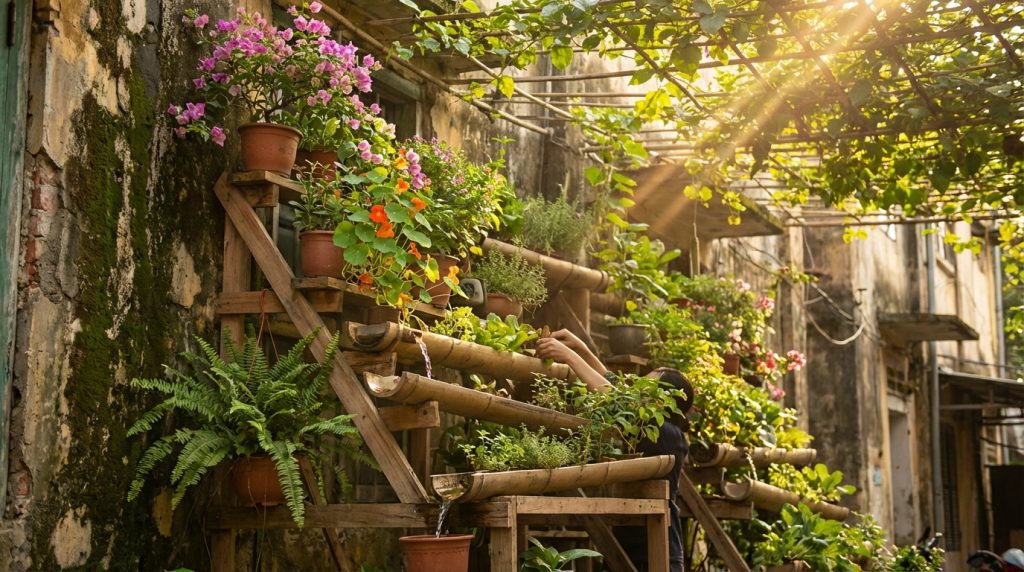
Imagine fresh greens and vibrant fish living together. This can happen right on your Hanoi balcony. Vertical aquaponics makes this possible. It’s a smart way to grow food. It uses less space and less water. This article will guide you through setting up your own system.
What is Vertical Aquaponics?
Aquaponics combines aquaculture and hydroponics. Aquaculture is fish farming. Hydroponics is growing plants without soil. In aquaponics, fish waste fertilizes the plants. The plants then clean the water for the fish. It creates a closed-loop system. This means less waste and more sustainability.
Vertical aquaponics takes this further. It stacks growing systems. This maximizes your growing space. It is perfect for small urban areas. Balconies in Hanoi are often limited in size. Vertical systems fit these spaces well. Therefore, they are ideal for city dwellers.
Why Choose Vertical Aquaponics for Hanoi?
Hanoi is a bustling city. Space is a premium. Vertical aquaponics offers a solution. It allows you to grow food locally. This reduces your carbon footprint. It also provides fresh, healthy produce. You know exactly where your food comes from. Furthermore, it’s a sustainable practice.
Additionally, it’s a rewarding hobby. You connect with nature. You also learn about ecosystems. It can be a great educational tool for families. For DIY enthusiasts, it offers a creative challenge. You can customize your system. You can grow what you love to eat.
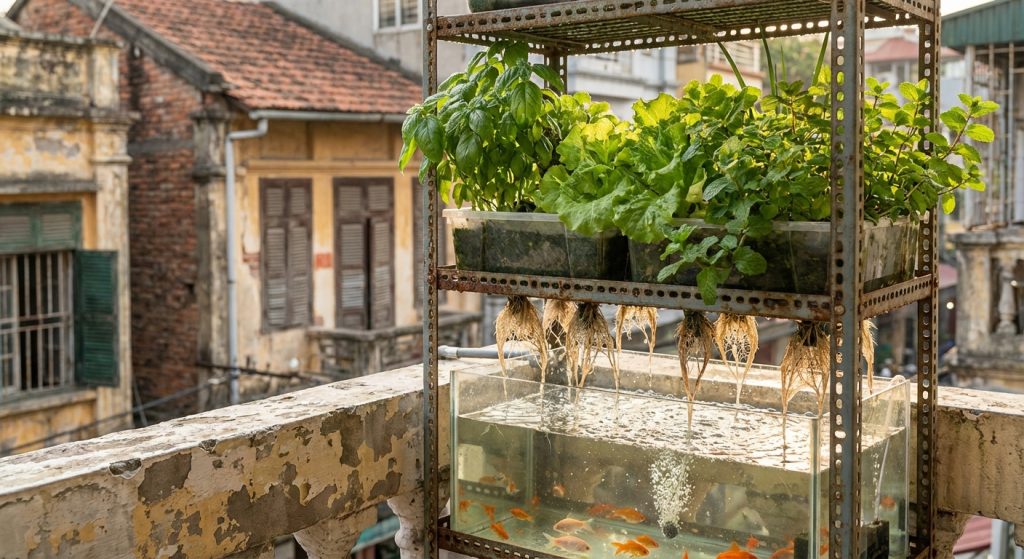
Key Components of a Vertical Aquaponics System
Setting up a system requires several key parts. These work together to create a balanced environment. Understanding each component is crucial for success.
1. Fish Tank
This is where your fish live. The size depends on your space. It also depends on how many plants you want to grow. Common fish include tilapia or goldfish. They are hardy and grow well. The tank needs to be sturdy and watertight. It should also be easy to clean.
2. Grow Beds
These are the areas where your plants grow. In a vertical system, these are stacked. They can be made of various materials. Common choices include plastic tubs or PVC pipes. The grow beds hold the plants and the growing medium. The growing medium supports the plant roots.
3. Growing Medium
This provides support for plant roots. It also helps filter the water. Popular choices include clay pebbles (LECA) or lava rock. These are inert and provide good drainage. They also have surface area for beneficial bacteria to grow. These bacteria are vital for the system.
4. Pump and Plumbing
A water pump moves nutrient-rich water. It circulates water from the fish tank to the grow beds. Plumbing connects the components. This includes pipes and fittings. The pump needs to be reliable. It should also be energy-efficient.
5. Sump Tank (Optional but Recommended)
A sump tank collects water. It sits below the grow beds. This helps maintain a consistent water level. It also houses the pump. This setup is common in flood-and-drain systems. It ensures water returns to the fish tank cleanly.
Types of Vertical Aquaponics Systems
There are several popular vertical aquaponics designs. Each has its advantages. Choosing the right one depends on your needs.
Media Bed Systems
In these systems, the grow beds are filled with a medium. This medium supports the plants. It also acts as a biofilter. Water floods the bed periodically. Then, it drains back to the fish tank. This is a simple and effective design. It is great for beginners.
Nutrient Film Technique (NFT) Towers
NFT towers use channels. Plants sit in net pots. A thin film of nutrient-rich water flows over their roots. This is very efficient. It uses less growing medium. However, it requires more precise water flow. It is also more prone to pump failure issues.
Deep Water Culture (DWC) Rafts
DWC systems float plants on rafts. Their roots are submerged in nutrient-rich water. Vertical DWC systems can be designed as stacked rafts. This method works well for leafy greens. It requires good aeration for the roots.
Choosing Your Fish and Plants
The success of your system depends on selecting compatible fish and plants. You want species that thrive in similar conditions.
Fish Selection
Consider fish that are hardy. Also, choose fish that are suitable for your climate. In Vietnam, tilapia are a popular choice. They grow quickly. They also tolerate a range of conditions. Goldfish are another option. They are more ornamental. They require less intensive care. However, they grow slower.
Plant Selection
Leafy greens are excellent choices. Lettuce, spinach, and kale grow very well. Herbs like basil, mint, and cilantro also thrive. Fruiting plants like tomatoes and peppers are possible. However, they require more mature systems and higher nutrient levels. For beginners, stick to greens and herbs.
Setting Up Your Balcony System: Step-by-Step
Building your vertical aquaponics system can be a fun DIY project. Here’s a basic guide.
Step 1: Design and Planning
First, sketch out your design. Measure your balcony space. Decide on the type of system you want. Consider the weight of the filled tanks and beds. Ensure your balcony can support it. Plan for access to sunlight and electricity for the pump.
Step 2: Gather Your Materials
Purchase or collect your components. You’ll need a fish tank, grow beds (or vertical towers), a water pump, plumbing supplies, and a growing medium. You might also need a timer for the pump if using a media bed system.
Step 3: Assemble the Structure
Build the frame for your vertical system. This could be a simple shelving unit or a custom-built frame. Ensure it is stable and can hold the weight. Then, place your fish tank and grow beds. Connect them using the plumbing.
Step 4: Install the Pump and Plumbing
Set up the water pump in the fish tank or sump. Connect the plumbing to move water to the grow beds. Ensure there are no leaks. Test the water flow. For media beds, set up a siphon or timer for the flood-and-drain cycle. This is crucial for oxygenating roots. You can learn more about water-efficient systems by exploring AI-driven drip irrigation, which focuses on saving every drop.
Step 5: Add Growing Medium and Water
Rinse your growing medium thoroughly. Add it to the grow beds. Then, fill the fish tank with dechlorinated water. It is important to remove chlorine. Chlorine can harm fish and beneficial bacteria. Let the water settle for a day or two.
Step 6: Cycle Your System
This is a critical step. Cycling establishes beneficial bacteria. These bacteria convert fish waste into plant nutrients. You can cycle with fish food or ammonia. It takes several weeks. Test your water regularly for ammonia, nitrite, and nitrate levels. You are looking for ammonia and nitrite to be zero. Nitrate levels should be present. This indicates a cycled system. This process is similar to establishing a healthy ecosystem. You can also explore how plants help clean environments in articles about phytoremediation.
Step 7: Add Fish and Plants
Once your system is cycled, add your fish. Start with a small number. Acclimate them slowly. Then, introduce your plants. You can use seedlings or seeds. Be patient. Your system needs time to stabilize.
Maintenance and Troubleshooting
Regular maintenance is key. It ensures a healthy and productive system. You should monitor water quality daily. Check pH, ammonia, nitrite, and nitrate levels. Also, observe your fish and plants for any signs of stress or disease.
Common Issues
- Algae Growth: This is common. It’s usually caused by too much light or excess nutrients. Reduce light exposure. Add more plants to consume nutrients.
- Pests: Aphids and other pests can attack your plants. Avoid chemical pesticides. Use natural methods. Ladybugs or neem oil are good options. You can also explore fungal bio-pesticides as a natural solution.
- Nutrient Deficiencies: If plants show yellowing leaves or stunted growth, they might lack nutrients. Ensure your fish are healthy and producing waste. You may need to supplement with specific minerals.
- Water Leaks: Regularly check all connections. Fix any leaks immediately.
Benefits of Balcony Aquaponics in Hanoi
Having a vertical aquaponics system on your balcony offers many benefits. It’s more than just growing food. It’s about a more sustainable lifestyle.
- Fresh, Healthy Food: You get pesticide-free greens and fish.
- Reduced Water Usage: Aquaponics uses up to 90% less water than traditional farming.
- Space Efficiency: Vertical systems maximize yield in small areas.
- Environmental Friendliness: It reduces food miles and waste.
- Educational Value: It’s a living lesson in ecology.
- Aesthetic Appeal: A green balcony adds beauty to your home.
Frequently Asked Questions
Is vertical aquaponics difficult to set up?
While it requires planning and some initial effort, setting up a basic vertical aquaponics system is manageable for DIY enthusiasts. Many resources and kits are available to simplify the process.
What kind of fish are best for a small balcony system?
For small systems, hardy fish like goldfish or guppies are good choices. If you plan for consumption, a few small tilapia can work, but ensure adequate tank size and filtration.
How much maintenance is involved?
Daily checks of water quality and fish health are recommended. Weekly tasks might include topping up water and checking the pump. Monthly tasks could involve cleaning the tank.
Can I grow vegetables year-round?
In Hanoi’s climate, you can grow many greens year-round. For optimal growth, consider season extension with small covers or choosing plants suited to the current weather.
What are the initial costs?
Costs vary widely. A basic DIY system can be built affordably with recycled materials. Pre-made kits can range from a few million to tens of millions of VND. However, the long-term savings on produce can offset this.
Conclusion
Vertical aquaponics offers a revolutionary way to bring sustainable food production to urban spaces like Hanoi balconies. It is an innovative solution for growing fresh food. It also promotes a healthier environment. By understanding the components and following a structured approach, you can create your own thriving ecosystem. Start small, learn as you go, and enjoy the rewards of homegrown produce and healthy fish. It’s a step towards a greener, more self-sufficient urban life.
