Net Zero Vietnam 2050: Heavy Industry’s Green Roadmap
Published on February 9, 2026 by Admin

Vietnam is on a critical journey towards Net Zero by 2050. This ambitious goal requires significant transformation across all economic sectors. Heavy industry, in particular, faces immense challenges. These industries are major contributors to greenhouse gas emissions. Therefore, a clear roadmap is essential for their decarbonization. This article outlines the path forward for Vietnam’s heavy industry to achieve Net Zero emissions.
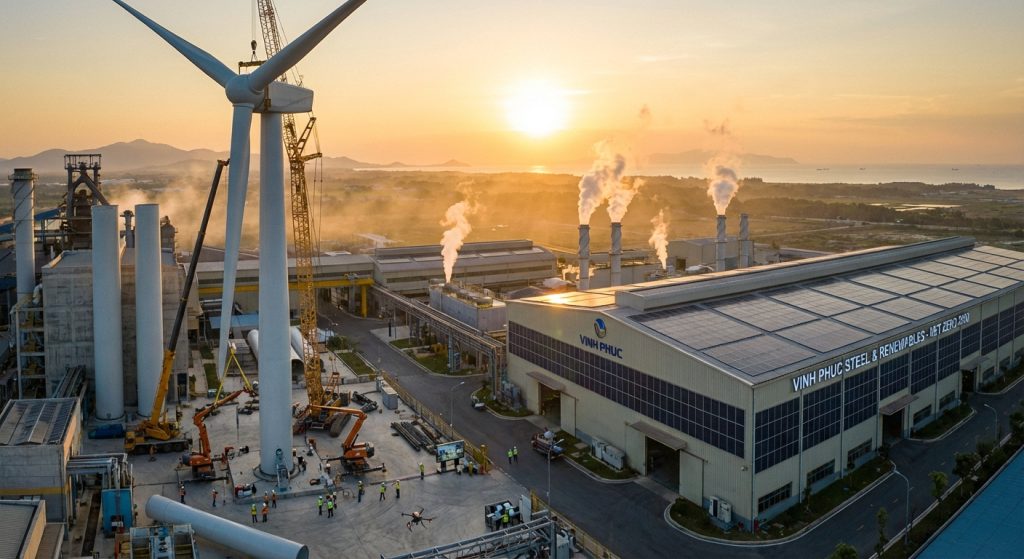
The Imperative for Decarbonization
The global push for climate action is undeniable. Vietnam has committed to ambitious emission reduction targets. These commitments are crucial for environmental sustainability. They also drive economic competitiveness. Heavy industries, including manufacturing, energy production, and resource extraction, are at the forefront of this challenge. Their operations are energy-intensive. Thus, they are significant sources of CO2. Transitioning to cleaner processes is not just an environmental necessity. It is also an economic opportunity.
Moreover, international pressure is mounting. Investors and trading partners increasingly favor sustainable practices. Therefore, decarbonizing heavy industry is vital for Vietnam’s long-term economic health. It also secures Vietnam’s position in the global market. This transition will foster innovation. It will also create new green jobs. Furthermore, it will enhance energy security.
Key Challenges for Heavy Industry
Heavy industries face unique hurdles. Firstly, many industrial processes are difficult to electrify. High-temperature heat is often required. This heat traditionally comes from burning fossil fuels. Secondly, the upfront cost of new, low-carbon technologies can be very high. This is a significant barrier for many businesses. Thirdly, existing infrastructure may not be compatible with new energy sources. Retrofitting or replacing this infrastructure is complex and expensive.
Additionally, a skilled workforce is needed. This workforce must operate and maintain new technologies. Training and upskilling are therefore essential. Finally, policy and regulatory frameworks need to adapt. Clear guidelines and incentives are necessary to encourage investment in green technologies. Without these, the transition will be slow and uneven.
Pillars of the Net Zero Roadmap for Heavy Industry
Vietnam’s strategy for heavy industry’s Net Zero transition rests on several key pillars. These pillars work in synergy to drive deep decarbonization.
1. Energy Efficiency and Conservation
This is often the first and most cost-effective step. Reducing energy consumption directly lowers emissions. It also cuts operational costs. Therefore, implementing energy management systems is crucial. This includes regular energy audits. It also involves upgrading to more efficient machinery and equipment. Simple measures like improved insulation and process optimization also contribute significantly.
Furthermore, smart energy monitoring is vital. This allows for real-time tracking of energy usage. It helps identify areas for improvement. Many industries can achieve substantial energy savings. These savings can be reinvested in further decarbonization efforts. This approach is foundational to any successful net-zero strategy.
2. Transition to Renewable Energy Sources
Replacing fossil fuels with renewable energy is paramount. Vietnam has abundant solar and wind resources. These can power industrial operations. Solar power can be installed on factory roofs. Large-scale wind farms can supply grid electricity. Additionally, biomass and geothermal energy offer other low-carbon options. The government needs to facilitate grid integration. This ensures a stable supply of renewable electricity.
Moreover, exploring green hydrogen is critical. Hydrogen produced from renewable electricity can replace natural gas. It can be used for high-temperature processes. This technology is still developing. However, it holds immense promise. Investing in research and pilot projects is essential. This will accelerate its adoption. The transition to renewables is a cornerstone of decarbonization.
3. Electrification of Industrial Processes
Where possible, industrial processes should be electrified. This allows them to run on renewable electricity. Electric furnaces and motors are more efficient. They also produce zero direct emissions. However, this requires significant investment in new equipment. It also necessitates upgrades to electrical infrastructure. Careful planning and phased implementation are key.
Some sectors, like cement and steel production, pose challenges. These require very high temperatures. Alternative fuels or innovative processes may be needed. However, for many other manufacturing processes, electrification is a viable and effective strategy. This is a crucial step towards cleaner production. You can explore related concepts like decarbonizing heavy industry to understand the broader context.
4. Carbon Capture, Utilization, and Storage (CCUS)
For emissions that are difficult to eliminate entirely, CCUS technologies offer a solution. These technologies capture CO2 produced during industrial processes. The captured CO2 can then be utilized in other applications. Alternatively, it can be stored safely underground. This is particularly relevant for industries like cement and chemicals. CCUS can help bridge the gap to full decarbonization.
However, CCUS is an energy-intensive process. Its economic viability depends on technological advancements. It also requires supportive policies. Vietnam should invest in pilot CCUS projects. This will help assess its feasibility. It will also build local expertise. Therefore, CCUS is a vital tool in the net-zero arsenal.
5. Circular Economy Principles
Adopting circular economy principles is essential. This means minimizing waste. It also involves maximizing resource efficiency. Industries should focus on designing products for longevity and recyclability. Reuse and repair should be prioritized. This reduces the need for raw materials. It also lowers energy consumption associated with production. Implementing these principles can lead to significant emission reductions.
For example, waste heat recovery systems can be implemented. Industrial symbiosis, where waste from one industry becomes a resource for another, is also powerful. Embracing a circular economy creates value. It also reduces environmental impact. This aligns perfectly with the Net Zero goal. You can learn more about the circular economy and designing for longevity.
Policy and Financial Mechanisms
Government policies play a critical role. They create the enabling environment for transition. This includes setting clear emission standards. It also involves providing incentives for green investments. Carbon pricing mechanisms, such as carbon taxes or emissions trading schemes, can drive change. These make polluting activities more expensive.
Financial support is also crucial. This includes green financing options. Subsidies and tax breaks for low-carbon technologies are important. Public-private partnerships can mobilize capital. International climate finance can also be leveraged. Vietnam needs to streamline approval processes. This will encourage private sector investment. A stable and predictable policy landscape is key. This ensures long-term commitment.
Technological Innovation and R&D
Continuous innovation is vital. Research and development (R&D) in low-carbon technologies must be prioritized. This includes exploring advanced materials. It also involves developing more efficient industrial processes. Digitalization and AI can optimize operations. They can also enable better monitoring and control of emissions. Vietnam should foster collaboration between industry, academia, and research institutions.
Investment in R&D will drive the development of next-generation solutions. These solutions will be critical for achieving deep decarbonization. Supporting pilot projects and scaling up successful innovations is also important. This ensures that new technologies reach the market. Therefore, a strong focus on innovation is non-negotiable.
Building a Skilled Workforce
The transition to a green economy requires a skilled workforce. Training programs are needed. These programs should focus on green technologies. They should also cover energy efficiency and sustainable practices. Upskilling existing workers is as important as training new ones. Educational institutions need to adapt their curricula. They should align with the future needs of the industry.
Government initiatives can support workforce development. This includes vocational training. It also includes public awareness campaigns. A green workforce is essential for the successful implementation of the Net Zero roadmap. This ensures that industries have the human capital to thrive in a sustainable future.
Sector-Specific Strategies
Different heavy industries have different decarbonization pathways. For example:
- Cement and Steel: These sectors require high heat. They will likely need a combination of CCUS, green hydrogen, and alternative fuels. Energy efficiency is also critical.
- Power Generation: A rapid shift from coal to renewables is essential. This includes solar, wind, and potentially nuclear energy.
- Manufacturing: Electrification of processes is key. This should be combined with renewable energy sourcing and improved energy efficiency.
- Chemicals: Developing green chemistry pathways and utilizing CCUS will be important. Renewable energy will power these new processes.
Tailored strategies are necessary for each sector. This ensures that decarbonization efforts are targeted and effective. A one-size-fits-all approach will not work. Therefore, deep sector-specific analysis is required.
Monitoring and Reporting
Robust monitoring and reporting frameworks are essential. These ensure accountability. They also track progress towards Net Zero goals. Industries must accurately measure and report their emissions. This data is vital for policy adjustments. It also builds trust with stakeholders. Transparent reporting is a hallmark of credible climate action. For example, understanding ESG data integrity is crucial for accurate reporting.
Regular reviews of progress are also necessary. These reviews should inform future policy decisions. They ensure that the roadmap remains effective. Continuous improvement is key to achieving ambitious targets. Therefore, a strong emphasis on data and transparency is critical.
Conclusion
Vietnam’s Net Zero 2050 goal for heavy industry is ambitious but achievable. It requires a multi-faceted approach. This includes energy efficiency, renewable energy adoption, process electrification, CCUS, and circular economy principles. Strong government policies, financial incentives, and continuous technological innovation are vital. Furthermore, developing a skilled workforce is paramount. Each industrial sector needs a tailored strategy. Transparent monitoring and reporting will ensure accountability. By embracing these strategies, Vietnam’s heavy industry can lead the nation toward a sustainable, low-carbon future. This will not only benefit the environment but also enhance economic resilience and global competitiveness.
Frequently Asked Questions (FAQ)
What is the main goal of Net Zero Vietnam 2050 for heavy industry?
The main goal is to reduce greenhouse gas emissions from heavy industries to a net-zero level by the year 2050. This means that any remaining emissions must be balanced by removals from the atmosphere.
What are the biggest challenges for heavy industry in Vietnam to become Net Zero?
Key challenges include the difficulty of electrifying high-temperature processes, high upfront costs for new technologies, adapting existing infrastructure, and the need for a skilled workforce. Additionally, supportive policy frameworks are crucial.
How can Vietnam’s heavy industry transition to renewable energy?
This involves increasing the use of solar and wind power for industrial operations, exploring biomass and geothermal energy, and investing in green hydrogen production and infrastructure. Grid integration and energy storage solutions are also important.
What role does Carbon Capture, Utilization, and Storage (CCUS) play?
CCUS technologies are important for capturing CO2 emissions that are difficult to eliminate. The captured CO2 can be utilized in other products or stored safely. This is particularly relevant for sectors like cement and chemicals.
Why are circular economy principles important for Net Zero?
Circular economy principles focus on minimizing waste, maximizing resource efficiency, and promoting reuse and recycling. This reduces the demand for raw materials and the energy needed for production, thereby lowering emissions.
What kind of government policies are needed?
Supportive policies include clear emission standards, incentives for green investments, carbon pricing mechanisms (like carbon taxes or emissions trading), and streamlined approval processes for sustainable projects.
How can Vietnam ensure it has a skilled workforce for the green transition?
This requires investing in training programs for green technologies, upskilling existing workers, and adapting educational curricula to meet the future needs of the industry. Government support for vocational training is also vital.