
Smart-Tech Agriculture: Finance for the Future Farmer
Published on February 9, 2026 by Admin
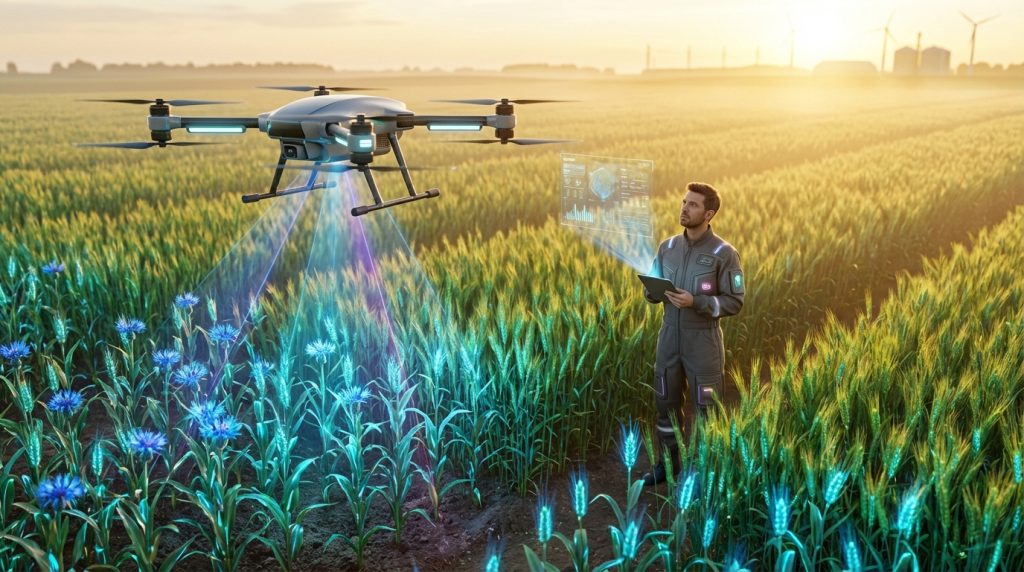
The agricultural sector is undergoing a revolution. Farmers are embracing smart technologies. This includes AI, IoT, and precision farming. These innovations boost efficiency and sustainability. However, adopting new tech requires significant investment. This is where sustainable agriculture finance comes in. Banks and financial institutions are now offering specialized loans. These loans are designed for smart-tech farmers. They help fund the transition to modern, sustainable practices.
This article explores sustainable agriculture finance. We will focus on loans for smart-tech farmers. We will discuss the benefits of these loans. We will also cover eligibility and application processes. Finally, we will look at the future of agri-finance.
The Rise of Smart Agriculture
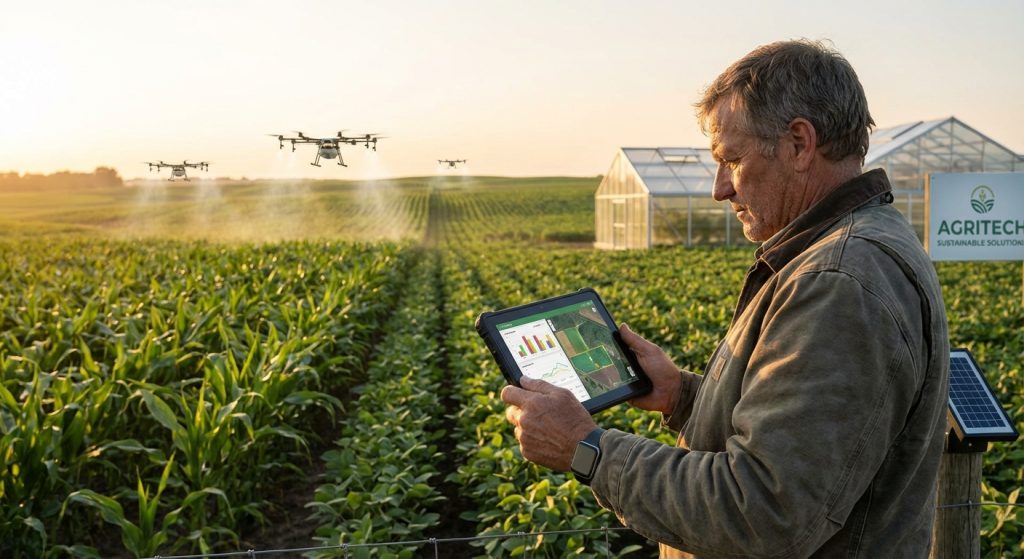
Traditional farming methods are evolving. Modern agriculture is data-driven. It uses technology to optimize every step. This includes planting, irrigation, pest control, and harvesting. For example, sensors monitor soil conditions. Drones provide aerial imagery. AI analyzes this data. It helps farmers make informed decisions. This leads to higher yields and reduced waste.
Precision agriculture is key. It targets resources precisely where needed. This conserves water and reduces chemical use. It also minimizes environmental impact. Furthermore, smart-tech farming contributes to food security. It helps produce more food with fewer resources. This is crucial for a growing global population.
Why Sustainable Agriculture Finance?
Smart farming technologies are not cheap. Drones, sensors, automated systems, and software can be expensive. Many farmers need financial support. Sustainable agriculture finance provides this. It bridges the funding gap. These loans are specifically tailored. They understand the unique needs of farmers. Moreover, they often come with favorable terms. This makes the investment more manageable. Banks see value in supporting sustainable practices. They recognize the long-term benefits. These include reduced environmental risk and improved profitability.
These financial products encourage innovation. They incentivize farmers to adopt eco-friendly methods. This aligns with global sustainability goals. It also helps farmers stay competitive. The agricultural sector needs to adapt. Sustainable finance is a critical enabler of this adaptation. It supports a greener and more efficient food system.
Benefits for Smart-Tech Farmers
- Access to Capital: Get the funds needed for advanced equipment.
- Lower Interest Rates: Often, these loans offer competitive rates.
- Flexible Repayment Terms: Tailored to agricultural cycles.
- Technical Support: Some programs include advisory services.
- Improved Profitability: Technology leads to higher yields and lower costs.
- Environmental Stewardship: Reduced resource use and pollution.
Therefore, these loans are more than just funding. They are an investment in a farm’s future. They also contribute to a healthier planet. It is a win-win situation for farmers and the environment.
Types of Loans for Smart-Tech Farmers
Financial institutions offer various loan products. These cater to different needs. Farmers can choose based on their specific situation.
Term Loans
Term loans are for specific purchases. Farmers can buy machinery, equipment, or technology. These loans have a fixed repayment period. They also have a set interest rate. This provides predictability for budgeting. It is ideal for significant capital investments.
Working Capital Loans
These loans cover operational expenses. They include costs for seeds, fertilizers, and labor. Working capital loans are usually short-term. They help manage cash flow throughout the season. They ensure smooth day-to-day operations.
Leasing Options
Leasing is another option. It allows farmers to use equipment without outright purchase. This reduces upfront costs. It can be a good way to access the latest technology. Lease payments are often tax-deductible. This offers financial flexibility.
Government Subsidies and Grants
Many governments support smart agriculture. They offer subsidies and grants. These can reduce the loan amount needed. They also lower the overall cost of technology adoption. Farmers should explore these opportunities. They can significantly ease the financial burden.
Eligibility and Application Process
Getting a loan requires meeting certain criteria. Banks want to assess risk. Farmers need to be prepared. Firstly, a solid business plan is essential. It should outline the farm’s operations. It must also detail how the loan will be used. Furthermore, it should project profitability. Financial records are also crucial. Banks will review past performance. This includes income statements and balance sheets. Collateral may be required. This could be land, equipment, or other assets. Lenders also look at the farmer’s experience. They want to see a track record of success.
The application process typically involves:
- Pre-qualification: Initial assessment of eligibility.
- Application Submission: Filling out detailed forms.
- Document Review: Providing financial statements, business plans, etc.
- Site Visit (Optional): Lender may visit the farm.
- Loan Approval: Final decision and terms.
- Disbursement: Funds are released.
Applying for a loan requires careful preparation. It is advisable to consult with financial advisors. They can help navigate the process. They also assist in preparing a strong application.
The Role of Technology in Sustainable Finance
Technology is not just for the farm. It is also transforming finance. Fintech solutions are making lending more efficient. AI and data analytics help lenders assess risk better. This can lead to faster loan approvals. It also allows for more personalized loan products. For example, platforms can analyze farm data. This helps in tailoring loan terms. Furthermore, digital platforms simplify applications. They reduce paperwork. This makes the process smoother for farmers.
Moreover, technology helps track loan performance. It can monitor the impact of financed technologies. This data can inform future lending decisions. It also helps in identifying successful investments. This supports the growth of sustainable agriculture. The integration of tech in finance is crucial for scalability.
Case Studies: Farmers Embracing Smart Tech
Many farmers have already benefited. Consider John, a corn farmer. He secured a loan for a precision irrigation system. Consequently, his water usage dropped by 30%. His yield increased by 15%. This was due to optimal watering. Another example is Maria, a vegetable grower. She financed automated pest monitoring drones. As a result, she reduced her pesticide use significantly. She also saved labor costs. These examples show the tangible benefits. Smart-tech adoption, supported by finance, pays off.
These success stories inspire others. They demonstrate the viability of smart agriculture. They also highlight the importance of financial support. Banks are increasingly seeing the value. They are developing more such products. This trend is set to continue. It promises a more productive and sustainable future for farming.
Challenges and Future Outlook
Despite the benefits, challenges remain. Some farmers lack digital literacy. They may need training. Furthermore, initial investment costs can still be high. Access to finance can be difficult for smallholders. However, the trend is positive. Financial institutions are becoming more innovative. They are developing new products. These include micro-loans and blended finance options. Blended finance combines public and private funds. It can de-risk investments for private lenders. This makes funding more accessible.
The future looks bright for sustainable agriculture finance. As climate change impacts grow, the need for efficient, sustainable farming increases. Consequently, demand for smart-tech solutions will rise. Banks will continue to innovate. They will offer more tailored financial products. This will empower farmers to adopt new technologies. It will also drive the agricultural sector towards greater sustainability. This shift is essential for global food security and environmental health. The integration of smart tech and finance is key to this progress. It fosters resilience in the face of challenges.
Banks are increasingly prioritizing green finance. This includes loans for sustainable agriculture. For instance, Vietnam banks are leading green loan initiatives. This indicates a broader trend. The financial sector is recognizing its role. It is supporting the transition to a sustainable economy. This is vital for sectors like agriculture. It ensures long-term viability and reduced environmental impact.
Frequently Asked Questions (FAQ)
What is sustainable agriculture finance?
Sustainable agriculture finance refers to financial products and services that support environmentally sound, socially responsible, and economically viable agricultural practices. This includes loans for farmers adopting technologies and methods that reduce environmental impact, conserve resources, and improve livelihoods.
Who is eligible for smart-tech farming loans?
Eligibility typically depends on the lender. However, common requirements include a viable business plan, good financial records, farming experience, and often collateral. Some loans may target specific farm sizes or types of technology.
What are the benefits of using smart-tech in farming?
Smart-tech in farming leads to increased efficiency, higher yields, reduced waste of resources like water and chemicals, better pest and disease management, and improved profitability. Ultimately, it contributes to more sustainable and resilient agricultural systems.
How can I find banks offering these loans?
You can inquire at your local banks or credit unions. Many also have agricultural lending departments. Additionally, government agricultural agencies and industry associations often provide resources and lists of financial institutions that offer specialized loans for farmers.
What is the difference between a term loan and a working capital loan?
A term loan is typically for purchasing long-term assets like machinery or technology and is repaid over several years. A working capital loan is for short-term operational expenses, such as seeds, fertilizer, and labor, and is usually repaid within a year.
Conclusion
Sustainable agriculture finance is a powerful tool. It empowers farmers to adopt smart technologies. This leads to more efficient, productive, and environmentally friendly farming. By providing access to capital, these loans drive innovation. They support the transition to a resilient agricultural future. As technology advances and financial models evolve, smart-tech farming will become more accessible. This benefits farmers, consumers, and the planet alike. Therefore, embracing these financial solutions is key for any forward-thinking agri-entrepreneur.
