

Viruses and bacteria are constantly evolving. Many can spread between people. This is a critical concern for public health. Understanding how this happens is key to prevention. It helps us control outbreaks effectively. This article explores the various ways pathogens spread from person to person.
Modes of Transmission
Pathogen transmission is complex. It depends on the specific microbe. However, several common routes exist. These routes facilitate human-to-human spread. Let’s examine them closely.
Direct Contact
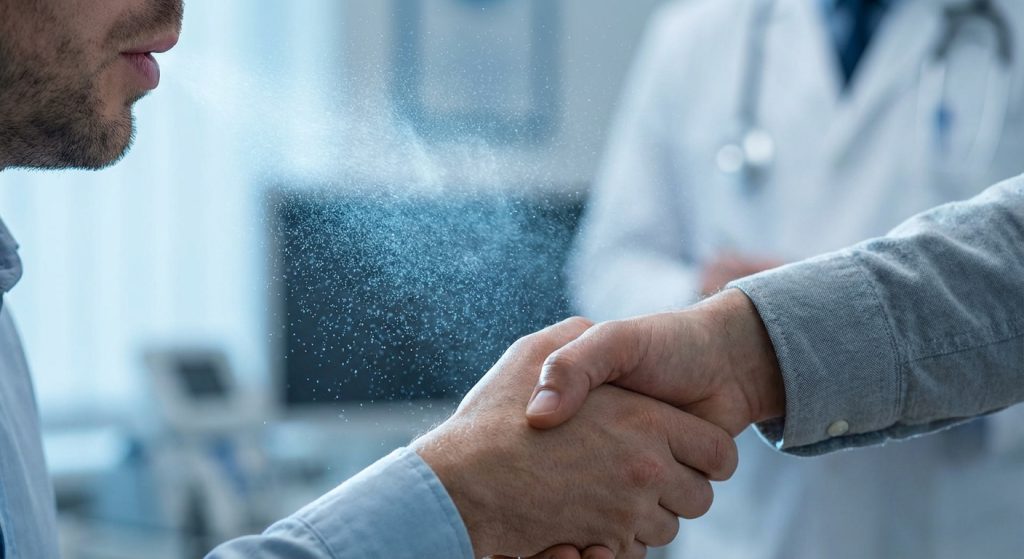
Direct contact is a primary transmission route. This occurs through physical touch. It includes shaking hands or hugging. For example, touching an infected person’s bodily fluids can transmit a pathogen. This is common with skin infections. It also applies to some viruses. For instance, the flu can spread this way. Therefore, hand hygiene is extremely important.
Indirect Contact
Indirect contact involves contaminated surfaces. These surfaces are called fomites. Think of doorknobs or phones. A person touches a contaminated surface. Then, they touch their eyes, nose, or mouth. This transfers the pathogen. For example, touching a used tissue is indirect contact. Consequently, regular cleaning of high-touch areas is vital.
Droplet Transmission
Droplet transmission occurs via respiratory droplets. These are expelled when someone coughs or sneezes. They travel short distances. Usually, this is about six feet. Close contact is needed for infection. For example, speaking or singing also releases droplets. Therefore, masks are effective barriers. They block these expelled particles.
Airborne Transmission
Airborne transmission is different from droplets. It involves smaller particles called aerosols. These can remain suspended in the air. They travel longer distances. They can also linger for longer periods. For example, tuberculosis is spread this way. Therefore, good ventilation is crucial. It dilutes airborne pathogens.
Fecal-Oral Route
This route involves contaminated food or water. It can also spread through poor hygiene. For instance, an infected person doesn’t wash hands after using the toilet. Then, they prepare food. Others consume this food. This contaminates them. Therefore, proper sanitation is paramount. This prevents diseases like Hepatitis A.
Vector-Borne Transmission
While less common for direct human-to-human spread, vectors can play a role. For instance, some viruses are transmitted by mosquitoes or ticks. However, these vectors typically acquire the pathogen from an animal. Then, they transmit it to a human. The disease then spreads person-to-person through other means. For example, Dengue fever is mosquito-borne. But its human-to-human spread is limited. However, understanding these cycles is important for overall control. It’s a key aspect of preventing zoonotic spillover.
Factors Influencing Spread
Several factors influence how easily a pathogen spreads. Understanding these helps predict outbreaks. It also aids in developing control strategies.
Pathogen Characteristics
The nature of the pathogen itself is crucial. Some viruses are highly contagious. Others are less so. For example, the R-naught value (R0) indicates infectivity. A higher R0 means faster spread. Moreover, incubation periods matter. A long incubation period can allow silent spread. Therefore, knowing these traits is vital.
Host Susceptibility
The health of the infected person is key. A weakened immune system makes individuals more vulnerable. Age also plays a role. Young children and the elderly are often more susceptible. Furthermore, pre-existing conditions can increase risk. Therefore, promoting general health is important.
Environmental Factors
The environment can promote or hinder spread. Crowded conditions increase transmission risk. Poor sanitation facilities are also a factor. For example, during natural disasters, hygiene can suffer. This can lead to outbreaks. Therefore, maintaining good environmental conditions is essential.
Behavioral Factors
Human behavior significantly impacts spread. Practices like frequent handwashing help. Social distancing reduces close contact. Mask-wearing is another effective behavior. Conversely, poor hygiene practices facilitate spread. Therefore, public education is critical. It promotes beneficial behaviors.
Preventing Human-to-Human Transmission
Preventing transmission requires a multi-faceted approach. Many strategies work together. They create layers of protection. Therefore, a combination of measures is most effective.
Vaccination
Vaccines are a cornerstone of prevention. They prime the immune system. This prepares the body to fight specific pathogens. For example, the MMR vaccine prevents measles. This disease is highly contagious. Therefore, high vaccination rates are crucial. They achieve herd immunity. This protects vulnerable populations. Research continues into new vaccines, such as the mRNA Nipah vaccine.
Hygiene Practices
Good hygiene is fundamental. Regular handwashing with soap and water is vital. This removes germs effectively. Covering coughs and sneezes is also important. Using tissues or the elbow prevents droplet spread. Therefore, these simple habits make a big difference.
Social Distancing and Masks
When respiratory pathogens are a concern, these measures are key. Social distancing minimizes close contact. Masks act as physical barriers. They reduce the expulsion and inhalation of infectious particles. For example, during the COVID-19 pandemic, these were widely used. Consequently, they helped slow transmission.
Sanitation and Clean Water
Access to clean water is crucial. Proper sanitation facilities prevent fecal-oral transmission. This is especially important in public spaces. Therefore, investing in infrastructure is vital. It protects communities from waterborne diseases.
Public Health Surveillance
Monitoring disease outbreaks is essential. Public health agencies track cases. They identify trends and hotspots. This allows for rapid response. For instance, real-time outbreak mapping is a powerful tool. It helps allocate resources effectively. This is crucial for real-time outbreak mapping.
Education and Awareness
Informing the public is paramount. People need to understand risks. They also need to know how to protect themselves. Therefore, clear communication campaigns are vital. They empower individuals to take action.
Specific Pathogen Examples
Different pathogens spread in distinct ways. Understanding these specifics is important.
Influenza (Flu)
The flu spreads mainly through droplets. It can also spread via fomites. Symptoms include fever and cough. Therefore, vaccination is recommended annually. Good hygiene also helps prevent its spread.
Norovirus
Norovirus is highly contagious. It spreads easily through contaminated food, water, or surfaces. It causes vomiting and diarrhea. Therefore, meticulous cleaning is essential. Handwashing is critical after using the restroom.
Tuberculosis (TB)
TB is spread through airborne droplets. It primarily affects the lungs. Symptoms can include a persistent cough. Therefore, good ventilation is key. Prompt diagnosis and treatment are also vital.
The Role of Consultants
Virology consultants play a crucial role. They help organizations understand transmission risks. They develop strategies for prevention and control. This includes advising on best practices. They also assist in outbreak response planning. For example, robust pandemic preparedness plans are essential.
Conclusion
Human-to-human spread of pathogens is a constant threat. It requires vigilance and proactive measures. Understanding the modes of transmission is the first step. Implementing preventive strategies like vaccination, hygiene, and public health surveillance is crucial. By working together, we can mitigate the risks. We can protect public health effectively. Therefore, continuous learning and adaptation are key.
Frequently Asked Questions (FAQ)
What is the most common way viruses spread between people?
The most common ways viruses spread between people are through respiratory droplets produced when an infected person coughs, sneezes, or talks, and through direct or indirect contact with contaminated surfaces.
How can I protect myself from catching a cold or the flu?
You can protect yourself by washing your hands frequently with soap and water, avoiding close contact with sick people, not touching your eyes, nose, and mouth, and getting vaccinated annually for the flu.
Are airborne viruses more dangerous than droplet-spread viruses?
Airborne viruses can be more challenging to control because their smaller particles can travel further and remain suspended in the air for longer periods. However, the danger also depends on the specific virus’s infectivity and severity.
How important is ventilation in preventing disease spread?
Ventilation is very important, especially for airborne pathogens. Good ventilation helps dilute the concentration of infectious particles in the air, reducing the risk of transmission.
Can I get sick from touching a surface that an infected person touched?
Yes, you can. This is called indirect contact or transmission via fomites. If you touch a contaminated surface and then touch your eyes, nose, or mouth, you can become infected.
What is ‘herd immunity’?
Herd immunity occurs when a large enough portion of a population is immune to a disease, either through vaccination or prior infection. This makes the spread of the disease from person to person unlikely, thus protecting those who are not immune.
How do virology consultants help with disease prevention?
Virology consultants provide expert advice on understanding pathogen risks, developing containment strategies, implementing hygiene protocols, and planning for potential outbreaks. They help organizations and public health bodies create effective defense mechanisms.
