
Posture Correction: Ergonomic Secrets for Office Workers
Published on January 23, 2026 by Admin
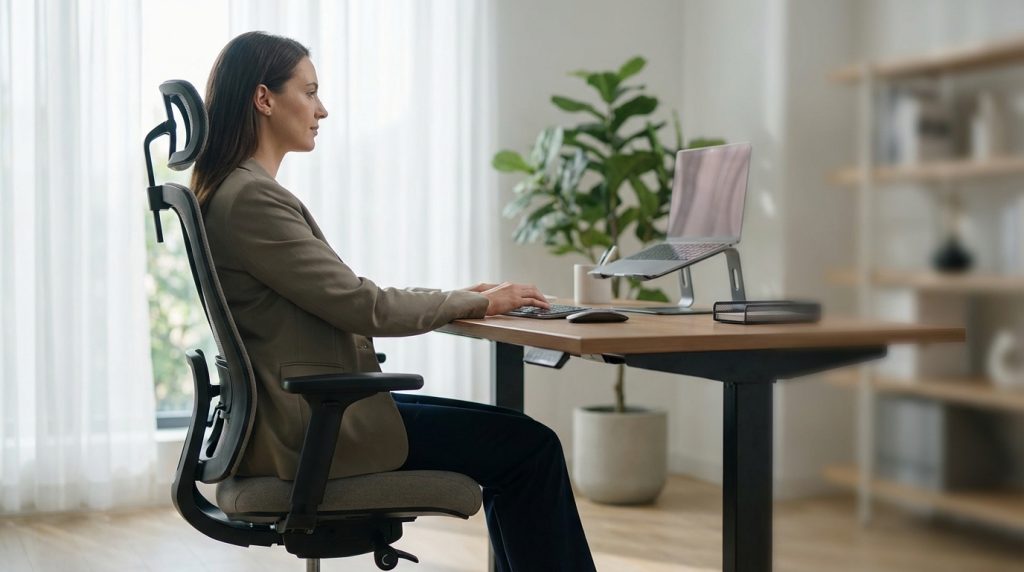
Many office workers spend hours each day hunched over a computer. This can lead to pain and discomfort. Therefore, good posture is essential. It prevents long-term health issues. This article reveals ergonomic secrets for better posture.
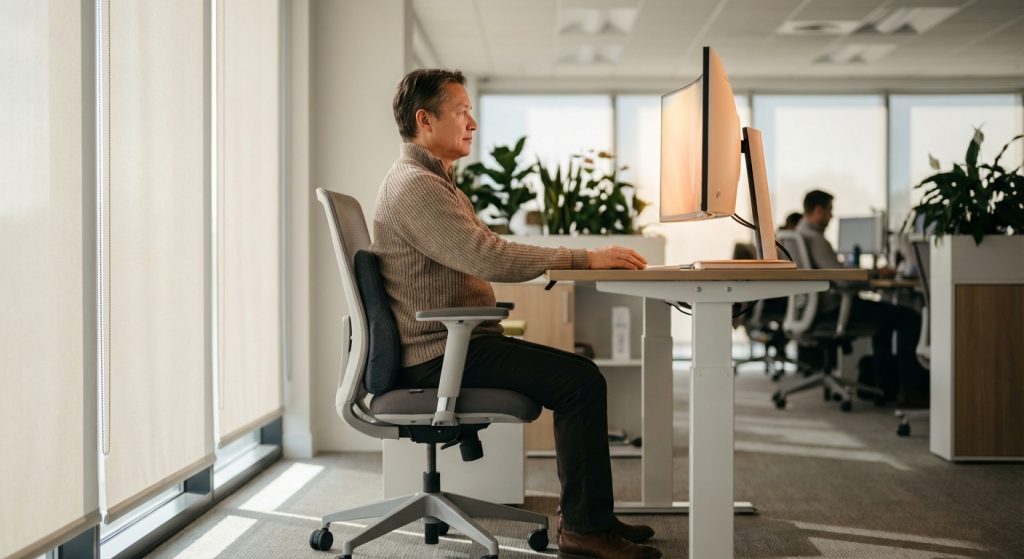
The Hidden Dangers of Poor Posture
Poor posture is more than just an aesthetic concern. It directly impacts your physical well-being. Slouching strains your spine. It also compresses your organs. This can lead to various health problems. For example, back pain is very common. Neck pain and headaches also arise. Furthermore, reduced lung capacity can occur. Poor circulation is another consequence. Ultimately, it affects your energy levels. It can even impact your mood.
Prolonged sitting in a slouched position puts undue stress on your muscles and joints. This can lead to chronic pain. It may also contribute to conditions like sciatica. Therefore, addressing posture is crucial for overall health.
Ergonomic Secrets for a Healthier Workspace
Creating an ergonomic workspace is key. It supports your body’s natural alignment. This significantly reduces strain. Here are some essential secrets:
1. The Chair: Your Foundation of Support
Your chair is your primary support system. It should promote good posture. Look for a chair with lumbar support. This supports the natural curve of your lower back. Adjust the chair height. Your feet should rest flat on the floor. Your knees should be at a 90-degree angle. Armrests should be at a height that allows your shoulders to relax. Therefore, a properly adjusted chair is vital.
2. The Desk: The Right Height Matters
Your desk height is also critical. It should allow your arms to rest comfortably. Your elbows should be at about a 90-degree angle when typing. This prevents shoulder and neck strain. If your desk is too high, use a footrest. Conversely, if it’s too low, consider desk risers. Thus, a balanced setup is essential.
3. Monitor Placement: Eye Level is Key
The top of your monitor should be at or slightly below eye level. This prevents you from craning your neck. Use a monitor stand if necessary. The monitor should also be about an arm’s length away. This reduces eye strain. Therefore, proper monitor placement is a simple yet effective secret.
4. Keyboard and Mouse: Close and Comfortable
Keep your keyboard and mouse close to your body. This prevents reaching. Your wrists should remain straight. Avoid bending them up or down. Some people benefit from ergonomic keyboards and mice. These can reduce strain on your wrists and hands. As a result, you can type more comfortably for longer periods.
Beyond the Workspace: Habits for Better Posture
Ergonomics is only part of the solution. Your daily habits play a huge role. Therefore, integrating posture-aware practices is essential.
1. The 20-20-20 Rule for Eye Strain
For every 20 minutes of screen time, look at something 20 feet away for at least 20 seconds. This reduces eye strain. It also gives your eyes a much-needed break. Consequently, you can maintain focus longer.
2. Regular Movement Breaks
Sitting for too long is detrimental. Get up and move every 30-60 minutes. Even short walks or stretches help. This improves circulation. It also prevents muscle stiffness. Therefore, incorporating movement is non-negotiable.
3. Stretching and Exercise
Regular exercise strengthens core muscles. These muscles support your spine. Yoga, Pilates, and strength training are beneficial. Stretching also helps maintain flexibility. Therefore, a consistent fitness routine is key. You can explore functional fitness for a longer, healthier life.
4. Mindful Sitting
Be conscious of your posture throughout the day. Regularly check in with your body. Are your shoulders relaxed? Is your back supported? Making small adjustments can prevent long-term issues. Thus, mindfulness is a powerful tool.
5. Hydration and Nutrition
Staying hydrated is important for disc health. Proper nutrition supports strong bones and muscles. Therefore, maintaining a healthy lifestyle complements good posture.
Simple Exercises for Posture Correction
You can perform several simple exercises at your desk or home. These help strengthen and stretch the muscles that support good posture. Firstly, try shoulder blade squeezes. Sit or stand tall. Squeeze your shoulder blades together. Hold for a few seconds. Repeat 10-15 times. This strengthens your upper back. Secondly, perform chin tucks. Gently tuck your chin towards your chest. Hold for a few seconds. Repeat 10-15 times. This helps correct forward head posture. Finally, do chest stretches. Stand in a doorway. Place your forearms on the doorframe. Lean forward gently. Hold for 20-30 seconds. This opens up your chest. Consequently, it counteracts the effects of slouching.
Frequently Asked Questions
How quickly can I expect to see improvements in my posture?
Improvements vary depending on consistency and the severity of your current posture. However, with regular practice of ergonomic adjustments and exercises, many people notice a difference within a few weeks. Therefore, patience and persistence are key.
What is the best type of chair for posture correction?
The best chair offers adjustable lumbar support. It should also allow for proper leg and arm positioning. An ergonomic office chair is generally recommended. However, even a well-adjusted standard chair can be effective. Therefore, focus on proper setup over a specific brand.
Can poor posture cause headaches?
Yes, absolutely. Poor posture, especially forward head posture, can strain the muscles in your neck and upper back. This tension can radiate upwards, leading to tension headaches. Therefore, correcting your posture can alleviate this type of headache.
Is it bad to sit all day?
Sitting for extended periods without breaks is detrimental to health. It contributes to poor posture, muscle weakness, and increased risk of chronic diseases. Therefore, it is crucial to take regular movement breaks. You can also explore digital detox strategies to manage screen time effectively.
Conclusion
Achieving and maintaining good posture is an ongoing process. It requires conscious effort and consistent practice. By implementing ergonomic principles in your workspace and adopting posture-aware habits, you can significantly reduce discomfort. Moreover, you can prevent long-term health issues. Therefore, invest in your posture today for a healthier, more comfortable tomorrow. Furthermore, remember that small changes can lead to substantial improvements over time.
