
Sustainable Aviation Fuels: The Future of Flight
Published on January 26, 2026 by Admin
The aviation industry faces a critical challenge. It must drastically reduce its carbon footprint. Sustainable Aviation Fuels (SAFs) are a key solution. They offer a path to greener skies. This article explores what SAFs are. It also covers their benefits and challenges. Furthermore, it discusses their role in the future of air travel.
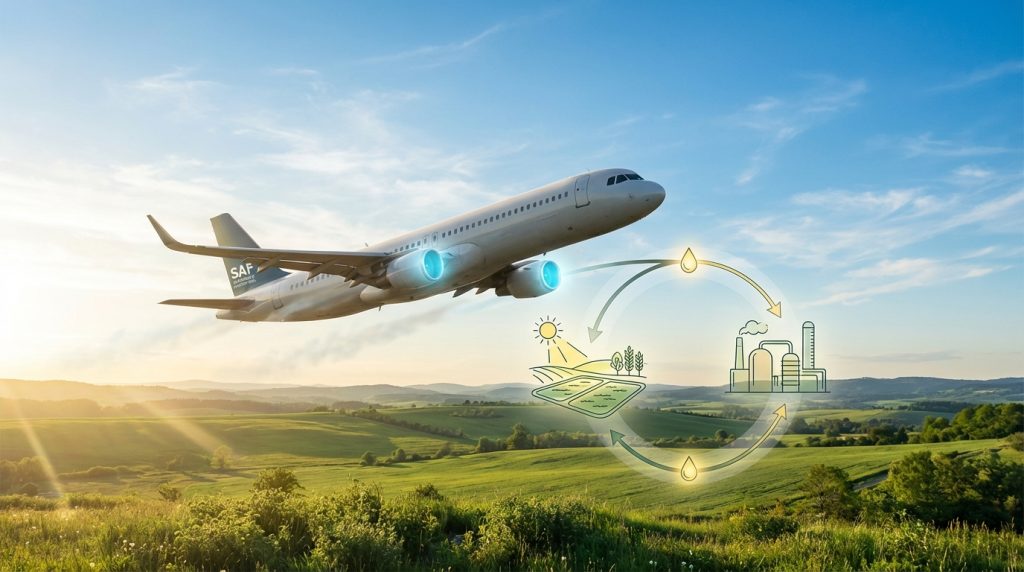
What Are Sustainable Aviation Fuels?
SAFs are not traditional jet fuel. They are derived from sustainable sources. These sources are renewable. They can significantly lower lifecycle greenhouse gas emissions. This is compared to fossil-based jet fuel. SAFs can be blended with conventional jet fuel. They can also be used as a direct replacement. This makes them a versatile solution.
Key SAF Production Pathways
Several technologies are used to produce SAFs. Each pathway has unique advantages. Understanding these is crucial for executives.
- HEFA (Hydroprocessed Esters and Fatty Acids): This is the most common pathway currently. It uses waste oils and fats. Examples include used cooking oil and animal fats. It can also use plant oils.
- Fischer-Tropsch (FT): This process converts synthesis gas (syngas). Syngas is made from sources like biomass, municipal solid waste, or captured carbon dioxide. It produces a synthetic paraffinic kerosene.
- Alcohol-to-Jet (AtJ): This pathway converts alcohols (like ethanol or isobutanol) into jet fuel. These alcohols can be produced from biomass fermentation.
- Power-to-Liquid (PtL): This innovative process uses renewable electricity. It combines hydrogen (produced via electrolysis) with captured carbon dioxide. This creates synthetic e-fuels. It offers a route to carbon-neutral fuels.
Each pathway requires careful consideration. Factors like feedstock availability and cost are important. Environmental impacts also vary by pathway. Therefore, a diversified approach is likely best.
The Environmental Imperative for SAFs
Climate change demands action. Aviation is a significant contributor to global emissions. SAFs offer a substantial reduction. They can cut lifecycle carbon emissions by up to 80% or more. This is compared to conventional jet fuel. This reduction is critical for meeting climate targets. For instance, the aviation sector aims for net-zero emissions by 2050. SAFs are indispensable for achieving this goal. They provide a tangible way to decarbonize flight. This transition is not just an environmental necessity. It is also becoming a business imperative. Stakeholders increasingly demand sustainable operations. Therefore, investing in SAFs is strategic.
Furthermore, SAFs help mitigate other environmental concerns. They can reduce particulate matter and sulfur oxide emissions. This improves local air quality. It also lessens the impact of aviation on sensitive ecosystems. The push for decarbonization aligns with broader ESG (Environmental, Social, and Governance) strategies. Transparent ESG reporting is becoming standard. SAF adoption demonstrates strong environmental stewardship.
Economic and Operational Benefits of SAFs
Beyond environmental advantages, SAFs offer economic and operational upsides. They can enhance energy security. By diversifying fuel sources, airlines reduce reliance on volatile fossil fuel markets. This can lead to more stable operating costs. Moreover, SAF production can stimulate new industries. It creates jobs in feedstock sourcing, fuel processing, and distribution. This fosters economic growth. It also supports rural economies through biomass cultivation and waste collection.
Operationally, SAFs are largely a drop-in solution. This means they can be used in existing aircraft engines and infrastructure. There is no need for major fleet overhauls. This significantly reduces the capital investment required for transition. Airlines can start blending SAFs immediately. This allows for a phased and manageable transition. As SAF production scales up, costs are expected to decrease. This will make them more competitive with traditional jet fuel. The market for SAFs is projected to grow substantially. Some estimates suggest a market value of over $30 billion by 2030.
Challenges and Hurdles in SAF Adoption
Despite the immense potential, SAF adoption faces significant challenges. The primary hurdle is cost. Currently, SAFs are considerably more expensive than conventional jet fuel. This price premium is a major barrier for airlines. Scaling up production is another critical issue. The demand for SAFs is growing rapidly. However, the supply chain is not yet robust enough. Feedstock availability can be a bottleneck. Ensuring sustainable and scalable sourcing of waste oils, biomass, and captured CO2 is essential. Moreover, the infrastructure for SAF production and distribution needs development. This includes biorefineries and logistics networks.
Policy and regulatory frameworks also play a crucial role. Clear government support, incentives, and mandates are needed. These can help de-risk investments. They can also drive demand and encourage production. For instance, mandates for SAF blending ratios are effective. International cooperation is also vital. Aviation is a global industry. Harmonized policies can facilitate wider adoption. The development of carbon credit markets can also provide financial incentives. However, these need to be robust and transparent.
The Role of Innovation and Investment
Innovation is key to overcoming SAF challenges. Research and development are crucial. They focus on improving production efficiency. They also aim to reduce costs. New technologies, like advanced Fischer-Tropsch and Power-to-Liquid, are promising. They offer pathways to greater scalability and sustainability. Investment is also critical. Significant capital is required to build new production facilities. It is also needed to develop feedstock supply chains. Both public and private sector investment are essential. Governments can provide grants and tax credits. Private investors can fund new ventures and scale-ups. This investment is vital for creating a competitive SAF market.
Furthermore, collaboration across the value chain is important. Airlines, fuel producers, feedstock suppliers, and technology providers must work together. This ensures a coordinated approach. It helps address systemic challenges. For example, airlines can commit to long-term SAF offtake agreements. This provides market certainty for producers. This, in turn, encourages investment in production capacity. The development of circular supply chains is also a focus. This aligns with principles of circular economy. It ensures resources are used efficiently.
Future Outlook for Sustainable Aviation
The future of aviation is undeniably sustainable. SAFs are central to this vision. As technology matures and production scales, costs will decrease. This will make SAFs more accessible. Furthermore, policy support is expected to strengthen globally. This will create a more favorable market environment. We will likely see a wider variety of SAF feedstocks and production pathways emerge. This will enhance supply chain resilience. The industry is committed to net-zero goals. SAFs are the most viable solution for decarbonizing long-haul flights in the near to medium term. While electric and hydrogen aircraft are being developed, they face significant technological hurdles for widespread adoption. SAFs offer a more immediate and scalable solution.
The journey towards sustainable aviation is ongoing. It requires continuous innovation, strategic investment, and collaborative action. By embracing SAFs, the aerospace industry can secure its future. It can also contribute significantly to global climate goals. The transition to SAFs is not just an environmental choice. It is a strategic imperative for long-term success and relevance. This aligns with broader goals of crafting a net-zero strategy roadmap.
Frequently Asked Questions (FAQ)
Are SAFs safe to use in current aircraft?
Yes, SAFs are designed to be “drop-in” fuels. This means they can be used in existing aircraft engines and fuel infrastructure without modifications. They meet the same rigorous safety and performance standards as conventional jet fuel.
What are the main challenges in scaling up SAF production?
The primary challenges include the high cost of SAFs compared to fossil jet fuel, securing sufficient sustainable feedstock, and building the necessary production and distribution infrastructure. Policy support and investment are crucial to overcome these hurdles.
Will SAFs make air travel more expensive?
Currently, SAFs are more expensive, which can lead to a modest increase in ticket prices. However, as production scales up and technology advances, costs are expected to decrease. Government incentives and carbon pricing mechanisms also influence the final price.
How do SAFs contribute to a circular economy?
Many SAF production pathways utilize waste streams, such as used cooking oil, agricultural waste, and municipal solid waste. This diverts waste from landfills and transforms it into valuable fuel, embodying circular economy principles. Circular supply chains are key to this efficiency.
What is the difference between SAF and biofuels?
Sustainable Aviation Fuel (SAF) is a specific type of biofuel. It is designed for use in aviation. While all SAFs are biofuels, not all biofuels are suitable for aviation due to strict performance and safety requirements.
