
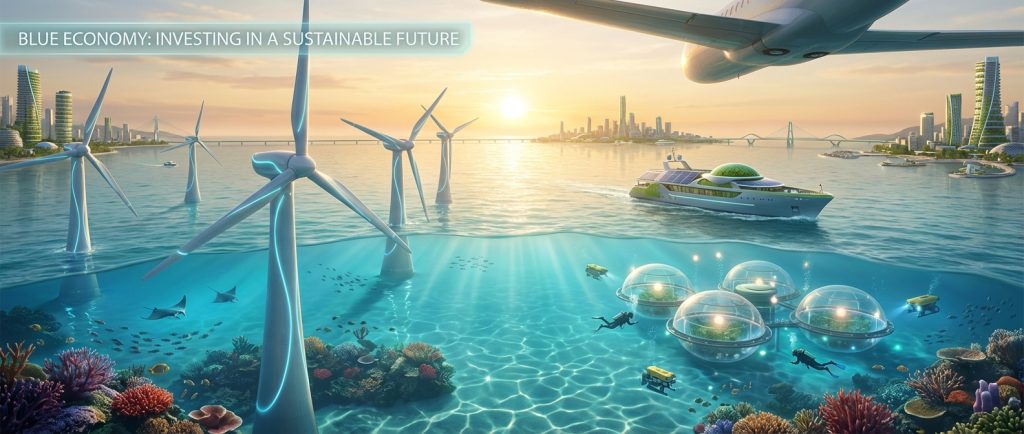
The blue economy represents a significant investment opportunity. It focuses on sustainable use of ocean resources. This approach benefits economic growth and human well-being. It also preserves ocean ecosystems and biodiversity. Many investors are now looking towards the blue economy. This sector offers innovative solutions. It also addresses global challenges.
Understanding the blue economy is crucial. It is more than just oceans. It encompasses all marine and coastal activities. These activities must be sustainable. They should also be profitable. This dual focus attracts impact investors. It also appeals to traditional investors.
What is the Blue Economy?
Simply put, the blue economy is about using ocean resources wisely. It supports economic growth. It also aims for environmental sustainability. This means we can use marine resources without depleting them. It is a paradigm shift from traditional resource extraction.
The United Nations defines it clearly. It refers to the sustainable use of ocean resources. This includes livelihoods and jobs. It also covers the health of the marine ecosystem. Therefore, it is a holistic approach. It links economic prosperity with environmental stewardship.
Key sectors within the blue economy include:
- Renewable marine energy (offshore wind, tidal, wave).
- Sustainable fisheries and aquaculture.
- Marine biotechnology and bioproducts.
- Coastal tourism and recreation.
- Marine and coastal transport.
- Offshore carbon capture and storage.
- Marine conservation and restoration.
These sectors are vital. They contribute to economic development. However, they must operate sustainably. This ensures long-term viability. It also protects marine environments.
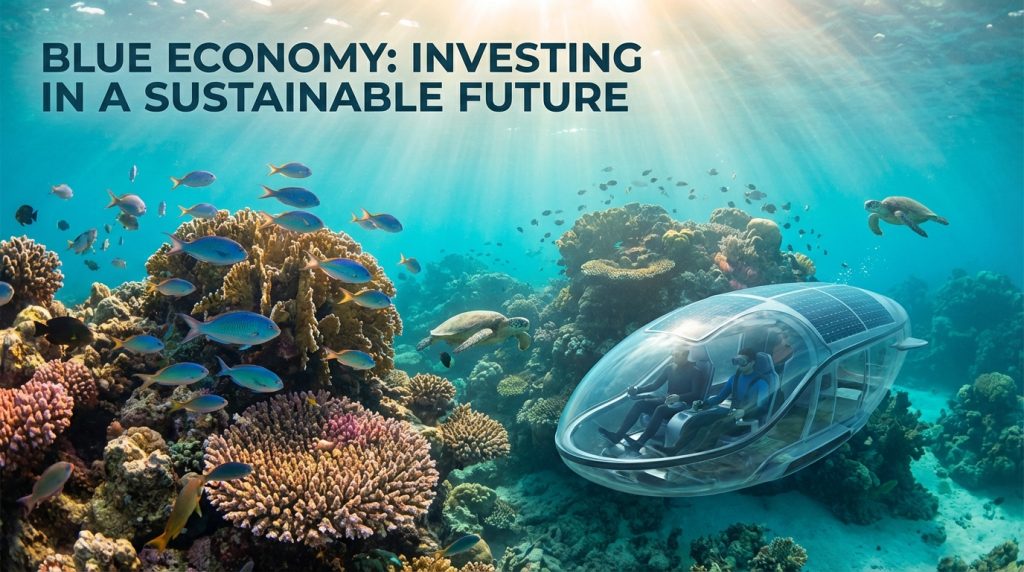
Why Invest in the Blue Economy?
Investing in the blue economy makes strong business sense. It aligns with global sustainability goals. Many governments are promoting it. International bodies are also supporting it. This creates a favorable investment climate.
Furthermore, the ocean is a vast resource. It holds immense potential. For example, marine renewable energy sources are powerful. They can meet a significant portion of global energy demand. This is a key driver for investment. It also offers a path to decarbonization.
Additionally, the oceans are crucial for climate regulation. They absorb a large amount of carbon dioxide. Investing in marine conservation helps this process. It also protects vital carbon sinks. This is a critical aspect of climate action. You can learn more about carbon capture innovation.
Moreover, the blue economy offers diversification. It reduces reliance on volatile fossil fuels. It also taps into new markets. These markets are growing rapidly. Therefore, it presents a compelling case for investors seeking returns and impact.
Market Growth and Opportunities
The market for blue economy investments is expanding. Projections show significant growth. For instance, the global blue economy is expected to grow substantially. This growth is driven by innovation. It is also fueled by increasing demand for sustainable solutions.
Specifically, the renewable marine energy sector is booming. Offshore wind farms are becoming more common. Tidal and wave energy technologies are also advancing. These innovations promise clean energy for the future. Consequently, this attracts substantial capital. It also creates new jobs.
Sustainable aquaculture is another key area. It provides a vital source of protein. It does so with a lower environmental footprint than traditional farming. As global populations grow, demand for sustainable food sources will rise. This makes aquaculture a strategic investment. It is also crucial for feeding the world with clean oceans.
Risk Mitigation and Resilience
Investing in the blue economy can also mitigate risks. Many traditional industries face scrutiny. They face regulatory challenges. They also face reputational risks. The blue economy offers a more sustainable alternative. It is often more resilient to climate change impacts.
For example, investing in marine protected areas. This can safeguard coastal economies. It also protects vital marine resources. Furthermore, sustainable fisheries management ensures long-term viability. This avoids boom-and-bust cycles. It also preserves livelihoods.
In addition, the blue economy fosters innovation. This leads to new technologies. These technologies can solve pressing environmental problems. They can also create new economic opportunities. Therefore, it is a forward-thinking investment strategy.
Key Sectors for Blue Economy Investment
Several sectors within the blue economy are particularly promising. They offer diverse opportunities for investors. Each sector has unique growth drivers and potential returns.
Marine Renewable Energy
The potential of marine energy is immense. Offshore wind is already a mature sector. However, tidal and wave energy are emerging. These technologies harness predictable ocean forces. They offer a reliable alternative to intermittent renewables. Therefore, investment in R&D and deployment is crucial.
This sector requires significant upfront capital. However, it offers long-term, stable returns. It also contributes directly to climate goals. Many governments offer incentives. These incentives support the growth of marine renewables. This makes it an attractive area for investment.
Sustainable Fisheries and Aquaculture
Feeding a growing global population is a challenge. Sustainable fisheries and aquaculture are part of the solution. They provide nutritious food. They do so while minimizing environmental impact. Modern aquaculture uses advanced techniques. These techniques reduce pollution and disease. They also improve feed efficiency.
Investors can support innovative fisheries management. They can also fund advanced aquaculture farms. This sector is essential for food security. It also supports coastal communities. Furthermore, it is a vital part of the blue economy. Learning about regenerative agriculture can provide context for sustainable food systems.
Marine Biotechnology
The ocean is a treasure trove of biodiversity. Marine organisms offer unique compounds. These compounds have potential applications. They are used in pharmaceuticals, cosmetics, and industrial products. Marine biotechnology is an emerging field. It holds significant promise for new discoveries.
This sector is research-intensive. It requires specialized expertise. However, the potential rewards are high. It can lead to breakthrough medicines. It can also create novel biomaterials. Therefore, it is a high-growth area for impact investors. It also taps into the vast, unexplored potential of the ocean. This aligns with the spirit of innovations for a living ocean.
Coastal Tourism and Recreation
Responsible coastal tourism can be a powerful economic driver. It must be managed sustainably. This means protecting natural beauty. It also means supporting local communities. Ecotourism and sustainable resorts are key examples. They focus on minimizing environmental impact.
Investment in sustainable tourism infrastructure is growing. This includes eco-lodges and marine parks. It also includes responsible tour operators. This sector provides jobs. It also raises awareness about ocean conservation. Therefore, it plays a dual role. It offers economic benefits and promotes environmental stewardship.
Challenges and Considerations
Despite its potential, the blue economy faces challenges. Investors must be aware of these. They need to conduct thorough due diligence. This ensures successful investments.
Environmental Risks
The ocean is susceptible to pollution. Climate change also poses significant threats. Overfishing and habitat destruction are ongoing issues. These factors can impact the viability of blue economy projects. Therefore, careful environmental impact assessments are crucial.
Investors should prioritize projects with strong environmental safeguards. They should also support initiatives that actively restore marine ecosystems. This proactive approach mitigates risks. It also enhances long-term sustainability.
Regulatory and Policy Hurdles
The regulatory landscape for the blue economy can be complex. It often involves multiple jurisdictions. International waters present unique challenges. Clear and supportive policies are essential. These policies encourage investment and innovation. They also ensure responsible resource management.
Investors should monitor policy developments. They should also engage with policymakers. This helps shape a favorable investment environment. It also ensures regulatory clarity. This is vital for long-term project success.
Technological Development
While innovation is a driver, some blue economy sectors are nascent. They rely on emerging technologies. These technologies may require further development. They also require significant investment. Therefore, investors must assess technological readiness. They must also consider the scalability of new solutions.
Supporting research and development is important. This accelerates technological progress. It also unlocks new opportunities. For example, advancements in offshore wind technology are making it more cost-effective. This is crucial for widespread adoption.
The Future of Blue Economy Investment
The blue economy is poised for significant growth. It is no longer a niche market. It is becoming mainstream. This is driven by growing awareness. It is also driven by the urgent need for sustainable solutions.
We are seeing increased collaboration. This includes governments, private sector, and NGOs. This collaboration is vital. It helps address complex challenges. It also drives innovation. For instance, blended finance models are emerging. These models combine public and private capital. They de-risk investments. They also mobilize more funding for impactful projects.
Furthermore, technological advancements will continue to shape the sector. AI, IoT, and advanced materials will play a role. These technologies will improve efficiency. They will also enhance sustainability. This will create new investment opportunities. It also strengthens the economic case for the blue economy.
Ultimately, investing in the blue economy is investing in our future. It is about creating economic value. It is also about protecting our planet. It offers a path to prosperity. It does so while ensuring a healthy ocean for generations to come. This aligns with the broader principles of sustainable investing and mastering ESG integration.
Frequently Asked Questions (FAQ)
What are the biggest risks in blue economy investments?
The biggest risks include environmental degradation, regulatory uncertainty, and technological immaturity. Market volatility and operational challenges can also pose threats. Thorough due diligence is essential to mitigate these risks.
How can individual investors get involved in the blue economy?
Individual investors can explore blue economy-focused mutual funds or ETFs. They can also invest in companies directly involved in sustainable marine activities. Impact investing platforms may also offer opportunities.
What is the difference between the blue economy and the traditional maritime industry?
The blue economy emphasizes sustainability and resource preservation. The traditional maritime industry may focus more on resource exploitation. The blue economy seeks to balance economic growth with ecological health.
Are there specific government incentives for blue economy projects?
Yes, many governments offer incentives. These can include tax breaks, grants, and subsidies. These incentives aim to encourage investment in sustainable marine sectors.
How does the blue economy contribute to climate change mitigation?
The blue economy contributes through marine renewable energy. It also supports ocean-based carbon sinks like mangroves and seagrass beds. Furthermore, sustainable practices reduce greenhouse gas emissions.
