
Nature’s Fiery Art: Unraveling Lightning’s Physics
Published on February 4, 2026 by Admin
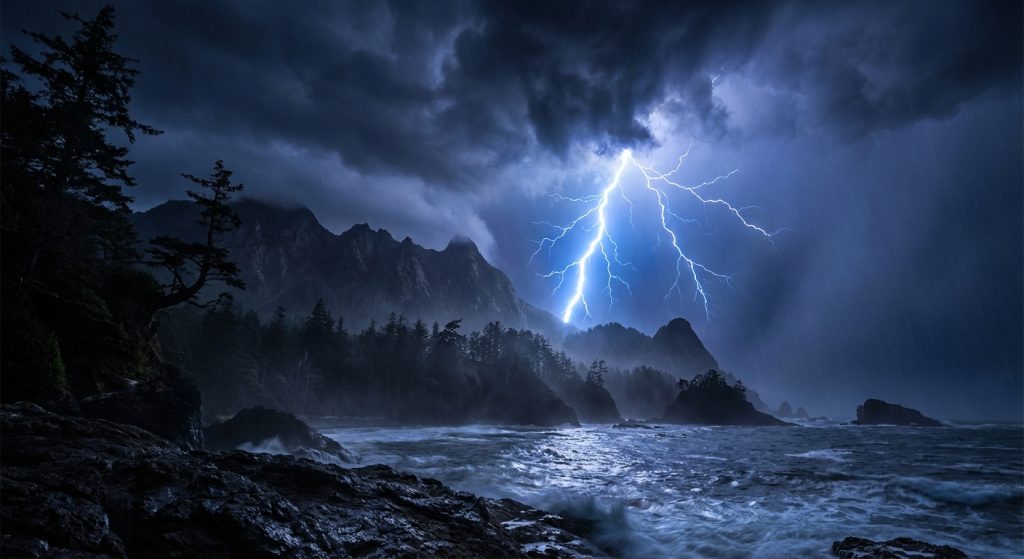
Lightning is a breathtaking display of nature’s power. It illuminates the night sky with brilliant flashes. These powerful electrical discharges are both beautiful and awe-inspiring. Understanding the physics behind lightning helps us appreciate this natural phenomenon. It also highlights the immense forces at play in our atmosphere. Let’s explore the science of lightning.
The Spark of Creation: How Lightning Forms
Lightning begins within thunderstorms. These storms are complex weather systems. They involve vigorous updrafts and downdrafts. Water droplets and ice crystals collide within the storm cloud. These collisions cause a separation of electrical charge. Typically, the top of the cloud becomes positively charged. The bottom of the cloud becomes negatively charged. This charge separation is crucial for lightning. It creates a massive electrical potential difference.
As the charge imbalance grows, the air’s insulating properties are overcome. The air can no longer contain the electrical charge. This leads to a rapid discharge of electricity. This discharge is what we see as lightning. The process is similar to static electricity buildup. However, the scale is vastly larger. The electrical potential can reach hundreds of millions of volts. This immense energy release is the hallmark of a lightning strike.
Types of Lightning: A Skyward Spectacle
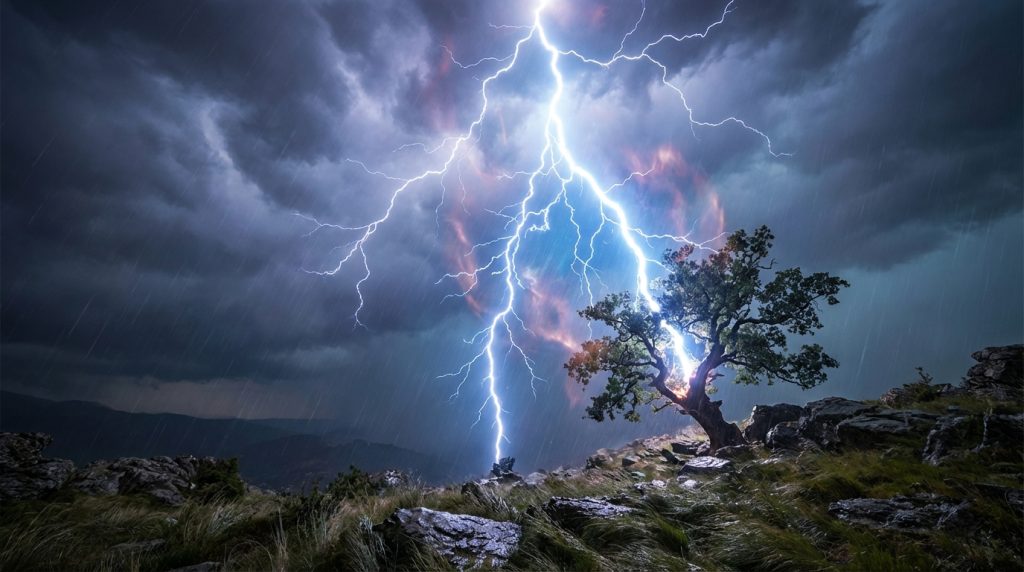
Lightning isn’t a single phenomenon. It manifests in several forms. These variations depend on where the discharge occurs. Understanding these types helps us categorize different lightning events. Each type has unique characteristics and visual appearances.
- Intracloud Lightning: This is the most common type. It occurs within a single thundercloud. The electrical discharge happens between different charged regions of the same cloud. It often appears as a diffuse brightening of the cloud. Sometimes, it looks like a sheet of light.
- Cloud-to-Cloud Lightning: This type happens between two separate thunderclouds. The electrical current jumps from one cloud to another. It can be quite spectacular to observe.
- Cloud-to-Ground Lightning: This is the most dangerous type. It occurs when the electrical discharge travels from the cloud to the Earth’s surface. It is also known as a ground strike. This is the type most people associate with lightning.
- Positive Cloud-to-Ground Lightning: This is a less common but more powerful variation of cloud-to-ground lightning. Instead of the negative charge at the cloud base, a positive charge from the upper parts of the cloud discharges to the ground. These strikes are often brighter and more dangerous.
The Dance of Electrons: The Physics Behind the Flash
The actual lightning strike is a rapid process. It involves several distinct stages. Firstly, a stepped leader emerges from the negatively charged cloud base. This leader is a channel of ionized air. It moves towards the ground in a series of rapid steps. It’s not continuously visible. As it approaches the ground, positive charges on the Earth’s surface are attracted. These positive charges surge upwards from objects like trees and buildings.
When the stepped leader gets close enough to an upward-leading positive streamer, a connection is made. This connection creates a complete conductive path. At this point, a return stroke surges upward. This return stroke is incredibly bright and fast. It carries the main electrical current. This is the visible flash we perceive as lightning. The entire process can happen in less than a second. However, it often involves multiple strokes.
The intense heat of the lightning channel causes the air to expand explosively. This expansion creates a shockwave. This shockwave is what we hear as thunder. The temperature of a lightning channel can reach up to 30,000 Kelvin. This is hotter than the surface of the sun! Therefore, the physics involved are extreme. This immense energy release is a fundamental aspect of lightning.
The Role of Charge Separation
Charge separation within cumulonimbus clouds is the engine driving lightning. This separation happens due to collisions between ice particles and supercooled water droplets. Lighter, positively charged ice crystals tend to be carried upward by updrafts. Heavier, negatively charged graupel (soft hail) falls to the lower parts of the cloud. This gravitational separation, combined with turbulent air currents, creates distinct charge regions. The greater the difference in charge, the more likely a lightning strike becomes.
This separation is not uniform. It can be complex, with multiple charge centers. However, the dominant pattern is positive at the top and negative at the bottom. This creates a giant capacitor in the sky. When the dielectric strength of the air is exceeded, the capacitor discharges. This discharge is the lightning bolt. It is a dramatic demonstration of electrostatic principles on a grand scale.
Lightning Strikes: Impact and Danger
Lightning is a powerful natural force. Its impact can be significant. Cloud-to-ground lightning is particularly dangerous. It can cause severe injuries and fatalities. Direct strikes are often fatal. However, even nearby strikes can be harmful. These include ground currents and side flashes. These phenomena occur when lightning travels through the ground or nearby objects.
Furthermore, lightning can cause fires. The intense heat can ignite dry vegetation. It can also damage electrical systems. Power surges from lightning strikes can destroy electronics. Therefore, taking precautions during thunderstorms is vital. Seeking shelter indoors is the safest option. Avoiding tall objects and water is also recommended. Understanding the risks helps in staying safe. For instance, climate planning needs to consider the increasing frequency and intensity of extreme weather events like thunderstorms.
Lightning and the Atmosphere
Lightning plays a role in atmospheric chemistry. The intense heat of a lightning bolt can break apart nitrogen and oxygen molecules in the air. These molecules then recombine to form nitrogen oxides. These nitrogen oxides are important for plant growth. They are carried down to the Earth’s surface by rain. This process contributes to the natural fertilization of soil. So, while dangerous, lightning also has ecological benefits. It is a natural part of the Earth’s nitrogen cycle. This natural cycle is essential for life. It is a fascinating interplay of physics and biology.
Thunder: The Roar of the Storm
Thunder is the audible consequence of lightning. It is caused by the rapid heating and expansion of air. This happens along the lightning channel. The air heats up to extreme temperatures almost instantaneously. This causes it to expand explosively. This creates a powerful shockwave. This shockwave travels through the air as sound waves. We perceive this as thunder. The sound travels much slower than light. This is why we see lightning before we hear thunder. The delay between seeing lightning and hearing thunder can indicate how far away the storm is. A longer delay means the lightning strike was further away.
The type of thunder we hear depends on the lightning strike. A close strike produces a sharp crack. A distant strike produces a low rumble. This is because the sound waves from different parts of the long lightning channel reach us at different times. The sound also echoes off the landscape. This can create a rolling or rumbling effect. Therefore, thunder is a direct acoustic manifestation of the electrical discharge.
Protecting Yourself from Lightning
Safety during thunderstorms is paramount. Understanding lightning behavior can save lives. Here are some key safety tips:
- Seek Shelter Immediately: Go indoors or into a hard-top vehicle. Avoid small, open structures like sheds or picnic shelters.
- Stay Away from Windows and Doors: Electrical currents can travel through these.
- Avoid Water: Do not bathe, shower, or wash dishes during a thunderstorm. Water conducts electricity.
- Unplug Electronics: Lightning can travel through electrical systems. Unplugging sensitive equipment can prevent damage.
- Avoid Tall, Isolated Objects: Do not stand under tall, isolated trees or poles outdoors.
- If Caught Outdoors and Far from Shelter: Crouch low to the ground. Minimize your contact with the ground.
Following these guidelines can significantly reduce the risk of injury. Remember, “when thunder roars, go indoors” is a good rule of thumb. This simple advice can be life-saving. It is important to respect the power of nature. Proper precautions are essential.
Lightning and Climate Change
Scientists are studying the potential link between climate change and lightning activity. Warmer temperatures can lead to more intense thunderstorms. This, in turn, could result in more frequent lightning strikes. More frequent and intense storms could increase the risk of wildfires. It could also impact power grids. Research in this area is ongoing. Understanding these connections is crucial for future preparedness. For example, the study of geoengineering aims to mitigate climate change impacts, but natural phenomena like lightning are also key considerations.
Frequently Asked Questions About Lightning
What is lightning?
Lightning is a natural electrical discharge of immense power. It occurs during thunderstorms. It happens when electrical charges build up within clouds or between clouds and the ground.
Is lightning dangerous?
Yes, lightning is extremely dangerous. Cloud-to-ground strikes can cause severe injury or death. Even indirect strikes can be harmful. It is crucial to take safety precautions during thunderstorms.
Why do we hear thunder after seeing lightning?
Light travels much faster than sound. You see the lightning flash almost instantly. The sound of thunder takes longer to reach you. The delay indicates the distance of the lightning strike.
Can lightning strike the same place twice?
Yes, lightning can and often does strike the same place multiple times. Tall structures, like the Empire State Building, are struck hundreds of times a year.
What is ball lightning?
Ball lightning is a rare and mysterious phenomenon. It appears as a luminous sphere. Its exact nature is still debated by scientists. It is often described as hovering or moving erratically.
Conclusion: Nature’s Electrifying Masterpiece
Lightning is a powerful and awe-inspiring force of nature. Its formation involves complex atmospheric physics. It is driven by charge separation within storm clouds. The resulting electrical discharge creates brilliant flashes and deafening thunder. While dangerous, lightning also plays a role in atmospheric chemistry. Understanding the science behind this natural spectacle helps us appreciate its grandeur. It also reminds us of the importance of safety during thunderstorms. Nature’s electric spectacle continues to fascinate and challenge scientists alike. It is a constant reminder of the immense power and beauty of our planet’s weather systems.
