
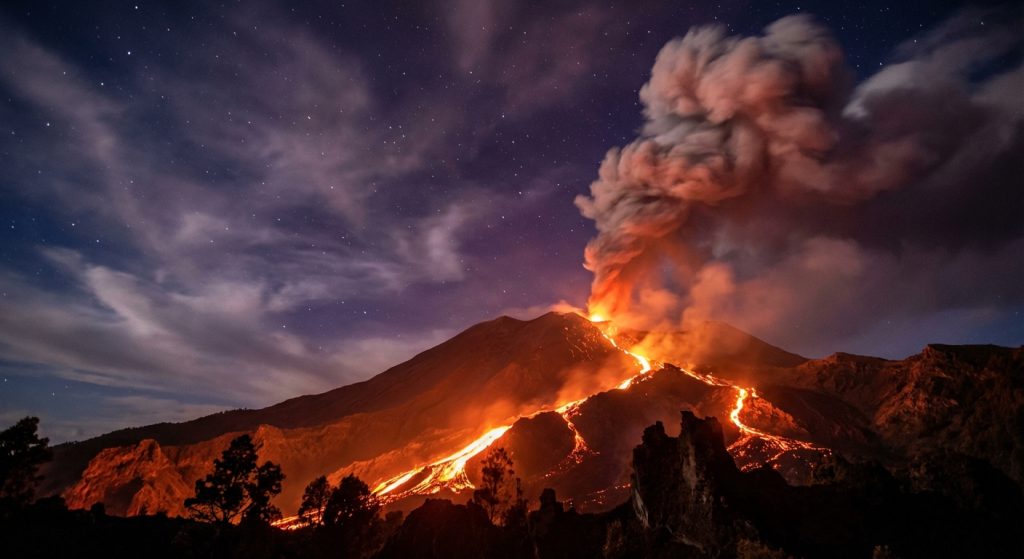
Volcanoes are powerful reminders of Earth’s dynamic nature. They erupt with molten rock, ash, and gases. This process reveals much about our planet’s interior. Understanding volcanology helps us predict future events. It also sheds light on Earth’s internal processes. Therefore, studying volcanoes is crucial for science and safety.
These fiery mountains are more than just geological formations. They are windows into the Earth’s very core. The molten rock, or magma, that fuels them originates deep beneath our feet. Studying its behavior gives us vital clues. It helps us understand mantle convection and plate tectonics. Furthermore, volcanic activity shapes landscapes over millennia. It also influences climate and ecosystems.
The Engine Within: Earth’s Internal Heat
Earth’s internal heat is the primary driver of volcanism. This heat comes from two main sources. Firstly, it’s residual heat from Earth’s formation. This includes heat from the planet’s accretion and core formation. Secondly, it’s from the radioactive decay of isotopes. Elements like uranium, thorium, and potassium are constantly breaking down. This decay releases significant amounts of thermal energy. Consequently, this internal heat keeps the Earth’s mantle partially molten.
The mantle is a thick layer of hot, semi-solid rock. It lies between the Earth’s crust and its core. While mostly solid, it can flow very slowly over geological time scales. This slow movement is called convection. Hotter, less dense material rises. Cooler, denser material sinks. This creates massive convection currents. These currents are fundamental to plate tectonics.
Magma: The Molten Heart of a Volcano
Magma is molten rock found beneath the Earth’s surface. It is often mixed with dissolved gases and solid crystals. The composition and temperature of magma vary greatly. This variation influences the type of volcanic eruption that occurs. For instance, magma with high silica content tends to be more viscous. This means it flows less easily. Therefore, it often leads to more explosive eruptions.
When magma erupts onto the Earth’s surface, it is called lava. Lava flows are a common feature of volcanic activity. However, eruptions can also be much more violent. They can eject ash, volcanic bombs, and gases high into the atmosphere. These eruptions pose significant risks to nearby communities. Understanding magma behavior is therefore paramount for prediction.
Volcanic Plumbing: How Magma Reaches the Surface
Volcanoes have complex underground systems. These systems are often called “magma chambers.” These chambers are reservoirs of molten rock. They can be located several kilometers beneath the surface. As magma accumulates in a chamber, pressure builds up. Eventually, this pressure forces the magma upwards through cracks and fissures in the Earth’s crust.
The path magma takes is not always straightforward. It can ascend through dikes and sills. These are fractures in the rock. The magma may also collect in smaller reservoirs closer to the surface. The shape and depth of the magma chamber influence the eruption style. Shallow magma chambers often lead to more explosive eruptions. This is because the dissolved gases in the magma expand rapidly. They are released more easily under lower pressure.
Predicting the Unpredictable: The Science of Volcanic Forecasting
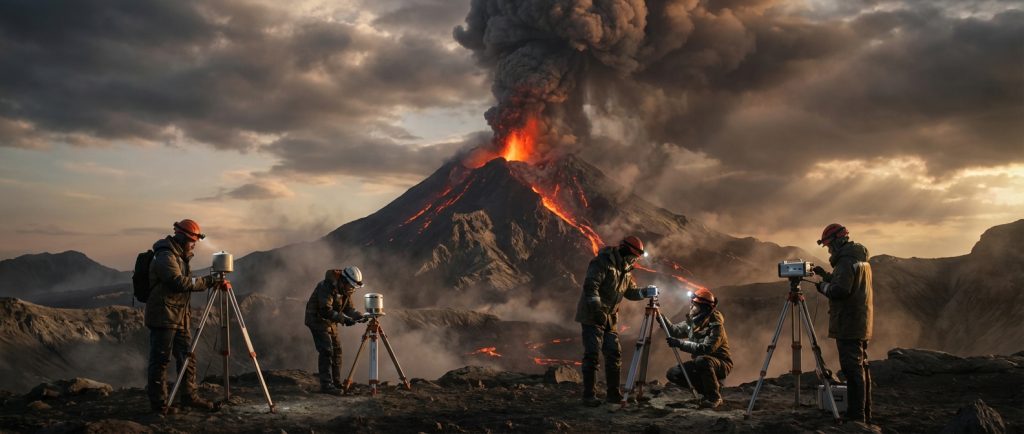
Predicting volcanic eruptions is a challenging but vital scientific endeavor. Scientists use a variety of methods. They monitor seismic activity. Earthquakes often occur before an eruption. This is because magma movement fractures rock. They also monitor ground deformation. The ground can swell or tilt as magma rises. This is measured using GPS and tiltmeters.
Gas emissions are another key indicator. Volcanoes release gases like sulfur dioxide and carbon dioxide. Changes in the types and amounts of gases can signal an impending eruption. Thermal imaging can detect changes in surface temperature. These changes can indicate rising magma. By combining data from these monitoring techniques, scientists can assess the risk. They can issue warnings to nearby populations. However, predicting the exact timing and magnitude of an eruption remains difficult.
Types of Volcanic Eruptions
Volcanic eruptions are classified based on their characteristics. These classifications help scientists understand the potential hazards. Some common types include:
- Hawaiian eruptions: These are relatively gentle. They feature effusive lava flows. They are named after the volcanoes in Hawaii.
- Strombolian eruptions: These are characterized by mild, intermittent explosions. They eject incandescent cinders and bombs.
- Vulcanian eruptions: These are more explosive. They produce ash clouds and pyroclastic flows.
- Plinian eruptions: These are the most violent. They create towering ash columns that can reach high into the atmosphere. These can disrupt air travel.
- Phreatic eruptions: These are steam-driven explosions. They occur when groundwater interacts with hot rock or magma. They do not involve fresh magma.
Each eruption type has unique hazards. For example, pyroclastic flows are fast-moving currents of hot gas and volcanic matter. They are extremely dangerous. Ashfall can blanket vast areas. It can damage infrastructure and harm agriculture. Therefore, understanding eruption types is crucial for hazard assessment.
The Impact of Volcanoes: Destruction and Creation
Volcanoes have a dual nature. They can be incredibly destructive. However, they also play a role in creating new landforms. Eruptions can devastate local environments. They can destroy towns, forests, and fertile land. Volcanic ash can also have long-term effects on climate. Large eruptions can inject aerosols into the stratosphere. These can block sunlight, causing temporary cooling. For instance, the eruption of Mount Tambora in 1815 led to the “year without a summer.”
On the other hand, volcanic activity creates new land. Volcanic islands are formed this way. Soil on volcanic slopes is often very fertile. This is due to the rich mineral content. Many agricultural regions are located on volcanic land. Geothermal energy is another significant benefit. This harnesses the Earth’s internal heat for power generation. This is a sustainable energy source. You can learn more about harnessing Earth’s fire in our article on geothermal energy.
Volcanology and Earth’s Internal Processes
Volcanology is a key discipline in understanding Earth’s inner workings. By studying volcanoes, scientists gain insights into processes occurring deep within the planet. These include:
- Mantle Dynamics: Volcanic rocks provide samples of mantle material. Their chemistry reveals information about the mantle’s composition and temperature.
- Plate Tectonics: Many volcanoes are located along plate boundaries. Their distribution helps map tectonic plate movements.
- Crustal Evolution: Volcanic activity can create new crust. It also modifies existing crust through the addition of volcanic material.
- Earth’s Magnetic Field: While not directly volcanic, the processes driving plate tectonics and mantle convection are linked to the geodynamo that generates Earth’s magnetic field. Understanding these internal processes is vital for understanding phenomena like Earth’s magnetic fields.
The study of volcanoes is an ongoing process. New technologies and research methods continue to improve our understanding. This helps us to better predict and mitigate volcanic hazards. It also deepens our knowledge of our planet’s dynamic systems.
Frequently Asked Questions (FAQ)
What is the difference between magma and lava?
Magma is molten rock found beneath the Earth’s surface. Lava is molten rock that has erupted onto the Earth’s surface.
How do scientists monitor volcanoes?
Scientists monitor seismic activity, ground deformation, gas emissions, and temperature changes to predict volcanic eruptions.
Are all volcanic eruptions explosive?
No, volcanic eruptions vary greatly. Some are gentle lava flows, like Hawaiian eruptions, while others are highly explosive, like Plinian eruptions.
Can volcanoes be beneficial?
Yes, volcanoes create fertile soil, form new land, and provide geothermal energy resources. However, they also pose significant dangers.
Why is studying volcanology important?
Volcanology is important for understanding Earth’s internal processes, predicting hazards, and assessing risks to human populations and ecosystems.
