
Soil Fertility: The Mineral Heart of Healthy Growth
Published on February 4, 2026 by Admin
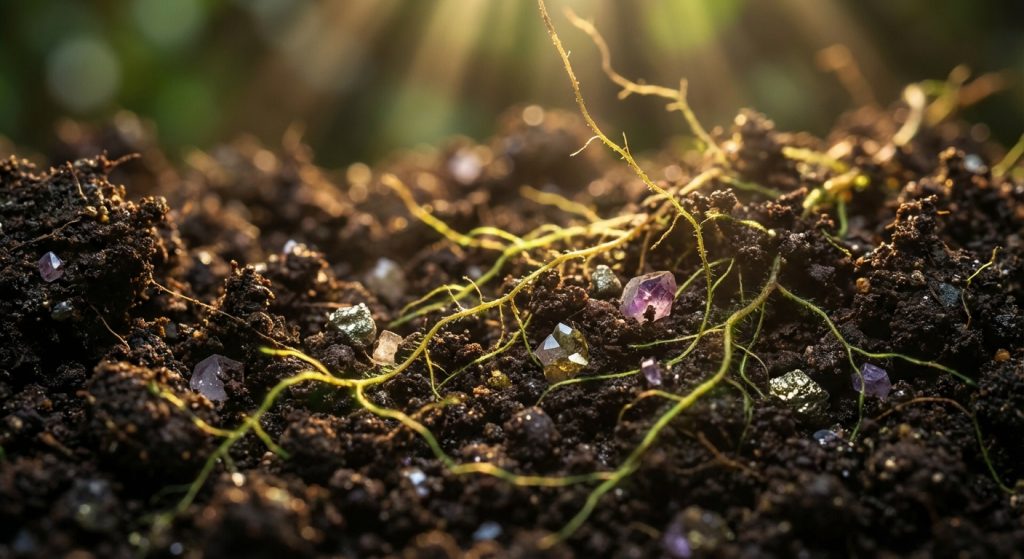
Soil is the foundation of life on land. It supports plants, which in turn feed animals and humans. But what makes soil fertile? The answer lies deep within its mineral composition. Understanding this geology is key to unlocking sustainable agriculture and a thriving planet.
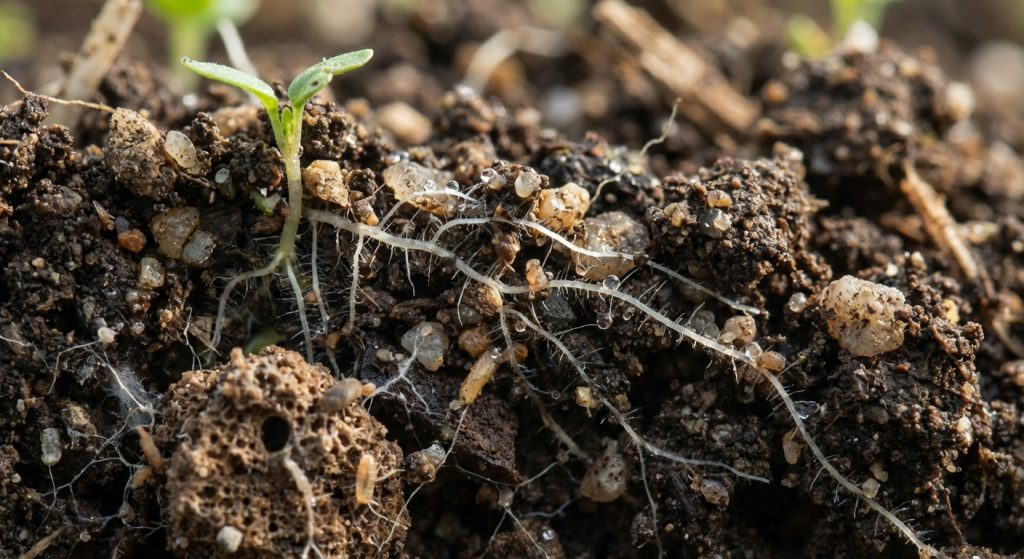
Minerals are not just inert particles. They are the building blocks of soil. They provide essential nutrients for plants. Therefore, soil fertility is intrinsically linked to its mineral makeup.
The Geological Origins of Soil
Soil formation is a slow, complex process. It begins with rocks. Weathering breaks down these parent rocks over millennia. This weathering can be physical, chemical, or biological. As a result, rock fragments break down into smaller particles. These particles form the mineral component of soil.
Different types of rocks yield different mineral compositions. For instance, granite soils are rich in feldspar and quartz. Basalt soils, however, might contain more iron and magnesium. The climate also plays a role. It influences the rate and type of weathering. Thus, parent material and climate are crucial factors.
Primary Minerals: The Foundation
Primary minerals are those that have not been significantly altered from their original crystalline structure. Quartz is the most abundant primary mineral in soils. It is very resistant to weathering. Feldspars are also common. They weather more readily than quartz.
These primary minerals contribute to the physical structure of the soil. They provide sand and silt particles. However, they offer fewer plant nutrients directly. Their primary role is structural and as a source for secondary minerals.
Secondary Minerals: Nutrient Powerhouses
Secondary minerals form from the weathering of primary minerals. They are often clay minerals. Clay particles are very small. They have a large surface area. This large surface area is vital for soil fertility. It allows them to hold onto water and nutrients.
Common secondary minerals include micas, chlorite, and kaolinite. These minerals can release essential plant nutrients like potassium, magnesium, and calcium as they further weather. Furthermore, the way these minerals are structured affects how they interact with water and nutrients.
The Role of Minerals in Plant Nutrition
Plants need a variety of minerals to grow. These are often called essential plant nutrients. They are absorbed from the soil solution. Minerals are categorized as macronutrients and micronutrients.
Macronutrients are needed in larger amounts. Examples include nitrogen, phosphorus, potassium, calcium, magnesium, and sulfur. Micronutrients are needed in smaller amounts. These include iron, manganese, zinc, copper, boron, and molybdenum. All these elements originate from the mineral components of the soil.
Nutrient Availability and Soil pH
The availability of these mineral nutrients to plants is not solely dependent on their presence. Soil pH plays a critical role. pH refers to the acidity or alkalinity of the soil. It affects how easily minerals dissolve and become available for plant uptake.
For instance, at low pH (acidic conditions), some essential nutrients like calcium and magnesium become less available. Conversely, toxic elements like aluminum can become more soluble and harmful. At high pH (alkaline conditions), micronutrients like iron and manganese can become less available. Therefore, maintaining an optimal soil pH is crucial for nutrient cycling.
Cation Exchange Capacity (CEC): A Vital Soil Property
Clay minerals and organic matter in soil have negative charges on their surfaces. These negative charges attract positively charged nutrient ions, called cations. This attraction is known as cation exchange capacity (CEC). It is a measure of the soil’s ability to hold onto essential nutrient cations.
A higher CEC means the soil can retain more nutrient cations. This reduces nutrient leaching. It ensures a steady supply for plants. Soils with a higher clay content or more organic matter generally have a higher CEC. Therefore, understanding CEC is important for managing soil fertility.
Organic Matter: The Unsung Hero
While minerals are the bedrock of soil fertility, organic matter is its vital component. Organic matter comes from decomposed plant and animal residues. It significantly enhances soil structure. It also improves water retention and aeration.
More importantly, organic matter is rich in nutrients. As it decomposes, it releases these nutrients slowly. This process is called mineralization. It provides a continuous supply of essential elements for plant growth. Furthermore, organic matter contributes to the soil’s CEC. It also buffers soil pH changes.
The Synergy Between Minerals and Organic Matter
Minerals and organic matter work together. Organic matter helps to break down minerals further. This releases more nutrients. It also binds to soil particles, improving structure. This structure allows roots to penetrate easily. It also facilitates water and air movement.
Conversely, minerals provide the essential elements that plants absorb. These elements are then incorporated into plant tissues. When these tissues decompose, they become organic matter. Thus, a healthy soil ecosystem involves a dynamic interplay between mineral and organic components.
Soil Texture and Structure: Shaped by Minerals
Soil texture refers to the relative proportions of sand, silt, and clay particles. These are all mineral components. Sand particles are the largest. They provide good drainage and aeration. Clay particles are the smallest. They have a high CEC and water-holding capacity. Silt particles are intermediate in size.
Soil structure refers to how these mineral particles clump together. This forms aggregates. Good soil structure is essential for root growth, water infiltration, and air exchange. It is influenced by the type of clay minerals present and the amount of organic matter. Therefore, the mineral composition directly impacts soil texture and structure.
Common Soil Fertility Issues Related to Minerals
Several common issues can arise due to mineral imbalances or deficiencies in soil.
- Nutrient Deficiencies: Lack of essential minerals like nitrogen, phosphorus, or potassium. This stunts plant growth. It can lead to yellowing leaves or poor flowering.
- Nutrient Toxicities: High concentrations of certain minerals can be harmful. For example, excessive boron can be toxic to many plants.
- pH Imbalances: As discussed, pH affects nutrient availability. Acidic or alkaline soils can lock up essential nutrients.
- Poor Soil Structure: Soils dominated by a single particle size (e.g., pure sand or pure clay) can have poor drainage or compaction issues.
Addressing these issues often involves soil testing. This helps identify specific mineral deficiencies or excesses. Then, appropriate amendments can be added. For example, lime is used to raise soil pH. Gypsum can help improve clay soil structure. Organic matter is almost always beneficial.
Improving Soil Fertility: A Mineral Focus
Improving soil fertility is an ongoing process. It requires a holistic approach. However, focusing on mineral composition is vital.
Soil Testing and Analysis
Regular soil testing is the first step. It reveals the existing levels of essential minerals. It also indicates the soil pH. This information guides any necessary amendments. For example, if phosphorus is low, phosphate fertilizers or rock phosphate can be added.
Amending Soils with Mineral Sources
Various amendments can be used to improve mineral content.
- Limestone: Provides calcium and magnesium. It also raises soil pH.
- Rock Phosphate: A slow-release source of phosphorus.
- Potash: Provides potassium.
- Green Manures: Plants grown specifically to be tilled back into the soil. They add organic matter and nutrients. Some are particularly good at fixing nitrogen.
- Compost and Manure: Excellent sources of organic matter and a broad spectrum of nutrients.
It is important to use amendments judiciously. Over-application can lead to imbalances or environmental pollution. Always follow recommendations from soil test results.
The Importance of Long-Term Soil Health
Building long-term soil fertility is about more than just adding nutrients. It involves fostering a healthy soil ecosystem. This includes a diverse population of microorganisms. These microbes play a crucial role in nutrient cycling. They help break down organic matter and minerals. They also improve soil structure.
Practices like crop rotation and cover cropping help maintain soil health. They prevent nutrient depletion. They also reduce erosion. Furthermore, minimizing tillage can protect soil structure and microbial communities. This approach ensures that the mineral resources in the soil are utilized efficiently and sustainably.
Conclusion: The Ground Beneath Our Feet
The mineral composition of soil is fundamental to its fertility. From the weathering of rocks to the availability of nutrients, geology shapes the very ground that sustains us. Understanding the interplay of primary and secondary minerals, soil pH, and cation exchange capacity provides a deeper appreciation for this complex system.
By focusing on soil testing and appropriate mineral amendments, we can enhance agricultural productivity. Moreover, we can build more resilient and sustainable farming practices. Ultimately, nurturing the mineral heart of our soils is an investment in a healthier planet and a more secure future. It is a testament to the profound connection between the earth’s geology and the life it supports.
Frequently Asked Questions (FAQ)
What are the main components of soil?
Soil is primarily composed of mineral particles (sand, silt, clay), organic matter, water, and air. The mineral component originates from the weathered parent rock.
Why is soil pH important for mineral availability?
Soil pH affects the solubility of minerals. At certain pH levels, essential nutrients can become unavailable for plant uptake or toxic elements can become soluble.
What is Cation Exchange Capacity (CEC)?
CEC is a measure of a soil’s ability to hold onto positively charged nutrient ions (cations). Higher CEC generally indicates better nutrient retention.
How does organic matter improve soil fertility?
Organic matter adds nutrients as it decomposes, improves soil structure, enhances water retention, and increases the soil’s CEC.
What are some common mineral deficiencies in soil?
Common deficiencies include nitrogen, phosphorus, and potassium. Micronutrient deficiencies like iron or zinc can also occur.
How can I improve the mineral content of my soil?
Soil testing is the first step. Amendments like limestone, rock phosphate, potash, compost, and manure can be used to address specific mineral needs.
