
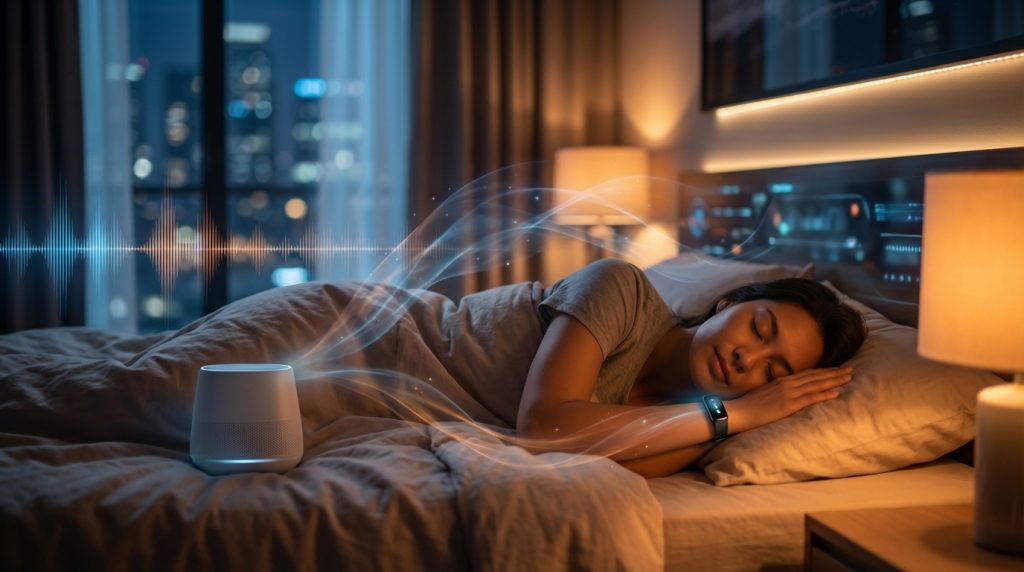
Many urban workers struggle with sleep. Insomnia is common. It impacts health and productivity. Fortunately, new technologies offer hope. Sound waves and AI are revolutionizing sleep science. They can fix disrupted sleep cycles. This article explores this exciting new frontier.
Understanding the Insomnia Epidemic
Modern life presents many sleep challenges. Stress is a major factor. Long work hours are typical. City noise disrupts rest. Blue light from screens affects our natural rhythms. Consequently, many people experience insomnia. This isn’t just about feeling tired. Poor sleep harms our physical and mental health. It can lead to serious health issues over time. Therefore, finding effective solutions is crucial.
The Science of Sleep Cycles
Our bodies have natural sleep-wake cycles. These are called circadian rhythms. They are governed by internal clocks. Light and darkness are key signals. They tell our brain when to be awake and asleep. When these rhythms are disrupted, sleep problems arise. This is common for shift workers. It also affects frequent travelers. Urban living can also interfere. Artificial light and noise are constant. Therefore, maintaining a healthy rhythm is vital.
Why Traditional Methods Fall Short
Many people try traditional sleep aids. These include medication and relaxation techniques. While they can help some, they aren’t always effective. Medications can have side effects. They may also become less effective over time. Relaxation techniques require consistent practice. They might not address the root cause of sleep disruption. Therefore, we need more advanced solutions.
Sound Waves: Nature’s Sleep Inducer
Sound has a profound effect on our minds. Certain sound frequencies can promote relaxation. They can even influence brainwave activity. For example, binaural beats are known to help. They are created by playing two slightly different tones. This creates a third, phantom tone in the brain. This can entrain brainwaves. It can guide them towards slower, more relaxed states. Thus, sound therapy is a promising area.
How Sound Waves Affect Brainwaves
Our brain operates on electrical signals. These create brainwaves. Different brainwave frequencies correspond to different states of consciousness. For instance, delta waves are dominant during deep sleep. Theta waves are present in light sleep and deep relaxation. Alpha waves are associated with a relaxed, wakeful state. Certain sound frequencies can encourage the brain to produce these waves. This is often referred to as brainwave entrainment. Therefore, targeted sound can guide us toward sleep.
The Role of White Noise and Pink Noise
White noise is a constant, steady sound. It masks other disruptive noises. This helps create a consistent sleep environment. Pink noise is similar but has a deeper tone. It has more energy in the lower frequencies. Many find pink noise more soothing. It can mimic natural sounds. Both can be effective for blocking out distractions. They create a more peaceful soundscape for sleep. As a result, they are popular sleep aids.
Artificial Intelligence: The Smart Sleep Solution
AI is transforming many fields. Sleep science is no exception. AI can analyze vast amounts of data. It can learn individual sleep patterns. This allows for personalized sleep solutions. AI-powered devices can monitor sleep. They can then adjust stimuli in real-time. This is a significant advancement. It moves beyond one-size-fits-all approaches.
Personalized Sleep Tracking
Wearable devices are becoming common. They track sleep duration and quality. AI algorithms analyze this data. They can identify patterns. For example, they might notice you sleep better on certain nights. They can also detect disruptions. This includes awakenings or restlessness. Therefore, AI provides deep insights into individual sleep habits. This data is crucial for improvement.
AI-Driven Sound Therapy
This is where sound waves and AI meet. AI can analyze your sleep data. It can then select the optimal sound frequencies. These sounds are played to you during sleep. The AI can adjust the sounds based on your real-time sleep stage. If you’re entering lighter sleep, it might play a more calming sound. If you’re struggling to fall asleep, it might use a different approach. This dynamic adjustment is key. It offers a highly personalized experience. You can learn more about deep sleep induction and the science of sound. Deep sleep induction: The Science of Sound provides further insight.
Adaptive Sound Environments
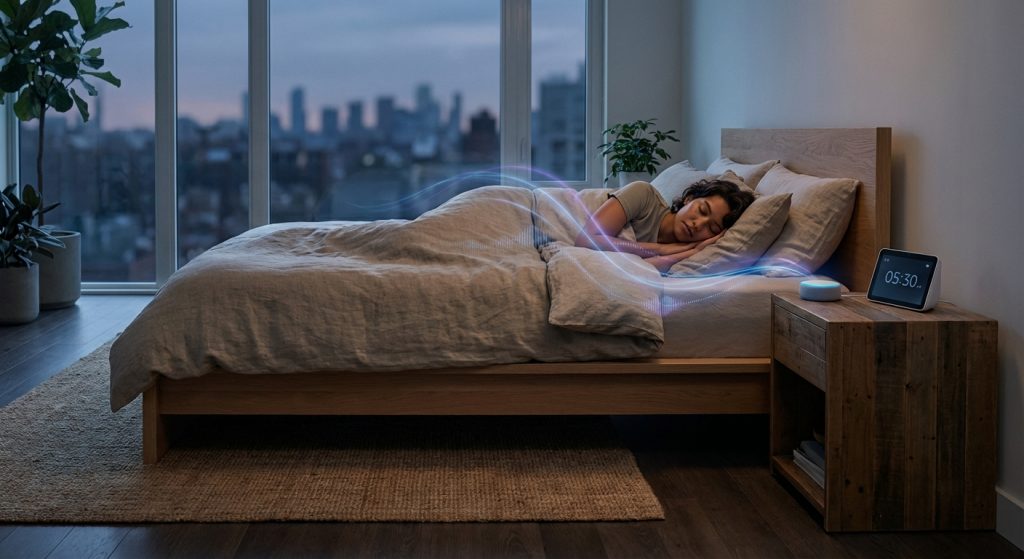
Imagine a bedroom that adapts to your sleep needs. AI can create such an environment. Devices can play specific soundscapes. These change as your sleep progresses. This helps you stay in deeper sleep stages. It can also help you wake up more gently. For instance, AI might gradually increase ambient light. It could also play a specific sound sequence. This creates a more natural awakening. Therefore, AI offers a holistic approach to sleep optimization.
Benefits for Sleep Specialists and Urban Workers
These advancements offer significant benefits. Sleep specialists gain powerful new tools. They can use AI data for diagnosis. They can also prescribe AI-driven sound therapies. This offers a more targeted approach. It can improve patient outcomes. Furthermore, it can reduce reliance on medication.
For Sleep Specialists
AI provides objective sleep data. This complements traditional polysomnography. Specialists can track sleep patterns remotely. They can also monitor treatment effectiveness. This allows for quicker adjustments. It leads to more efficient patient care. Additionally, it can help identify subtle sleep disorders. Therefore, AI empowers specialists with better insights.
For Urban Workers
Urban workers face unique sleep challenges. Commuting, noise, and stress are common. AI-powered sound therapy offers a practical solution. It can be used at home. It doesn’t require significant lifestyle changes. It works by directly influencing sleep cycles. This can lead to improved sleep quality. Better sleep means more energy. It also means improved focus and productivity. Consequently, it enhances overall well-being. This technology can be a game-changer for busy professionals. It offers a path to overcoming the modern insomnia crisis. You can explore more about this topic in The Modern Insomnia Crisis: Tech’s Role in Sleep Science.
The Future of Sleep Technology
The integration of AI and sound is just the beginning. Future technologies will likely be even more sophisticated. We might see haptic feedback integrated with sound. This could provide gentle wake-up cues. Biofeedback loops could become more advanced. They could monitor physiological signs of stress. Then, they could deploy targeted sound interventions. Furthermore, AI might predict sleep issues before they occur. It could offer proactive solutions. This promises a future with better sleep for everyone.
Challenges and Considerations
While promising, there are challenges. Data privacy is a concern. Users need to trust that their sleep data is secure. The cost of advanced technology can also be a barrier. Ensuring accessibility is important. More research is also needed. We need to understand long-term effects. We also need to refine AI algorithms. This will ensure optimal outcomes for diverse users. Therefore, careful development is essential.
Conclusion: Embracing a New Era of Rest
Insomnia is a pervasive problem. However, technology offers powerful new solutions. Sound waves, guided by AI, are transforming sleep. They offer personalized, adaptive approaches. These can fix disrupted sleep cycles. For sleep specialists, this means better diagnostic tools. For urban workers, it means a path to better rest. This convergence of AI and sound therapy is exciting. It heralds a new era of sleep science. Embracing these innovations can lead to healthier, more productive lives. It’s time to say goodbye to sleepless nights.
Frequently Asked Questions
How do sound waves actually help me sleep?
Sound waves can influence your brainwaves. Certain frequencies encourage relaxation. They can guide your brain towards states associated with sleep. This is called brainwave entrainment. AI then personalizes these sounds. It adapts them to your sleep patterns.
Is AI sleep technology reliable?
AI is becoming increasingly reliable. It analyzes your unique sleep data. This allows for personalized interventions. Early results are promising. However, more research is ongoing. It’s important to choose reputable devices.
Can this technology replace a sleep specialist?
No, it’s designed to complement. AI tools provide valuable data. Sleep specialists interpret this data. They diagnose complex conditions. They also create comprehensive treatment plans. The technology is a powerful aid, not a replacement.
What is the difference between white noise and pink noise for sleep?
White noise is a consistent, static sound. It masks other noises. Pink noise is deeper. It has more energy in lower frequencies. Many find pink noise more soothing. It can mimic natural sounds like rain.
Are there any side effects of using AI sound therapy?
Generally, sound therapy is considered safe. There are typically no significant side effects. Some individuals might find certain sounds distracting. However, AI personalization aims to avoid this. It adapts to your preferences.
