
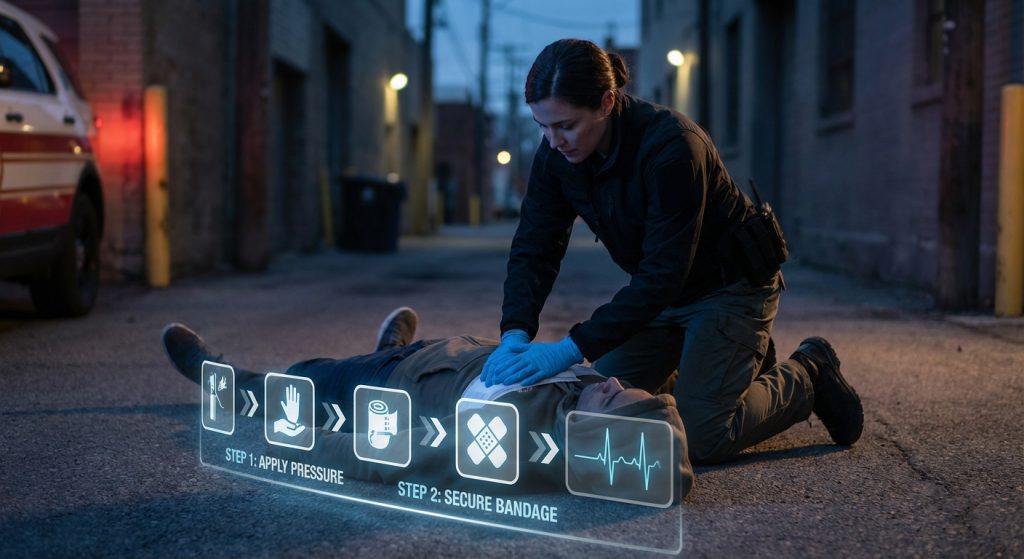
Emergencies happen fast. Seconds count. Often, the first people on the scene are not trained medical professionals. They are ordinary bystanders. These individuals can feel helpless. They want to help but don’t know how. Now, there’s a new tool emerging. It uses Augmented Reality (AR). This technology can guide bystanders through emergency response. Therefore, it promises to revolutionize first aid. This article explores AR-guided emergency response for bystanders. We will look at its potential and impact.

The Critical Role of Bystander Intervention
When someone collapses, immediate action is vital. Early CPR can double or triple survival rates. This is especially true for cardiac arrest. Bystanders are often the first responders. However, fear and lack of knowledge can be barriers. They might hesitate to act. Or they might perform actions incorrectly. This hesitation can be tragic. Therefore, empowering bystanders is crucial. We need to give them the confidence and knowledge needed. AR technology offers a promising solution.
What is AR-Guided Emergency Response?
Augmented Reality overlays digital information onto the real world. Imagine looking through your phone or smart glasses. You see instructions projected onto the scene. For first aid, this means seeing visual cues. These cues guide you step-by-step. For example, AR could show you exactly where to place your hands for CPR. It might highlight the correct pressure points. Or it could guide you through administering an AED. The AR system uses your device’s camera. It recognizes the environment. Then, it displays relevant information. This makes complex tasks simpler. It also reduces the chance of error. This technology is especially useful for complex procedures. It can provide real-time feedback. So, you know if you are doing it right.
How AR Enhances First Aid Training
Traditional first aid training is effective. However, it has limitations. Refreshers are needed. Stressful situations can make people forget. AR can bridge this gap. It provides on-demand guidance. This means training can be more dynamic. It can also be more accessible. Imagine an AR app on your smartphone. You can practice scenarios virtually. You get immediate feedback. This makes learning more engaging. Furthermore, it helps build muscle memory. This is vital for critical situations. Companies are developing AR training modules. These modules simulate various emergencies. They cover everything from bleeding control to airway management.
The Technology Behind AR-Guided Response
Several technologies converge to make this possible. Firstly, smartphones and smart glasses are key. They provide the visual interface. Secondly, advanced sensors and cameras are essential. They capture real-world data. Thirdly, sophisticated algorithms process this data. They recognize objects and environments. Finally, AI plays a significant role. It interprets the situation. It then delivers the most appropriate guidance. For instance, AI can assess the patient’s condition. It can then tailor the AR instructions accordingly. This makes the response more personalized. It also ensures it is medically sound. We are seeing rapid advancements in these areas. This drives innovation in AR applications.
Key Features of AR First Aid Systems
- Step-by-Step Visual Guidance: Clear, animated instructions appear directly in the user’s field of view.
- Real-Time Feedback: Sensors can monitor user actions. They provide immediate correction if needed.
- Voice Commands: Hands-free operation is possible through voice recognition. This is crucial when hands are busy.
- Contextual Information: AR can display patient vital signs or relevant medical history if available.
- Emergency Service Integration: The system can help dispatchers guide bystanders while help is en route.
Benefits for First Responders and Developers
The impact extends beyond the bystander. For professional first responders, AR can be a powerful tool. It can assist them in complex scenarios. For example, it can overlay patient data during transport. It can also guide them through intricate procedures in the field. Furthermore, AR can improve communication. Teams can share visual information in real-time. This enhances coordination. For tech developers, this is a burgeoning field. There are many opportunities. They can create innovative AR applications. These applications can save lives. They can also improve healthcare outcomes. The demand for such solutions is growing. This is driven by both public safety needs and technological advancements. The integration of AI into these systems is also a key area. It allows for more adaptive and intelligent guidance. This mirrors progress in other AI-driven fields like AI-driven drug discovery.
Challenges and Future Directions
Despite its promise, AR-guided first aid faces hurdles. Firstly, the cost of AR hardware can be a barrier. Not everyone can afford smart glasses. However, smartphone-based AR is more accessible. Secondly, reliability is paramount. The system must function flawlessly in emergencies. This requires robust testing. Thirdly, user adoption is key. People need to trust and be comfortable using the technology. Public education and intuitive design are vital. Privacy concerns also need addressing. Data security is a major consideration. Looking ahead, we can expect more seamless integration. Devices will become smaller and more intuitive. AI will make the guidance even smarter. Imagine AR systems that can detect subtle changes in a patient’s condition. They can then alert the bystander proactively. This technology could also extend to remote medical consultations. This would be particularly beneficial for areas with limited healthcare access, akin to advancements in telemedicine.
Case Studies and Real-World Applications
While still in its nascent stages, early trials show promise. Some pilot programs have equipped first responders with AR devices. These trials have demonstrated improved response times. They have also shown increased confidence among users. For instance, one study involved dispatchers guiding bystanders. They used AR overlays to direct CPR. The results were encouraging. As the technology matures, we will see more widespread adoption. Imagine a future where AR first aid kits are commonplace. They could be in homes, schools, and public spaces. This would democratize emergency care. It would empower every individual to be a potential life-saver.
Conclusion
AR-guided emergency response for bystanders is more than just a futuristic concept. It is a tangible solution to a critical need. By overlaying vital information onto the real world, AR technology can empower ordinary citizens. It can turn them into capable first responders. This technology has the potential to save countless lives. It enhances training, provides on-demand guidance, and reduces errors. While challenges remain, the rapid advancement of AR and AI suggests a bright future. For both first responders and tech developers, this field offers immense opportunity. It is an exciting frontier in emergency medicine. It promises a world where anyone can provide life-saving assistance.
Frequently Asked Questions (FAQ)
What is Augmented Reality (AR)?
Augmented Reality (AR) is a technology that overlays digital information, such as images, sounds, and text, onto the real world. This is typically done through devices like smartphones, tablets, or AR glasses.
How can AR help in an emergency situation?
AR can provide step-by-step visual instructions for emergency procedures. For example, it can guide a bystander on how to perform CPR or use an AED. This makes complex tasks easier and reduces errors.
Are AR first aid systems available to the public now?
While the technology is still developing, some AR-guided first aid applications are available. Many are in pilot programs or used by professional first responders. Consumer-level AR first aid solutions are expected to become more common.
What are the main benefits of AR for bystanders?
The main benefits include increased confidence, reduced fear, clearer instructions, and the ability to perform life-saving procedures correctly. It democratizes emergency response skills.
What role does AI play in AR-guided emergency response?
AI helps in interpreting the real-world scene, recognizing patient conditions, and tailoring the AR instructions to be most effective and relevant for the specific emergency.
