
AI-Powered Pharmacies: 24/7 Medicine Dispensing in VN
Published on February 6, 2026 by Admin

The healthcare landscape is rapidly evolving. New technologies are transforming how we access essential services. This includes medicine. In Vietnam, innovative solutions are emerging. Autonomous pharmacies represent a significant leap forward. These facilities leverage artificial intelligence (AI). They offer 24/7 medicine dispensing. This promises greater convenience and accessibility for all.
The Need for Innovation in Vietnamese Pharmacies
Urban centers in Vietnam are growing quickly. This creates new challenges for healthcare. Traditional pharmacies face limitations. They have fixed operating hours. Staffing can be a constant concern. Furthermore, accessibility is not always uniform. Rural areas often have fewer options. This is especially true outside of standard business hours. Therefore, a more efficient system is needed. AI-driven solutions can bridge these gaps.
Urban planners are looking for smart solutions. They want to improve public services. Healthcare access is a top priority. Autonomous pharmacies fit this vision perfectly. They can be deployed strategically. This ensures medication is available when needed. It reduces reliance on human resources for routine tasks. This frees up pharmacists for more complex clinical roles.
What Are Autonomous Pharmacies?
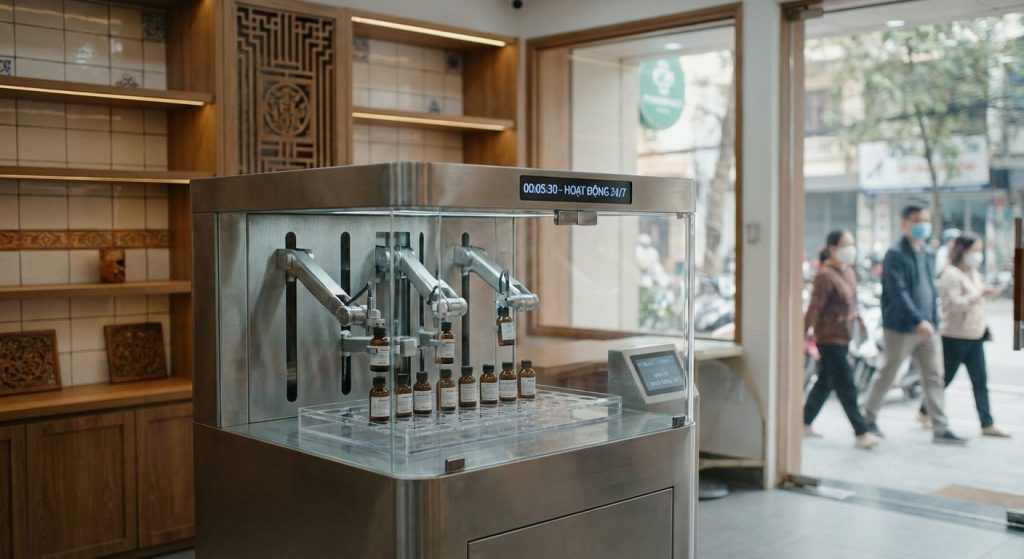
Autonomous pharmacies are automated dispensing systems. They use advanced robotics and AI. These systems can store and dispense a wide range of medications. Users interact with a kiosk or mobile app. They submit a prescription. The AI verifies the prescription. Then, a robotic system retrieves the correct medication. Finally, it dispenses it to the user. This entire process is automated.
These pharmacies operate around the clock. This means patients can get their medicines anytime. There are no queues during peak hours. There are no worries about closing times. This is particularly beneficial for chronic patients. They often need regular medication refills. It also helps with urgent needs. For example, after-hours emergencies.
Key Technologies at Play
Several key technologies enable autonomous pharmacies. AI is central to their operation. It handles prescription verification. It manages inventory. It also optimizes dispensing routes. Robotics are essential for the physical handling of medicines. Secure storage systems prevent tampering. Advanced software ensures data privacy and security.
Furthermore, these systems can integrate with e-prescribing platforms. This streamlines the entire workflow. It reduces potential errors. It also enhances efficiency. The user interface is designed to be intuitive. This makes it easy for patients to use. Even those less familiar with technology can operate it.
Benefits for Pharmacy Owners
Pharmacy owners stand to gain significantly. Autonomous systems reduce labor costs. They can operate with minimal human oversight. This is especially true for dispensing. Inventory management becomes more precise. This minimizes waste. It also ensures stock availability. Furthermore, these systems can operate in smaller footprints. This can reduce rental costs.
Moreover, autonomous pharmacies offer extended service hours. This attracts more customers. It provides a competitive edge. It also allows for data-driven insights. Owners can track usage patterns. They can identify popular medications. This helps in optimizing stock. It also allows for better business planning. The potential for expansion into underserved areas is also high.
Advantages for Urban Planners and Patients
For urban planners, these pharmacies offer a solution to healthcare access challenges. They can be placed in high-traffic areas. They can also be deployed in remote or underserved neighborhoods. This improves health equity. It ensures that all citizens have access to essential medicines. This contributes to a healthier and more productive city. It also reduces the burden on emergency services for non-critical needs.
Patients benefit directly from convenience and accessibility. They can pick up prescriptions at any time. This is a major advantage for busy individuals. It is also crucial for the elderly and those with mobility issues. The automated nature reduces human interaction. This can be preferable for some. It also minimizes the risk of medication errors. This is because the process is standardized and automated.
Improving Medication Adherence
One significant benefit is improved medication adherence. When patients can easily access their medications, they are more likely to take them as prescribed. This is crucial for managing chronic conditions. It leads to better health outcomes. It also reduces healthcare costs in the long run. For example, preventing hospitalizations due to non-adherence.
Autonomous pharmacies can also send reminders. They can integrate with patient apps. This further encourages adherence. This technology supports a proactive approach to health management. It empowers patients to take control of their well-being. It also aligns with the growing trend of digital therapeutics.
Implementation Challenges and Considerations
Despite the numerous benefits, there are challenges. Initial investment costs can be high. This includes the technology and infrastructure. Regulatory frameworks need to adapt. Ensuring the security and privacy of patient data is paramount. Public acceptance and trust are also important factors. Educating the public about the safety and reliability of these systems is crucial.
Maintenance and technical support are also key. These systems require regular upkeep. A robust support network is necessary. Cybersecurity measures must be top-notch. This protects against potential breaches. Furthermore, the human element remains important. Pharmacists’ roles will shift. They will focus more on patient counseling and clinical services. This ensures a holistic approach to care. This is similar to how health equity is being addressed in Vietnam.
The Role of AI and Data Analytics
AI is the brain behind autonomous pharmacies. It analyzes prescription data. It predicts demand. It manages inventory efficiently. This reduces waste. It also prevents stockouts. Data analytics can provide valuable insights. This helps in understanding patient needs better. It can also inform public health strategies. For example, identifying disease trends.
The use of AI can lead to more personalized healthcare. By analyzing patient data, pharmacies can offer tailored advice. They can also suggest appropriate medications. This is a step towards precision medicine. It aligns with advancements in pharmacogenomics.
Future Outlook for Autonomous Pharmacies in Vietnam
The future of autonomous pharmacies in Vietnam looks promising. As technology advances, costs are likely to decrease. This will make them more accessible. Increased adoption will lead to greater public familiarity. The government’s support for technological innovation is also a positive factor. This could accelerate their integration into the healthcare system.
These pharmacies can play a vital role. They can improve healthcare delivery. They can enhance patient outcomes. They can also contribute to economic development. By creating new technological jobs. They also support the growth of a modern healthcare infrastructure. This is essential for a developing nation like Vietnam. The potential for integration with smart city initiatives is also significant. These pharmacies can become a cornerstone of future urban health services.
Frequently Asked Questions (FAQ)
How do autonomous pharmacies ensure medication safety?
Autonomous pharmacies use sophisticated AI and robotics. These systems verify prescriptions against databases. They also track inventory meticulously. This reduces human error. Secure storage prevents unauthorized access. Regular audits and quality control measures are in place.
Are these pharmacies secure from cyber threats?
Yes, security is a top priority. They employ advanced encryption and cybersecurity protocols. This protects patient data and prescription integrity. Regular updates and monitoring are essential.
What happens if a patient needs to consult a pharmacist?
While dispensing is automated, human interaction is still possible. Many systems offer remote consultation options. Patients can connect with a pharmacist via video call. This ensures professional advice is always available.
Can autonomous pharmacies dispense all types of medications?
Initially, they may focus on common and stable medications. However, technology is advancing rapidly. They are increasingly capable of handling a wider range. This includes controlled substances and temperature-sensitive drugs. This requires specific secure storage.
What is the cost impact for consumers?
The goal is to reduce overall healthcare costs. While initial setup is expensive, efficiency gains can lead to lower operational costs. This may translate to more affordable medications for consumers in the long run.
Conclusion
Autonomous, AI-driven pharmacies represent a revolutionary step. They offer 24/7 access to medicines. This is a critical need in Vietnam’s rapidly urbanizing environment. For pharmacy owners, these systems promise efficiency and cost savings. For urban planners, they are a tool for improving health equity. For patients, they offer unparalleled convenience and safety. While challenges exist, the benefits are substantial. Embracing this technology is key to building a healthier, more accessible future for all in Vietnam.
