
Digital Twins: Testing Surgery in a Virtual World
Published on February 6, 2026 by Admin
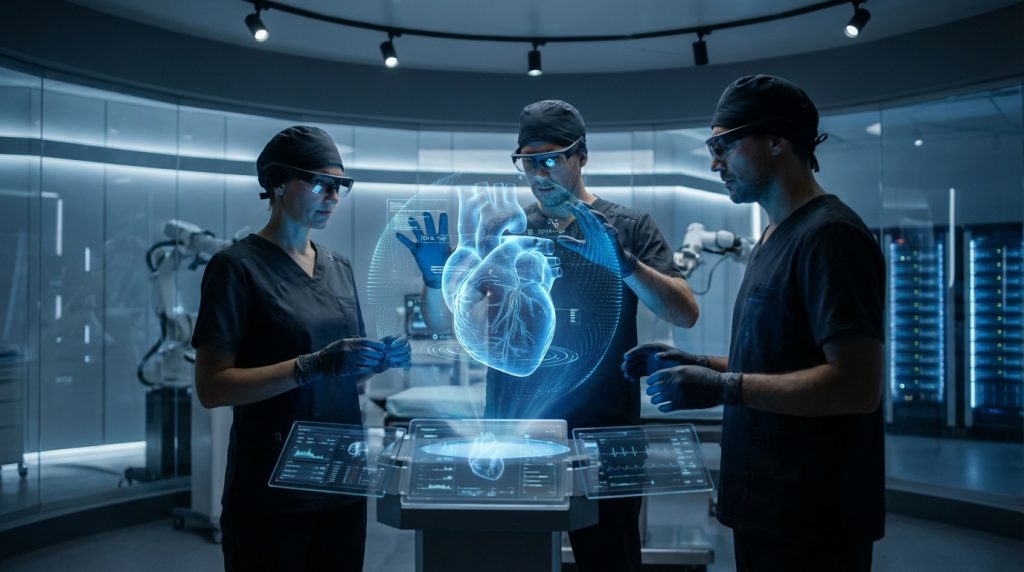
Imagine a surgeon preparing for a complex operation. Instead of relying solely on textbooks and past experience, they first practice on a perfect virtual replica of the patient’s anatomy. This isn’t science fiction anymore. Digital twins of the human body are rapidly changing medicine. They offer a safe, precise way to test procedures before the actual surgery. This technology bridges the gap between software development and surgical innovation.
What is a Digital Twin of the Human Body?
A digital twin is a virtual model. It mirrors a physical object. In this case, the object is a human body. Or, more specifically, a part of it. For surgery, it’s usually a patient’s unique anatomy. This model is built using data. High-resolution scans like MRIs and CTs are key. Data from medical records also helps. Algorithms then process this information. They create a dynamic, 3D representation. This twin is not static. It can simulate biological processes. It can also respond to interventions.
Think of it like a sophisticated video game. But instead of a character, it’s a patient. Every detail is captured. This includes bone structure, blood vessels, and organs. It even accounts for unique patient conditions. Therefore, each digital twin is unique. It’s tailored to an individual.
Why Are Digital Twins Crucial for Surgeons?
Surgery is inherently risky. Mistakes can have severe consequences. Digital twins offer a powerful solution. They allow surgeons to practice extensively. This practice happens in a risk-free environment. Surgeons can rehearse complex maneuvers. They can also test different surgical approaches. This helps them anticipate potential problems. For instance, they can identify difficult-to-reach areas. They can also plan the optimal path for instruments. Therefore, surgical planning becomes much more precise.
Furthermore, digital twins can simulate outcomes. Surgeons can see how their planned actions might affect the patient. This is incredibly valuable. It helps refine techniques. It also builds surgeon confidence. This leads to better patient safety. Ultimately, it improves surgical success rates. This innovation is a testament to how AI in personalized healthcare is transforming patient care.

The Role of Software Developers
Creating these advanced digital twins is a massive undertaking. It requires deep collaboration between medical professionals and software developers. Developers are essential for building the platforms. They create the sophisticated algorithms. These algorithms process vast amounts of medical data. They also develop the visualization tools. These tools make the digital twins interactive. Furthermore, they ensure the simulations are accurate. This involves understanding biomechanics and fluid dynamics. It also requires expertise in data security and privacy.
The software needs to be robust and intuitive. Surgeons need to access and manipulate the twins easily. This means user interface (UI) and user experience (UX) design are critical. Developers also work on integrating different data sources. This includes imaging data, electronic health records, and sensor data. Therefore, their role is foundational to the entire digital twin ecosystem.
Key Benefits of Digital Twins in Surgery
The advantages of using digital twins are numerous. They extend beyond just surgical planning. Here are some key benefits:
- Enhanced Surgical Precision: Surgeons can practice on a patient’s exact anatomy. This reduces guesswork. It leads to more accurate procedures.
- Reduced Surgical Risks: By rehearsing extensively, surgeons can avoid unexpected complications. This improves patient outcomes.
- Personalized Treatment Plans: Digital twins allow for highly individualized surgical strategies. They cater to each patient’s unique physiology.
- Improved Medical Education: Trainee surgeons can learn and practice on realistic models. This accelerates their skill development. It also provides a safe learning environment.
- Accelerated Innovation: Researchers can use digital twins to test new surgical devices and techniques. This speeds up the development cycle.
- Cost-Effectiveness: While initial investment can be high, digital twins can reduce the need for expensive physical models. They also minimize operative time and complications, leading to long-term cost savings.
The Technology Behind Digital Twins
Several technologies converge to make digital twins possible. Firstly, advanced imaging techniques are crucial. These include MRI, CT scans, and ultrasound. These provide the raw anatomical data. Secondly, data processing and AI play a huge role. Machine learning algorithms reconstruct the 2D scans into 3D models. They also enable predictive simulations. For example, AI can predict blood flow patterns. It can also simulate tissue response to surgical tools. This is similar to how AI accelerates drug discovery.
Furthermore, powerful computing hardware is necessary. Creating and running complex simulations requires significant processing power. Cloud computing solutions are often employed. This allows for scalable access to these resources. Finally, visualization technologies are key. This includes virtual reality (VR) and augmented reality (AR). These technologies immerse surgeons in the digital twin. They allow for intuitive interaction. Indeed, VR is already showing promise in various therapeutic applications.
Challenges and Future Outlook
Despite the immense potential, challenges remain. Data standardization is one hurdle. Medical data comes in many formats. Integrating it seamlessly is complex. Data privacy and security are paramount. Protecting sensitive patient information is critical. Another challenge is the cost of implementation. High-end hardware and software can be expensive. Wider adoption will require cost reductions. Furthermore, regulatory frameworks are still evolving. Ensuring the safety and efficacy of digital twin-based procedures is vital.
However, the future is bright. As technology advances, digital twins will become more sophisticated. They will incorporate real-time physiological data. This will allow for even more dynamic simulations. We might see digital twins that predict long-term health outcomes. They could also be used for remote patient monitoring. The integration of digital twins into routine surgical practice seems inevitable. For surgeons, it means enhanced capabilities. For software developers, it opens up new frontiers in medical technology. This synergy is paving the way for a new era of precision medicine.
Frequently Asked Questions
What is the difference between a medical simulation and a digital twin?
Medical simulations often use generic models. They are great for learning basic procedures. A digital twin, on the other hand, is a highly personalized, dynamic replica of a specific patient’s anatomy. It’s built from their actual medical data.
How accurate are digital twins of the human body?
The accuracy depends on the quality and quantity of data used. High-resolution imaging and comprehensive medical records lead to very accurate twins. Continuous advancements in AI and data processing are constantly improving their fidelity.
Can digital twins be used for non-surgical applications?
Absolutely. Digital twins can be used for drug development, personalized treatment planning for conditions like cancer, and even for understanding disease progression. They are versatile tools in healthcare.
What are the ethical considerations surrounding digital twins?
Key ethical considerations include data privacy, patient consent, and ensuring equitable access to this advanced technology. It’s crucial to address these issues as the technology matures.
Conclusion
Digital twins of the human body represent a paradigm shift in healthcare. They empower surgeons with unprecedented tools for preparation and execution. Simultaneously, they challenge software developers to create ever more sophisticated and reliable systems. By bridging the physical and digital realms, digital twins promise safer, more effective, and highly personalized surgical interventions. This fusion of medical expertise and cutting-edge technology is undoubtedly shaping the future of surgery.
